In all societies, the focus remains on the pains and loss of orphans because they are too young to understand the loss. BabraWani met a few parents who lost their kids to fate and have failed to fill the void and come out of the emotional crisis even decades after
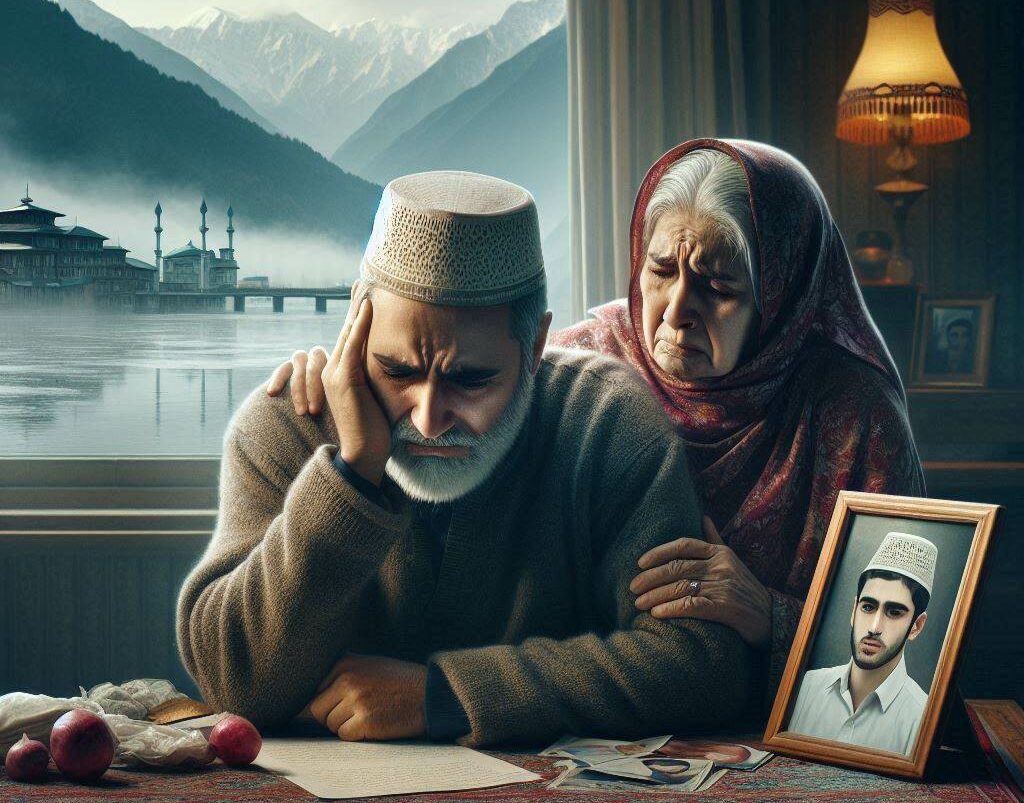
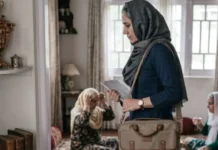
A teardrop has dried on her wrinkled face, leaving behind a long trail from her left eye towards her mouth. Zaina, 72, a resident of South Kashmir often sits by the window of her room, staring continuously outside, often tears roll down her eyes, while her lips remain shut, as if sown together.
Her room, gives a glimpse of her heart, both of them have turned dull. She lives with her family of nine, including her husband, two sons, two daughters-in-law and grandchildren. Her third and youngest son has passed away. Since then, the heartbroken Zaina started sitting by the window, silent and staring blankly outside the window.
A Broken Mother
“There’s a reason she stares outside the window,” her eldest daughter-in-law sighed. “She lost her son that she was most attached to.”
Zaina lost her 19-year-old son on the day of Eid in 2004, to a brain haemorrhage. “He was my most beloved child, my most empathetic son, my most caring son, but he left me alone,” Zaina stated, a tear rolling down her cheek. “I lost him on the evening of Eid and the happiest day turned into the saddest one, mourns and wails filled the days following.”
Zaina and her husband have not been able to reconcile with the fate. Her husband started having health complications, and Zaina suffered from both physical as well as psychological complications. “I last smiled nineteen years ago, when my son was alive, but since then even if I try, I am not able to do anything,” Zaina remarked, choking as she struggled to complete her words. “I feel like all of the bones in my body have been broken, you know I feel that my back has been shattered into pieces.” Sitting nearby, her husband said: “It’s a shared sorrow. Both of us lost a child, and both of us suffer equally.”
An Ignored Pain
In Kashmir, as in the rest of the world, the focus usually remains on the kids who lose their parents. People who lose their children are rarely talked about. Unlike orphan, there is no word in any language that would describe the status of a parent who loses their kid. That does not lessen the parental pain.
Syeda, 58, lost a 20-year-old son to a road accident. Belonging to a modest household, the widow’s son was the eldest of her three siblings and the lone bread earner of the family of four.
Since the day of her son’s death, Syeda has stopped talking and living like she used to. “My mother has turned into a statue, she does not talk much, does not laugh, does not eat normally, she’s merely surviving,” Syeda’s daughter remarked. “My brother was the closest to my mother. After my father’s passing, he became the man of our household. He worked different jobs to manage the expenses of our house, but he was snatched away from us too soon.”
Syeda’s son was returning home from his work when he met with an accident. “He remained in ICU for three days, but could not make it,” Syeda uttered, “He was a very dutiful, very obedient son. He was so full of hopes and smiles. His asswun buth (smiling face) made him the most special young boy around. Su ous pholwun gulaab (he was a budding rose).”
Syeda who now is left with her two daughters, makes sure to take a plate of food and put it outside, “Tamissund hisse chunna tamis waatenaawun (I have to take his share to him),” she said, her eyes all gloomy and all welled up with tears.
“He left me with so much heartache and despair, I don’t think I will ever be able to overcome this loss),” Syeda remarked as she stared blankly at her hands.
Countless Families
In Kashmir, countless families have lost their children to unfortunate circumstances and mothers like Syeda and Zaina suffer from the unbearable and unfathomable pain of losing a part of their flesh and blood, their child.
The love of a mother towards her children is the purest and unconditional love and has remained the key theme of a lot of poetry, storytelling and films. Often the loss of a child is the biggest heartbreak in a mother’s life. Unlike mothers, however, fathers are often regarded as tough, but they also suffer, albeit silently.
The Distraught Fathers
Ghulam Rasool, Zaina’s husband, is also suffering equally. “I was bound to live a tough life, since I am the father, I had to look after my whole family, everybody around and everything. So, I needed to put on a brave face and shut off these emotions, but it is a shared pain,” Rasool acknowledged, “My wife has already suffered so much. Look at her, she has taken those things directly to her heart, she is already in a lot of pain.”
The couple and their three children lived a beautiful life and were all very hopeful of the future. On that day, he went to call his son for dinner. “There was no response at all I still remember,” he said, “I called him many times but he did not say anything back and that is when we were alarmed.”
Worried, Ghulam Rasool went to check on his son. “While everybody else had gathered downstairs to relish the meals my wife had prepared, I saw my youngest one lying unconscious in his room, I did not understand what had happened to him.”
Soon he called his wife and other sons. “My eldest son started his car and we took him to a medical facility near our village, my son was still unconscious. I was praying with all my might for his life for his safety.”
Upon reaching the medical facility, the family was referred to the district hospital. “When we somehow managed to reach there, the doctors declared my son brought dead. Our world with that one statement, crumbled down.”
Back in those days, there were no mobile phones and Ghulam Rasool and his sons had to manually go and tell people about the youngest one’s passing. “I did not even have time to mourn my beloved son’s death, I had to go to people to relatives and give them the heartbreaking news.”
Ghulam Rasool since that day has not been fine. “I have suffered from so many things, but I still need to put up a brave face.”
Family Sufferings
It was the fateful day in 2010 when the Bhat family received the horrifying news that their eldest son had passed away in a road accident. “We were devastated, he has small children and we could not help but think about them,” a family member said.
The mother, who was offering namaz fainted when she heard about her son’s passing, the father was at his shop when he heard the news. The parents since that day have completely shut down and cut off from the world. “We do not want to enjoy any worldly things. We want to live our days left by praying and taking care of our orphaned grandchildren,” the father said.
The family has suffered endlessly since 2020 and continues to do so. “You know when you lose a child, you are left with a big void that can never get filled. Even our other children cannot fill in for him. He had his place in our lives. He was the firstborn, the first blessing from Allah. But maybe Allah liked him more, and we are sure he is in a far better place right now,” the devastated mother said.
The families who lose a loved one are often left with both physical and psychological complications. “Our physical and mental has suffered every day since that day,” they said, “We have started experiencing physical weaknesses, bouts and long episodes of depression and anxiety.”
The other suffering that the family experienced was that of loss of interest in day-to-day life, “Our life has become more robotic now, we try not to act on our emotions anymore now.”
Preserving Memories
“Since his passing, I have stopped entering his room,” Zaina stated, “I never entered his room and not even once I touched the things. His things are still positioned the way he had kept them.”
“His friends and his classmates still come to meet me to talk about him, even after these many years,” Zaina remarked, “But I can’t help but sigh and listen to them silently. What other option do I have?”
Unlike the present times, Ghulam Rasool regretted that they lacked gadgets to click photos and videos of him. “We only have cherished memories.”
Syeda, however, has countless memories like photographs and other memorable items that, “we value, that we cherish, that we hold very dear to my heart. Though through photographs and videos, I still see my child,” Syeda said.
The memories that are left behind often help the families in processing and dealing with the grief of a lost one.
“I hope and I always pray that no other mother, no other parent should suffer as I did. I hope nobody else loses a child like I did,” Syeda stated, “Snatching a life after bestowing it is very painful.”