In the rugged Himalayan terrain near Kargil, Hundarman is a village where geopolitics and history collide. From its days as a battleground to its reinvention as a Museum of Memories, Hundarman stands as a testament to resilience amid the turmoil of disputed borders and vanishing resources, writes Humaira Nabi
In the biting cold of a dry, snowless December, veiled between the towering Himalayan peaks, Hundarman stirred awake to the sound of boots pounding against the frozen earth. The stillness was shattered by the rhythm of hundreds of soldiers advancing the village in the dead of night. “We tried to peer through the cracks of our homes, but the village was shrouded in dense fog,” Fida Hussain, now 68, recounted. His eyes, clouded with memories, seemed to pierce through the decades. “We waited breathlessly for dawn, but it felt like years before the first light broke over the land.”
As the first glimmers of dawn arrived, Fida’s father, driven by instinct, ventured into the icy air. “He saw soldiers, hundreds of them, in the uniform of the Indian Army. And then a voice rang out, loud and resolute: ‘Yeh Hindustani fouj hai, aur humne tumhare gaon par qabza kar liya hai (This is the Indian Army, and we have taken control of your village).’”
View this post on Instagram
A Village Redefined
Hundarman, situated ten kilometres from Kargil town, carries a fraught history. In 1971, as the world’s gaze was fixed on Bangladesh, India and Pakistan engaged in a parallel conflict in the shadow of these remote mountains. Overnight, Hundarman and its inhabitants found themselves on this side of the erstwhile ceasefire line. As part of India’s capture of 804 square kilometres in Baltistan, the village was absorbed into Jammu and Kashmir following the Shimla Agreement. The new border, now the Line of Control (LoC), cemented Hundarman’s place on India’s map but fractured its ties with the rest of Baltistan.
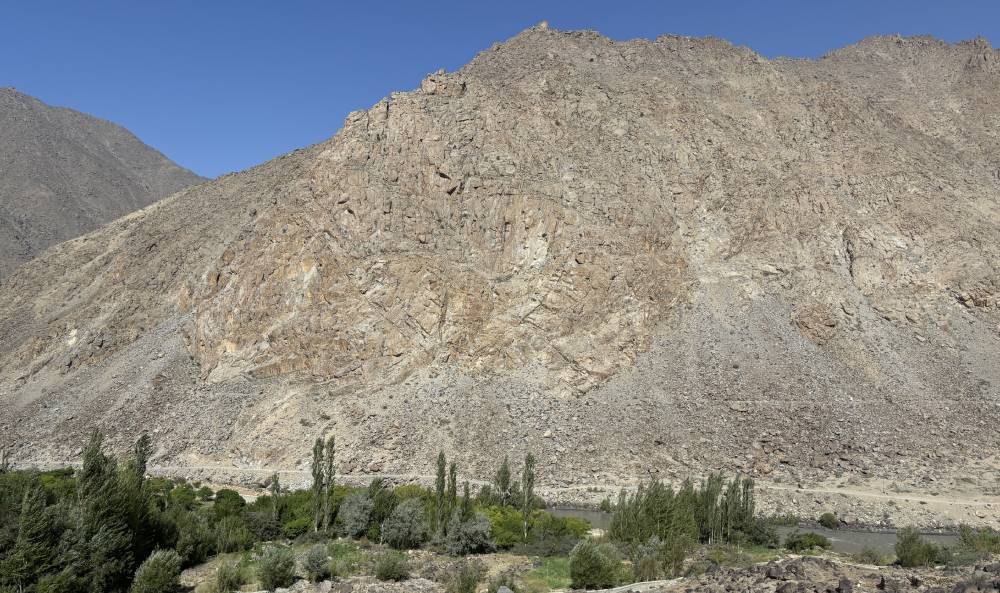
From 1949 to 1965, Hunderman was under Pakistani control. The India-Pakistan war of 1965 transformed the village into no-man’s-land, an ambiguous status that persisted until it was reabsorbed into Pakistan. However, in 1971, India reclaimed the village, setting off a dramatic shift in its political status and the lives of its inhabitants.
Despite his years, Fida Hussain is broad-shouldered and energetic and has lived through the village’s turbulent transitions. He now presides over a small stall near an apricot processing factory, selling bottles of apricot juice, jam, and nuts—each glowing with a golden hue. Waving at passing vehicles, he beckons travellers to sample his wares. Amid the bustle of his makeshift enterprise, he pointed to an open stretch of land downhill, his voice carrying both solemnity and urgency: “Maine aath Pakistani fouji ke laash dekhi hain idhar (I saw eight bodies of Pakistani soldiers here). Their bodies were frozen, shrouded in the white soot of fog.”
Despite the devastation, he added that some villagers had shown compassion amid the chaos. “A few injured Pakistani soldiers were taken to a local Imambara, where they were treated until they could return home.”
Fractured Lives
The Indian Army’s arrival irreversibly altered the fabric of Hundarman. Some residents fled to Pakistan, abandoning homes and land, while others stayed, their identities redefined as Indian citizens. The new border tore families apart, leaving loved ones stranded on opposing sides. In some cases, couples separated by war dissolved their marriages through letters—a testament to the emotional toll of a conflict that remade personal and political boundaries.
Following its capture, the Indian Army maintained strict control over Hunderman for several months. Villagers were confined to their homes, and permitted to leave only under military supervision. “The army would take one member from each family to Kargil market in a truck every Thursday morning to purchase essentials,” recalled Fida, a resident. He added that the Indian Army also provided rations during this time.
Hundarman has remained a witness to the echoes of war. Its strategic position meant it was embroiled in the Kargil War of 1999, with the village becoming an integral part of the conflict’s theatre. The scars of those days linger, etched into the collective memory of its residents, even as they strive to move forward.
During the Kargil War, the residents of Hunderman, lived in bunkers, navigating the tensions of conflict while aiding the Army. They provided supplies and helped transport equipment, embodying resilience amidst the turmoil.
Reflecting on those cold days, Fida said, “We had to break the ice in the well to fetch water and assist the Indian Army with it too.”
Seated on a chair, having stopped a commercial car heading toward the village, Fida reminisced about his youth as a Pakistani citizen. Once a porter for the Pakistani Army, he recounted, “My friends and I used to carry loads for the army. It was our only source of income back then.” Chuckling at the memory, he added, “The Pakistan Army still owes me fifty rupees for a load I carried just days before we became part of India.”
The Road to Hunderman
The journey from Kargil to Hunderman offers a striking contrast to the bustling town. The road, winding through towering mountains, provides a scenic escape into the tranquillity of Ladakh’s rugged landscape.
Along this route, a solitary tea spot perched on a hill serves as a welcome respite for travellers. The tea maker, distinguishable by his traditional Balti hat, runs the establishment with quiet efficiency. Beside his counter lies an old pair of binoculars, an invitation to visitors to peer across the valley and glimpse a world beyond the border.
Through the binoculars, the Pakistani Army can be seen conducting training exercises, their movements a distant yet stark reminder of the region’s contested history. Nearby, a shrine comes into view, with locals visibly engaged in routine activities. The serenity of the scene is punctuated by the sound of gunfire, its echo traversing the valley and blending into the stillness of the rugged terrain.
At the Edge of History
A few metres ahead, Hundarman emerges from the barren, windswept terrain like an extension of the stark mountains surrounding it. The village, with its stone houses stacked in tiers, blends seamlessly with the arid landscape. The steep, rocky hills encircle the settlement in a protective embrace, echoing tales of resilience and adaptation to the harsh yet mesmerising environment.
Perched beside the Suru River, Hundarman offers a striking view of the historic Silk Route. On the opposite bank, the ancient path through Skardu serves as a vivid reminder of the region’s once-thriving trade and cultural exchanges.
A signpost welcomes visitors to Hundarman, pointing towards a stairway that winds down for over a kilometre. Lined with a sturdy metallic railing, the descent is both challenging and rewarding. To aid travellers, a collection of makeshift walking sticks is thoughtfully placed at the top. From this vantage point, the village below presents a lively scene: foreign tourists scattered across the settlement, some savouring food, others capturing the essence of the place with their cameras, while many lean against ancient walls, absorbing the textures and stories of this timeless hamlet.
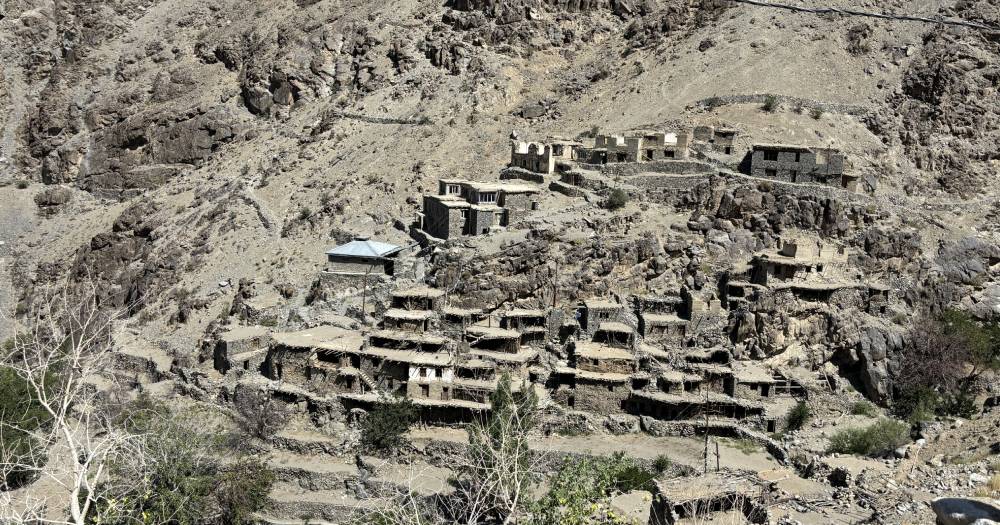
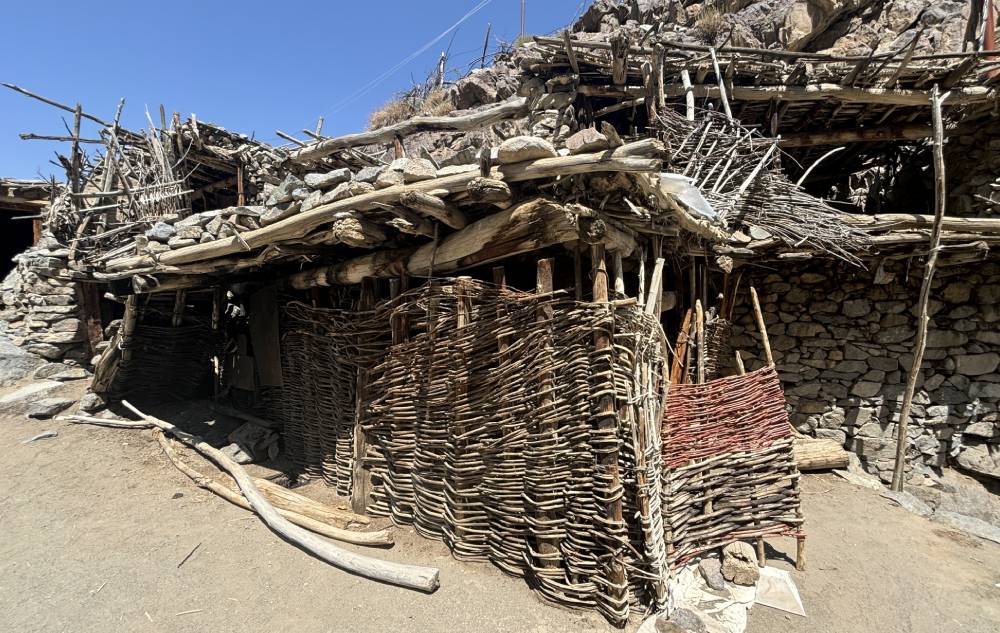
Built at an elevation of 2,700 metres, the architecture of Hundarman reflects its challenging winters. Interconnected houses were designed to conserve heat and minimise exposure to the elements. In earlier times, roofs, doors, and windows were deliberately small to retain warmth. On each level, rooftop rooms feature a single windward wall made of intricately knitted willow branches, allowing ventilation without sacrificing insulation.
Museum of Memories
A signpost further down reads: “Hundarman, an abandoned Purgi settlement in Kargil located at the LoC (Line of Control), came under the territory of India post-1971 Indo-Pak conflict. The rediscovery of the settlement in the form of artefacts and memories has evolved into a living museum. The experience is designed to give visitors a unique perspective into the history and culture of an otherwise unknown settlement of Kargil.”
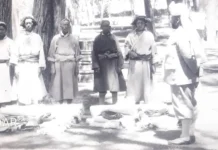
The descent to Old Hundarman reveals a gravelly trail leading to the Hunderman Museum of Memories. Established in 2015, the museum stands as a testament to the village’s layered history and cultural richness. Its creation was driven by the dedication of two individuals: Ilyas Ansari, a local villager, and Aijaz Hussain Munshi, a renowned Kargil-based researcher.
Ilyas transformed his ancestral homes in Old Hundarman into a museum, preserving the tangible and intangible heritage of the village. The institution chronicles the rich yet sorrowful history of Hundarman, offering visitors an intimate glimpse into its past while reviving its forgotten stories.
Custodian of Memories
Mohammad Bakar, 45, serves as the custodian and guide of the Hunderman Museum of Memories. For a modest fee, he escorts visitors through the preserved ancestral homes that now house the museum, transforming the exhibits into a living narrative. With each stop, he breathes life into the past, recounting the village’s history and sharing tales of its people.
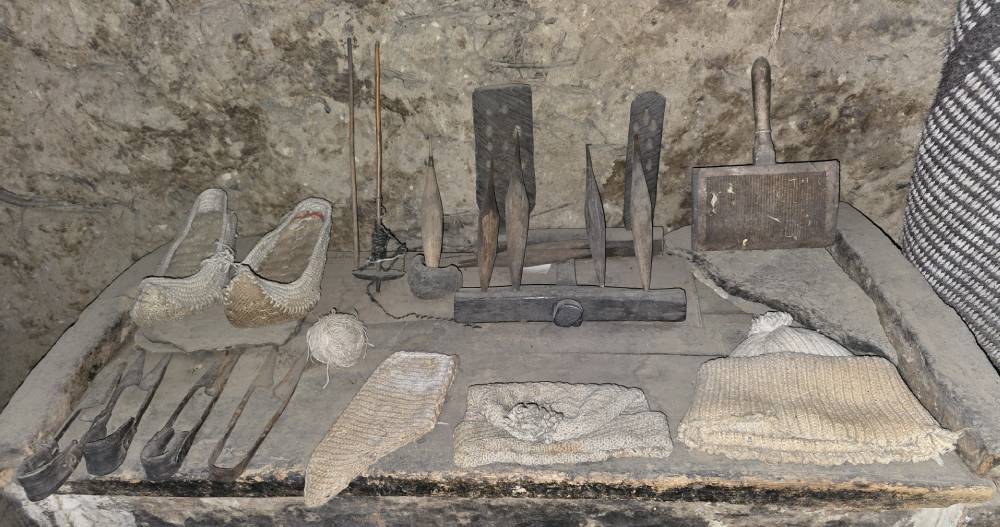
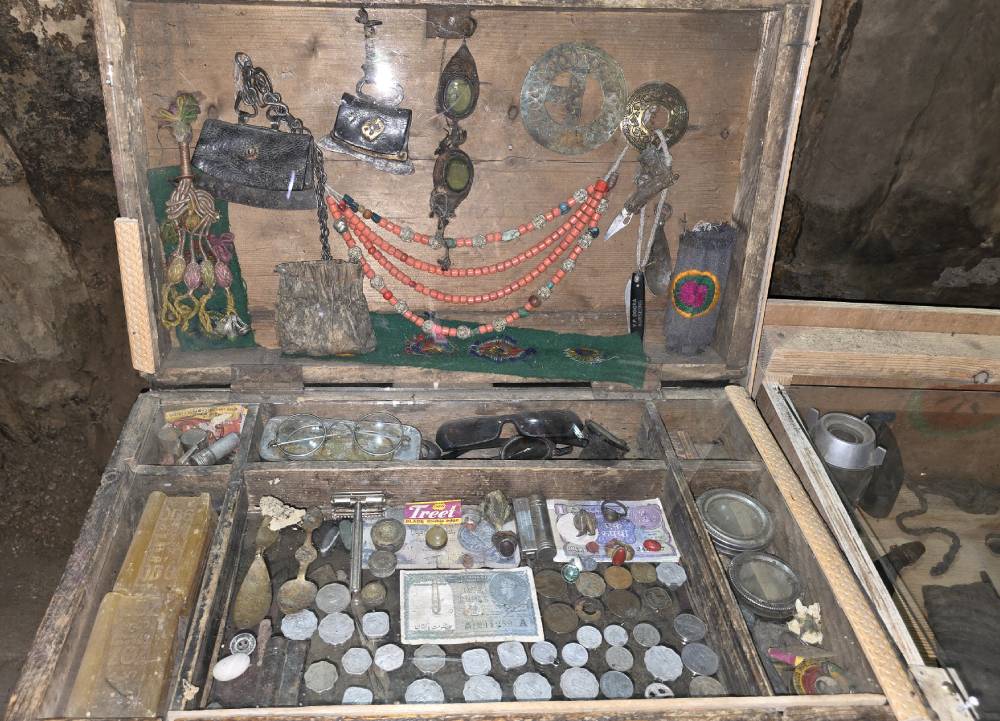
The museum itself, built on the foundations of the village’s ancestral homes, offers an evocative collection of artefacts that vividly depict its rich and layered past. Among the exhibits are relics from the British Raj era: vintage perfume bottles, biscuit tins, utensils, garments, tools, and shoe polish containers. These seemingly ordinary items serve as poignant reminders of a time long gone.
Amid the collection are war relics, including shrapnel and bullets from the 1971 and 1999 conflicts, which stand as stark evidence of the hardships endured by the residents. The museum also preserves ID cards belonging to Hundarman’s ancestors, delicate reminders of personal identity amidst shifting borders and political upheaval.
Letters of Longing
Bakar often pauses by a display of old letters, pointing to them as fragments of human experience shaped by displacement and endurance. “These objects are not just artefacts but fragments of human lives, revealing a history shaped by displacement, endurance, and the unbreakable threads of connection,” he explained, his voice imbued with reverence.
The administration has initiated a helicopter service to Gurez in Kashmir following the closure of the Gurez Road, with a trial run successfully conducted.
One letter, written by Ghulam Hussain to his brother from Skardu, poignantly reveals the struggles of a refugee life. In the letter, Hussain expressed his despair, writing:
“I am a servant of God, living alone in Skardu. There has been no letter from you, no communication. Why? When I asked for money, what wrong did I do? Do I have any brother in Skardu from whom I could ask for money? I cannot even work as a labourer anymore. The people in Madina Colony evicted me. Now, I live in a rented room for 300 rupees a month. If you think I did something wrong, forgive me; there is no other reason. Everything is fine here. I do not have your phone number, otherwise, I would have called. I am living alone. We will meet, if not today, then tomorrow.”
Another letter, written in 1955 by a brother to his sister, captures a blend of familial affection and mundane concerns. It reads:
“I hope, by the grace of Allah, that you are happy and healthy. Everything is fine here, thanks to Allah. I am very happy. Are you happy too? Everything is fine at home. There is no trouble. I had sent a gift for Muhammad Abdullah. Did he receive it? Please write to me about it. I wrote you many letters, but I did not receive any reply. If I made any mistake, forgive me. Please pass my regards to Asgar Khatayi’s family, Akbar Sahib, and to Brother Muhammad Ali, Abdul Raheem, and Ibrahim Haider’s family. I will wait for your reply.”
Bound by History
Hundarman, split into two sections—Hunderman Mal (the lower village) and Hunderman Brok (the mountain village)—carries the weight of a complex history shaped by shifting borders and political upheaval. The village’s struggles are deeply rooted in the chaotic aftermath of the 1947 partition of India, a moment when hastily drawn borders paid little heed to the lives they disrupted. Hundarman found itself precariously positioned along the newly established LoC, leaving its residents grappling with an identity fractured by geopolitics.
Over the decades, the villagers have endured the turmoil of four wars: in 1947-48, 1965, 1971, and 1999. Each conflict has left an indelible mark, not only on their lives but also on their relationship with their homeland.
The Vanishing Waters
More than 400 years ago, approximately 30 families from Kargil’s Poen and Karkechu villages migrated to Hundarman, drawn by its fertile soil, plentiful water, and strategic location. The village thrived, its fields lush and green, sustained by a vital water canal. But as time passed, the landscape changed. Conflict first prompted an exodus, and later, dwindling water resources led to further abandonment. The once-flourishing settlement was left behind, with only faint traces of the water canal serving as a reminder of its past vitality.
The residents eventually relocated to Upper Hunderman, a higher settlement in the valley, to start afresh. However, even this refuge is now facing the same pressing issue of water scarcity, apparently the impact of climate change.
“The village was once very fertile,” said Muhammad Mussa, a resident. “There was greenery all around, but now it feels like one has entered a desert. Reptiles, typically found in arid regions, have become a common sight here.”
Fida Hussain, another resident, is concerned. “Water is essential for life,” he remarked. “While we were once driven away by war, it is now the scarcity of water that has turned us into nomads, constantly searching for a place to call home.”