Amidst fierce political and religious opposition, the Waqf Board’s radical overhaul and the controversial Waqf (Amendment) Bill, 2025, ignite a nationwide debate over minority rights, state control, and the future of India’s most extensive religious endowment system, Ibtisam Fayaz Khan reports
“This bill is an attempt to target one religion and will not be acceptable to the people of Jammu and Kashmir, Chief Minister Omar Abdullah stated, voicing his opposition to the Waqf (Amendment) Bill, 2025, passed by the Lok Sabha on April 3, 2025. The legislation triggered widespread backlash in Jammu and Kashmir, with leaders across the political spectrum accusing it of infringing on religious freedoms guaranteed under Article 25 of the Indian Constitution.
Following a 12-hour debate, the Lok Sabha passed the bill with 288 votes in favour and 232 against. The Rajya Sabha later cleared it with 128 ayes and 98 nays. With both Houses’ approval, the bill awaits presidential assent to become law.
The government maintained the bill aimed to improve transparency and efficiency in Waqf property management. However, critics warned it gave the state excessive control and eroded the autonomy of Muslim religious institutions. India, with over 872,000 registered Waqf assets spanning 405,000 hectares, hosts the world’s largest Waqf portfolio, valued at over US$ 14.22 billion. These include mosques, shrines, graveyards, schools, and commercial assets.
The amendments sparked intense reactions in Kashmir, where Waqf properties are considered part of a deeply rooted religious heritage. The Waqf Board is said to be the country’s third-largest landowner, trailing only the Ministry of Defence and the Railways, and holding more land than several sovereign nations.
Reforms Under Scrutiny
The bill amended the Waqf Act of 1995, proposing the inclusion of non-Muslim members in Waqf boards, ostensibly to broaden representation. It also suggested renaming the legislation as the Unified Waqf Management, Empowerment, Efficiency, and Development Act (UMEED), 1995.
Provisions allowed Waqf properties to be leased for commercial projects like malls, schools, and hospitals, with extended lease terms and new revenue-sharing models. While the government claimed this would enhance funding for community welfare, critics warned it risked commercialising endowments originally meant for religious and charitable purposes.
One major change shifted the authority to declare Waqf ownership from State Waqf Boards to district collectors. In disputed cases, if the collector ruled in favour of the government, the land would be officially recorded as state property.
The bill also abolished the Waqf by Use doctrine, which had recognised sites as Waqf properties based on long-standing public use, regardless of documentation. Critics feared this could lead to the loss of status for centuries-old religious sites lacking formal records.
Other provisions included mandatory digitisation and geo-tagging of Waqf assets, a revamped tribunal structure with a two-member panel, and a new appeals process to the High Court within ninety days.
While the government insisted the changes would modernise Waqf management and curb irregularities, opponents said the inclusion of non-Muslim members and heightened state control infringed on Muslim autonomy and risked marginalising the community.
Muted Voices, Mounting Dissent
Chief Minister Abdullah remarked that every religion has a charitable wing. “When we make charitable donations, we do so through the Waqf board. Targeting this institution is regrettable… it seems only our institution of charity is being targeted. Our members will oppose the Bill in Parliament.”
The National Conference has two MPs in the Lok Sabha—Aga Syed Ruhullah Mehdi (Srinagar-Budgam) and Mian Altaf Larvi (Anantnag-Rajouri). During the debate, Mehdi was denied a chance to speak despite his party’s opposition, with only a five-minute slot granted to Larvi.
According to aides, Mehdi had formally requested time to present his objections, but the Speaker did not yield. His assistant said Mehdi viewed the bill as a direct religious intrusion and was disturbed that no Muslim MP had been allowed to speak. He further noted the Joint Parliamentary Committee (JPC) examining the bill lacked any Muslim representation. Though some ulemas were consulted, their concerns were reportedly disregarded.
Legal and Clerical Opposition
Abdul Rahim Rather, Speaker of the Jammu and Kashmir Assembly, called the bill unconstitutional, arguing it violated Article 25. He warned that tampering with religious rights could set a dangerous precedent. It is not good to interfere in anybody’s religion or personal affairs, he said. Ruhullah Mehdi argued that the Bill reaffirmed the BJP’s anti-Muslim, anti-minority intent and showed disregard for the community’s concerns.
Mirwaiz Umar Farooq, Kashmir’s chief cleric, expressed dismay over the bill’s passage. “Today, crores of Muslims in India, like mute spectators, are haplessly watching their rights and institutions being blatantly undermined”, he posted on X.
In January, the Mirwaiz had met JPC chairman Jagdambika Pal in Delhi, accompanied by leading scholars from Jammu and Kashmir. The JPC reportedly received 9.7 million petitions and memoranda, with 284 delegations—including Waqf boards from 25 states and Union Territories—submitting views before the final report.
At an emergency meeting at Fairview, Gupkar Road, the Jammu and Kashmir alliance led by Chief Minister Omar Abdullah passed two resolutions, one firmly opposing the Waqf (Amendment) Bill, 2025. The party argued the Bill undermined regional autonomy by centralising control of Waqf properties, which they insisted must remain under local oversight.
Religious Coalition and Political Parallels
The Mutahida Majlis-e-Ulema (MMU), led by the Mirwaiz and comprising groups such as Anjuman Auqaf Jamia Masjid, Darul Uloom Rahimiyah Bandipora, and Jamiat Ahle Hadith, strongly opposed the bill. The community is well aware of the larger intent behind this legislation, the MMU said in a statement. A meeting to determine their collective response was scheduled for 7 April.
PDP leader Waheed Parra compared the Waqf Bill to the Jammu and Kashmir Reorganisation Act of 2019. The Waqf Bill mirrors the J&K Reorganisation Bill, prioritising control over community rights, he posted on X. His remarks reflected broader concerns among political leaders about shrinking local and religious autonomy.

Mohmad Haneefa, MP from Ladakh, criticised the inclusion of non-Muslims in the Waqf administration. This will directly interfere with the religious rights of the Muslim community and violate Article 26, he said. Haneefa also accused the government of attempting to dismantle the principle of Waqf by asserting control over assets traditionally preserved by the Muslim community.
Backing the Bill
While the Waqf (Amendment) Bill sparked fierce opposition from political and religious leaders in Jammu and Kashmir, it received strong support from leaders aligned with the ruling party and certain civil society groups.
Janata Dal United (JDU) President G.M. Shaheen firmly backed the amendment, accusing the Opposition of either appeasing vote banks or fearing the loss of land acquired through Waqf. He maintained that the government aimed to introduce transparency in the Waqf system, ultimately benefiting Muslims. He further argued that while the Opposition had long failed Muslims, the NDA government sought fair governance.
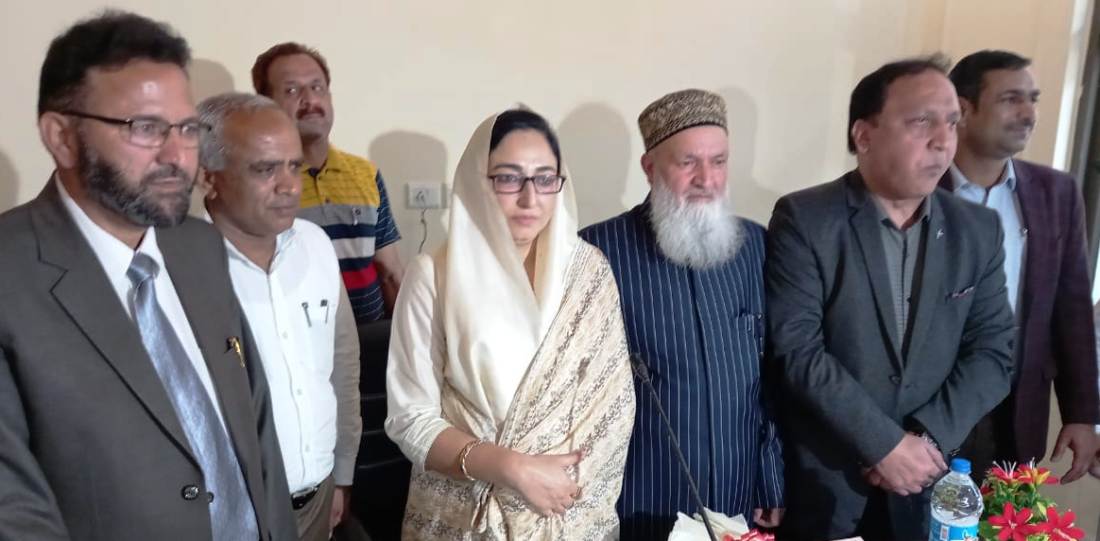
Dr Darakhshan Andrabi, BJP leader and Chairperson of the Jammu and Kashmir Waqf Board, echoed this support. She said the amendment would modernise Waqf property management, ensure equitable representation—including for Muslim women and non-Muslims—and reduce litigation. She dismissed concerns about adverse effects, emphasising that the reforms would enhance accountability, clarify property dedication rules, and improve transparency across Waqf bodies.
The Kashmiri Pandit Sangarash Samiti (KPSS), while opposing state interference in religious matters, directed criticism at local political parties and civil society. The group accused regional leaders of ignoring the desecration and illegal occupation of Pandit religious sites over the past three decades. According to KPSS, those who remained silent on these injustices have no moral standing to comment on the Waqf Bill.
NDA Government’s Stand
Union Minority Affairs Minister Kiren Rijiju, who introduced the Bill in Parliament, described it as one of the country’s most comprehensive legislative reviews. He noted that the Joint Parliamentary Committee held extensive consultations before finalising the Bill, which aimed to overhaul Waqf property management through technology and transparency.
Home Minister Amit Shah defended the UMEED Bill, accusing the Opposition of misinformation for political gain. He clarified that Waqf denotes property donated for religious charity in Allah’s name and must be personally owned. Shah also criticised the 2013 amendment for politically motivated restrictions. He stated that Waqf Boards controlled 18 lakh acres from 1913 to 2013, and another 21 lakh acres were added afterwards, bringing the total to 39 lakh acres by 2025. The Bill proposed audits by retired CAG officers and checks on Waqf Board and Council orders.
Historical Context
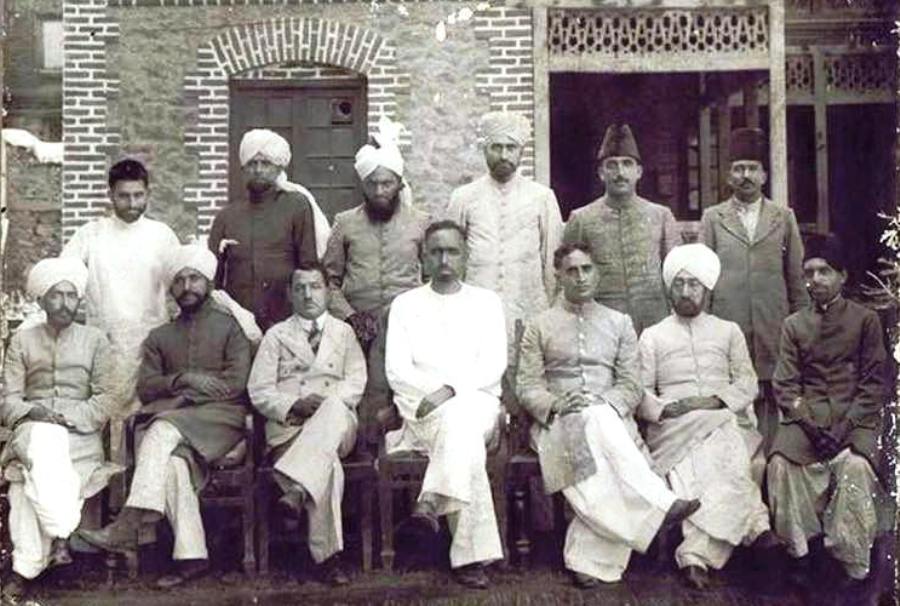
Whether or not the changes in the overall law will impact the Waqf operations in Jammu and Kashmir, the mismanagement of the Waqf properties in Jammu and Kashmir was always an issue. The Jammu and Kashmir Muslim Waqf Board originated in the 1930s when the Muslim Conference, under Sheikh Mohammad Abdullah, established the Muslim Auqaf Trust amid political awakening and anti-Dogra sentiment. It aimed to harness income from shrines for the socio-economic uplift of Kashmiri Muslims, blending spiritual goals with political mobilisation.
For decades, the Trust remained under National Conference control. Under Sheikh Abdullah’s leadership, it gained structure but lacked transparency, merging religious and political authority. His dominant role left little room for institutional accountability, leading to unchecked practices.
After his arrest in 1953, Bakshi Ghulam Mohammad assumed control without legal basis, setting a precedent for the political takeover of the Trust. The absence of appointment mechanisms and opaque finances led to widespread fund misuse and declining public trust.
The 1980s and 1990s brought a deeper decline. Transparency vanished, and political interference intensified. In one case, a 1947 orchard in Asham, Sonawari, was seized by militants and counter-insurgents during the insurgency and only reclaimed after a key figure’s death, highlighting the vulnerability of religious assets in conflict.
To address systemic failure, the government, under Mufti Mohammad Sayeed’s PDP-led administration, restructured the Trust into the Jammu and Kashmir Muslim Waqf Board in 2003. The Board came under government purview, with its first CEO ranked at the Chief Secretary level, holding Minister of State status.
Despite reforms, inefficiency and mismanagement persisted. From 2000 to 2009, income grew from Rs 7.68 crore to Rs 11.21 crore but inflated staff and operational inefficiencies offset gains. By 2010, employee strength had surged to 1,093—far beyond the sanctioned 700. The salary bill rose from Rs 2.37 crore to over Rs 6 crore, forcing unauthorised withdrawals from fixed deposits.
Property mismanagement also plagued the Board. With around 1,400 shops, many rented at outdated rates—some as low as Rs 200—its prime commercial assets, including Suleman Complex, Taj Hotel (Lal Chowk), and others, yielded minimal returns. In 2010, shop rents totalled only Rs 67 lakh annually—less than half the income of the Makhdoom Sahib shrine alone, which generated Rs 1.25 crore. This discrepancy caused an estimated loss of Rs 4–5 crore annually, excluding unpaid rents and encroachments.
A political tug-of-war between the National Conference and the People’s Democratic Party reduced the Board to a site of factional power play, sidelining public welfare. Post 2019, as political interference evaporated, the Board is reportedly making an income of Rs 40 crore, half of which is going to the salaries alone.