Despite a landslide mandate, Omar Abdullah leads a government stripped of autonomy, with key powers resting in the Raj Bhawan, revealing the deep imbalance in Jammu and Kashmir’s post-statehood governance, writes Masood Hussain
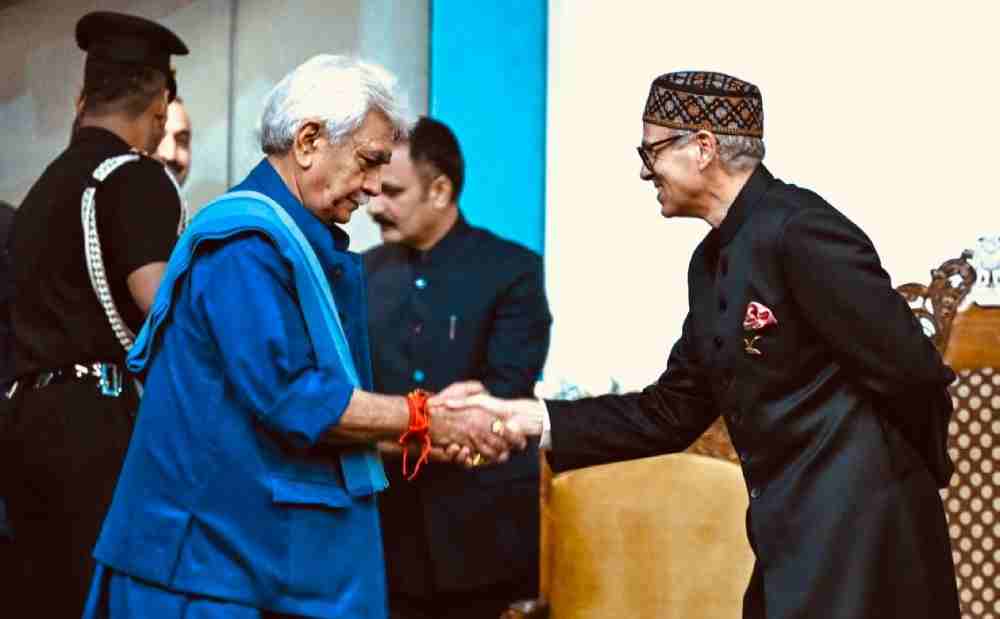
Omar Abdullah’s opposition began long before he took the oath of office as Chief Minister of the Union Territory of Jammu and Kashmir on October 16, 2024. Initially a reluctant contender for the post, he eventually stepped into the fray, and the familiar taunt followed him: Na Na Karkay Han Kar Di!
After a year in office, Omar admits he has been one of the most powerless Chief Ministers Jammu and Kashmir has ever seen. His opponents, sensing weakness, now wish to consume him politically for having “failed.” Within and beyond the Jammu and Kashmir National Conference (JKNC), politicians recount their own tales, anecdotes of afsarshahi, mis-governance, humiliation, and disempowerment. Even bureaucrats, some for the first time in their careers, whisper stories of how governance has changed under this new order.
Own Admissions
Yet, of all those speaking, it is the Chief Minister himself who, bit by bit, has offered the most revealing insights into how governance now functions, or fails to. Having led the erstwhile state through the 2010 unrest and the devastating 2014 floods, before losing power to the BJPDP alliance in 2015, Omar knows well how powerful a Jammu and Kashmir Chief Minister once was. Though he avoids casting himself as a victim, he remains, in truth, the principal casualty of the new order.
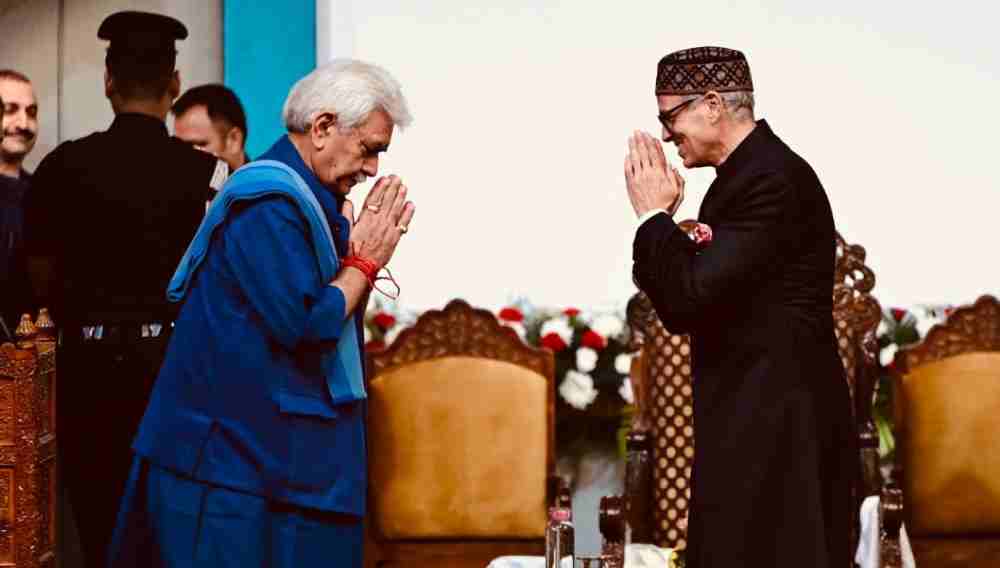
In practice, Omar Abdullah is part of the administration headed by Lieutenant Governor Manoj Sinha. There is, in fact, no cabinet in the conventional sense, despite what some media reports suggest. Omar and his ministers function as a council mandated only to advise the Lieutenant Governor, with all their decisions requiring approval from the Raj Bhawan. Many of the “decisions” taken by Omar’s “cabinet” as early as March 2025, he recently admitted, are still awaiting formal sanction.

Soon after assuming office, when debates over the dual power structure began dominating newspaper front pages, Omar’s aides claimed to have formally written to Raj Bhawan seeking clarity on the division of powers, rights and responsibilities. At one point, his team insisted that it was Omar’s ‘cabinet’ that would take the final call on the matter. Now, however, the Chief Minister himself has revealed that the note about business rules has already been sent to Raj Bhawan, and that a response is still awaited.
The absence of clearly defined business rules within Jammu and Kashmir’s hybrid governance structure, where elected and unelected systems coexist, has created a complex administrative imbalance in the state. Certain domains are already beyond the Chief Minister’s authority. All judicial and legal matters are now directly overseen by the Raj Bhawan.
Soon after Omar Abdullah assumed office, the then Advocate General resigned. Omar met him and persuaded him to reconsider, and he agreed. However, the Advocate General did not return to work. Omar has since disclosed that he was instructed not to resume his duties. It was communicated verbally. This episode underscores a larger structural deficit repeatedly flagged by Jammu and Kashmir’s highest courts, but yet to be addressed either by the Raj Bhawan or the Chief Minister’s Office. He recently said he discussed it with the powers-that-be in Delhi and they felt convinced. Still, the issue is hanging fire.
Law and order, envisaging control over the Jammu and Kashmir Police and the wider security grid, is already under the Raj Bhawan’s command. Anticipating the formation of a new government, the Home Ministry shifted the financial responsibility for the roughly 1.5 lakh-strong police force to its own budget. This also includes the powerful Anti-Corruption Bureau (ACB), which is currently investigating ten politicians, one IAS officer, and eighty-nine Jammu and Kashmir Administrative Service officers. Control over the security apparatus remains the cornerstone of governance in Jammu and Kashmir, deeply influencing how public order and local tensions are managed on the ground.
Denied Entry
Omar recently remarked that there are several areas of governance where the elected representatives should have the primary right to decide, yet they continue to be denied that authority. Citing the example of the Jammu and Kashmir State Power Development Corporation (JKSPDC), a major enterprise making a profit of around Rs 500 crore annually, its managerial control remains with bureaucrats unwilling to relinquish it. Power generation, a crucial sector in Jammu and Kashmir, has seen sweeping interventions over the past five years. Allowing an elected government to take charge, insiders in Jammu and Kashmir’s political circles say, could raise uncomfortable questions about post-2019 decision-making.
Recently, Omar disclosed that his government has not yet been given decision-making authority over the Jammu and Kashmir Academy of Art, Culture and Languages, a key institution entrusted with promoting the region’s linguistic and cultural heritage. The Academy, with its long and distinguished history, has traditionally played a vital role in preserving Jammu and Kashmir’s diverse cultural identity.
In the post-2019 administrative setup, English, whether British, American, or an informal Hinglish, has effectively become the lingua franca of governance in Jammu and Kashmir. Meanwhile, Urdu, once the sole official language, has been stripped of that status. The region now recognises a basket of official languages, but how these will be meaningfully promoted and sustained remains an open question. This is a no-go area for Omar, by his own admissions. Omar had planned to draft Jammu and Kashmir’s Culture Policy in the first 100 days, but the document is still awaited.
A similar situation prevails at the Sher-e-Kashmir Institute of Medical Sciences (SKIMS), the Valley’s premier healthcare institution and the final destination for most serious medical cases in the region. Traditionally, the director of SKIMS functioned as the ex officio Secretary to the government to ensure swift decision-making without bureaucratic hurdles. After 2019, however, the arrangement was altered, and the institute was brought under the Health Department, leading to a visible decline in its functioning, a challenge the current director, Dr Ashraf Ganai, has been striving to address. Despite Omar’s assurance of his government’s support for the institution, he has himself acknowledged that SKIMS still lies beyond his administrative authority.
Portraits of Marginalisation
This power imbalance became most visible when the Home Minister chaired a series of security review meetings over the past year, none of which were attended by the Chief Minister. The absence itself spoke volumes about the divided command in Jammu and Kashmir. It was perhaps for this reason that Omar Abdullah publicly credited the security grid for the decline in violent incidents during the past year, while at the same time holding it accountable for the Pahalgam massacre of April 22, in which twenty-six civilians were killed.
Administrative control over the IAS cadre in Jammu and Kashmir, too, rests with the Raj Bhawan rather than the Chief Minister’s Office. These are the very officers through whom the Chief Minister is expected to run the government, yet he lacks authority over their appointments or postings. They report to the authority that deploys them and signs their pay cheques. Omar has repeatedly said that he now finds himself pleading with officers to fulfil his policy commitments. He has also pointed out that several posts traditionally held by JKAS officers have been taken over by IAS officers, leaving his government with a shrinking operational space.
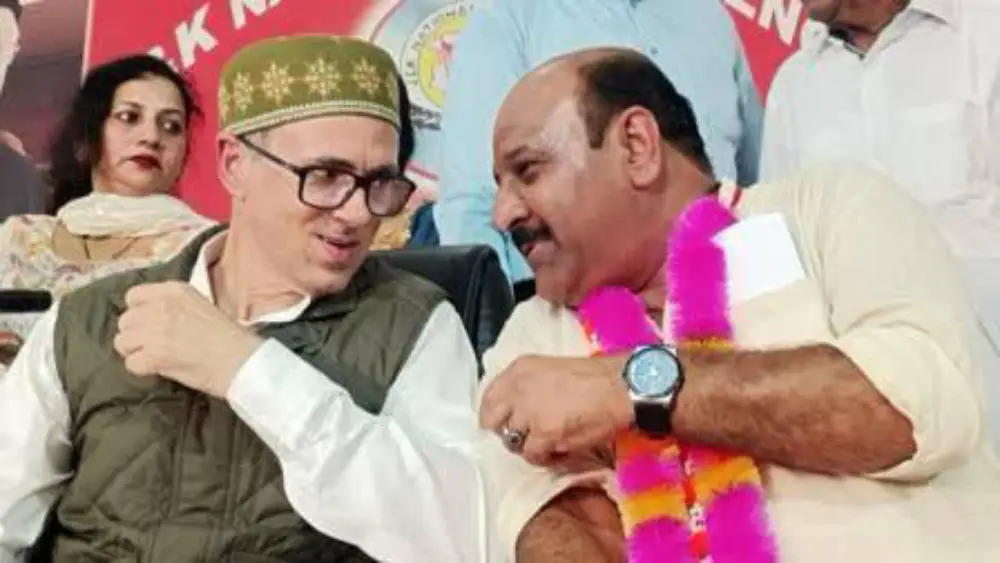
Even though the Assembly exists, its legislative powers are limited. It cannot pass money bills, pieces of legislation that carry financial implications, without prior approval from the Raj Bhawan. This restriction also covers several welfare promises made in the ruling JKNC’s 2024 election manifesto. The party, aware of these constraints, has avoided pushing for their implementation, at least for now, with four years of its term remaining.
Protocol-related controversies dominated social media throughout the past year, underlining the uneasy balance within Jammu and Kashmir’s power structure. The Chief Minister was denied permission to visit the Martyrs’ Cemetery on July 13 and had to go there a day later, in what turned into a photographer’s nightmare. The Deputy Chief Minister, meanwhile, has faced restrictions of his own, confined largely to his residence in Jammu at the peak of a crisis in the region and, more recently, subjected to an abrupt change in his security detail.
Incidents of open defiance within the bureaucracy have further exposed the fault lines in governance. Anecdotes of officers raising their voices against Omar Abdullah’s ministers, even claiming in official statements to the Department of Information and Public Relations that they occupy a higher administrative pedestal, became the gossip of the civil secretariat.
The erosion of protocol was also evident when photographs surfaced showing Omar part of the following crowd during visits by senior ministers from Delhi to review flood damage in Jammu. In another striking instance, official videos and statements showed BJP lawmaker and Leader of the Opposition, Sunil Sharma, briefing central government officers during meetings, a role that has traditionally belonged to the Chief Minister.
Even Omar’s adviser, Nasir Aslam, has yet to receive his salary. His file, which outlines his terms, conditions, and remuneration package, continues to be shuffled between various administrative desks in the Civil Secretariat. Omar recently acknowledged this publicly, praising his close friend for continuing to contribute despite these unresolved issues.
Nothing New?
A year after the elections, the politicians from different political parties, shouting from the rooftops, were aware that this was all coming. Barring a few things in which verbal orders were passed, almost everything that is happening was known in anticipation.
In the amendments to the Reorganisation Act and a series of orders that were issued around, this was already clear that the government in Jammu and Kashmir would continue to be headed by the LG and the state and status of Chief Minister was a fait accompli. The only difference is that it was Omar whom the people, mostly in Kashmir, chose to emerge for a challenge and possibly for a political sacrifice.
When newspapers began reporting a series of pre-poll orders being issued in Srinagar and Delhi, people already had a fair sense of what was coming. They understood the pros and cons of the system they were about to elect. Turning out in large numbers, they used the electoral process both to register their protest against the post-2019 developments and to create a buffer between the two layers of power, the bureaucracy and the Raj Bhawan. They might have expected much, but the past year’s experience might not be appealing.
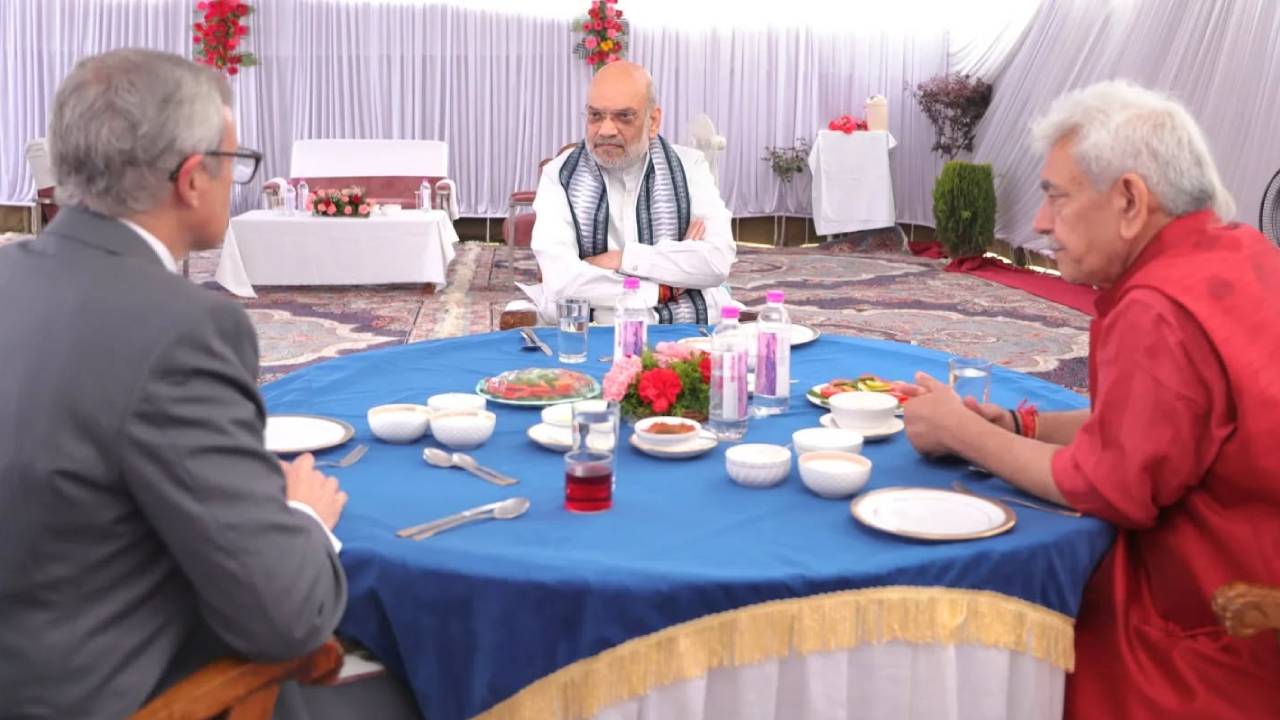
Few Accomplishments
There have been a few notable interventions over the past year. Omar began his tenure on a strong note. Within days of taking office, he set a 100-day target for his government. Soon after, he engaged actively with the media in Srinagar and Jammu and held detailed interactions with members of civil society.
During one such meeting, private school representatives highlighted that the post-2019 change in Jammu and Kashmir’s academic calendar defied logic, local needs, geography, and weather patterns. Convinced by their reasoning, the government convened within hours and decided to restore the academic calendar to its pre-2019 schedule. This move helped recover some of the class days students had been losing.
Questions were raised over some of Omar’s decisions, but his government undeniably made life easier for women commuters, at least within the transport fleet run by the Jammu and Kashmir government, including the SRTC and Red Bus network. Although the move has affected private transporters, who were expected to offer similar facilities, it marked a meaningful intervention. So far, the government estimates that the initiative has cost the public exchequer around Rs 36 crore.
Party insiders credit Omar with raising the marriage assistance for girls from economically weaker sections to Rs 70,000. A more significant reform, however, was the waiver of stamp duty on land transactions among blood relatives. According to officials in the Registration Department, this measure has led to a surge in property transfers within families, a trend rarely seen before. While beneficiaries are exempted from stamp duty, they still pay the registration fee, bringing additional revenue to the public treasury.
Within a month in government, Omar initiated the Draft Procurement Preference Policy for Micro and Small Enterprises (MSEs). Aimed at boosting local entrepreneurship and economic growth, the policy proposed to channel 30 per cent of government procurement towards registered local MSEs, giving them better access to public contracts and creating a more inclusive business environment. Key provisions include a 25 per cent price preference for registered suppliers, reserved procurement quotas, and waivers on Earnest Money Deposits and application fees. The policy also reserves a share of procurement for women-owned and SC/ST-owned enterprises to promote diversity. How it has performed on the ground remains to be seen.

Statehood Status
Article 370 aside, Jammu and Kashmir faces pressing challenges, the foremost being the restoration of statehood. Omar and his colleagues have consistently maintained that without a return to the pre-2019 status, governance in the region will continue to lack legitimacy. Apart from a cabinet resolution and repeated public assertions that statehood is imminent, there has been little visible progress. Political insiders believe that despite the National Conference’s sweeping mandate, the demand for statehood must not be confined to newspaper headlines. They advocate a united, sustained campaign involving dialogue, lobbying, and all peaceful means of persuasion to achieve the goal.
Sceptics in both Srinagar and Jammu, however, argue that the delay in restoring statehood is linked to Jammu’s perceived under-representation in the government. Jammu is the BJP’s main vote bank in the erstwhile state, which historically has been the Parivaar’s post-partition Nagpur.
Omar’s cabinet includes only two ministers from the Jammu region, Surinder Choudhary, now Deputy Chief Minister, who defected from the BJP to the National Conference just before the elections, and Satish Sharma, a former Congress leader who contested as an independent, won, and later joined Omar’s camp.
Whether improving regional representation requires rapprochement with the BJP, which dominates Jammu with 28 seats in the 90-member now-unicameral Assembly, remains a critical question. While some view this as a practical route, Omar has repeatedly ruled out the possibility. Party insiders recall how the PDP-BJP alliance of 2015 altered Jammu and Kashmir’s political course. Despite facing criticism for his stance, Omar remains publicly firm in his refusal to consider any such partnership, even if it might appear to offer a temporary solution.
The political grapevine suggests that sections within the Parivaar are exploring the idea of granting statehood to Jammu while retaining Kashmir as a Union Territory. Though unconfirmed, the speculation has added a new twist to the statehood debate, now pending before the Supreme Court, which has given the Centre a month to explain why the promised restoration has yet to take place.
The Rioting Reservations
Another major challenge that surfaced even before Omar took the oath of office was the issue of reservation. The BJP government had included the Pahari-speaking population (PSP) in the Scheduled Tribes (ST) category, granting them 10 per cent reservation. This reshaped the overall reservation structure in such a way that residents of the Kashmir plains became a minority within the system, and open merit began to lose its significance. Currently, nearly 70 per cent of government jobs, educational admissions, and promotions in Jammu and Kashmir fall under various reserved categories, a situation many fear is undermining meritocracy and fostering mediocrity.
A few months after assuming power, Omar, reportedly under pressure from both within and outside his party, set up a ministerial subcommittee with a fixed deadline to review the reservation structure. The panel submitted its report in June 2025, but its fate remains unclear. There is no official word on where the report stands, whether the Law Department has completed its examination, or if the recommendations will ever be implemented. The matter has already reached the High Court, where a detailed petition outlines the evolution of the crisis.
Omar’s political opponents argue that his party is unlikely to revise the current reservation framework, given that eight Assembly constituencies and one Lok Sabha seat are linked to ST categories. The National Conference has maintained silence on these claims, though insiders suggest that the government may address the issue in the coming months. But when everybody is asking across Jammu and Kashmir.

Meanwhile, frustration among the youth is palpable. With nearly 70 per cent of opportunities reserved, competing in the remaining 30 per cent open merit quota has become increasingly difficult. Many young people are either migrating outside Jammu and Kashmir in search of private-sector jobs or turning to small businesses and manual work for survival. Addressing unemployment and restoring faith in fair opportunity has thus become one of the Omar government’s biggest challenges.
In his first-year target, Omar had projected that the Jammu and Kashmir Public Service Commission (JKPSC) would appoint 1,120 officers, the Service Selection Board (SSB) would make 5,853 selections, and 75 people would be given jobs on compassionate grounds. How much of this plan has materialised remains to be seen.
Deliverable Goals
Kashmiris have a long tradition of voicing their opinions, often overlooking ground realities. Political parties frequently assert that Omar could have taken decisive action despite operating under difficult political constraints. Critics say he tends to set ambitious targets and then lose focus. For instance, he proposed a signature campaign to secure public consent across Jammu and Kashmir for the statehood demand within 80 days, yet the campaign has not even begun.

In the aftermath of the Pahalgam massacre, the Jammu and Kashmir government shut down 49 of the 89 tourist destinations within 24 hours, citing security concerns. The move was unprecedented: even during the peak of militancy, when tourists rarely visited, local residents kept these sites active. The closures came at a time when both the Centre and the Jammu and Kashmir government were promoting the revival of the tourism sector as a symbol of peace. After sustained lobbying by trade bodies, security authorities gradually allowed re-entry to most sites, though around 12 remain closed.
Beyond public statements, the trade argues that the elected government should have persuaded the Raj Bhawan to avoid such disruptions. Omar had also promised to roll out Tourist Trade Rules within 100 days, a commitment that remains unfulfilled.
Writing on Omar Abdullah’s debut budget, Jammu and Kashmir’s last finance minister of the state claimed the Chief Minister lost an opportunity in inching towards the statehood status. One of the key distinctions between a State and a Union Territory (UT) lies in Article 270 of the Constitution, which entitles states to a share of central taxes, something UTs do not receive, he wrote.
While the Finance Commission does not treat UTs as states for tax sharing or grants, the Jammu and Kashmir Reorganisation Act of 2019 contains a provision that could have altered this arrangement. Section 83(1) of the Act mandates that the President refer the Union Territory of Jammu and Kashmir to the Fifteenth Finance Commission to be treated as a state for the purpose of sharing net tax proceeds.
By invoking this clause, the elected government could have secured parity with states in fiscal relations, replacing the “Transfer of Assistance to UT under MHA Demand” with a share in central taxes, a seemingly minor fiscal detail but a major political statement. This move could have strengthened Jammu and Kashmir’s long-term case for statehood. Supporting arguments could also have been drawn from the GST framework, which treats UTs with legislatures as states for taxation purposes.
Even if the Union had resisted, the matter could have been pursued judicially, given past precedents where courts applied the broader constitutional definition of a state. In missing this chance, whether through oversight or constraint, he wrote that the government has produced a budget devoid of political assertion, one that reads more like the Union Finance Minister’s eighth Jammu and Kashmir budget than the first of its own Finance Minister. There was a lot of debate within the Jammu and Kashmir bureaucracy over this, but the government skipped taking this route.
Jammu and Kashmir public finances are more a collection of centrally sponsored schemes than the budgets they used to have earlier. Now it is facing a shortfall in the ongoing fiscal year as GST slabs have shifted. Managing the stated commitments may push Omar to borrow more in the coming days.
More recently, the Jammu–Srinagar National Highway (NH-44) remained closed for over three weeks, coinciding with the peak of the apple harvest, the backbone of Kashmir’s economy. As thousands of apple-laden trucks stood stranded, their produce began to rot, and desperate farmers pleaded for help that never came. Omar visited the affected stretches, remarking that if the road were under his control, he would have reopened it immediately. His visit reflected both concern and a sense of helplessness. The apple sector is now reporting massive losses amounting to several thousand crore rupees.

A Gentleman
A common critique of Omar these days is that he is a gentleman, a pacifist, a leader unwilling to fight. But even if he were to adopt the mantle of a firebrand, would it truly change the ground reality? If sheer militancy of action guaranteed results, Ladakh, the arid desert region that welcomed the abrogation of Article 370, would already have achieved statehood. Its leaders, after all, are still struggling to secure the release of the region’s most prominent Ladakhi figure.
As he completes the first of his five years in office, Omar Abdullah faces a fresh set of political challenges. He must navigate the contest for at least two of Jammu and Kashmir’s three Rajya Sabha seats at a time when the BJP has publicly declared one seat as secured and expressed confidence in winning a second. Simultaneously, two Assembly by-elections are on the horizon, Budgam, which Omar vacated, and Nagrota, where his close friend and BJP leader Devinder Singh Rana recently passed away. The BJP is expected to field Rana’s daughter from Nagrota. Whether Budgam becomes the real test of Omar’s popularity remains to be seen.