Following the central government’s directive to consolidate rural banks within states and union territories into single entities, Jammu and Kashmir now has a new financial institution, the Jammu and Kashmir Grameen Bank. Although burdened with a questionable asset portfolio, the newly unified bank boasts an expansive branch network, making it the region’s second-largest banking presence. Masood Hussain reports on Jammu and Kashmir’s latest institutional acquisition.

Acquisition and merger are a continuous process in the banking sector, as is the amalgamation. To improve efficiencies and taking the capacities to the next level, the Government of India has decided that all states and Union Territories must have only one Regional Rural Bank and this led to the making of Jammu and Kashmir Grameen Bank, which effectively will be the second major banking network to operate in Jammu and Kashmir.
It is the second outcome of the reorganisation process of the regional rural banks in Jammu and Kashmir. Earlier, in 2010, the Government of India asked Jammu and Kashmir Bank (JKB), the major bank in Jammu and Kashmir, to merge the two rural banks it sponsors. This led to the merger of Jammu Rural Bank (JRB) and Kamraz Rural Bank (KRB) into a new entity called the JK Grameen Bank.
Almost 15 years later, the Government asked the JKB to merge JK Grameen Bank with the State Bank of India sponsored Elaquai Dehati Bank. Though such acquisitions had started earlier in other states, a quick issuance of the gazette notification made it compulsory by May 1, 2025.
A New Entity
The Jammu Kashmir Grameen Bank will be headquartered at Jammu, and JKB is its lone sponsor. By way of network, it is now the second major bank across Jammu and Kashmir, having 326 branches. With JKB having 837 branches across the erstwhile state, including Ladakh, the JKB-JKGB is now the major banking network in Jammu and Kashmir, albeit with different managements and product baskets. Unlike JKB, which is a commercial bank, the JKGB will have larger interventions from the government and the National Bank of Agriculture and Rural Development (NABARD). This, banking insiders said, is a good thing.
JKB, which continues to a geographic control over Jammu and Kashmir’s banking sector, was not willing to go for the deal, but the regulator had offered no other option. Their reluctance was the outcome of the massive losses that the two banks have been booking over the years.

The government has already detailed in the gazette the capital that JKB will have to pay for acquiring (reluctantly) a new bank. “The authorised capital of the transferee Regional Rural Bank shall be Rs 2000 crore, divided into 200 crore fully paid shares of Rs 10 each. The subscribed share capital of the transferee RRB shall be equal to the subscribed share capital of the transferor RRBs and, therefore, the entire subscribed share capital of the transferor RRBs shall be deemed to have been transferred to and shall be deemed as subscribed share capital of the transferee RRB,” the gazetted notification reads. It offers the contributions of share capital as well: Central Government Rs 494, 17, 58,500; Jammu and Kashmir Government: Rs 148, 25, 27, 540 and Jammu Kashmir Bank Rs 345, 92, 30,960.
As per the shareholding pattern of the RRBs, JKB will have a 35 per cent stake in the merged entity, while the Government of India and the UT shall have a stake of 50 per cent and 15 per cent, respectively. It has been reliably learnt that the merged entity would require a capital infusion of about Rs 420 crore, out of which the JK Bank’s share works out to Rs 147 crore.”
Key Parameters
The capital of the new entity is Rs 988.35 crore (JK Grameen: Rs 589.44 crore and EDB Rs 398.91 crore), which gives an idea about the strong capital base of the new entity. This is being seen as positive for the stability and future lending capacity of the new entity.
However, the combined net worth drags down the combined entity. The cumulative net worth is Rs 197.17 crore (J&K Grameen Rs 355.56 crore and EDB’s Rs -158.41 crore. This indicates strained financial health and calls for quick recapitalisation. Better investments can help it manage the mess, but that requires highly skilled and professional leadership.
In banks, advances and deposits are the real bread and butter. The deposits are healthy in both banks. A CASA ratio of 43.70 per cent indicates stable, low-cost funding. The joint deposit base is Rs 7,812.51 crore (JK Grameen’s Rs 6,299.36 crore and EDB’s Rs 1,513.15 crore).
The combined advances are at Rs 4,992.07 crore (J&K Grameen’s Rs 4,150.89 crore and EDB’s Rs 841.18 crore). It is the JKB-sponsored JK Grameen Bank that dominates the loan portfolio. The merger expands the lending base, but EDB’s higher Gross Non Performing Asset (GNPA) percentage (9.79% vs 3.80%) raises asset quality concerns.
The asset quality is not very encouraging. Pre-merger, the Grameen asset quality was three times better than the EDB’s. EDB’s poor asset quality worsens the merged entity’s GNPA, and experts assert that the new bank must focus on recovery and stricter credit norms. However, the net NPA of the new bank is 1.65 per cent (JK Grameen’s 1.25 per cent and EDB’s 4.01 per cent. This, according to insiders, is still manageable but requires vigilance to prevent further deterioration.
Both banks were loss-making. However, EDB loss is more than double of the Grameen. The cumulative loss now for the new entity works out at Rs 782.81 crore (JK Grameen’s Rs 225.49 crore and EDB’s Rs 557.32 crore). It is a significant burden and the merger’s success hinges on cleaning up these losses through profitability or write-offs. Since the losses are directly linked to the Capital Adequacy (CRAR), which stands at 4.66 per cent (JK Grameen’s 9.45 per cent and EDB: 18.24 per cent). This is alarmingly low, far below the regulatory requirement of 9 per cent. Experts see it as a critical red flag, likely due to EDB’s accumulated losses. The new bank may need urgent recapitalisation from JK Bank (its parent) or the government.
What is interesting is that EDB has bled profusely because it has incurred too much loss at merely 110 branches in comparison to Grameen’s 216. On average, every EDB branch of a 110-door network has booked a loss of more than Rs 5 crore, which is too huge in comparison to more than one crore a branch for Grameen’s 216-branch network. Post merger, the two offer a wider network of 326 branches. The cumulative staff strength will be 1,545 (Grameen’s 1204 and EDB’s 341).
Losses apart, the post-merger scenario offers an impressive balance sheet of Rs 9,800 crore with 326 branches and a stable CASA ratio (43.70 per cent). However, the sponsor and other stakeholders will have to address the critical CRAR (4.66 per cent), and it can be quickly done through immediate recapitalisation. (In RRBs, the Government of India holds 50 per cent, with the rest of the half shared by the state government and the sponsor banks). Unless the EDB’s legacy issues are tackled, the situation for the new entity shall remain struggling and in crisis. It may require a quick, aggressive recovery drive and write-offs to cleanse its balance sheet.
The merger has potential but is high-risk due to EDB’s weak finances. Success depends on swift capital infusion and robust NPA management. If executed well, the new bank could become a stronger player in rural banking.
Opportunities Around
“This is more than a structural reform; it is the coming together of hearts, hands, and hopes. It is a unification of not just two banks, but of every customer we proudly serve. It’s a celebration of our collective dreams and the blending of decades of service and commitment,” Sanjay Gupta, the Chairman of the new bank, has posted on the bank’s website. “As one, we are stepping into a future that’s brighter and brimming with new possibilities.”
Under the norms, the new entity will have the leadership coming from the sponsor bank. Its board of directors is a grand mix of professionals from JKB, NABARD and the Jammu and Kashmir government. However, insiders insist, it is the second line in the bank management that will have to improve, adjust and get to the next level.
“The regional rural banks (RRB) were set up post 1975 with a focused mandate to improve the credit requirements of the periphery,” one key banker, who was part of the earlier set up, said. “Over the years, these banks have ceased to be rural. They do everything that JKB or the SBI does. They operate on Finacle, they also have ATMs, and they fund all kinds of loans, including cars and vehicles they were once not permitted to. They are as good as commercial banks.” The new entity had 19 pure urban branches and 44 suburban branches.
Unlike the scheduled and commercial banks, the RRBs have the option of the government getting into their support by way of capital infusion and extending facilities for which other banks have to pay. In 2021-22, the government made a capital infusion of Rs 10890 crore in RRB across India, which exceeded Rs 8393 crore of capitalisation that the government had made in RRB since its set-up in 1975. “We expected a fresh dose of capital infusion in the RRBs, which are technically new entities under the One State-One RRB initiative,” a banker said.
Reinvest Rural Banking
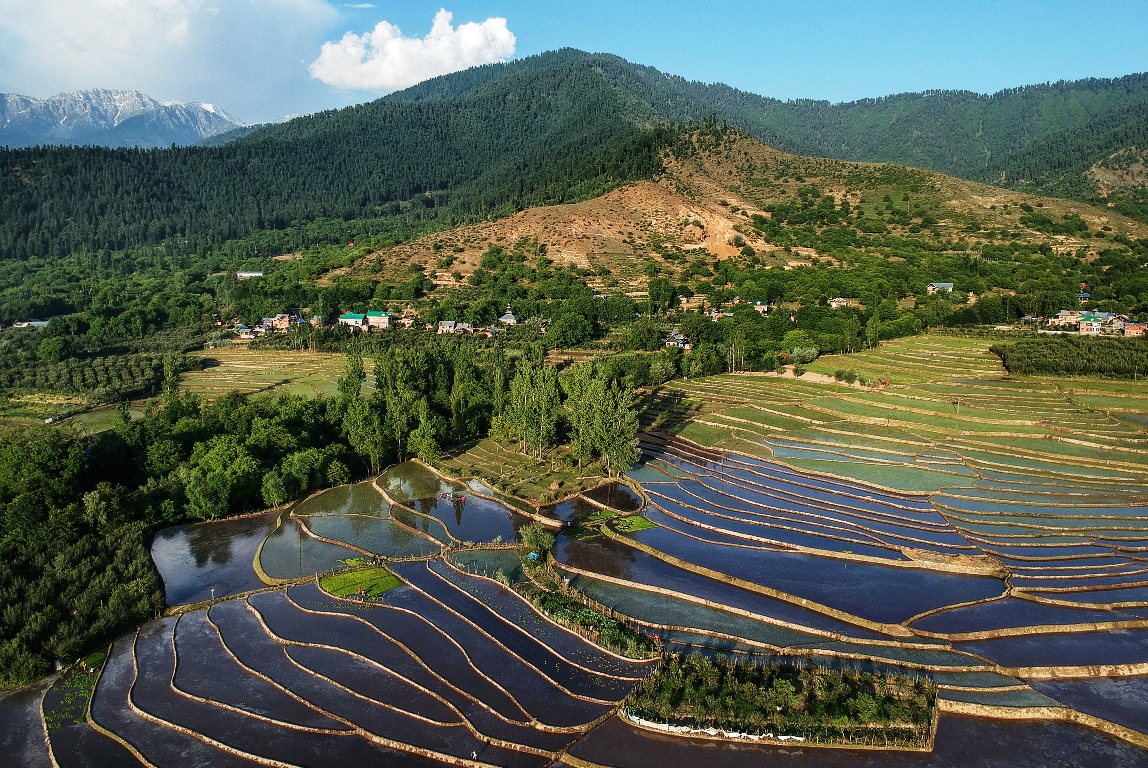
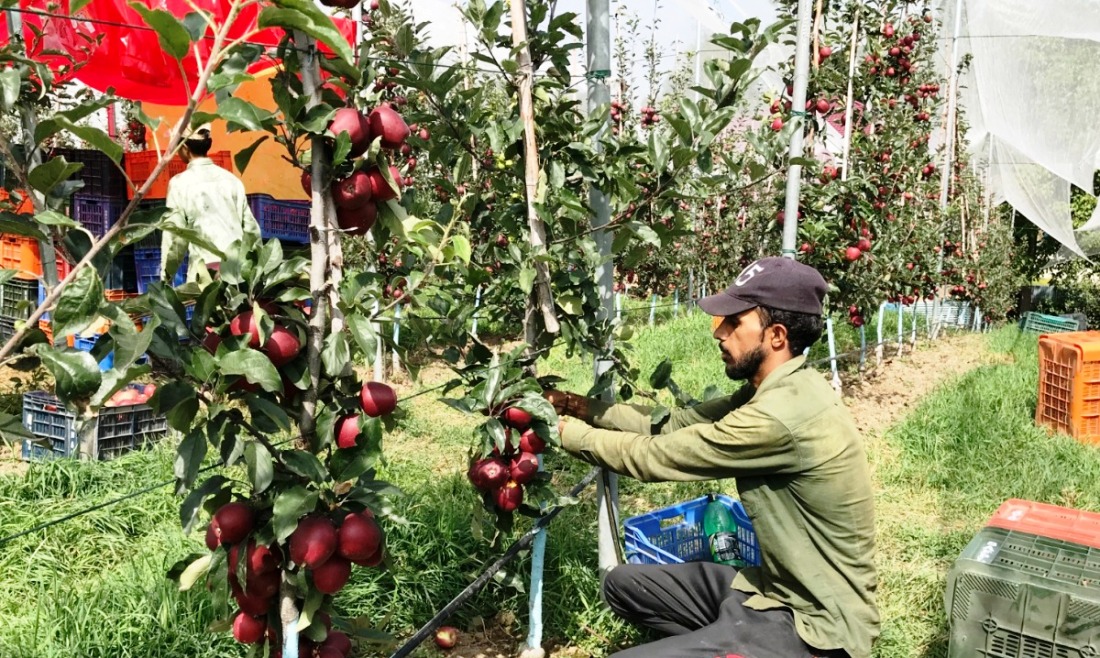
In Jammu and Kashmir, it is the periphery that is dictating the economy, unlike the rest of India, where the urban belts dominate the sector, possibly because of corporate requirements and the burgeoning service sector. By the end of fiscal 2024, an amount of Rs 11651 crore was outstanding in agriculture lending in Jammu and Kashmir, which was more than 24 per cent of the priority sector basket. This includes Rs 5775 crore outstanding against Kissan Credit Cards, of which the post-merger entity has barely a share of Rs 800 crore.
Over the years, it is the Kashmir periphery where the new vehicles – both commercial and personal cars – are in the huge demand. Besides, the grower has gone into mechanised farming, which requires an impressive investment in getting modern tools. The impressive investment in the post-harvest in the region has triggered a massive appetite for credit in the main infrastructure and the ancillary services. There lies the profit.
“The JKB was unhappy over what happened,” one insider said. “But they do not recognise the opportunity it carries. They simply have to rebrand the product basket and reorganise the operations. It will be a windfall.”
An impression within the banking sector is that the RRB growth story is heading towards a situation in which they will eventually be subsumed by the sponsor banks. “The JKB must keep that in mind and make this network ready for that. It may take some years, but it eventually has to happen.”