Jammu and Kashmir’s Housing and Urban Development Department is undergoing a major reorganisation aimed at cost-cutting and efficiency, but critics warn of weakened public services and loss of institutional depth, reports Humaira Nabi

With digital transformation and the increasing use of machines, societies are reporting job losses everywhere. In Jammu and Kashmir, cost efficiency, lean bureaucracies, and tech-based service delivery are being implemented in slightly different ways. The erstwhile state’s Housing and Urban Development Department (HUDD), operational since 1970, is in the process of being reorganised. While the official line promotes enhanced efficiency, the deeper subtext reveals a clear trend: financial savings appear to have trumped public service needs, particularly in urban centres like Srinagar.
Urban development policy has seen a lot of interventions in recent years. Now the ‘reforms’ are being rolled out and these span across a dozen key government agencies and aim to eliminate ‘redundant staff’, outsource several critical roles, and realign institutional structures with current needs. The restructuring has an eye on budget cuts, which keeps one pressing question looming: is the government prioritising balance sheets over boots on the ground? Incidentally, when the idea was presented to the Chief Minister, Omar Abdullah, on May 19, 2025, he seemingly approved the thought process and hoped it would improve the situation at ground zero.
HUDD in all societies is a major government function as its mandate is to frame policies, prepare plans for urban area growth and the civic amenities. New housing settlements, real estate and municipal affairs, the entire exercise falls within the HUDD mandate. In the case of Kashmir, the lakes and waterways, especially in Srinagar, are also the responsibility of the same department. Of late, the new housing settlements planned for the underprivileged are also an HUDD function.
In the last meeting, the presentations seemed to take a pick and choose approach as certain information was not revealed in full.
JK Housing Board
The Jammu and Kashmir Housing Board was established under the Jammu and Kashmir Housing Board Act of 1976 with the objective of addressing the housing and urban infrastructure needs of the region. Over the years, it has evolved from its original mandate, expanding its functional responsibilities beyond housing development to include the execution of infrastructure projects for various government departments.
Available official data suggests the Board has developed 12 housing settlements, six each in Kashmir and Jammu divisions, offering 8762 plots and 510 flats under self self-financing scheme. It has also constructed 1240 flats for Darbar Move employees. It is currently working on 12 housing projects in Samba, Jammu, Kathua, Pulwama, Bandipora, Ganderbal, Srinagar, Poonch and Udhampur. Besides, the government has transferred the development of 11 housing colonies comprising 5820 plots to the Board.
On July 24, 2001, the HUDD formally notified the recruitment rules for non-gazetted services within the Board, under Section 7 of the Act. This step was intended to streamline appointments and bring administrative clarity to the staffing structure of the Board. Following the implementation of the Jammu and Kashmir Reorganisation Act, 2019, the sanctioned strength of both gazetted and non-gazetted posts was notified through SROs 875 and 887, on October 26, 2019.
The twin notifications capped the workforce at 297 sanctioned positions, 25 gazetted and 272 non-gazetted. Out of its 297 sanctioned posts, more than half belonged to Class-IV categories, low-skilled and largely obsolete in a modern planning environment. Now, the reorganisation plan suggests that the Board had long been a bloated body. The managers felt a noticeable shortage of professional manpower essential for planning and technical execution.
In recent years, the scope of the Board’s activities has significantly broadened. Apart from its conventional responsibilities, it has been designated as the Mission Directorate for the Pradhan Mantri Awas Yojana (PMAY), Housing for All (Urban), thereby taking on key roles in both implementation and monitoring. This diversification has created an increased demand for skilled and specialised personnel, while also rendering certain posts obsolete due to changing functional priorities, the plan explains.
The new plan has recommended reducing the staff strength to a total of 139, including 21 gazetted and 118 non-gazetted. This will reduce the Board’s annual salary burden from Rs 20.88 crore to Rs 12.65 crore, a saving of Rs 8.23 crore every year. Planners believe a leaner, more technically focused entity will perform better. The critics, however, ask whether institutional memory and ground-level effectiveness might suffer with such abrupt downsizing.

The LCMA
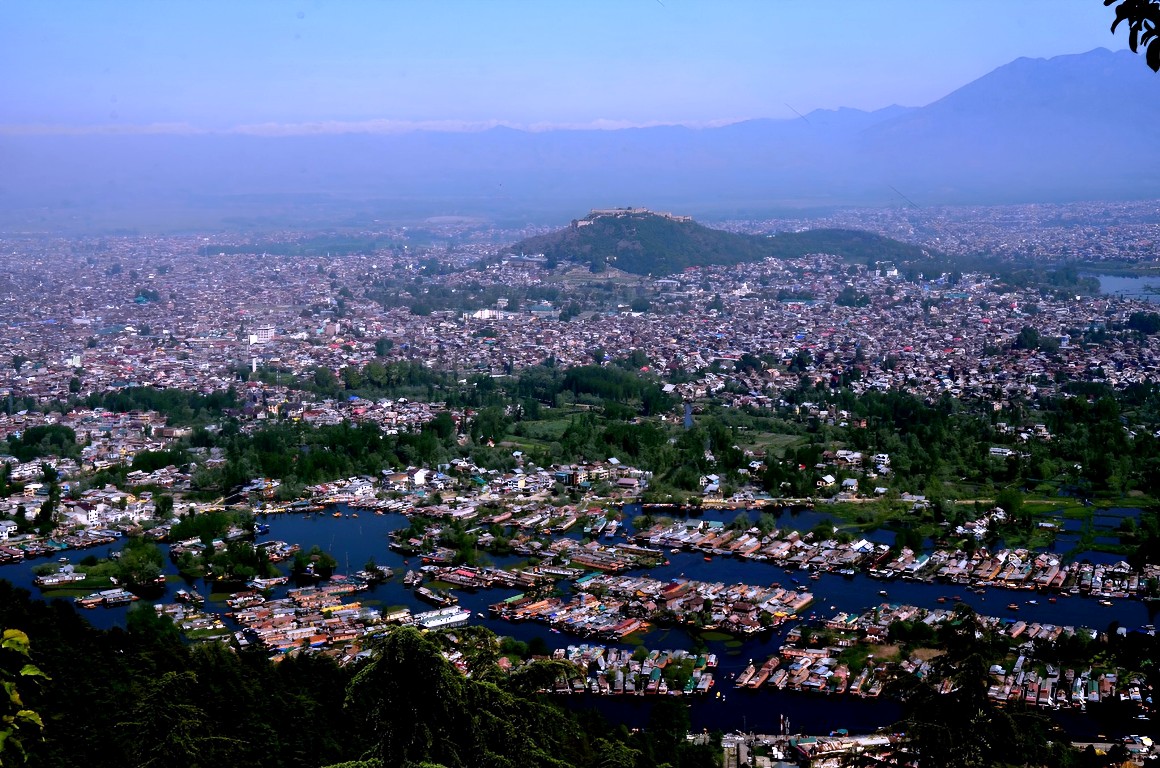
For the last many decades, the Lakes and Waterways Development Authority (LAWDA) has been a key institution in managing Srinagar city’s two major lakes – the Dal and Nigeen. Of late, water bodies like Gilsar and Khushal Sar, which were retrieved by civil society, have also been handed over to the Authority for upkeep. In the last five years, the Kashmir rulers from the plains felt something bad in the Authority’s name, that it was formally named the Lake Conservation and Management Authority (LCMA). Being the major tourist hub, the government has invested a huge amount in preventing encroachment, de-silitation, ensuring water quality and halting eutrophication of the water body.
The Authority has constructed five Sewage Treatment Plants (STP) with a total capacity of 36.73 MLD for the treatment of domestic Sewage generated from households, business establishments situated in the periphery and adjoining areas of the lakes. A sewerage network now connects 570 houseboats in Dal Lake and 75 in Nigeen Lake to STPs.
Over the years, 3108 families living within the lake have been shifted and rehabilitated at various housing colonies. Though the outer boundary has been capped to prevent encroachments, the tensions within the lake have not been tackled either on the pollution front or on encroachment. Managing a clean ecosystem in the lake that has literally a town living within it is a major challenge.
Officials said while they have drafted an Rs 212.38 crore Integrated Management Plan for Dal-Nigeen Lake has been approved for Rs 212.38 crore, the plans are there to invest Rs 306.05 crore under AMRUT 2 to build a new STP and cover uncovered areas around Dal Lake to further reduce pollution.
LCMA had a sanctioned strength of 358 posts, including 23 gazetted, 153 non-gazetted and 182 Class IV.
Under the reorganisation, the LCMA is using ‘science’, renaming Research Officers as Scientists. The plan envisages reviving 57 positions, creating 22, abolishing 81 and diminishing 93 so that the new sanctioned strength of the Authority is capped at 206. This, the babus’ have said, will reduce the salary component from Rs 10.49 crore to Rs 7.36 crore, thus making a saving of Rs 3.12 crore to the Consolidated Fund. The justification is that the authority will focus on scientific conservation and data-backed monitoring of the twin lake system in the city. But such a drastic cut, over 40 per cent, could risk bottlenecks unless scientific staff hiring is accelerated.
The Town Planning Organisation
The Town Planning Organisation was initially established through Government Order No 114-C on May 16, 1963, as part of the Directorate of Design and Planning. It underwent reorganisation on September 26, 1967 (Government Order No PW-534-WIP) with the inclusion of Town Planning and Architecture wings. A subsequent reorganisation through Government Order (No DP-284-WIP) dated April 12, 1971, formally separated the Town Planning and Architecture units into independent departments to focus on physical planning and the development of towns and cities.
The last structural overhaul of the Town Planning Department, according to officials, occurred in 1989 with the creation of new divisions. However, despite significant urban expansion and the emergence of new districts and towns since then, the department has remained unchanged and now requires urgent reorganisation.
The department is responsible for the preparation of Master Plans, Zonal Plans, and other policy documents, while also offering advisory and technical services to development agencies, Urban Local Bodies (ULBs), and government departments. It handles building permission cases from 78 ULBs, 21 Tourism Development Authorities, and various rural areas, adhering to Public Services Guarantee Act (PSG Act) timelines. Currently, the department comprises a workforce of 155 personnel, including 29 gazetted officers, 73 non-gazetted staff, and 53 Class IV employees.
The Finance Department has formally approved the reorganisation of the Town Planning Organisations (TPOs) in Jammu and Kashmir, marking the first such structural overhaul in decades. As part of the reorganisation, the posts of Head Draftsmen, Draftsmen, and Tracers/Printers will be re-designated as GIS Analyst (I), GIS Analyst (II), and GIS Analyst (III), respectively, in alignment with evolving planning needs and geospatial technologies. The restructuring involves the creation of 46 new posts, a revival of 17 posts, the abolition of 55 posts, and the diminishment of 9 posts. The Head Offices of the Chief Town Planners in Jammu and Kashmir will now have a combined staff strength of 66 – 32 in Jammu and 34 in Kashmir. Additionally, each regional office will have 40 staff members, taking the overall strength of the organisation to 146. Despite the administrative expansion, the financial implications of the reorganisation will see a marginal reduction, with the annual expenditure expected to decrease from Rs 11.90 crore to Rs 11.45 crore.
The Architects Organisation
Jammu and Kashmir’s Architects Organisation of Jammu and Kashmir was established in 1971 with a primary mandate to provide architectural consultancy services to various departments of the government, contributing to the design and execution of public infrastructure across the Union Territory.

Following the reorganisation of the erstwhile state in 2019, the total sanctioned staff strength of the Organisation was notified through SRO-843 and SRO-845, issued on October 26. The organisation was sanctioned 28 gazetted posts, 44 non-gazetted posts, and 12 Multi-Tasking Staff (MTS), bringing the total sanctioned strength to 84. However, only 34 personnel are presently serving across the organisation, reflecting a critical shortage of staff in a key technical wing of the government.
Despite this constraint, the organisation has delivered notable results over the past three years. It undertook a wide range of projects involving new constructions, renovations, and design interventions in critical infrastructure sectors. The total built-up area of projects designed by the Organisation during this period stands at approximately 47.13 lakh square feet, worth Rs 1947.97 crore. Notably, the consultancy fee for such architectural work, estimated at a minimum of one per cent of the project cost, roughly Rs 19.48 crore, has effectively been saved for the government exchequer by executing the designs in-house.
Under the reorganisation of this department, the staff strength will go down from 84 to 76, with a new distribution of 26 gazetted posts, 41 non-gazetted posts, and nine MTS. As a result, the annual financial burden on the government will be reduced from the current Rs 7.07 crore to an estimated Rs 6.46 crore.
While the savings are minimal, the lost opportunity to scale up internal expertise is significant.
Srinagar Municipal Corporation
The most controversial segment of the reorganisation may be the Srinagar Municipal Corporation (SMC). Tasked with managing a sprawling 246 sq km urban area, which includes 74 municipal constituencies grouped into 35 functional administrative wards, including roads, parks, PHCs, and water divisions transferred to it under the 74th Constitutional Amendment, SMC’s workload has soared without a corresponding increase in manpower or budget. The corporation takes care of a city that has a resident population of 17,25,000 (excluding floating population) living in 220564 households (2025).
Established in 1886, SMC, over the years, has evolved into the principal urban local body responsible for the civic and infrastructural management of Srinagar city. SMC’s sanctioned strength stands at 3,670 posts, including 74 gazetted and 3,596 non-gazetted posts. However, as of now, only 2,480 employees are in position, 47 gazetted and 2,433 non-gazetted, highlighting a significant shortfall in staffing that hampers the Corporation’s ability to deliver services effectively across its expanding mandate.
The reorganisation proposes a new staff structure of 3,064 posts – 95 Gazetted and 2,969 Non-Gazetted. The plan is to create 591 positions, abolish 379 posts and put 553 in diminishing cadre, as 133 additional positions will be deemed abolished as they are vacant for more than two years. At first glance, it appears generous. But it reduces the salary budget from Rs 150.22 crore to Rs 134.95 crore, achieving savings of Rs 15.27 crore per annum. This is being accomplished through the abolition of roles like Birth & Death Reporters (now replaced by digital services) and the outsourcing of sanitation staff.
Given the city’s rising population and increasing demand for services, the staff reduction is alarming. The SMC risks becoming a paper tiger, heavy on responsibility, light on personnel.
Urban Local Bodies
The Directorate of Urban Local Bodies, Jammu and Kashmir, was bifurcated in 1982, resulting in the creation of two separate regional directorates at the provincial level. Currently, the DULB, Jammu oversees nine Municipal Councils, Poonch, Rajouri, Kathua, Samba, Reasi, Udhampur, Doda, Kishtwar, and Ramban, and 27 designated Municipal Committees. Together, these 36 urban local bodies (ULBs) span 446 municipal wards and operate under the provisions of the Jammu and Kashmir Municipal Act, 2000. Their responsibilities cover a range of civic and developmental functions, tailored to meet the growing demands of urban governance.
The HUDD has formalised service rules for these institutions through a series of interventions between 2008 and 2019. This gave the department staff strength of 2842 positions, including 59 gazetted officers, 2,233 non-gazetted employees, and 550 multi-tasking staff (MTS).

Given the growing complexity of urban management, the department has been asked to create a post of Environmental Expert at the directorate level to address environmental concerns, including compliance with directions of the National Green Tribunal (NGT). Besides, the Municipal Committees of Kalakote and Thathri currently have no sanctioned staff, prompting a proposal to create two Executive Officer posts and supporting staff for both. The post of Chief Executive Officer at Municipal Committee Katra is proposed to be abolished and replaced by a single Executive Officer post.
Sanitation remains a pressing issue across ULBs. Despite the presence of 1035 safaiwallas serving all 36 ULBs, service gaps persist. To address this, additional sanitation staff are to be hired through outsourcing.
Under the reorganisation, the department is panning abolishing several obsolete or redundant positions including Birth and Death Reporters (due to the shift to online certification), Food Inspectors and Health Officers (as their mandate now lies with the Food and Drug Administration), and Cleaners (since vehicle maintenance is now outsourced to the private sector). The enforcement wing is being rationalised to ensure more effective operations.
Outsourcing is also being proposed for several lower-level posts, including Safaikaramcharis (renamed as Safaisaathies), Demolition Guards, IT Managers, Laddermen, Drivers, and Gardeners. This approach, guided by cost-effectiveness and operational flexibility, allows ULBs to respond to service demands without incurring the financial burden of permanent appointments. Outsourced positions would be paid as per the Minimum Wages Act, the policymakers believe.
The financial implications of this reorganisation are significant. Out of the current 2,842 positions, 124 posts are being transferred to Jammu Municipal Corporation, carrying a salary burden of Rs 7.24 crore. A further 100 new posts are being created with an estimated salary cost of Rs 9.33 crore. Simultaneously, 616 positions, worth Rs 31.89 crore, are being abolished, and 87 positions, worth Rs 3.71 crore, are being diminished. This leaves 2,115 regular posts requiring Rs 85.99 crore. In addition, 1,392 posts are being proposed for outsourcing with an estimated annual expenditure of Rs 16.65 crore. After accounting for all these changes, the total salary expenditure under the reorganised structure would stand at Rs 102.65 crore, marking a net saving in the salary head and leading to more efficient human resource deployment across Jammu’s urban local bodies.
The reorganisation proposal, while aiming to reduce the salary burden through abolition, diminishment, and outsourcing of posts, raises concerns over weakened institutional capacity, over-reliance on contractual staff, and potential disruption of essential urban services. By abolishing 616 posts and outsourcing 1,392 roles, including sanitation workers, IT managers, and enforcement personnel, the plan may compromise service continuity, professional standards, and local accountability. The proposal appears budget-driven, lacking sufficient focus on strengthening grassroots governance, building institutional memory, and ensuring long-term service delivery outcomes critical to rapidly urbanising municipalities.
A similar structure is being mirrored in Kashmir’s ULBs, with the same digital-first, outsource-heavy philosophy. According to the plans, the government intends to bring down the number of staffers working in the DULBK from a sanctioned strength of 3357 (only 1905 are in position) to 2232 positions by creating 117 new positions, abolishing 772 and diminishing 352 positions. This will reduce the salary outgo on the establishment from Rs 174.63 crore to Rs 121.12 crore.
Jammu Development Authority
Established in 1970, the Jammu Development Authority (JDA) is now working under a new master plan that expands its jurisdiction from 130.36 sq km to 632.33 sq km. The reorganisation proposal includes the creation of new posts, both Gazetted and Non-Gazetted, to match this expansion.
The Authority currently has 502 staffers on its rolls, including 44 gazetted cadre positions. It requires a salary outgo of Rs 21.29 crore. Under the reorganisation plan, the policymakers want to cap the staff position of the JDA at 474, including 60 gazetted positions. This will require Rs 21.92 crore, an additional cost of Rs 62.79 lakh. When the Chief Minister was given a detailed presentation on the reorganisation, not many other details about JDA operations and outcomes were shared, officials pointed out.
Srinagar Development Authority
Established in 1971, the Srinagar Development Authority (SDA) started operations with the implementation of the first Master Plan in 1976; a second Plan in 2003. Currently, it is implementing the Master Plan 2035, which significantly expands the Srinagar Metropolitan planning limits from 416 square kilometres to 766 square kilometres. It was approved by the State Administrative Council on March 7, 2019.
Interestingly, this Authority (SDA), too, is facing a structural reshuffle, but unlike the JDA, its reorganisation plan reads like a bureaucratic jigsaw. Numerous comparative charts show a rationalisation of both Gazetted and Non-Gazetted posts. The Authority has 382 positions, including 49 gazetted cadre posts currently and the revised structure will take the gazetted positions to 48 and reduce the overall strength to 254. Yet the financial implications and functional realignments are still under review.
The SDA’s slow traction could be a symptom of administrative caution, but for a city like Srinagar, already under strain, this delay is said to be costly.
The Urban Environmental Engineering Department
The Urban Environmental Engineering Department (UEED), responsible for sanitation, drainage, and water supply, is also being restructured. The reforms include both Gazetted and Non-Gazetted tiers, aiming to improve technical performance and align with new sanitation goals. The policymakers have decided that the overall staff strength of the department will change from the existing 201 positions (including 19 gazetted cadre posts) to 384, including 160 gazetted positions. This will change the salary requirement of the UEED from Rs 11.26 crore to Rs 34.92 crore, an additional burden of Rs 23.66 crore.
But here too, while restructuring is financially neutral, no bold hiring or capacity building is visible, raising doubts about whether technical gaps will actually be filled or simply renamed.
The Price of Efficiency
The overarching result of all these reforms under reorganisation will help the Jammu and Kashmir government make a yearly saving of Rs 81.19 crore by reducing the staff strength on roll by 2992. The to-be-scrapped position includes abolishing redundant posts, shrinking administrative bloat, and embracing digital governance. From birth certificates to tax collections, e-portals are replacing clerks.
Yet while the financial case is strong, the service impact remains uneven.
The Disparity Dilemma
A particularly glaring imbalance is visible in the way Kashmir and Jammu have been treated. While Jammu’s urban local bodies are being infused with Environment Experts and given administrative stability, Srinagar is being streamlined without matching expansions in core service areas.
Some urban planners see this as a political recalibration, a bid to stabilise urban governance in Jammu while leaving Srinagar to navigate its own rising demands with fewer hands. Srinagar city is a happening place where nearly a million people are floating at any point in time. It was even more when tourism was at its peak.
While the reorganisation simplifies hierarchies, removes duplication, and projects a fiscally responsible image, the disproportionate focus on cost-cutting risks losing sight of its central mandate: urban service delivery.
Srinagar, in particular, stands at a crossroads. It needs more manpower, not less. It requires stronger institutions, not outsourced placeholders. If the government truly intends to usher in a new urban era, it must back its reforms with the human resources required to serve its citizens. Smartphones and apps can help have tension-free accounting, but Srinagar streets need sweeping.
While presiding over the review meeting, the Chief Minister’s address focuses on “operational efficiency” and “institutional capacity,” but failed to directly acknowledge the specific service delivery stress in Srinagar. The plan lacks a mention of how the SMC’s staff shortfall will be addressed beyond outsourcing sanitation workers; there is no indication of direct recruitment for critical functions. This silence is not just an oversight. It reveals a political and administrative blind spot.