After an unlettered driver blew the whistle, a sweeping crackdown in Jammu and Kashmir exposed a dangerous supply chain of rotten meat, spoiled rice, and adulterated food, triggering a public health scare, eroding consumer trust, and driving authorities into an unprecedented enforcement campaign, reports Babra Wani and Syed Shadab Ali Gilani
On the morning of August 6, 2025, the quiet village of Lelhara near Kakapora was jolted by a disturbing sight. From the balcony of his home overlooking the village ground, Haseeb Ashraf Shah saw a huge crowd gathering.
Drawn by a pungent stench, he walked over to find more than 400 kg of rotten meat strewn across the ground. Officers from Jammu and Kashmir’s Food Safety Department and the Jammu and Kashmir Police (JKP) stood among the onlookers, coordinating a quick disposal. A bulldozer rumbled in, carving a pit to bury the decaying heap as the smell clung to the summer air. “The stench was so overpowering that people had to cover their noses,” one resident said. “I thought it could trigger an infection outbreak.”
Jammu and Kashmir government officials witnessed a surge in the seizure and dumping of rotten meat in recent days. Although it began with meat, the crisis soon spread to rice, spices, and sweets, as well as frozen and pre-cooked materials. It involved Jammu as well as Kashmir.
The hero of the entire campaign is neither from the trade nor from the government. He is an anonymous load-carrier citizen who noticed irregularities while handling packages from the Sunshine Traders, a meat dump operating from a government industrial facility, which is meant for some other activity.
“He reported it, and when we checked, his report was completely true. That is how the entire process began,” Smitha Sethi, Jammu and Kashmir’s Commissioner of Drug and Food Administration, explained. “The initial complaint exposed illegal practices not just at Sunshine Traders but also among manufacturers and packaging units from Uttar Pradesh and West Bengal, who had sent unlabelled products. “I am so grateful, so very grateful,” said Smitha, appreciating the ‘whistle-blowing’ driver.
Rotten Rice
With the rotten meat seizure dominating the social media, around 36 truckloads carrying rice from Punjab arrived at the Food Corporation of India (FCI) store in Shilvat (Bandipora). Some of the trucks, reports said, contained rotten rice. Rice is the main staple in Kashmir, and it is always in demand, especially after the vast rice fields were converted into apple orchards.
Residents alleged that a large portion of the stock appeared unfit for consumption. They demanded that the Consumer Affairs and Public Distribution Department (CAPD) immediately inspect the consignment to determine whether it was safe for public distribution. Even the store manager asserted that he inspected one truck and found spoiled rice and reported the issue to his seniors. A team assessed the stock and declared it unfit for human consumption.
Shady Dumps
The recovery of the meat forced the officials to fan out. An official associated with Kakapora disposal said the meat had been kept in a plastic bag, taken to the police station, and then sent to various agencies for examination and later buried safely.
Similar stocks, he said, had been dumped across Kashmir last fortnight. In some cases, there was proper labelling, in others, none. The meat dumped on the wayside was unlabelled and not stored under any proper temperature control. People holding such stocks in their shady systems had voluntarily thrown it away to save their skin from the law.
In Kashmir, earlier this month, enforcement teams carried out coordinated raids and surprise inspections across Srinagar, Pulwama, and Ganderbal. The biggest haul followed a tip-off that led officials to a nallah near Chinpoh Lasjan B, in the city outskirts, where approximately 800 kgs of unsafe meat had been illegally dumped. Additional dumps were discovered at Khandey Colony, Nowgam, 600 kg, and at another nearby location in Nowgam, 600 kg.
These findings added to earlier seizures, including 2500 kababs processed using frozen meat containing unapproved food colouring in the Safakadal and Parimpora areas of Srinagar, and 150 kgs of Gushtaba, the Wazwan meatballs. In Ganderbal’s Nagbal area, 250 kgs of visibly deteriorated meat were destroyed on site.
Two food business operators in Ganderbal had their premises sealed after they were found in violation of hygiene and storage regulations. Officials noted that some defaulters were resorting to dumping spoiled food at abandoned or open locations to avoid penalties.
In the Jammu division, enforcement teams seized 4.40 tons of substandard Rasgulla and 8.2 quintals of paneer, both unfit for human consumption. The consignments were confiscated during routine inspections and were under investigation for further legal action. The operation targeted meat, milk, sweets, paneer, spices, cereals, vegetables, and other packaged foods that were misbranded, unlabelled, or spoiled.
“In Jammu and Srinagar, in poultry products, mutton, chicken, other packed meats, and fish, we have counted around 11,668 kilograms so far,” the Commissioner said. “If dairy items are included, it is around 12,000 kgs.”
Given the fact that social media raised eyebrows over the source of the seized mutton, the Commissioner asserted that all suppliers involved had proper certifications. “Proper halal certification exists for all the meat that has been seized. There is nothing to suggest dog or cat meat is involved,” she asserted.
Shocked Consumer
Residents were shocked by the racket. Instead of rushing to the roads in protest, they stopped consuming meat and chicken and avoided eateries selling cheat Wazwaan and Tuj.
Before Wazwaan country’s lotus eaters would get into mass depression, social media helped them break into laughter, a tradition Kashmir has cultivated over the centuries. Songs surfaced within days, taking potshots at the lives of Kashmiris.
“Asli myadas naklei ristai, kaaju pistai katti waainam
Akh foot kababas rate yell iboazekh, paan tche soazekh overhaulus.”
(When you come to know that your real stomach is being fed by fake Rista, dry fruits and when you come to know the throwaway cost of the kebabs, you may send yourself for a body overhaul)
Residents were aghast. They used humour to cope with their overflowing emotions, in their typical Kashmiri style. Now, people routinely ask each other: “Have you also consumed the fake mutton?”
The Law
As officials started digging deep, they found too much to tackle. “In spices like chilli and turmeric, it is often found that there is a usage of synthetic food colours and other materials that are harmful to human health,” Smitha said. She explained that their mandate is sourced from the Food Safety and Standards Authority of India (FSSA) Act, where the criminal part is managed by the police. She, however, said that the police were very helpful in collaborating to tackle this menace. “Trader associations have come forward to support this endeavour. We are in a mission mode now,” she asserted.
The violation of the Act could lead to two types of punishments, one with fines, penalties, and the other with jail, punishments. Penalties included misbranding, selling dirty or spoiled food, giving false advertising, giving unsafe food or not following an officer’s order. For these, fines from Rs 1 lakh to Rs 10 lakhs could be given. “Jail punishments are for more serious mistakes like giving unsafe food, which causes injury or death. In this jail, from 6 months to life, and a fine from 1 lakh to 10 lakhs can be given. Running a food business without a licence can also lead to 6 months’ jail and a 5 lakh fine. This law stops wrong food practices and gives strong punishment,” a lawyer explained.
“Improper labelling or packaging, poor hygiene, and the use of harmful plastics or other unsafe packaging materials is a crime,” Sethi said. “We also find adulteration and the use of synthetic colours, which have increased a lot. Sometimes expired items are kept without proper mention.”
Experts said there were clear regulations on storage materials and temperatures. “For example, meat or chicken to be frozen must be kept between 0 to 4°C and consumed within four to five days. Frozen material should be kept at –18°C and can be stored for 10 to 12 months. Proper temperature, correct packaging, and manufacturing and packaging dates are all mandatory. Similar temperature rules apply for fish, vegetarian food items, and other products.”
FSSAI’s scientific council defines the roles and responsibilities of all the stakeholders in the food chain so that the consumer gets the best of it.
Rotten Meat Network
When news about the seizure of 1,200 kilograms of rotten meat broke, many presumed that a high-end food chain processing unit that usually makes in news was the site of the seizures.
However, Babar Chowdhary, Managing Director of Hattrick and President of the Jammu and Kashmir Hotels and Restaurant Association, rebuffed the rumours. “When the news first broke on August 1, before it was clarified that Sunshine, and not Hattrick, was involved, many connected the dots wrongly because Hattrick also has a unit in Zakura.”
On August 2, sales across the Srinagar district dropped abruptly by 70 to 80 per cent. The impact was across the board, not just for Hattrick. By the third day, several eateries had closed, including some in Lal Chowk and “even the Batte Gali, which relied heavily on the tainted supply.”
“This was a highly secretive network,” Babar explained. “It operated in two distinct streams. The first involved branded frozen meat from major companies like Alana, India’s largest exporter to the UAE, and other recognised firms, all sold with proper packaging, labelling, manufacturing dates, and market-based pricing. The second stream was unbranded meat, and that’s where the real problem lay.”
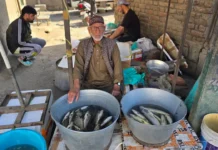
An insider, he alleged that unbranded meat could be procured for around Rs 160 a kg, or as low as Rs 90 to Rs 100 from Rajasthan, Jaipur, Delhi, and Haryana. “This low-cost meat was then processed by secretive distributors, minced, and used to make kebabs, gushtaba, and ristas, the main ingredients of the famed Wazwan. Fresh mutton is required for these dishes, but this meat was often mixed with other kinds. Given that beef costs Rs 400 per kg and goat meat Rs 700, one must ask, what exactly is this Rs 160 meat? The harsh truth is that we do not know what is slaughtered, processed, and sent here, mainly to dhabas and street vendors.”
Chowdhary stressed that high-grade restaurants did not use such meat. “Some C-grade vendors, especially on highways or small Wazwan shops, have been using this low-grade supply for the past five or six years.”
On the origins of the suspected meat, Chowdhary said, “The police are still investigating. One distributor has been caught, and an FIR has been filed. There was a processing plant in the Zakura Industrial Estate where one of them operated. We have urged the authorities to register FIRs against all those who procured from him. This is haram, it is poison. Such meat has no place in our system.” However, it is strange that “genuine trade” knew the shady network but avoided telling anybody.
Everybody in Kashmir is seeking accountability. With the mess almost into its third week, nobody is offering a detailed account of what has happened and how long it has been happening. “If there are 1,000 outlets, the government should scrutinise their records, receipts, and sales ledgers, and if any are guilty, revoke their licences and seal them,” Chowdhary said. He admitted there was no exact data on how many C-grade outlets and street vendors were supplied by the arrested individual. “The food department and police are investigating, but one distributor has confessed to being in the trade since 2006.”
Sources pointed to a major chicken and fish supplier’s involvement, though his name was missing from records.
Business in Shock
Over the years, Kashmir witnessed a disproportionate growth of the food outlets, including the barbecue vendors. Though it was attributed to the improved visitor footfalls, most of the people frequenting these eateries were residents. After the meat-rot moved out of the malfunctioning freezers, the industry started gasping for breath. Srinagar’s eateries have gone silent, with footfalls hugely compromised. These crowded spaces look deserted and abandoned.
A bakery owner in South Kashmir, who also sells chicken and mutton patties, said they had stopped making them since the news broke. “The trust between customers and shopkeepers is now at stake, and that’s tragic. Many genuine businesses are suffering,” he said.
There is a visible scare among habitual tuj eaters. “I had a guest and we went to one of the best restaurants in Srinagar,” a medical doctor said. “Of more than 25 tables, I saw two occupied, and it included mine.” The crisis led the Khayam market association to go for a press conference and reassure consumers that they are selling safe food. “It will take a long time for the consumer to restore confidence,” one of the barbecue owners admitted.
Trust had collapsed, and eating out suddenly felt dangerous. “I am sure the authorities will act, but the guilty must be punished and named. Cafés and restaurants striving to serve quality food also need to speak up and reassure customers,” a city hotel owner said. “This isn’t just my loss, it’s everyone’s. We are a largely non-vegetarian society, and those in this trade are feeling the heat. Once trust is broken, it’s hard to win back. Yet in some ways, this could benefit those who run their businesses ethically.”
Adulteration Crisis
Food adulteration, according to Dr Tawheed Amin, an Assistant Professor at SKUAST-K’s Food Science and Technology department, is the act of lowering food quality by adding, substituting, or contaminating ingredients, which poses a serious public health concern. It could be intentional, where harmful or cheap substances were added to maximise profit, or unintentional, incidental, arising from negligence, poor handling, or environmental contamination (e.g., pesticide residues, storage contamination).
“Recently, there has been news about the presence of formaldehyde in meat samples. If believed to be present, this is a serious concern, which needs to be addressed as a priority,” Amin asserted. Formaldehyde was classified as a Group 1 carcinogen by the International Agency for Research on Cancer (IARC), which meant that there was enough evidence that it was known to cause cancer in humans. “To prevent such risks, food safety systems must evolve.”
Traditional Hazard Analysis and Critical Control Points (HACCP) focused on identifying and controlling hazards in production, but emerging threats required the Hazard Analysis and Risk-Based Preventive Controls (HARPC) approach, which must be mandated by Food Safety Authorities, which emphasised proactive risk prevention, including economically motivated adulteration.
“Equally important is to have a robust food defence plan, a structured strategy to protect the food chain from intentional food fraud. There is a need to shift towards a behaviour-based Food Safety Management System (FSMS) that cultivates a culture of integrity, vigilance, and responsibility at every stage of the supply chain,” Tawheed explained. “Besides, consumer awareness is crucial, and people must be sensitised to recognise and report suspicious food quality issues.”
There was also a need to develop the ‘Integrated Risk Information System (IRIS)’, which should contain information on human health effects from exposure to various substances in the environment.
In the wake of the recent news about spoiled meat, the most important thing was to test the meat samples to find out the source of the meat. “The Food Safety Authority should also scrutinise products being sold significantly below prevailing market prices, as they may be susceptible to potential food fraud,” he said.
Officials have their own story. “Monitoring of any food item is part of our routine duty,” Smitha asserted. “We take samples, carry out inspections, and if we have doubts, we collect surveillance samples. If the doubt persists, we take legal samples and send them to the labs for further testing.”
Jammu and Kashmir has two NABL-accredited labs for Food Safety, one each in Jammu and Srinagar. Other than that, the FSSAI has notified labs all across India where the samples can be sent for testing, and we generally go for the National Food Lab, Gaziabad and other such NFLs. They were all NABL-accredited FSSAI-registered labs. “Testing mechanism is methodical and scientific and is prescribed in the Regulations and guidelines issued by FSSAI,” Sethi explained.
Government Interventions
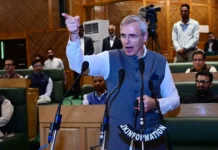
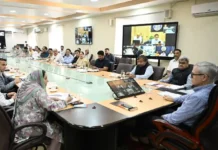
As the newspaper front pages and the social media started reporting with newer recoveries, the Omar Abdullah government presided over a high-level meeting in which officials talked about their operation. He ordered the establishment of entry-point check posts and testing laboratories at Lakhanpur and Qazigund to screen mutton, chicken, and other perishable items entering Jammu and Kashmir.
Though the emerging evidences suggest that the slaughtered mutton and dressed chicken had been coming into Jammu and Kashmir for many years, the abolishing of the Lakahnpur check post has played a major role in the entry of unregulated materials. “There was an element of corruption and an issue with the delayed cargo, but one great benefit we had is that we knew what was coming in and for whom,” one industrialist in Jammu said. “Its abolishing was done for political reasons, and we have started suffering. Even the established industry is facing music.”
Besides, Omar passed various directions: food testing laboratories should be set up in all districts; mobile food testing vans should be deployed; all food distributors, traders, and vendors must be brought in under a formal licensing framework. “An inter-departmental committee must be constituted to ensure coordination, efficiency, and smooth enforcement, particularly for the distribution and sale of safe, hygienic, fresh, and properly labelled perishable items such as meat and chicken,” he added.
Taking serious note of the use of harmful chemicals, unauthorised synthetic additives, and colouring agents, Omar asked departments to verify that meat supplies originate from safe sources and that the cold chain is maintained.
Public Health Scare
In the August 11, 2025, meeting, the officials offered Omar a detailed presentation in which food intake was linked to the rise in cancer cases. In comparison to 136 cases in 1993, the officials said the cancer registry in Jammu and Kashmir recorded 6733 cases in 2022. The data suggested that in 2008, there were only 395 cases, but a year later the numbers spiralled up – 1995 in 2010, 3484 in 2011, and 4632 in 2012.
“The incidence of oesophageal cancer in Kashmir valley is among the highest in the world and constitutes up to 30 per cent of all cancers in the region,” A 2009 study, Oesophageal Cancer in Kashmir Valley, published in the International Journal of Health Sciences (Vol. 3, Issue 1) said. The authors note that “dietary habits peculiar to this part of the world appear to play a significant role,” highlighting that “over 90 per cent of the patients consumed salted tea at high temperatures several times a day” and that “smoked fish, dried and pickled vegetables, and red meat formed a regular part of the diet.”
A consumption market, Kashmir, over the years, has emerged as a dumping ground for compromised food. In 2013, when the Omar government banned the import of “spent hens”, egg-laying layer birds normally discarded or used as dog meat after their laying cycle ends, there was a law and order issue in Punjab. The ban was lifted after the PMO intervened, according to media reports.
A 2023 study Food Adulteration: A Socio-Legal Problem, by Naveed Naseem and Dr Mohd Yasin Wani of the University of Kashmir warned that “milk and dairy products are at the top of the most adulterated items” in India, with “over 80 per cent of milk… contaminated with several harmful substances with around 8 to 13 per cent contamination in rural areas and about 60 to 68 per cent in cities.”
A 2022 peer-reviewed study on cancer causes in Kashmir flagged unsafe food storage and adulteration as major risk factors for certain cancers. Published in the Applied Science and Biotechnology Journal for Advanced Research by Usman Yusuf, it found that storing food in plastic containers can raise the risk of breast and prostate cancer, as bisphenol from the plastic leaches into the food. The study linked the region’s rising cancer incidence to “increased consumption of spicy and pickled foods, alongside the widespread availability of adulterated products,” warning that “everyday foods are riddled with adulteration, and this must be urgently addressed and regulated.”
Food and cancer have always had a relationship, said veteran oncologist Dr Sheikh Aijaz Aziz, “It comes from everywhere. It is in the air, the soil, the fire, the water. It comes from how food is made, how it is stored, how long it waits before it reaches the plate.” He added: “Old meat, preserved with chemicals, cold drinks loaded with additives, spices mixed with colour, all these things do not hurt today. But the body remembers and records. Eventually, over time, the record becomes a result. Packaging matters. The pH, the moisture, the material, the temperature, if one factor slips, contamination begins.”
“In women, prolonged consumption of adulterated food can trigger hormonal disruption,” a gynaecologist asserted, “I mean it can lead to a decline in ovarian reserve, and increase the risk of polycystic ovary syndrome, metabolic syndromes, recurrent miscarriages, and even chromosomal abnormalities in the foetus.” Women apart, she said in men, “the consumption of adulterated food can cause reduced sperm motility, lower sperm counts, and damage to sperm DNA is also becoming more common. These are not isolated issues; they are part of a growing public health concern that directly impacts fertility and the ability of couples to conceive healthy children.”
Consultant physiotherapist, Talia Qadri, said that the food adulteration was like slow poisoning. It not only increased the risk of cancer but also affected bone health, leading to fragile bones. Elderly patients may experience neuro problems, brain fog, and coordination issues. Even children’s growth and mental balance were impacted, and rising infertility and early menopause in young women could be linked to contaminated food and unknown sources of meat. “This is a major setback for our society.”
Long-Term Benefits
The mutton rot has triggered a huge debate. While it is bleeding a section of the business, those in the supply chain of genuine foods think it has long-term benefits. “Why can’t we have dressed chicken here, and how many unemployed will find jobs if we set up a commercial slaughtering process within Kashmir?” asked the poultry major. Till 2018, Kashmir was managing almost two-thirds of its poultry requirements within Kashmir, a situation that has gone haywire. “These happenings must offer course corrections.”
“I do not think the rotten meat issue has hurt our business; it has boosted it,” said Nouman Ali Khan, a livestock trader from Handwara who had been in the business for three years. “Earlier, for functions or large gatherings, people would often buy ready-cut meat from outside suppliers. Now, they prefer going to their local butchers, who sell fresh meat daily. This has reduced reliance on manufacturers and wholesalers, and I believe it has given our local meat industry a lift.”
Nouman supplied sheep to butchers and caterers, though not directly, and had seen a noticeable rise in orders. “The wedding season is on, and people are looking for mutton. With packaged meat now almost entirely off the menu for most customers, fresh local meat is in higher demand. Compared to our usual sales, we have had a 10 to 15 per cent boost; it is not a massive boom, but it is an improvement.”
“I now sell four to five sheep a day. People are also making more enquiries about prices and bookings. It is clear they feel safer buying from a trusted, known source rather than from packaged consignments whose origins and storage conditions they cannot verify.” Before the scandal, he used to sell two sheep per week.
“Yes, of course, the recent rotten meat scandal has affected my business, but positively,” said a mutton seller from Pampore, Mushtaq Ahmad Ganie. “When the meat used to come from hotels and outside suppliers, our sales were affected. Now, people prefer buying directly from our shop and cooking at home.”
While the surge in demand had been welcome, Ganie said his prices had remained unchanged. “We have not increased rates; it is the same as before. On average, we are making sales of around Rs 60,000 these days. The difference is that customers now avoid packaged or frozen meat altogether. They want fresh, locally sourced meat, and that has benefited us.”
A Dark Flip
On the flipside, the helpline set up to assist people in distress has also seen instances of alleged misuse. In one recent case, a complaint was filed against a Srinagar-based entrepreneur running a high-tea venture, raising doubts about whether it was a genuine grievance or a move driven by competitive rivalry.
The business, built on the idea of offering premium, flavour-rich tea experiences for weddings, corporate events, and special occasions, had earned customer trust and appreciation. “We always take feedback seriously and address it with full transparency,” the founder said. “But in this case, the timing, coinciding with ongoing food drives, and the nature of the complaint suggest market rivalry rather than customer dissatisfaction. Unfortunately, such tactics emerge when a business begins to stand out.”
She believed the complaint was rooted in personal rivalry aimed at discrediting the start-up. “Personal differences should never spill into professional spaces. Healthy competition is welcome, but targeted actions born out of grudges are unfair, not just to us, but to the customers who value our service. Rivalry may try to cloud our name, but the taste of honesty and quality will always shine through.” Her paperwork was in order, and even officials at the Food Safety Department had questioned the motives behind the complaint.
Smitha admitted that they had received hundreds of calls, many fuelled by jealousy or animosity. “Personal grudges should not dilute the entire movement,” she said, urging citizens to put public health above private disputes. “We have to be answerable to ourselves and avoid actions that undermine the integrity of the operation.”