Budget apart, the 3-week Jammu session of the Jammu and Kashmir Legislative Assembly is expected to be significant and noisy, reports Syed Shadab Ali Gillani
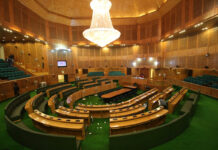
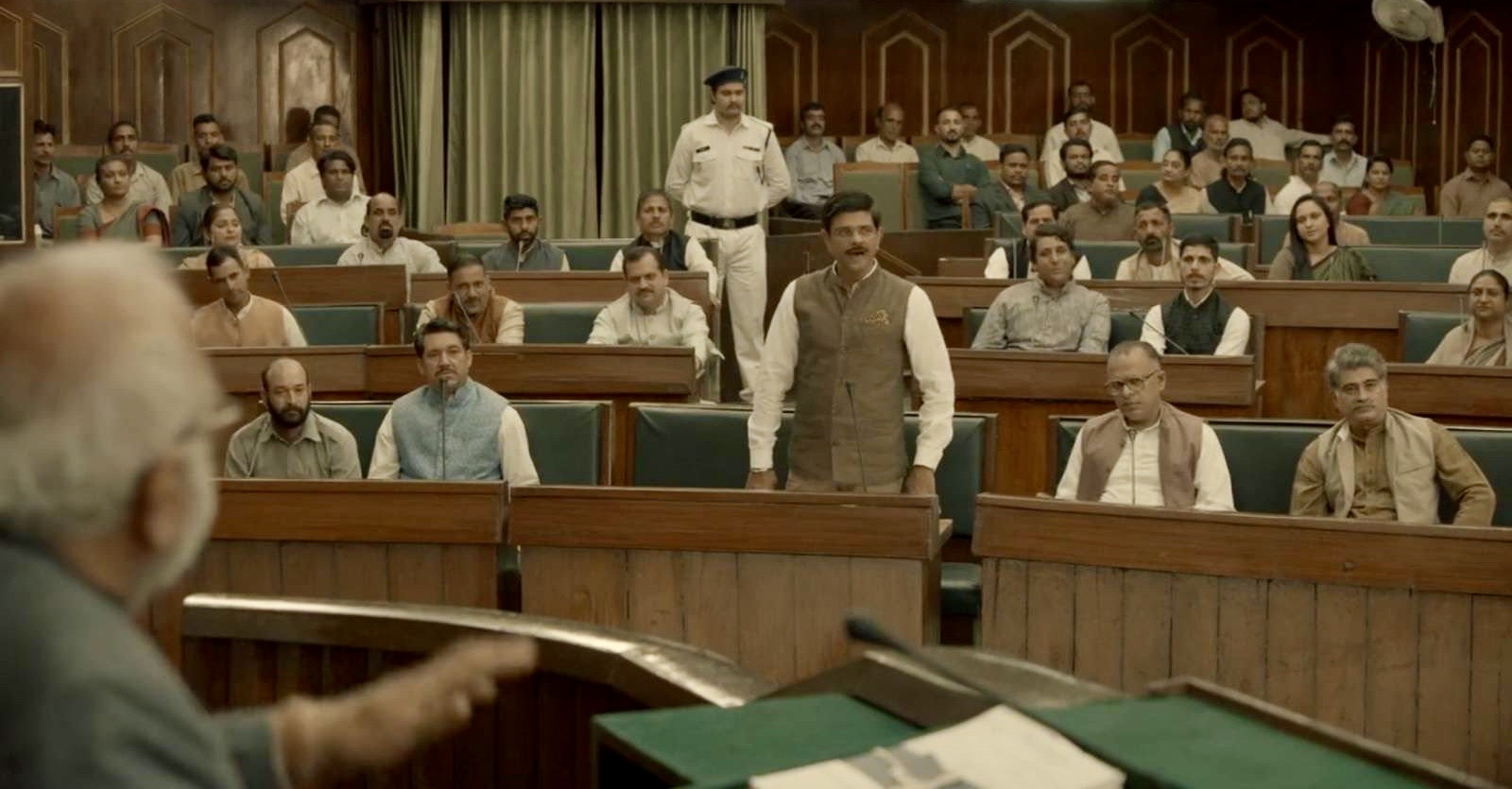
The Jammu and Kashmir Legislative Assembly last convened in 2018. After a hiatus of seven years during which a web series was shot at Jammu, it is set to resume, with its first major session scheduled for March 3, 2025.
The administration has already appointed nodal officers and established Question Cells at the departmental level. “No officer or official shall leave their station without prior approval during the session to ensure the smooth conduct of proceedings,” a government order states, directing strict adherence by administrative secretaries and department heads.
Scope of Business
Eighty-two out of 90 members have submitted nearly 800 questions and 80 private members’ bills. Speaker Abdul Rahim Rather had directed each MLA to submit up to 20 questions—ten starred and ten unstarred—along with three private members’ bills. However, specific restrictions have been placed on the nature of questions that can be raised.
Written questions about All India Services, including the IAS, Jammu Kashmir Police, law and order, and security matters, will not be permitted unless explicitly approved by the Speaker under special circumstances. Besides, debates concerning these matters will also be excluded from discussion.
Historical Significance
The last budget session of the Assembly was held in early 2018. The upcoming session is of particular importance, marking the first budget session since the collapse of the BJPDP government in June 2018, following the BJP‘s withdrawal from the coalition.
Later, Jammu was Kashmir slipped into the President’s and then the Governor’s rule, leading to the abrogation of Article 370 and its reorganisation into two Union Territories in 2019. This session will be the first since the political restructuring and reorganisation of the erstwhile state, making it a crucial moment in the region’s governance.
Call for Cooperation
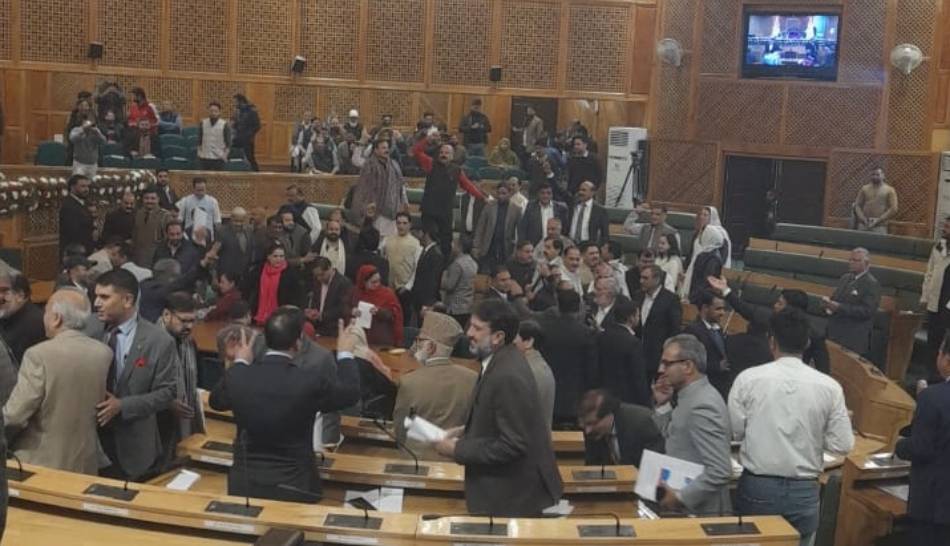
Recognising the session’s significance, the Speaker has urged all parties and independent legislators to cooperate to ensure productive deliberations. Chairing an All-Party Meeting, he emphasised the need for dialogue, coordination, and consensus-building to facilitate smooth legislative proceedings. With the session just days away, the political landscape of Jammu and Kashmir is poised for a return to legislative discourse after a prolonged gap.
Leader of the Opposition Sunil Sharma and Surjeet Singh Slathia represented the BJP, the principal opposition, while Mubarak Gul attended on behalf of the ruling National Conference. Waheed-ur-Rehman Parra represented the PDP, Ghulam Ahmad Mir spoke for the Indian National Congress, and Mohammad Yousuf Tarigami represented the Communist Party of India (Marxist). Advocate Muzaffar Iqbal Khan attended as an independent legislator.
In his opening remarks, Rather urged legislators to engage actively in debates, highlighting their role in addressing public welfare concerns. “The Budget Session is a crucial time for policy deliberations and financial planning,” he said, calling for meaningful debate and strict adherence to House decorum.
Question Hour
The Speaker placed particular emphasis on the importance of Question Hour as a mechanism for government accountability. He encouraged legislators to use this time effectively to raise public concerns and demand concrete responses from the administration. “Question Hour is a key tool for ensuring government accountability. Legislators must utilise this time effectively,” he said.
He also called upon all political parties to maintain coordination throughout the session, stressing that the effectiveness of the House depends on constructive engagement between the government and the opposition.
Budget Presentation
Expected to last for three weeks, the Chief Minister, who also holds the finance portfolio, will present the budget. It is expected to pass before the end of March. This will be the first time that Omar Abdullah will present the budget. During his previous tenure from 2009 to 2014, he oversaw the Home and General Administration departments. Now, Home is not part of his assignments.
For the past five years, the budget was passed by Parliament. In 2019–2020, following the dissolution of the PDP-BJP government, the then Governor Satya Pal Malik’s State Administrative Council approved the budget.
This session marks only the second time the assembly has convened since the formation of the National Conference-led government in the Union Territory.
Rule Modifications
Post-election, the assembly convened in Srinagar from November 4 to 8, less than three weeks after the formation of the government. This marked a significant shift in the region’s legislative landscape following the central government’s decision in August 2019 to revoke Jammu and Kashmir’s special status under Article 370 and restructure it into two UTs —Jammu and Kashmir and Ladakh.
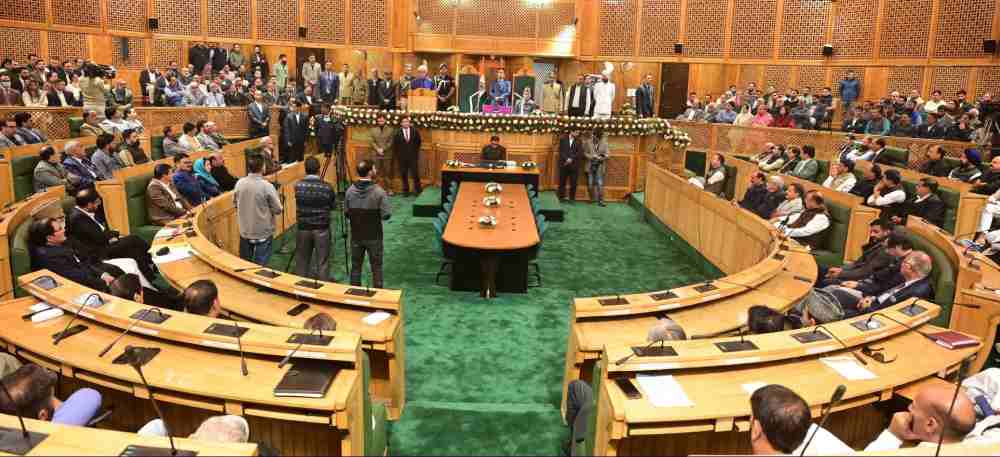
Officials indicate that the upcoming budget will prioritise key sectors such as tourism, agriculture, and education. Earlier this month, the Assembly’s Rule Committee approved modifications to the existing Rules of Procedure and Conduct of Business, granting the Speaker authority to implement these changes. The committee, chaired by the Speaker, met at the Assembly complex in Jammu to finalise these amendments.
Sources familiar with the proceedings stated that committee members agreed othat nly minor adjustments were necessary to ensure the Assembly’s efficient functioning. A government official noted that the Speaker already possessed this authority under the Reorganisation Act, 2019. The committee’s approval, the official said, merely formalised the process.
Political Reactions
BJP legislator RS Pathania defended the modifications, arguing that they were essential for the effective operation of the Assembly. “The Speaker is authorised to make these changes following the passage of the Jammu and Kashmir Reorganisation Act, 2019,” he said.
PDP, however, strongly criticised the amendments, viewing them as an implicit endorsement of the constitutional changes imposed on August 5, 2019.
Sources revealed that among the modifications, references to the Jammu and Kashmir Constitution, the now-defunct Legislative Council, and the Joint Select Committee were removed from the Assembly’s procedural framework. Besides, adjustments were proposed regarding quorum requirements. Under the revised rules, a session of the Assembly will require a minimum of ten members, rather than the previous 23.
The change aligns with the Reorganisation Act, which stipulates that the quorum for an Assembly sitting shall be either ten members or one-tenth of the total membership, whichever is greater.
Key Legislative Bills
PDP president and former Chief Minister Mehbooba Mufti has written to Chief Minister, Leader of Opposition Sunil Sharma, and People’s Conference leader Sajad Lone, among other key political figures, urging bipartisan support for three legislative bills introduced by PDP lawmakers. The bills focus on property rights, the regularisation of temporary workers, and the prohibition of alcohol.
The proposed legislation includes the Jammu and Kashmir (Regularization & Recognition of Property Rights of Residents in Public Land) Bill, 2025, the Jammu and Kashmir Civil Services (Special Provisions for Regularization of Adhoc, Daily Wagers, Need-Based and Other Temporary Workers) Act, 2025, and the Jammu and Kashmir Prohibition of Alcohol Bill, 2025.
“These bills seek to address urgent concerns affecting the daily lives of our people and uphold their aspirations,” Mufti wrote.“I look forward to your positive response and hope that we can move forward on these core issues together. Our political paths may differ, but the challenges faced by our people are shared, and so must be our resolve to address them.”
Mufti highlighted the hardships residents of Jammu and Kashmir have endured since 2019 and called for collective action beyond party lines to address public concerns. She assured PDP’s support for any government initiative aligned with these core issues, stressing the need for a united approach to governance.
After Seven Years
As the Assembly begins its first full session in seven years, 82 out of 90 MLAs have submitted approximately 800 queries and 80 private members’ legislative bills. The introduction of new procedural norms now requires all bills to be cleared by the Law Department, a change implemented post-reorganisation.
The government’s decision to hold a comprehensive legislative session has provided MLAs with a platform to raise critical issues, propose reforms, and engage with their constituents’ concerns. All private members’ bills and resolutions will undergo review by the Law Department before being introduced in the Assembly. Government-sponsored bills must also receive the Lt. Governor’s approval before proceeding.
Proposed Legislation
BJP leader Sunil Kumar Sharma has made it clear that his party will not allow any bill, resolution, or question to be deemed unconstitutional, undemocratic, or anti-national. “During the all-party meeting, I urged the Speaker to ensure that no such activity takes place and that the House is run impartially,” Sharma said.
PDP lawmaker Fayaz Ahmad Mir has submitted a private member’s bill seeking the prohibition of alcohol in Jammu and Kashmir. The three-page draft was forwarded to the Assembly Secretariat on Monday, the deadline for members to propose legislation ahead of the three-week session in Jammu. The bill is expected to be tabled during the upcoming budget session.
Alcohol Prohibition
The push for a ban on alcohol in Jammu and Kashmir has intensified, with multiple legislators submitting bills advocating for prohibition. Mir warned of severe social consequences if alcohol consumption remains unchecked. In the statement of objectives and reasons for his proposed legislation, he described the rising trend as an “ascending curve” and attributed it to a lack of comprehensive policy measures. “If this trend is not checked at this point, it will prove disastrous for society,” he stated, arguing that strict legal measures were inevitable. His bill proposes stringent penalties, including imprisonment and fines for violators.
Joining Mir in the demand for prohibition is Sheikh Khursheed Ahmad of the Awami Ittihad Party (AIP), who has introduced a similar bill calling for a complete ban on alcohol in the region. AIP chief spokesperson Inam Un Nabi reiterated the party’s long-standing stance against alcohol, recalling that its founder, Er Rashid, had opposed its sale since 2009. The ruling party’s Ahsan Pardesi has also tabled a private bill seeking the closure of wine shops in Kashmir.
Reservation Reform
Legislators are also expected to deliberate on a proposal to revise the region’s reservation policy. A bill advocating for a cap on reservation quotas has been admitted for tabling during the upcoming budget session. The bill, reportedly sponsored by NC legislator Dr B A Veeri, seeks to limit reservations for reserved category candidates to 40 per cent in an attempt to balance social justice with merit-based selection.
The proposal aligns with demands from the Open Merit Students Association (OMSA), which recently released a draft bill advocating amendments to the Jammu and Kashmir Reservation Rules, 2005. Certain media reports suggest that Veeri has framed his bill in response to these appeals.