by Syed Asif
There remains the possibility for tourism and tradition to exist together. This can happen only if empathy, learning and a sense of responsibility guide that growth. The desire to modernise must not erase the essence of this place.
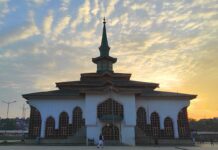
Kashmir is no longer a postcard-perfect retreat. In recent years, it has become one of the most visited places in South Asia. In 2024, the Valley recorded its highest influx of travellers, from honeymooning couples in Gulmarg to pilgrims arriving at Hazratbal. This surge has revived local economies and restored livelihoods disrupted by conflict, yet it forces a difficult question. Can tourism and tradition survive side by side in Kashmir, or must one eventually displace the other?
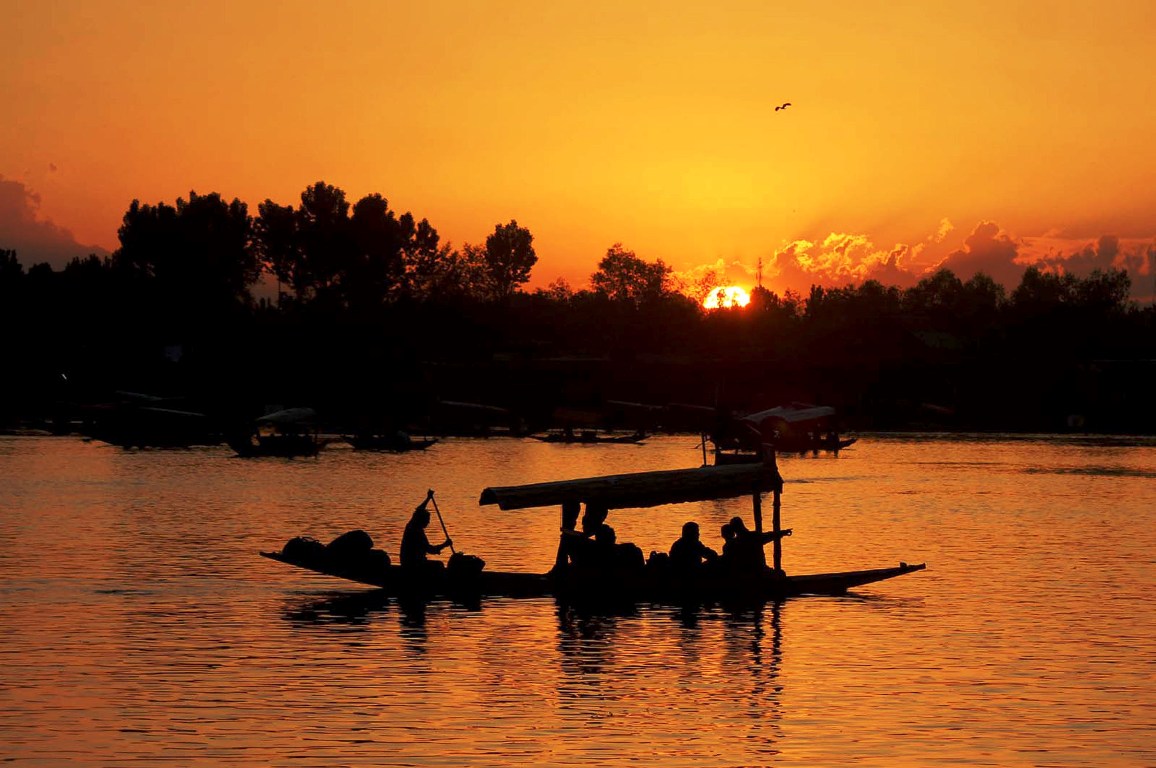
For many young Kashmiris, the rise in tourism has brought new opportunities. Guides, café owners, cab drivers and social media influencers are emerging across the region. Businesses are thriving. Artisans are finding new markets. Small homestays now remain booked throughout the season. Tourism has delivered a fragile sense of economic renewal, following years of political upheaval, prolonged lockdowns and climate-related disruptions.
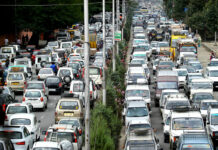
Yet beneath this appearance of revival, unease is growing. Large development projects are altering the terrain. Traditional homes are making way for shopping complexes. Cultural forms are yielding to the demands of mass tourism. In parts of old Srinagar, where the rabab once sounded from courtyards and wanwun carried through alleys, loudspeakers now blare film remixes for tourist dance parties. What was once a carefully sustained blend of spirit, art and ecology is becoming harder to recognise. The changes are not always visible but are deeply felt.
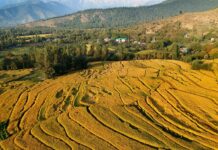
The environmental toll is growing. The fragile Himalayan ecosystem is straining under the pressure of unchecked tourist influx. In Sonamarg and Pahalgam, once-clear trails now carry heaps of plastic. Water sources are showing signs of contamination. The haphazard rise of hotels, eateries and car parks has stripped hillsides of trees, loosened soil, and forced native species into retreat. Residents often remark that while tourists depart after their visit, it is the locals who are left to face the consequences.
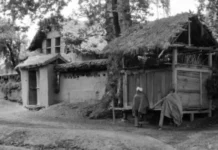
Elders in rural parts of Kashmir speak of a fading way of life. They recall a time when visitors arrived with genuine curiosity — to share wazwan on the floor, to eat with their hands, to listen to sufiyana melodies, to sit through long evenings of stories. The current shift towards selfie-driven travel and marketable experiences has reduced the Valley to a backdrop. An elderly poet in Anantnag remarked that the culture now feels staged. The people, he said, are becoming actors in their own story.
Yet signs of resistance are emerging. A quiet effort is unfolding across the Valley. Young people are leading campaigns for responsible travel. Local organisations and businesses are training guides to teach visitors about Kashmir’s ecology, customs and history. Women have begun hosting guests in eco-conscious homes that reflect lived traditions. Villages such as Gurez and Bungus are drawing interest for community-based tourism models, where residents manage the experience and share directly in its gains.
Kashmir now requires a deliberate, people-centred approach to tourism — one that prioritises sustainability over short-term gain. The authorities must enforce clear regulations on construction within ecologically fragile areas, manage the volume of visitors during high seasons, and offer consistent support to local craftspeople and cultivators. At the same time, schools, colleges and media outlets should encourage the younger generation to take pride in their heritage and represent a form of tourism that values depth over display.
Travellers, too, carry a responsibility. Visiting Kashmir should not be reduced to completing a list of attractions. It should involve observation, interaction and respect. Sitting with a family over a cup of noon chai, visiting a workshop where paper-mâché is still shaped by hand, or quietly watching the Jhelum move past can leave a deeper impression than any souvenir or photograph.
The Valley now stands at a point where choices will shape its future. The decision is not between development and protection. It is about shaping development that protects. There remains the possibility for tourism and tradition to exist together. This can happen only if empathy, learning and a sense of responsibility guide that growth. The desire to modernise must not erase the essence of this place. In Kashmir, tradition is more than inherited memory. It is a presence, still alive, still changing, and still needed.
With another tourist season drawing near, the question returns. What version of Kashmir will be presented to the world? Will it be one of curated facades or one that speaks of continuity and care? The answer may define not only perception but identity.
(The author is a writer based in Varmul. Ideas are personal.)