The Chashoti cloudburst during the Machail Yatra killed 65, left dozens missing, and devastated the Sapphire-rich Padder Valley’s picturesque hamlet. Survivors recall terror, rescuers fight mud and boulders, and experts warn of rising Himalayan disasters driven by climate change, reports Syed Shadab Ali Gillani, who spent three days in the ill-fated Himalayan hamlet
Three days after a massive cloudburst unleashed a devastating flash flood along the Machail yatra route, the August 17, 2025, long drive to Chashoti in Kishtwar’s sapphire-rich Padder Valley unfolded amid unceasing rain and the thunderous roar of the Chenab. The devastation was stark even before reaching the site, as news came of another cloudburst in Kathua that eventually claimed seven lives. A fleet of ambulances moved towards Chashoti, the yatra base camp that routinely bustled with pilgrims.
After an exhausting 11-hour, 350-kilometre drive from Srinagar, the arrival was overwhelming; an entire village lay buried under rubble, while the towering mountains stood in silence, bearing witness to the devastation of life and property.
Dusk had fallen, and silence in Chashoti was broken only by rescue work, medical teams, and reporters probing a frightened population. Rains returned on Monday morning. Showers are common in this season, but what was different was the fear the people carried. The village now lives on edge, eyes fixed on the sky as if another disaster were waiting to hit.
“It is raining, and you can see people outside. It is the trauma,” said a resident, calling August 14 a tragic date for Padder. “We fear there might be another cloudburst. Nights have been sleepless since that day, and each morning feels like a nightmare. We are still unable to process what has happened to us.”
The Cloudburst
Residents remember August 14, noon, as if it were their second birthday, the moment a ferocious cloudburst struck the spot. The downpour turned into a wall of water racing through the Machail pilgrimage route. Homes, vehicles, cattle, everything in its path got swallowed.
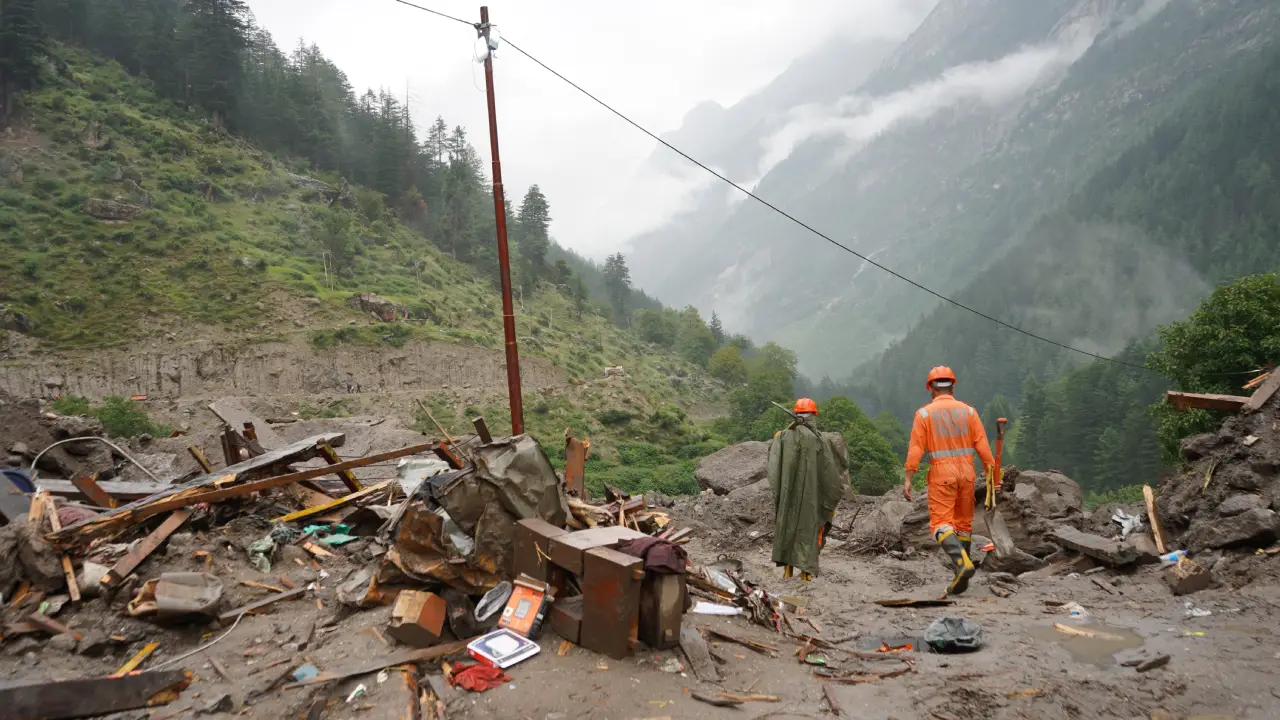
Now, official figures put the death toll at 65, with more than 30 still reported missing. The victims, dead and missing, were mostly Hindu pilgrims, including two personnel of the Central Industrial Security Force (CISF) and a dozen locals. Hundreds were injured. Those missing are presumed to have been buried under the rubble. Residents said nearly 1,000 pilgrims were at and around the spot when the mud-rich floods struck, further amplifying the scale of panic and loss.
Rescue began as the rain continued. NDRF, SDRF, Army, police, NGOs and residents dug through mud and debris. Helicopters struggled against the weather, reached Kishtwar but decided against moving through the narrow gorges. Roads were broken, while landslides blocked access.
Within hours, ambulances lined up, ferrying the injured down narrow routes. Doctors were rushed from Kishtwar to handle the injured. For many families, the wait outside makeshift mortuaries was longer than they could bear.
The Survivor Stories
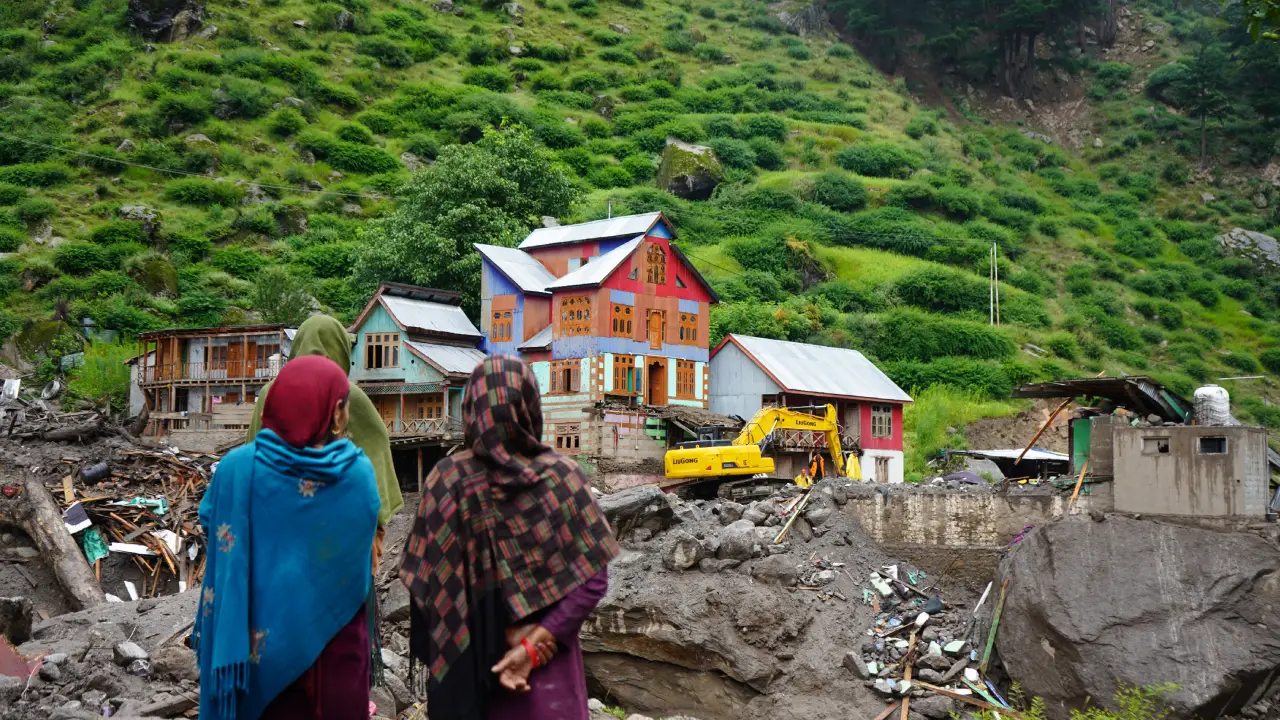
Survivors spoke of water tearing through lanes without warning. Children pulled away from parents, and livestock vanished in a jiffy. Community kitchens that once served pilgrims were washed away. The grief was layered: loss of loved ones, shelters, and livelihood. Chashoti, once full of pilgrims, now resembled a graveyard.
Eyewitnesses recounted that the burst came at such a speed that it swept everything away within seconds, before people could even realise what had struck them. It gave no time to think, a disaster that even pilots cannot handle.
“No one in my family, father, grandfather, or great-grandfather ever saw such a flood,” said Dev Raj.
Seva Ram pointed towards the flattened houses, “This was the most expensive house here. Nothing is left. It looks like an empty cemetery.”
“We have lost our homes and loved ones. The fear of another disaster haunts us daily. We no longer feel safe here; relocation is the only way to rebuild our lives,” said a resident whose home was flattened, and a relative is missing.
View this post on Instagram
People recalled running in every direction as the water surged. “Some were stuck. Some tried to climb, some tried to run. I sat on a stone and thought, if I go, I go. There was no way out.”
Women were buried under rubble where the kitchens once stood. Some of them were busy in the routine course of dusting, cleaning or cooking. Shops, cattle, and entire families disappeared into the torrent.
Hari Krishan, whose house stood further away, escaped but saw the fury unfold. “Surrounded, we stand trapped. The flood came with such intensity that people panicked. Black clouds loomed, and water rose quickly. We only saved our lives with difficulty,” he said. “This cloud burst came from where our sewage drains fall, only a few km away. We have witnessed two cloudbursts so far, but not of this magnitude. There is also the danger of glaciers. The intensity of the flood created fear and commotion. As black clouds came, people ran to save their lives with difficulty,” he said.
Rescue Efforts
Within a few minutes after the deadly disaster ebbed, with most of the discharge rushed down like a bullet train, the first to jump into the crisis management were the residents. Soon, police joined, and a few hours later, the army and the social volunteers, like the Ababeel, the main NGO of the Chenab valley, rushed in. The quick response led to the rescue of any people who were alive but trapped in mud, between boulders and on slopes where they had issues ascending the steep.
Devanshi, 9, was seen trembling by reporters when she recalled the moment the mountain came crashing down on her. She had stopped with her family at a wayside eatery when the flash flood struck. Within minutes, a torrent of mud and debris swallowed the shop, burying her and dozens of others. Hours later, her uncle and fellow villagers clawed through broken wooden planks to reach her. “I couldn’t breathe. My uncle and others removed the planks after hours, and we all came out. Mata saved us,” she told reporters, her young voice still carrying the terror of that night.
Sneha, 32, from Jammu, questioned her very survival. Melancholic, she thought it was the afterlife. She and her family had just loaded their luggage onto their vehicle when the roaring waters swept them into the sludge. Trapped under mud and crushed beneath a vehicle, she found herself surrounded by bodies. “Some of them were children, with broken necks and severed limbs. I lost hope of my survival,” she told reporters after she was rescued. It was her father who wriggled free first, pulling her out before helping the rest of the family. She then dragged her barely conscious mother out from under an electric pole. “My mother was badly injured, but we survived.”
Sudhir from Udhampur recalls how the “sky and earth seemed to collapse together,” trapping his group in the sludge. His wife and daughter were buried under bodies before being pulled out. Sunita Devi from Nanak Nagar was running for her life when she was struck by an electric pole and knocked to the ground. Pinned under other women, she struggled until she was freed and rushed to the hospital.
View this post on Instagram
Survivors were the ones who moved out of the sludge on day one. The last person who was pulled out alive after 30 hours was Subhash Chandra, a langar (community kitchen) sevak from Udhampur. Feared dead, his faint cries were finally heard by rescuers clearing debris with excavators and controlled blasts, before he was pulled out dehydrated and injured but breathing. For his colleagues, Subhash’s survival was nothing short of a miracle.
Though groups like Ababeel and the local right-wing volunteers were at work within the first few hours, the major thrust in rescue came a day later. Specialist Mobility Vehicles (SMV) branded as ATOR-N1200, brought from Chandigarh, now move across mud, water, and broken terrain to evacuate survivors. “It is next to impossible to run such a large operation here,” said one official. “But we are grateful to all the agencies. Without them, we could not have retrieved even these bodies.”
“This vehicle, made in Chandigarh, can run on any terrain, water, mud, or snow. It can carry nine people and evacuate them safely. The rains have made the terrain difficult, but evacuation is possible,” said Jaipal Singh, who oversaw the operations of this special vehicle.
Another official involved in operations said, “Such a big disaster, yet the operations are in full swing. Machines, L&T, rock breakers, blasting, manual work, everything is going on. NDRF is working manually. It is almost impossible to handle such a big operation, but many bodies have been retrieved so far. More will be recovered soon.”
The floods also flattened a makeshift market, damaged 16 houses and government buildings, three temples, a 30-metre-long bridge and four water mills.
The Hero
When the tragedy struck, fear paralysed many, but Arif Rashid, a daily-wage ambulance driver, became the first responder on the ground. Stationed for the Machail Yatra, he was preparing to ferry pilgrims when a wall of water, mud, and boulders swept across the valley. For a moment, like everyone else, he ran for safety. But the cries of the trapped pulled him back.
Moments later, he plunged into the muck, removing his trousers to wade through waist-deep sludge, dragging out the injured and recovering the dead. “I must have rescued 15 to 20 injured people and pulled several bodies from the debris,” he told reporters. His ambulance, stuck up to the tyres, was somehow freed, and within minutes it became a lifeline, carrying dozens to makeshift medical points. By nightfall, he had ferried scores of victims, working without food, rest, or concern for his own safety.
For the next six days, Arif refused to pause. In a communally sensitive district where most of the victims were Hindu pilgrims, his actions spoke only of humanity. He lifted bodies over rocks, tied stretchers to ropes to pull across streams, and carried survivors on his shoulders when bridges collapsed. At one point, he and a small team retrieved a body nearly 20 km away, wading through treacherous terrain to ensure it was returned to the family. He rescued an injured girl, reunited families torn apart by the deluge, and helped perform last rites for those who did not make it.
Activists who witnessed his work call him the unsung hero of Chositi, a man who shunned the camera and worked silently, driven not by recognition but by duty. “For me, they are all humans and I do not think about anything else,” Arif said, embodying the spirit of service in the darkest of hours.
The Village
Chashoti, about 95 km from Kishtwar, marks the last motorable point on the route towards Machail, where a temple of a deity, the centre of the yatra, is constructed. The road snakes around the Chenab River banks on the foot of a steep mountain range, making it narrow, vulnerable and frightening for non-natives. Water crossings, soil erosion and frequent landslides are part of travel, and during the monsoon months, the journey slows further as movement becomes dependent on weather and terrain.
Paddar is a remote area where most people follow Hindu traditions influenced by Himachali practices. A small Buddhist community once lived in the higher reaches near Machail and Haloti, maintaining ties with Zanskar, the remotest part of Ladakh, now a district. Over the years, most of them have descended down to Gulabgarh, but their cultural presence is still part of the valley’s memory.
Chashoti itself has around 80 houses, sheltering more than 500 people. The majority depend on farming, cultivating maize, rajma and barley. A few residents are teachers or serve as Special Police Officials (SPO) for the Jammu and Kashmir Police. The region needs too much police presence to guard the dormant Sapphire mines from smugglers. Life here is shaped by limited access to facilities and poor communication links. Mobile signals do not reach the village; even satellite phones convey garbled communication.
The annual Machail Yatra plays a crucial role in sustaining the local economy. When the pilgrimage is disrupted, tourism income tumbles and food shortages become more pronounced.
DNA and demography apart, Paddar’s identity rests on its mineral wealth. Beneath the soil lie sapphire deposits that once made the region famous. The sapphires, noted for their deep blue shade, include the legendary Star of Kashmir. Though mining has stopped for decades, the name remains associated with Paddar in the folklore and wider accounts constructed by travellers and experts.
Cultural life in Chashoti and its surrounding areas continues through rituals, shrines, and oral traditions. Temples dedicated to Nag Devtas, serpent deities associated with Shiva, are found everywhere. These are small wooden shrines with carvings that link the community to its older faith practices. Folk songs known as sugli are performed to the beats of dhoons, nagaras and flutes, while Kharzath dances are staged in temple courtyards or open spaces during festivals.
Traditional attire is still seen in daily use. Women wear the chadur draped over the salwar-kameez, with head coverings like the joji, while men dress in garments such as the kamri, choga, sutad and toot.
Paddari is the lingua franca. It is a dialect related to Pangwali of Pangi, Bhaderwahi and Sarazi, all belonging to the Chenabic group. Across the valley, language shifts with the ridges and routes that once divided small kingdoms. In the Buddhist households, the Zanskari language, of Tibetic origin and written in Tibetan script, continues in prayers and family conversations, though now mostly preserved by families in Gulabgarh.
Festivals and seasonal events are central to village life. One of the main 4-day celebrations is Canchaiti. Children move from house to house singing songs and collecting small offerings such as grains, walnuts or sometimes just Thanjhanjer. Each day has a local name: Jhazhoo, Chakhyd, Gartyashi and Oosair, and the ritual is aimed at celebrating the marriage of Shiva and Parvati.
Chashoti’s identity is thus shaped by remoteness, farming, religious practices, folk traditions and languages that carry histories across generations. The Machail Yatra provides both a link to the wider world and an economic support system. In August 2025, when the devastating cloudburst struck Chasoti, this cultural and economic fabric was deeply shaken, leaving the community facing loss of life, property and livelihood.
Understanding the Cloudburst
The Chashoti cloudburst was not an isolated tragedy. Jammu and Kashmir has seen thousands of severe weather incidents in the past decade, with cloudbursts, flash floods, and landslides increasing every year. Climate change has intensified rainfall patterns, and the steep Himalayan terrain turns sudden downpours into torrents. Unregulated construction and unchecked resource extraction have left slopes fragile and riverbeds unstable.
In 2021, Kishtwar lost Hunzar village in Dachhan, killing 26 people. Days later, Kathua faced another cloudburst that claimed seven lives, while Kupwara, Pahalgam, and Bandipora also reported flash floods. The pattern is clear: the Himalayas are fast becoming hotspots of extreme weather events, and Kashmir is emerging as a crucible.
Experts warn that climate change is not limited to rising temperatures but also manifests through erratic weather patterns and more frequent extreme events. “Episodes of extreme precipitation, including cloudbursts, have caused widespread destruction. At the same time, reckless and unplanned urbanisation has turned natural hazards into human disasters,” said Dr Irfan Rashid of Kashmir University. He stressed that while climate change cannot be halted immediately, reducing the carbon footprint, controlling construction in vulnerable zones, and adopting eco-zonation plans are crucial.
Meteorological officials also highlight that warming air now holds more moisture, making cloudbursts more frequent. Radars installed in Srinagar, Jammu, and Banihal, with more coming up in Poonch, Rajouri, Doda, and Kishtwar, are expected to improve early warnings. “We cannot prevent them, but alerts can move people, animals, and assets to safety,” said Dr Mukhtar of the Meteorological Department.
The Response
The Jammu and Kashmir administration was quick to respond. It announced financial relief, Rs 2 lakh for each victim’s family, Rs 1 lakh for the injured, and compensation for damaged homes. But for villagers, the challenge is not only survival. It is rebuilding lives, schools, and homes on a land that feels less stable than ever.
The rescue has been slow and difficult. Debris lies piled high. Bodies remain trapped. Machines dig, Rock-breakers hammer. Soldiers and volunteers claw through mud by hand.
Chashoti, once a base camp for the Machail Mata yatra, is scarred beyond recognition. Survivors cling to hope that promises of relief and rehabilitation will not fade.
Authorities on August 21, began DNA profiling of body parts recovered during rescue and issued lookout notices to identify three bodies. The remains have been sent to GMC Kishtwar for DNA profiling. Families of the missing have been asked to provide samples in the hope of identification.
Officials said 65 people were killed. Of them, 62 bodies have been identified and handed over, while three remain unidentified. Five limbs recovered have been preserved for DNA testing, and families of the missing have been asked to come forward.
Of the 136 people reported missing, 66 were rescued alive and 37 confirmed dead. Search operations by NDRF, SDRF, Army, CRPF, CISF, police, GREF and civil administration are continuing to trace 33 still missing. Chief Minister Omar Abdullah, who visited the village, said the possibility of anybody still alive is not possible now.
An Incomplete Yatra
The Machail Yatra is an annual pilgrimage to the shrine of the goddess Chandi in Machail. It typically takes place during Shravan and was revitalised in its modern format in 1987 under Thakur Kulveer Singh.
Pilgrims travel around 250 km from Jammu to Gulabgarh, the last motorable point, after which they trek 31 km on foot, with night halts at Massu, Chishoti and Machail villages. The journey includes the procession of the sacred mace (Holy Chhari) and devotional rituals, strengthening communal bonds.
The yatra supports local economies, porters, pony handlers, cooks, sanitation staff and volunteers, all vital contributors who earn their livelihoods through it.
This year, over 50,000 devotees participated, despite growing environmental concerns such as flash floods and landslides. However, the cloudburst shattered the pilgrimage’s momentum. As a result, the Yatra has been suspended indefinitely. Yet, the symbolic passage of the sacred mace continued. Carried across a Bailey bridge erected by the Army, it proceeded not as a celebratory procession, but as a subdued gesture of faith.
Nature’s Fury
Just days before the cloudburst, a Class 4 student, Suman, rehearsed for Independence Day at the government school in Chasoti. Her poem now resonates with painful irony. The video is now widely circulated on social media.
Hey manav abuto sudharja
abi iss laalach ko chhod de
dharti maan ko samaj,
prakriti se rishta jod de.
Warna ye prakriti nahin ruk payegi aur tu jhulas jaayega;
vilukt hote prajati ki hai lagegi,
vilukt hote prajati ki hai lagegi;
Phir tera number aayega,
tu bhi vilukt hojaye.
(“Oh, humans, mend your ways, leave this greed; respect Mother Earth and connect with nature. Otherwise, nature will not stop and you will be scorched; the curse of vanishing species will descend, and then your turn will come, you too will vanish.”)
In a village buried under debris, the little girl’s words stand as both a warning and a prophecy fulfilled.
The hammering of boulders brought by the cloudburst continues as teams search for those still missing. Rescue workers, doctors, NGOs, and reporters constantly move through the village, while locals try to recover what they can. No one knows how long it will take to rebuild, or how long the scars of August 14 will remain. Residents talk about the politics of rescue, as certain natives intelligently suggested that the volunteers from the Chenab valley go home.
Unanswered Questions
The tragedy has also raised hard questions. Why were pilgrims allowed to continue their journey when heavy rain warnings had been issued? Could lives have been saved with stricter precautions? This pilgrimage is a very recent phenomenon, and it is not being regulated as the local organisers lack capacity and vision, the residents said. Nobody even knows the carrying capacity of the route that passes through a fragile landscape, which is treacherous in many places. The official policy of taking a road to a pilgrimage spot is yet another concern that the experts have been flagging all these years. Jammu and Kashmir has a huge number of yatras, and all of them have their centres in highly fragile mountain ranges.