In the snow-bound winters of Kashmir, the Hammam, a heated stone-floored room, has emerged as a cultural cornerstone and a practical lifeline. Babra Wani explores the resurgence of this age-old heating system as an enduring necessity in a region where energy is expensive and short in supply

When the Mir family of Mattan down south resolved to renovate their home two years after moving in, their priorities reflected a time-honoured Kashmiri tradition. Among the key upgrades, they constructed a Hammam—a heated stone-floored room that has long been a staple in the region’s winter survival arsenal.
“The harsh cold of these winters became unbearable,” explained Mohammad Mir, the head of the household. “The unpredictable weather conditions made the need for a Hammam evident.” This traditional heating method, he said, was a practical and cultural response to the severe winters.
Mir detailed the family’s plan to transform part of their kitchen into a Hamaam, specifically the dining area. “It makes sense because we all sit there. Besides, it was the easiest space to convert. We have elderly family members, young children, and the women in the household who all rely on this area,” he added.
A Return to Tradition
The construction of Hammam’s witnessed a resurgence in recent years, a trend driven by rising energy costs and an increasingly strict government policy on power tariffs. More importantly, the absence of cheap kerosene oil, earlier rationed by the government’s Consumer Affairs Department and the frequent load shedding hugely contributed to the Hammam trend.
“Urbanisation in Kashmir has standardised winter management systems, heavily reliant on electricity,” Mir said. “But with the steep tariffs and phasing out of flat rates, people are seeking alternatives.” Mir pointed out that many of his relatives and acquaintances have begun incorporating Hammam into their homes. “It is becoming a common phenomenon,” he said, underscoring a broader shift to traditional solutions amid modern challenges.
A Personal Connection
For Mir, the decision to construct a Hammam was also steeped in nostalgia. Growing up in a rural village, his only access to this facility was through the local mosque. “We had five mosques in our vicinity, but only the main one had a Hammam,” he recalled. “As a child, I would accompany my father there during winters, especially when the water at home would freeze.”
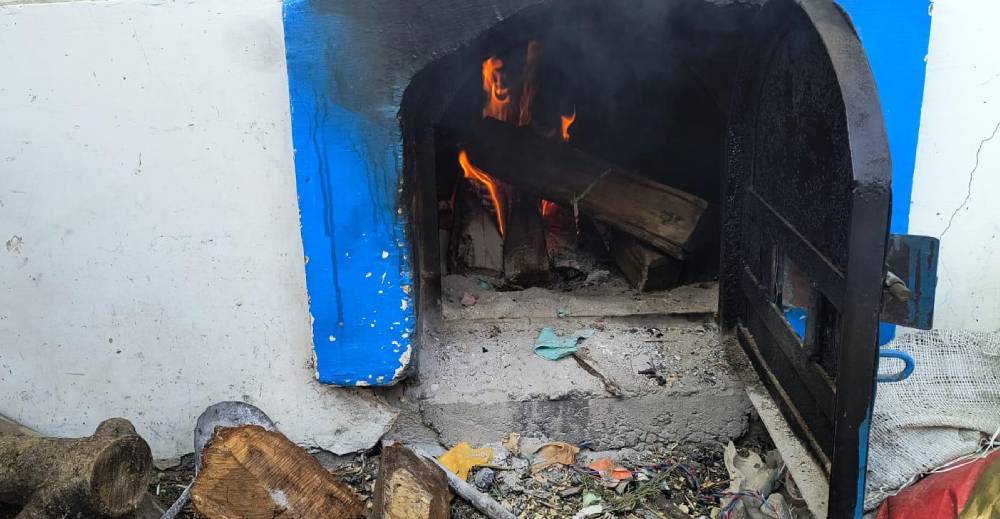
Now, the Hammam is an essential feature of Kashmiri households and mosques, combining tradition and practicality. Part of the Mughal inheritance, which is believed to have brought this Turkish-origin heating system to Kashmir, the Hammam has evolved significantly over time. For centuries, these were part of court enclosures. The Mughals had added a Hammam each to various fascinating gardens in Srinagar and Achabal so that they stay warm during early springs or late autumn and in case the local governors would utilise them in harsh winters.
From the courts, these Hamma’s moved to the commercial space. In most of Srinagar’s localities, communal baths existed till the 1990s. These were part of the personal upkeep of the residents, mostly men. There were, however, certain facilities where it was open to women too. These Hammam’s usually run by the barbers as part of their traditional saloons, served as the precursor to today’s Hammams. Apart from managing the native load, these community Hammas would cater to the requirements of hundreds of people with orthopaedic problems in which traditional Hakim would prescribe Hammam therapy. Though the structure and usage have transformed, the core principles—offering warmth and convenience—remain unchanged.
It was in the second stage that the facility started moving to the mosques and shrines. While the historic Jamia Masjid still lacks the facility – it is so huge a space that no Hammam can help it warm up, Khanqah-e-Moala has a Hammam on its first story (usually it is in the basement).
With the post-partition prosperity driven by land-to-tiller in the first intervention, now Hammam is a hallmark of well-off households, symbolising both heritage and comfort.
Construction
A typical Kashmiri Hammam comprises a room with a hollow base where firewood is burned, heating thick limestone slabs laid on top. The process also includes a copper water tank, called khazane in local parlance, which provides a consistent supply of hot water. Residential Hammams are equipped with tanks holding 200 to 300 litres of water, while mosque hammams often boast tanks of over 1,000 litres.
Over the years, Hammam making has become a super-speciality. Now the Hammam masons are aware of which kind of stone slate suits which part. They have been using a mix of stones based on their durability. Most of the Hammams still do not use cement as part of the main construction. Off late, however, cheap stones are imported from outside and it has impacted the local stone slate market hugely.
No Options Left
“In the villages, electricity is the first casualty when the snowfalls start, “Wasim Ahmad, a Shopian resident said. “That is when the Hammam comes to the rescue.”
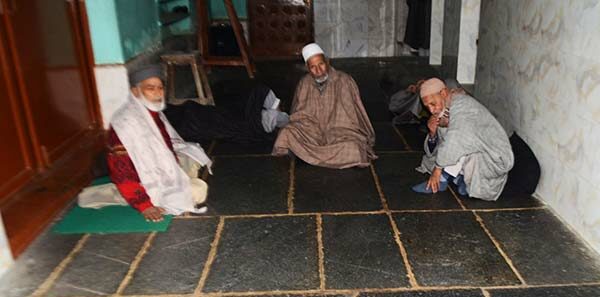
Firing Hammam does not require Oxygen alone. It is fuel-intensive. To fuel his Hammam, Mir has adopted a resourceful approach. He sources firewood, mostly from the eco-system, he lives in. Mirs utilise pruned branches and leaves from their apple orchards.
“Whenever we prune, we collect the waste—leaves and branches—to use in the Hammam,” he said. He also repurposes other materials such as old clothes and cardboard boxes. “Everything is consumed, and that is a benefit too. In a way, we are conserving nature.”
Before the Hammams’ became popular, the used clothes would usually be thrown into rivers and the pruned material from orchards would get into expensive and pollution-creating charcoal making. In all families, where Hammams exits, these are the tensions of the past.
Demand for Firewood
Unlike the periphery where the fuelwood is sourced locally, it is a very expensive exercise in urban spaces. Jammu and Kashmir’s government’s forest department has traditionally managed the fuelwood supplies. It was earlier part of the routine monthly rationing as the home hearts would run with the fuelwood. Of late, when the hearth, the Daan moved to oblivion, and was replaced by the LPG after kerosone stoves phased out, the requirement has gone down. Now it is a winter requirement in urban and sub-urban spaces.
This year, the Forest Department recently said the target for firewood consumption has raised to 80,000 quintals (8000 tons), up from 60,000 quintals last year. By the 2024 year end, almost 6300 tons of firewood have already been deposited at sale depots across the Valley, with 4400 tons distributed so far.
Interestingly, most of the firewood demand, accounting for 95 per cent, is from mosque committees in Srinagar and other urban areas, along with some requests from gurdwara committees. To better address the heightened demand, the number of sale depots has increased from thirteen in 2024 to thirty in 2024.
This leaves many times more fuelwood demand to the private sector. It is a huge network that works overtime during the summer and sells during autumn and winter. Fuelwood sells anywhere between Rs 70 to Rs 110 a kilogram in Srinagar, depending on the quality of the fuel and the sizing.

Modern Amenity
Apart from the traditional Hammam going for an upgrade, there are too many other variants that are in fashion these days. Now Turkish technology is in vogue in which the same quantum of fuelwood warms up entire homes with the heat waves passing through the hollow behind the walls. Unlike traditional Kashmir Hammam, this one is part of the design of the new home construction.
There are some companies now installing wiring in the concrete that warms up there is a current. The load shedding, however, is not pushing it to popularity despite being cheap.
There are new Hammam building companies in Srinagar which use the most modern facilities to add facilities to the preconstructed homes. “There are many options but there is no alternative to the traditional Hamman,” one of the promoters of such company said.
For Bagh-i-Mehtab resident, Rafiq Wani, the Hammam offers more than just warmth. Wani, who recently installed one in his home, praised its efficiency. “The Hammam does not require much wood,” he explained. “It can be heated with a few logs, scrap wood, or even cardboard packing.”
Once heated, the hammam serves multiple purposes. Besides producing a substantial amount of hot water, it doubles as a drying area for damp clothes, which would otherwise freeze when left outside.
Wani asserted that people in the periphery, who often bear the brunt of winter hardships, have started embracing this system. “In winter, we prefer sleeping in the Hammam. It helps us stay warm and provides the peace and comfort that reflects the true essence of Kashmir.”
A Post-Flood Necessity
For Ameema, a resident of Baramulla, the Hamaam has been indispensable since her family moved into a new house after the devastating floods of 2014. “When we looked for a new home, the main question was, ‘Does it have a Hammam?’ Our previous house had a large Hammam with a barooj, which felt like a sanctuary to me,” she recalled.
Ameema described the dual utility of the Hammam, noting its coolness during summer when the fire is unlit and its unmatched warmth during winter. She shared how the Hammam became her retreat after work. “With frequent power outages in winter, day-to-day activities can become burdensome,” she said. “For those relying on electric blankets, heaters, or the traditional kangri, I would recommend the Hammam. It is safe, manageable, and provides warmth that lasts throughout the day.” For her, lighting the Hammam has become a daily ritual she cherishes.
A Winter Cornerstone
Tahir, a resident of Tral, emphasised the Hammam‘s cultural and practical significance. He described it as an effective and traditional solution to combat the biting cold. Built with stone slabs heated by firewood, the Hammam radiates warmth, creating a cosy and inviting environment.
“It is not just a source of physical comfort but also a cultural space,” he observed. “Families gather here to share stories, meals, and moments of togetherness. Its ability to retain heat for long hours makes it an energy-efficient and sustainable choice for heating homes.”
Tahir’s reflections underline the hammam‘s role as a blend of practicality and cultural heritage.
The abundance of firewood in rural Kashmir makes the Hammam an even more sustainable choice. “Firewood is more readily available in these areas, making it a practical option for heating,” Tahir explained.
Many rural homes lack modern insulation, Tahir said making the Hammam a critical refuge against freezing temperatures. “The Hammam is not just a heating solution but a lifeline for rural Kashmiri families during the winters,” he asserted, highlighting its essential role in preserving both comfort and tradition.