With Jammu and Kashmir’s fertility rate falling to an all-time low of 1.4, well below replacement level, every birth has become precious. Even as infant mortality declines, Afreen Ashraf examines neonatal care across public and private hospitals to assess how the Valley is safeguarding its next generation
Amid a near-epidemic of PCOS and the rising age of motherhood, childbirth celebrations increasingly give way to prolonged battles for newborn survival. This has placed immense pressure on healthcare systems to strengthen neonatal care, a once rudimentary speciality now in unprecedented demand.
“On January 20, 2024, I delivered twins at a private hospital. While one baby was healthy, the other developed severe respiratory distress after aspirating meconium and had to be referred to the Government Children’s Hospital, Bemina, due to the lack of advanced neonatal care,” a first-time mother revealed. “He remained on respiratory support for ten days before recovering and being discharged. Today, both my children, Yahya and his twin Zehraan, are home.”
The infrastructure improvement has helped manage things better. National Family Health Survey data show a marked long-term improvement in infant mortality (IMR) in Jammu and Kashmir, despite early fluctuations. The IMR stood at about 45 per 1,000 live births in NFHS-1 (1992–93), worsened to around 65 in NFHS-2 (1998–99), and then began a sustained decline to nearly 45 in NFHS-3 (2005–06) and 32 in NFHS-4 (2015–16). The most dramatic progress occurred in the latest decade, with NFHS-5 (2019–21) recording an IMR of roughly 16 per 1,000 live births, almost a 50 per cent reduction from NFHS-4, reflecting significant gains in maternal, neonatal, and child health services across Jammu and Kashmir. (IMR, however, is slightly different from the neonatal deaths.)
Precious Births
Facing music for its newly acquired lifestyle and a semblance of prosperity, the career-oriented new generation is increasingly getting singled out.
“Jammu and Kashmir is among those states in India which have a low fertility rate,” Dr Sajad Ahmed Bhat, a neonatal super specialist, said. “So it is important for us to ensure the newborns are taken care of properly.” A thumb rule is that by and large, most of the babies born to urban and semi-urban mothers are precious.
“The total fertility rate (TFR) in Jammu & Kashmir is 1.4 children per woman, which is below the replacement level of fertility. Fertility has decreased by 0.6 children between NFHS-4 and NFHS-5,” the NFHS-5 revealed. “The total fertility rate in urban areas, at 1.2 children per woman, and in rural areas, at 1.5 children per woman, is below the replacement level.” It means the generation is not producing enough offspring to replace itself.
A study published in the International Journal of Reproduction, Contraception, Obstetrics and Gynaecology found that around 10-15 per cent of the population in Kashmir struggles with infertility, with primary infertility accounting for a majority of cases. This has made Kashmir a key market for in vitro fertilisation (IVF) as an assisted reproductive technique. The IVF pregnancies are often medically high-risk, making the survival of newborns even more critical and increasing the demand for neonatal services. “IVF pregnancies carry a higher risk of premature birth, and many such newborns eventually end up in NICUs,” admitted Sajad.
Kashmir’s geography and climate conditions have contributed to the addition of neonatal care. The high-altitude region’s harsh winters and prolonged sub-zero temperatures impact the well-being of newborns.
“Hypothermia is a killer and remains one of the biggest threats to neonates in this region,” added Sajad. Though Jammu and Kashmir has more than 90 per cent institutional births, still moving the 8 per cent underweight to the best facility becomes a challenge for peripheral regions like Kupwara, Gurez, and Bandipora. By the time they reach the hospital, many of them are already critically ill.
“The first hour after birth is the golden hour; thus, for sick neonates, even a delay of minutes can be fatal,” admits Dr Tanveer Bashir, director of advanced NICU at Noora Hospital. According to a recent survey, the mortality rate for outborn neonates is 24.32 per cent, and nearly 30 to 35 per cent of neonatal deaths occur within the first 48 hours of life.
Understanding Neonatology
Now a specialised science, neonatology focuses on the intensive care of newborns, particularly those born prematurely, underweight, critically ill, or with medical complications. It spans the first 28 days after birth, a phase marked by rapid physiological changes and heightened vulnerability.
To manage all these complications, neonatologists help in controlling conditions like respiratory distress, infection, low birth weight and birth asphyxia. Care is delivered primarily through Neonatal Intensive Care Units (NICUs), which provide respiratory support, thermal regulation, nutritional management, infection control, and continuous monitoring of vital functions.
“Currently, around 10 per cent of newborns worldwide are born preterm, and most of them require NICU care,” said Dr Sajad. “A newborn’s body is still adjusting to life outside the womb, so some neonates may have difficulty breathing, ingesting or maintaining body temperature.”
Triad of Mortality
Experts identify three interconnected factors responsible for a large proportion of neonatal deaths. Often referred to by doctors as the Triad of neonatal mortality, these conditions frequently overlap, compounding risks during the critical initial days of life.
Immediately after birth, the most common issue faced by premature babies is respiratory distress due to underdeveloped lungs, leading to respiratory distress syndrome, which is responsible for approximately 37.24 per cent of deaths. “Such infants require respiratory support, beginning in the delivery room through CPAP (Continuous Positive Airway Pressure), followed by continued care in the NICU,” explains Dr Tanveer Bashir. “In certain cases, surfactant therapy is administered to aid lung function.”
Reports reveal that the lack of functional CPAP machines in district hospitals usually forces shifting kids to Srinagar, during which improper respiratory support endangers infant lives.
Birth Asphyxia accounts for approximately 29.5 per cent of neonatal deaths but can largely be prevented with quality inter-partum care, doctors assert. It occurs when a newborn does not receive enough oxygen before, during or immediately after birth. The high incidence suggests that, despite the high institutional delivery rate, the quality of monitoring during labour and the availability of skilled resuscitation at birth are inadequate in peripheral centres. It reflects the failure at first minute after birth, where effective resuscitation could save a life.
Infection is the third major killer, contributing to 16 to 30 per cent of mortality depending on the facility, where birth takes place, and the state of the mother. It could be acquired from the mother, or often due to prolonged labour or unhygienic checks. Late-onset sepsis is a critical indicator of hospital quality. In overcrowded NICUs like Lal Ded Hospital spread of multidrug-resistant organisms is a constant threat, insiders in the sector claim. The data links high sepsis rates directly to the overcrowding and lack of aseptic protocols in high-volume settings.
The Jaundice Mess
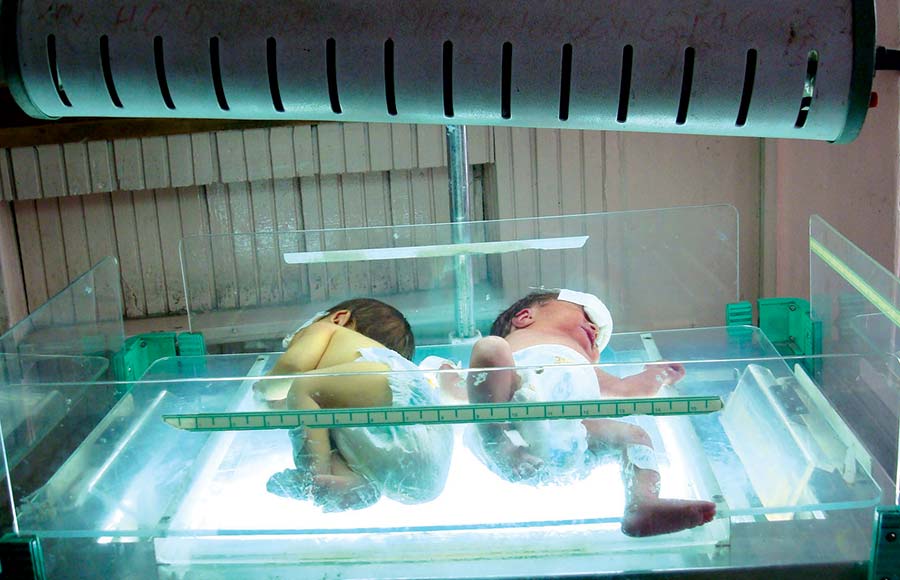
Neonatal jaundice is a major reason for admissions to the NICU. Nearly 26.7 per cent of babies develop jaundice. Most recover naturally, but one in five may require medical treatment.
Physiological jaundice occurs due to excess breakdown of red blood cells and the immature liver’s inability to process Bilirubin efficiently, experts believe. Premature babies are especially vulnerable as the necessary liver enzymes develop only after the first week of life.
Dr Tanveer Bashir said that in several cases, kids acquire phototherapy, but in a very small number, blood transfusion is required. He, however, regrets that a huge section of the parents prefer faith-healing. “Since most neonates recover naturally, people credit the faith healers,” he said. “But the one child who actually needs medical care may acquire permanent brain damage if treatment is delayed.”
Progress and paradox
Jammu and Kashmir, officials said, is among the six states that have already attained the sustainable development goal (SDG) target of having an NMR less than or equal to 12 by 2030, positioning the erstwhile state as the outperforming state with a historically stronger health system.
According to the SRS Bulletin of 2022, the IMR of Jammu and Kashmir is estimated at 26 infant deaths per 1000 live births, representing a specific reduction from the previous year’s 27 deaths per 1000 births. However, the focus on neonatal care is critical, as neonatal deaths constitute two-thirds of total infant deaths. The NFHS-5 report indicates NMR of 9.8 per 1,000 live births.
Infrastructural Challenges
The backbone of neonatal care in Kashmir rests largely on state run hospital network, particularly tertiary care institutions in Srinagar: SMHS Hospital, Lal Ded Hospital, Children Hospital Bemina and SKIMS, which functions as referral hubs for high-risk neonates. This centralised referral system places immense strain on already overstretched facilities, with many neonates arriving in critical conditions after delays and inadequate stabilisation at peripheral centres.
“We receive a lot of patients from the Kashmir periphery,” Dr Rashid Parra, the Medical Superintendent of children hospital, said, adding the countryside lacks a proper NICU facility. “Sometimes, it is hectic for us to deal with the rush”.
Data shared with all SNCU and NICU facilities show that five districts report referral rates exceeding 33 per cent, reflecting a serious deficiency at the district level. A performance audit conducted in November 2025 revealed that many special newborn care units function largely as transit points rather than treatment centres, resulting in avoidable referrals. At the community health centre in Kupwara, for instance, non-functional phototherapy units led to referrals even for routine jaundice cases.
Equipment shortages have further compounded the crisis. A 2024 report highlighted a shortfall of over 25 ventilators across skims with a severe gap in neonatology services. Due to poor maintenance and a lack of spare parts, many machines are rendered non-functional in PICUs and NICUs.

Conditions at Lal Ded hospital have raised particular concern, with reports of 2 to 3 neonates sharing a single radiant warmer, significantly increasing the risk of hospital-acquired infections and neonatal sepsis.
Hospital data reflects the severity of the referral burden. In 2024, Lal Ded recorded 297 deaths out of 3107 admissions. Following media scrutiny in 2025, hospital authority sited an adjusted neonatal mortality rate of 9.9 per thousand live births while acknowledging the mortality figures are skewed by its role as a referral endpoint for the sickest newborns.
Although aggregate neonatal mortality in Jammu and Kashmir has declined, moving the UT closer to SDG targets ahead of the national timeline, underlying disparity persists. Rural areas continue to face the “tyranny of distance”, with out-born neonatal mortality historically nearly double that of inborn cases (24.32 per cent vs 14.86 per cent in 2018). Encouragingly, recent data from 2023 indicates that out-born mortality has declined to around 11 per cent, suggesting improved ambulance services and stabilisation protocols, even as audit findings confirm that referral rates of 29 per cent to 36 per cent in districts such as Ramban, Kulgam, and Reasi remain well above the ideal 10-15 per cent threshold for functional SNCUs.
Improvising Conditions
For years, hospitals in Jammu and Kashmir have carried a heavy neonatal and paediatric workload. Resources have often been stretched, wards overcrowded, and doctors forced to make difficult decisions under pressure. Yet, slowly and quietly, the situation has begun to change.
Doctors working in the public health system say outcomes for newborns in the Valley are improving. In some indicators, they now compare favourably with several high-focus states. The shift, they say, is the result of steady investments in public hospitals, better referral systems, and a growing emphasis on specialised care rather than emergency response alone.
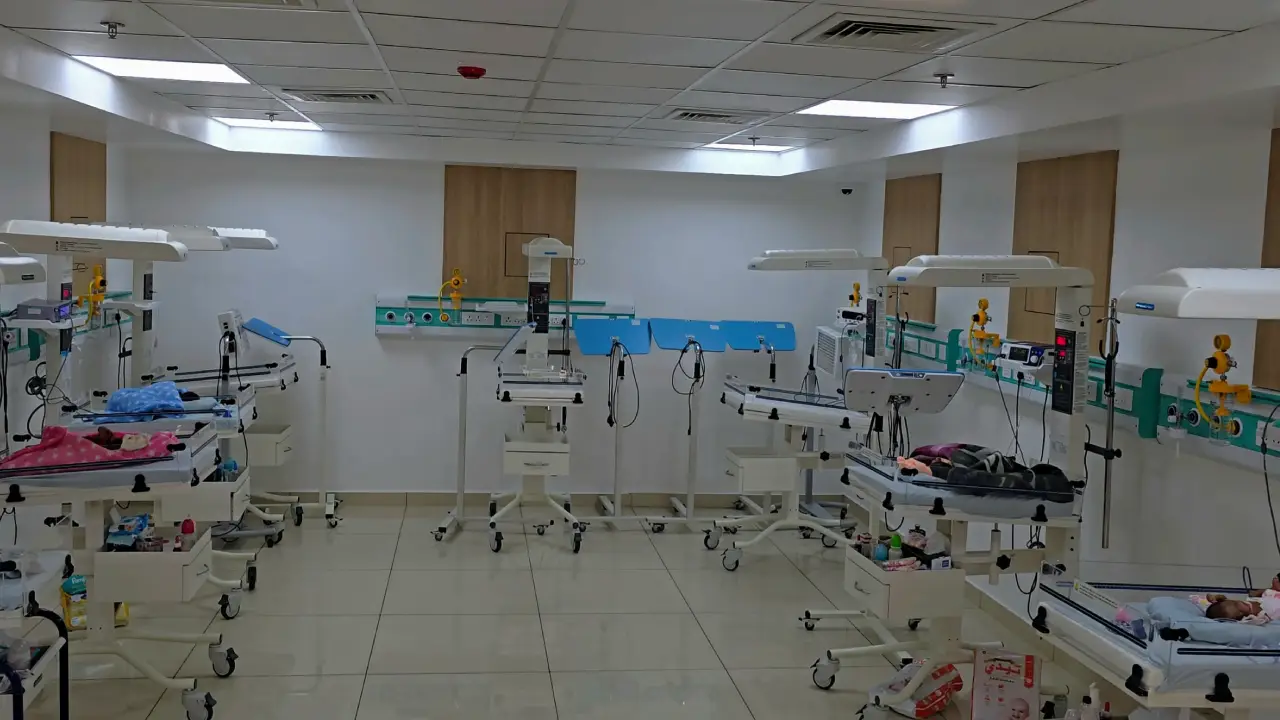
At the heart of this transition are the tertiary hospitals. In recent years, the Children’s Hospital has become the Valley’s main centre for paediatric and neonatal care. Parra said his hospital operates 25 fully equipped NICU beds, supported by high-end ventilators and advanced bubble CPAP systems, along with another 16 ventilators.
A Level-II unit with nearly 60 beds looks after moderately ill newborns, while Level-I services handle basic neonatal care. Altogether, the hospital now offers close to 128 paediatric and neonatal beds. “We are now able to operate on children with birth anomalies due to good backup support,” Parra said. “We are trying to ensure that care across the paediatric spectrum is given under one roof.”
The impact of these improvements is beginning to show beyond hospital walls. According to the Sample Registration System Bulletin 2022, Jammu and Kashmir’s IMR has declined to 26 deaths per 1,000 live births, continuing a downward trend. Health workers credit this to high institutional delivery rates and the expanding reach of ASHA and ANM workers, who often spot complications early and guide families to care.
Referral outcomes are improving as well. Data from 2022-23, shared by senior paediatricians, show that mortality among outborn newborns has fallen to around 11 per cent. Doctors link this to better ambulance connectivity under the 108 referral network and improved stabilisation at district hospitals, which has reduced dangerous delays during transport. In Anantnag, officials said that after increasing paediatric bed strength to 55, referrals to Srinagar dropped to below 10 per cent.
Besides, programmes like the Janani Shishu Suraksha Karyakram and home-based newborn care have taken neonatal services into communities. While home visits are largely on track, officials admit that frontline workers still need better training to identify high-risk newborns early.
The Private Sector
With parents aware and the proper care in demand, the private sector chipped in. They started filling the gaps, especially when government facilities are stretched. Advanced neonatal care remains confined to public hospitals.
“Earlier, NICUs were available in major government hospitals,” said Dr Tanveer Bashir, a neonatologist at Nora Hospital. “The private sector started NICU in 2016, and by now the ecosystem has matured”. Unlike the state-run facilities, the private NICUs often offer quicker admissions, higher staff ratios, and advanced monitoring. “Our NICU has 26 beds, and it is almost always full.”
Cost, however, remains a major barrier. While Golden Card insurance offers some relief, doctors acknowledge that coverage rarely matches the real cost of intensive neonatal care, forcing families to make difficult choices.
Doctors assert that systems and services can only go so far without informed parents. One mother, who had been treated for a high-risk pregnancy, admits she never imagined her newborn might need specialised care. “I was seeing a private doctor, but I never thought to ask whether a NICU was available,” she said. “Only later did I realise how unprepared we often are.”
Dr Sajad admitted the lack of awareness. “Most families consult gynaecologists during pregnancy. When complications arise, they are referred to government hospitals, often without complete medical records,” he said. “That gap can affect care.”
He believes counselling must begin early. “From the moment a pregnancy is confirmed, parents should be told about possible risks. Childbirth is unpredictable and can become life-threatening,” he said. With rising infertility, he added, “Every birth is precious”.
Stories of Hope
Better facilities have improved the neonatal care. Dr Tanveer recalls a child born at just 24weeks of pregnancy, weighing only 600 grams. “Such babies can survive only when there is advanced equipment and trained staff available,” he said. He remembers a 28-week preterm twin, weighing around 900 grams, who was admitted with collapsing lungs and a severe RSV infection. The baby remained on a ventilator for nearly three weeks. “Today, the child has been discharged and is breathing on his own.”
Similar stories are in the Children’s Hospital, too. They speak of a preterm baby weighing only around 400 grams who survived.
Way Forward
Kashmir’s neonatal care is neither one of crisis nor of easy success. It is a story in transition marked by progress, persistence, and unresolved gaps. On one hand, declining mortality indicators, expanding NICU capacity, improved referral transport, and the emergence of specialised neonatal services signal a health system that is slowly strengthening. On the other hand, stark disparities between urban and rural access, infrastructure shortfalls at district facilities, and delayed care during the most critical hours of life continue to place newborns at risk.
In a region where births are increasingly precious, every newborn saved carries significance far beyond statistics. The direction is hopeful, the foundation is visible, and the evidence suggests that with sustained commitment, neonatal care in Kashmir can move from pockets of excellence to a system that protects every child’s first and most fragile days of life.