In Kashmir, the struggles and resilience of single fathers are often overlooked in a society where emotional caregiving is predominantly seen as a mother’s role, reports Babra Wani
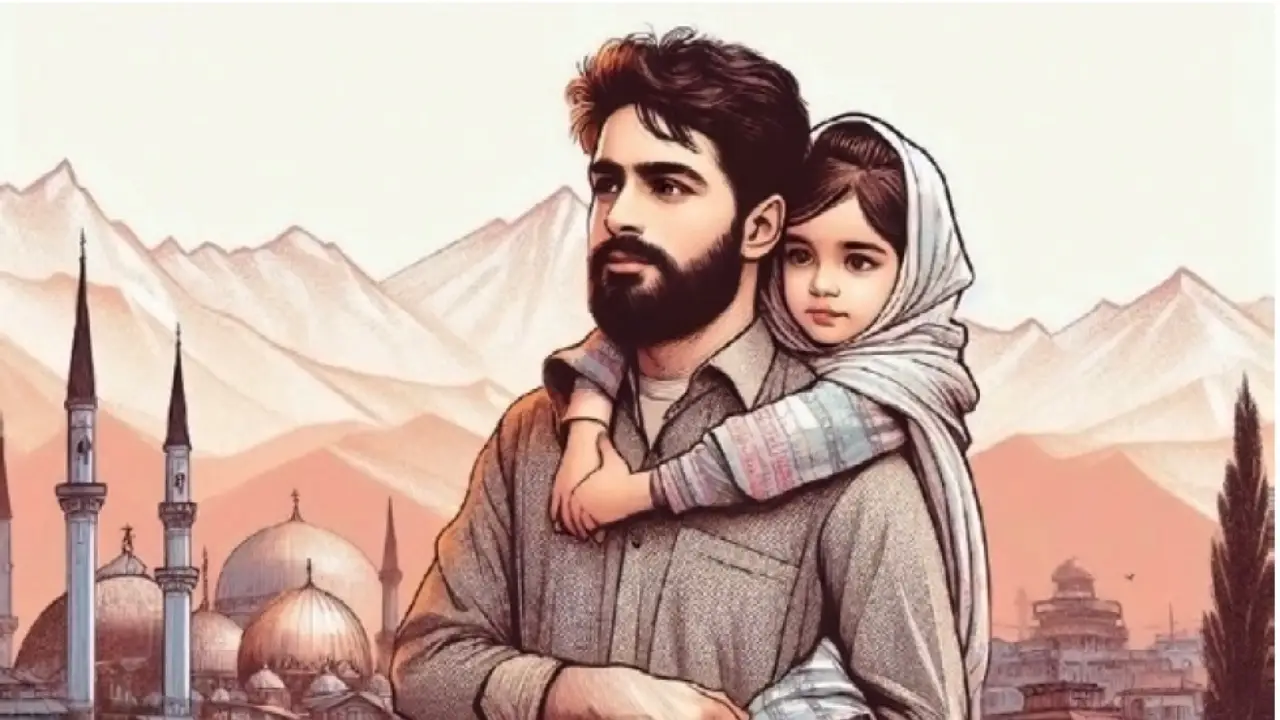
Fayaz Ahmad Bhat, 46, a widower and single father of three, sat on the veranda of his modest home in Laddi, a village nestled in South Kashmir’s Anantnag district. “Not only a child, but the father is unlucky too,” he said, reflecting on the crisis of being lonely and managing the kids single-handedly.
The mother of his three children passed away nearly a decade ago after losing a long battle with oesophageal cancer, a diagnosis that came as a shock to the family. Her death left Fayaz to navigate parenthood alone, raising two daughters and a son.
“For boys, it is easier,” Fayaz asserted, now having a decade-long firsthand experience, his tone measured but sombre. “For girls, it is not. I carry a greater responsibility because I have two daughters, and I cannot replace their mother entirely.”
“There are days when they need their mother more than ever,” Fayaz said, after a long pause, as if thinking how much he should hide and how much to reveal. “I have to step in, not just as their father but as their friend. Some things only their mother could have provided, and on those days, I must be more attentive.”
The support of his extended family has been a cornerstone of Fayaz’s journey. His ageing mother, his disabled brother, and his sister-in-law have all played a role in filling the void left by his wife’s death.
“Without them, I would not have managed,” he admitted, with quiet gratitude. “Their help allows me to work without constant worry about my children, especially my daughters. I know they are in safe hands.”
Fayaz has never considered remarrying, a choice he made resolutely. “There is nothing wrong with remarrying or starting over, but I never even thought about it,” he admitted. “Relatives tried to convince me, but I could not imagine giving my children a stepmother. My only wish is for them to have a good life.”
Fayaz’s children are grown up now. His daughters, who were once in school, have left their studies to focus on religious pursuits, while his son continues his education. “It was entirely their choice to leave their education and do what they are doing now,” he said with mixed feelings about their decisions. “I never forced them, but I cannot say I am happy about it. I never studied. I never went to school.”
Fayaz has been a kaaleenbaaf (carpet weaver) for 19 years. Later, he shifted to the tourism sector. At the age of 23, he decided to marry. “My marriage lasted for more than 15 years,” he said, his tone reflecting the passage of time and the memories of a partnership that ended too soon.
When his wife passed away, his eldest daughter was in class six, the second in class four, and the third one was just four years old. The sudden loss left him struggling to fulfil both parental roles. “I try to keep a very open and friendly relationship with my daughters because now I am both their mother and father. But I know I can never replace their mother,” he said, insisting, “It is not just the children who suffer, but the man who loses his partner, his wife, is unlucky too. Everything becomes more difficult without a woman.”
Not Alone
Fayaz’s story is not unique, as Kashmir is home to countless men who have taken on the dual roles of mother and father, navigating a path filled with challenges while trying to give their children the best life they can manage.
Kashmir’s single fathers come from diverse backgrounds. Some are widowers grappling with loss, while others are left to shoulder parenting alone due to separation or abandonment. Their experiences unfold against the backdrop of conflict and cultural norms where fatherhood is often seen through the lens of financial provision, with emotional caregiving traditionally assigned to women.
Yet, for some men, fatherhood transcends such stereotypes. They brush their daughters’ hair before school, comfort their children in moments of distress, and take on roles that demand tenderness, patience, and resilience. They persevere despite societal judgments, financial strain, and a lack of support systems, driven by a commitment that defies convention.
A Failed Remarriage
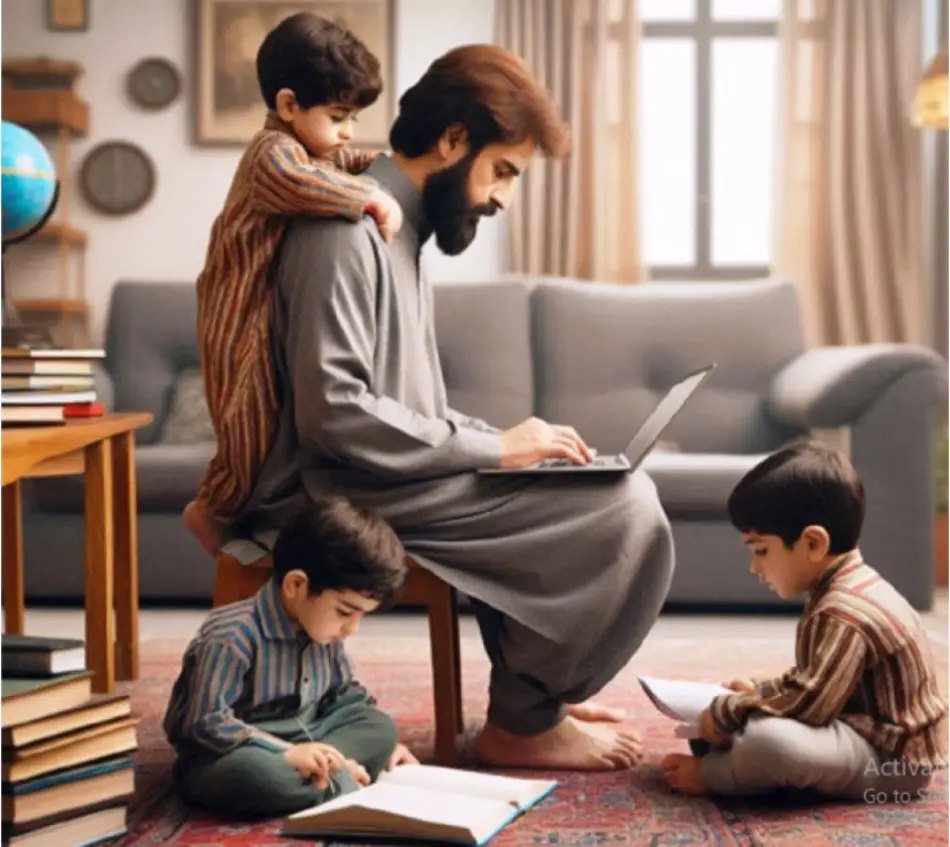
Srinagar resident Ghulam Nabi shares a journey similar to Fayaz’s. He lost his wife to cancer, leaving him to raise three children. Unlike Fayaz, Nabi chose to remarry, a decision that brought its own set of challenges.
In 2003, Nabi’s wife passed away. His youngest son was just five years old, while his two older sons were eight and nine. The family was left reeling from the loss after months of watching their mother battling for life in the hospital.
The youngest son, now 26, admitted he has no memories of his mother. “I was too young when she passed away. Maybe that is why I feel no sense of attachment to her. I do not even remember her face,” he said.
For Nabi, however, her memory remains vivid. “When she passed away, I did not think about remarrying initially,” he recalled. “But since my children were very young, everyone around me insisted I should marry again.”
Three years after his wife’s death, Nabi remarried. His second wife, also a widow, brought her young daughter into the family. But the marriage proved short-lived.
“It did not work out,” the youngest son explained. “Her behaviour towards us was different. She treated us unequally, and when our father realised this, he decided it was better to call it quits.”
After just over a year, Nabi and his second wife divorced. The decision marked the end of his brief attempt to rebuild his family with a new partner, leaving him to continue as the sole caregiver to his children.
Nabi’s experience underscores the complexities single fathers face in a society where remarriage is often seen as a solution, but one that does not always align with the needs of grieving families.
For Ghulam Nabi, the extended family played a crucial role in helping him raise his children. His sister, in particular, stepped in to provide support, ensuring the three young boys had some semblance of stability after their mother’s death.
“Now that we are older, we keep telling our father that he deserves a life of his own,” said Nabi’s youngest son. “We encourage him to consider remarrying. Soon, we will have our own families, and we cannot let him be alone. He sacrificed most of his youth for us. But he is firmly against it. We still try to convince him.”
In Kashmir, for single parents like Nabi, remarriage is often seen as a way to rebuild a family and create a nurturing environment for their children. Yet, when such efforts fail, the repercussions can be severe.
A failed remarriage often deepens the pain of an earlier loss, compounding feelings of inadequacy and failure. In conservative communities where relationships are closely scrutinised, the dissolution of a second marriage may lead to social judgment and stigma. Children, caught in the upheaval, may grapple with confusion, instability, and difficulties in forming trust.
Family Support
This struggle is not unique to Nabi. Ghulam Qadir, a 65-year-old resident of Srinagar’s Downtown area, faced a similar ordeal. After his wife’s death, he was left to raise two young children on his own. Qadir’s sister became his pillar of support, stepping in to help him navigate the dual challenges of grief and single parenthood.
“She and her family moved into my home to care for my children as well as hers. She gave up her dream of building her own house to prioritise mine. Now that my children are grown, she believes her responsibilities are fulfilled and has begun constructing her long-awaited dream home”, Qadir said, weighing every single word before saying it. He said he never felt alone or allowed his children to sense his fears and vulnerabilities. His sister’s unwavering support had made this possible. “As a man, you are expected to be emotionally resilient. I could shoulder everything because my sister was always there,” he said.
An Adopted Parenthood
While many stories of single fathers centre on their biological children, Bashir Ahmad’s journey stands apart. Now in his mid-sixties, Bashir, a resident of Pahalgam, has lived a life shaped by unusual parenthood. He married thirty years ago, and the couple soon conceived their first child. Tragically, the baby passed away shortly after birth.
The loss devastated them, and their attempts to conceive again were unsuccessful. They sought blessings at shrines and consulted spiritual healers and mystics, but their efforts yielded no results.
In a society where childlessness remains a sensitive and often stigmatised issue, Bashir and his wife decided to adopt. They brought home a baby boy from a nearby village, believing their lives had finally found completeness. However, their happiness was short-lived. Bashir’s wife was diagnosed with cancer, a revelation that struck the young couple like a calamity.
“I remember hearing the news for the first time. It felt as if the ground had given way beneath me. My legs were numb, and I could not stand,” Bashir recalled.
Over the years of struggling with childlessness, the couple had become deeply bonded, united by shared grief and longing.
“When we adopted our son, he was just a few months old. He is 23 now,” Bashir said. “Those were happy days, but my wife’s illness, followed by her passing, changed everything.”
The family of three had moved into their own home after the death of Bashir’s parents. But when his wife passed away, Bashir was left to raise their young son alone. “She was very young when she died, and my son was just a child. Unfortunately, I had no helping hand. I have no sister. So, I had to raise him on my own, in every sense,” he said.
Balancing his roles as a father, mother, and breadwinner, Bashir took on the challenges of single parenthood. He worked as a labourer, navigating a life of emotional and financial strain. “I tried my best to give him a beautiful and fulfilling life. We adopted him to offer him everything we could.”
Bashir is preparing for his son’s wedding next year, a milestone he views as a testament to the struggles they have endured together. “I believe he is now ready to start a family of his own,” Bashir said. “His childhood was a journey of hardship, but he has grown into a responsible young man.”
Despite losing his wife at a young age, Bashir never considered remarrying. “I loved my wife deeply,” he explained. “We grew up in the same neighbourhood and shared a life of struggle. Our love and mutual understanding gave us strength. Marrying again was never an option for me.”
Raising his son alone, Bashir faced years of loneliness, financial strain, and societal expectations in his close-knit community. Yet, his love for his son and the memory of his late wife kept him determined. “Each struggle has been a lesson,” Bashir reflected. “I am grateful for the life I have built for my son, and he has always shown gratitude for the efforts I made.”
Changing Narratives
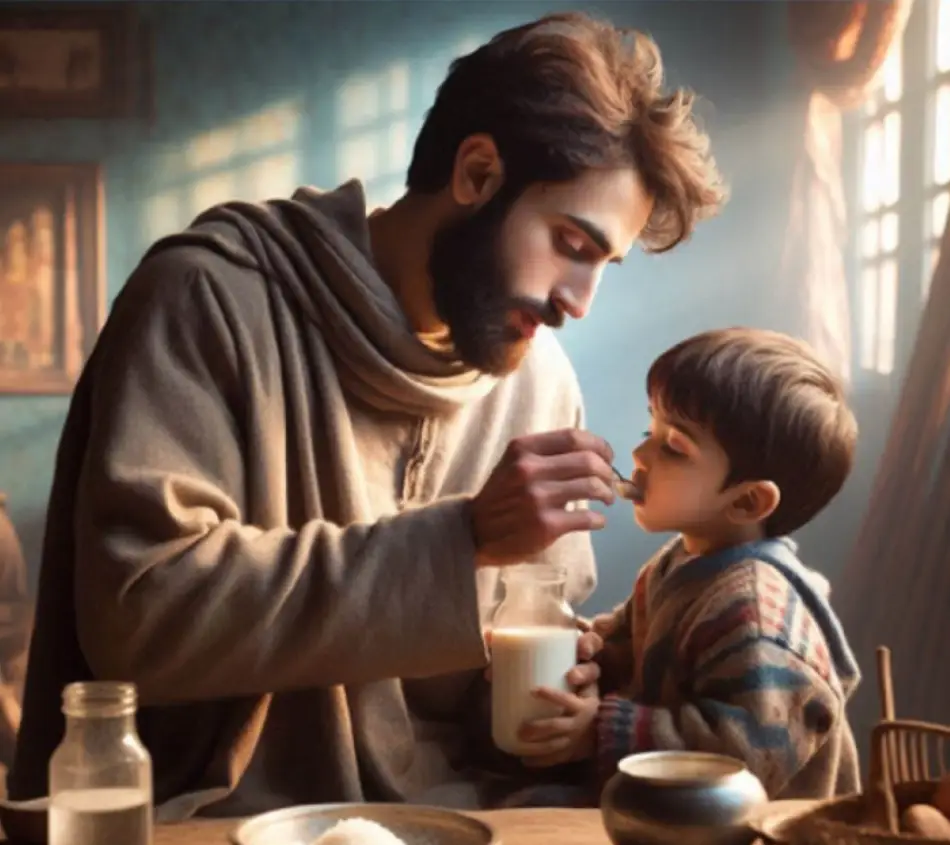
In Kashmir, single parenthood has traditionally been associated with widowed or divorced mothers, often celebrated for their resilience in raising children alone. However, this narrative is gradually expanding as the stories of single fathers like Bashir gain visibility, offering new perspectives on the complexities of parenting.
In Eastern households, fathers are typically seen as providers, responsible for the family’s financial stability. The dual burden of emotional caregiving, traditionally assigned to mothers, alongside the responsibility of earning a livelihood, poses unique challenges for single fathers.
Balancing these roles redefines fatherhood, challenging entrenched cultural norms. The evolving experiences of single fathers highlight the shared struggles and triumphs of all single parents, irrespective of gender, while contributing to a broader understanding of modern parenting.
A Healer
For 70-year-old Ghulam Mohammad Mir, life has been shaped by struggle since the day he was born. He reflects on the challenges he has faced, not only in raising his children after the untimely death of his wife but also in caring for his orphaned nieces and nephews.
“After my siblings passed away, I took it upon myself to raise their children. I believe that responsibility has kept me going,” Mir, fondly known as Moam Cheche, said.
The loss of his siblings in quick succession left him solely responsible for his family. Not long after, his wife also passed away. “I faced many hardships raising orphaned children. But perhaps it was these very hardships that led to a beautiful gift,” he continued. As the only surviving member of his family, he assumed the weight of caring for his relatives.
Moam Cheche is also known for his work as a healer. People visit him for relief from ailments such as joint pain, knee pain, and backaches. His neighbours regard him as a godly man, someone whose hands bring healing.
“The most challenging part of raising children without a mother is trying to fill the void left by her,” he explained. “You can never truly replace that. When people compare a mother’s love to that of Allah, it highlights the profound significance of a mother’s role. A father’s love is not comparable in the same way. I have spent years trying, but I cannot replace a mother’s love.”
Mir went on to reflect on the different roles fathers and mothers play in a child’s development.
“A father’s love often manifests as protection, direction, and encouragement,” he said. “It helps a child develop independence and resilience. But a mother’s love is more about warmth, care, and emotional support. It offers safety and consolation. While a mother focuses on emotional health, a father’s role often centres on preparing children for life’s challenges.”
A Loss
Mohammad Yousuf Mir, from Dahwatoo in Dacchnipora, Anantnag, has similarly shouldered the responsibility of raising his three children – two daughters and a son – alone after the death of his wife.
“She was a pious woman, a wife, a mother – the kind of woman everyone dreams of,” Mir said, his voice trembling as he recalled the memory of his late wife. “She was beautiful and healthy. No other woman in the world could compare to her. She was unlike anyone else.”
Mir’s love for his wife was palpable as he continued, “She was the eldest of her siblings. Shortly after our marriage, her mother passed away. At that time, her siblings were still young, and there was no one to guide them. That is when she took on the role of mothering them.”
In 2010, Mir and his family lived in rented accommodation in Anantnag to support their children’s education.
“One day, while travelling back to our native village, my wife complained of discomfort and pain in her underarms. I told her we would see a doctor the next day,” he recalled.
Initially, Mehbooba visited a local doctor and was prescribed medication. “She took the medicine for over a week, but there was no improvement. We then consulted another doctor, but still, there was no change,” Mir explained.
Unsatisfied with the results, the couple sought further medical advice, eventually visiting a hospital and then a specialist. “When she saw the third doctor, he ordered a series of tests,” Mir said. After the tests were conducted, the couple was told to return for the results in four days.
“I was leaving for our native village when my wife told me that the doctor wanted to meet with me,” Mir recalled. “I still remember the chill that ran down my spine. I knew something terrible was about to happen.” When Mir met with the doctor, he was informed that his wife had been diagnosed with breast cancer.
A Long Journey
“The world went numb. It marked the beginning of a long journey of struggle,” Mir said, recalling the moment he received the diagnosis.
His wife’s treatment began immediately, and with it, a series of tests. “We were given another date for consultation, then another for surgery,” he continued.
The couple soon travelled to Mumbai, where further tests were conducted. “They asked us to visit SKIMS in Soura to start the treatment. We went to a nearby hospital, where Mehbooba’s breast was removed. Even after the surgery, there was no improvement,” Mir explained. Mehbooba’s cancer had progressed to stage three. Mir did everything he could to secure her recovery. “I was about to sell land and exhaust all my savings. I just wanted her to get better,” he said.
But despite the efforts, Mehbooba passed away on September 29, 2011. At the time, Mir’s eldest son was 18, his daughter, now a doctor, was sixteen, and the youngest was just fourteen.
“Life became a series of struggles after she passed,” Mir reflected. “The biggest challenge was the children’s education. It suffered. We continued living in the rented accommodation, and that is when I had to take on the role of mother. I cooked, I washed, I maintained everything. I did everything she used to do.”
“Alhamdulilah, my children have shone,” Mir continued. “My eldest daughter is now pursuing her post-graduation in medicine. My youngest daughter decided to take on the homemaking responsibilities and now looks after the household.”
Mir expressed the pain of losing his wife, describing it as the greatest tragedy. “It is the woman who looks after the house, raises the children, and does everything in the home-building process. I had to take on that role. The hardships I went through are known only to Allah and myself.”
He acknowledged the support of his siblings and his late wife’s family. “I was even urged to remarry. Many proposals were made, but I could not. My wife and I raised our children with so much love and care. I could not risk remarrying. It would have been unbearable to see my children suffer.”
“Initially, my children were more attached to their mother, but now, since she is no longer here, I am everything to them,” he said. “Alhamdulilah, I succeeded in my mission. My daughters and I share a beautiful relationship.”
The shift in his role as a father was also evident. “When Mehbooba was alive, I was strict. But now I have become softer. I used to think that if I scolded my children or stopped them from doing something, they might start to think about not having a mother.”
Mir concluded that, until his last breath, he would never be able to fill the void left by his wife. “She was the best woman of my life. Even the stones cried at her loss. Her absence can never be compensated for. I will always miss her. She was a woman of strength, wit, and wisdom.”
(Some names in the report have been changed to protect the identities of the characters.)