Protests in Muzaffarabad over power tariffs, subsidies and refugee seats echo 2024 unrest, exposing Pakistan’s governance failures and deepening alienation
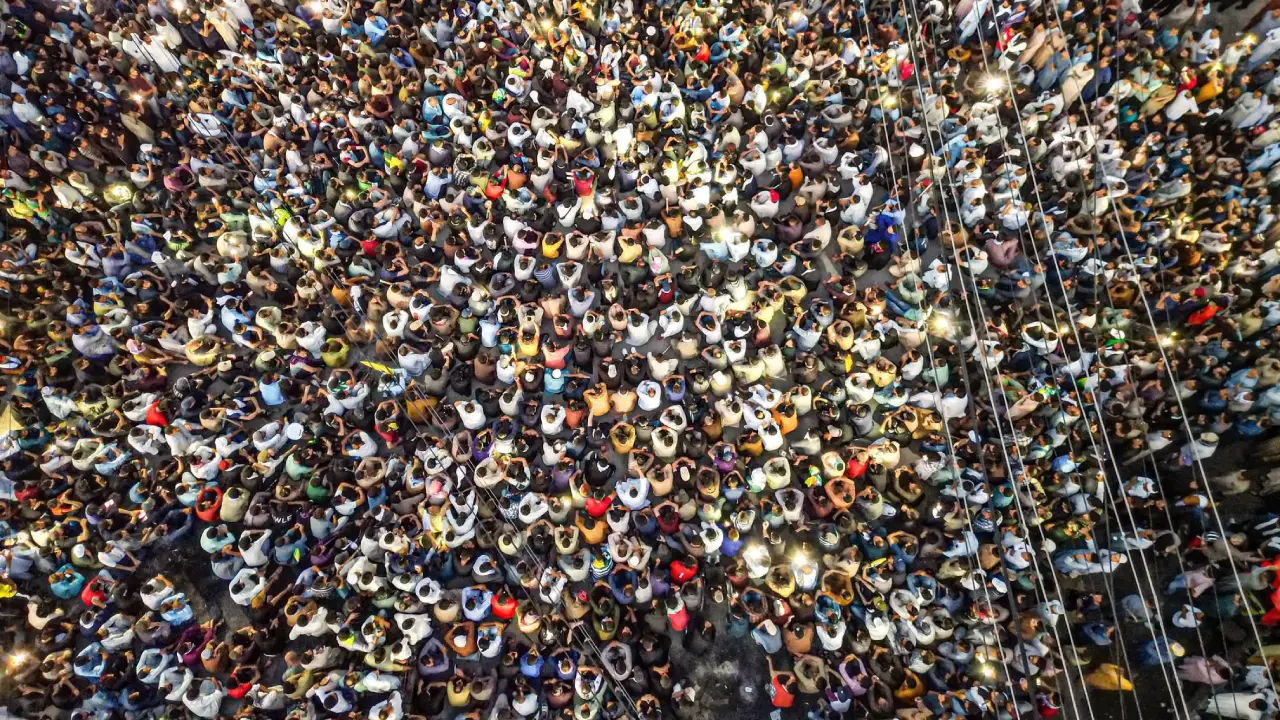
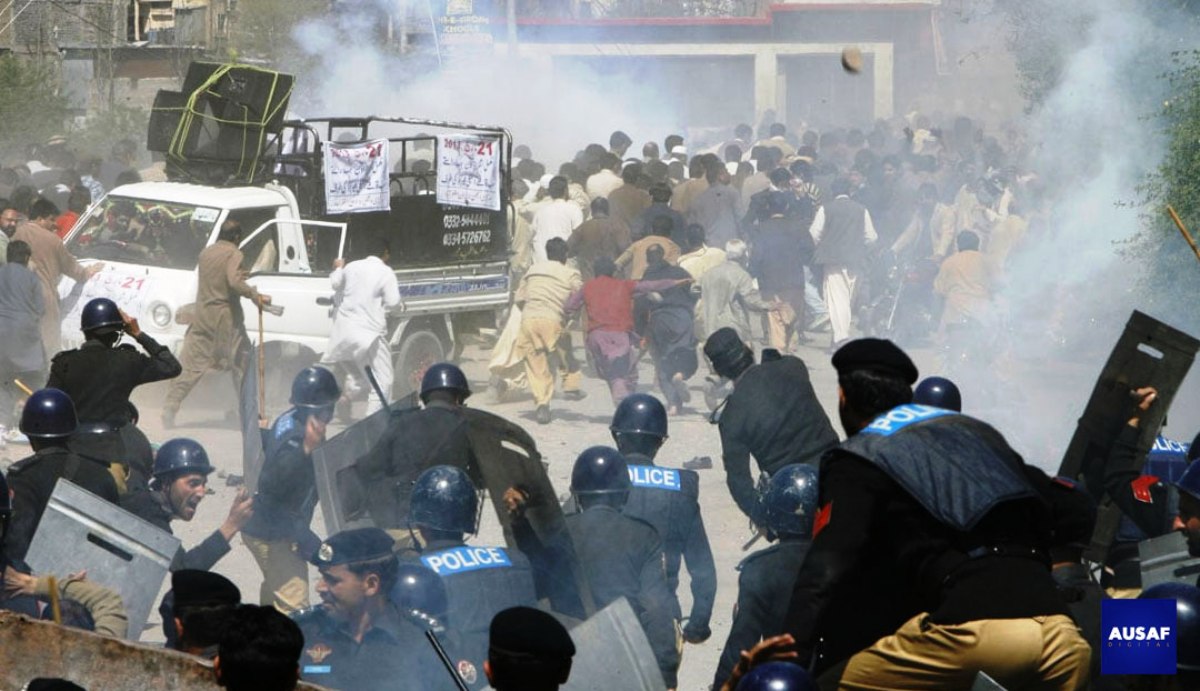
Muzaffarabad, the capital of the disputed Kashmir on the other side of the Line of Control (LoC), has rarely looked this tense. For many days, last week, its streets remained eerily deserted. Shuttered shops, wheel-jammed highways, and the absence of even roadside vendors spoke of a city under siege. Only the wail of tear-gas shells and the crack of live fire broke the silence as protesters and police clashed at Neelum Bridge. By the end of September 29, shopkeeper Muhammad Sudhir, 30, lay dead, and more than a dozen others were injured, according to reports appearing in Indian and Pakistani media.
Sudhir’s killing has become the focal point of a storm in the region, paralysing its districts from Mirpur to Rawalakot. The trigger this time is a sweeping 38-point charter of demands issued by the Joint Awami Action Committee (JAAC). But the discontent runs far deeper, echoing grievances that set the region ablaze in May 2024.
By now, the death toll has crossed 10, including three cops and six civilians. JAAC executives, however, assert that 12 civilians have been killed in three days, the worst on October 1, when six civilians and three cops were killed. They have said that nearly 200 civilians are injured, some of them seriously. Region’s Press Information Department (PID) has issued a statement asserting 172 cops and 50 civilians are injured and 12 police men are in critical condition.
The Events
The events of late September unfolded with speed. A so-called peace rally led by Muslim Conference politician Raja Saqib Majeed entered Muzaffarabad on the very day the JAAC had announced a shutdown. Eyewitnesses quoted by the media insist that the convoy, protected by police and paramilitary personnel, opened fire on demonstrators gathered at Neelum Bridge. Within minutes, chaos swept through the city.
Sudhir, a crockery shop owner from Neelum Valley, was struck by a bullet. “By the time we reached CMH, he had lost consciousness due to excessive bleeding,” Ghulam Mustafa, a bystander who helped carry him to the hospital, was quoted as saying. He died soon after.
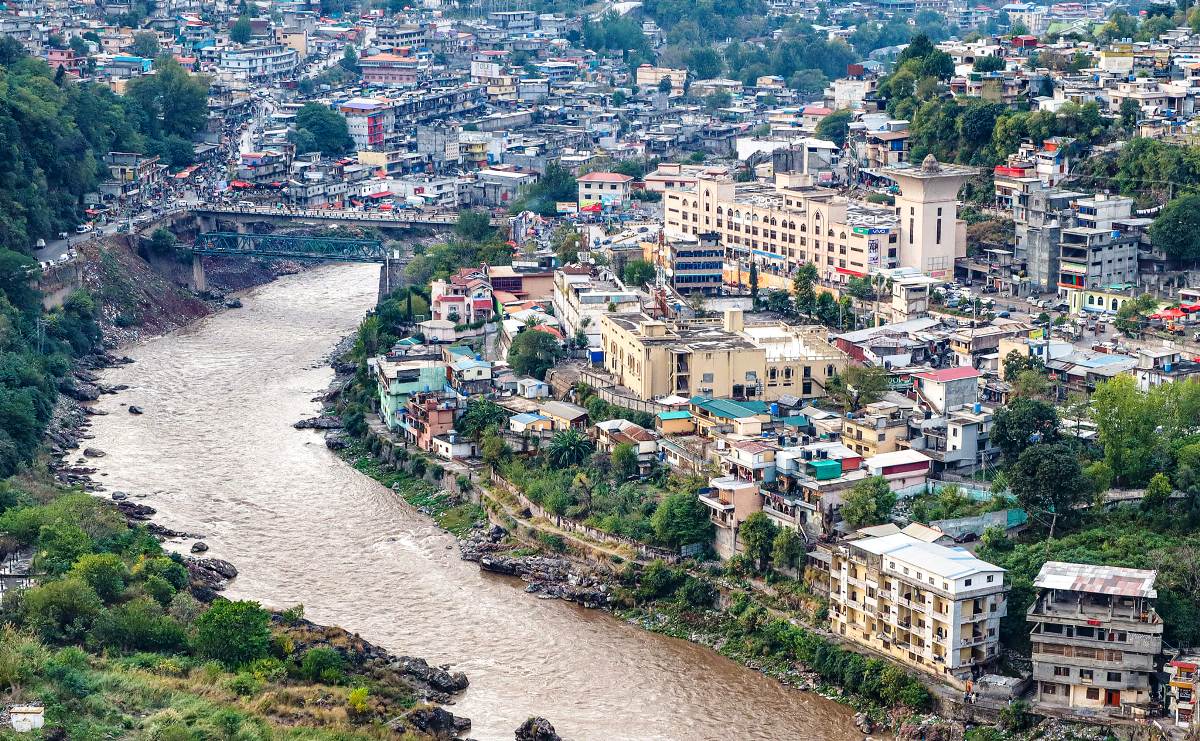
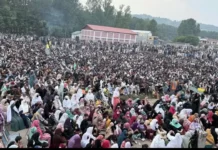
That night, Sudhir’s body was laid across the Chehla Bandi road by angry relatives and fellow activists, who refused burial until a formal case was registered against Majeed and his supporters. By the following morning, Muzaffarabad’s Lal Chowk had swelled with thousands chanting against elite privilege, police brutality, and Islamabad’s neglect. Shaukat Nawaz Mir, the fiery leader of the JAAC, addressed the crowd with sharp words. “A state is like a mother,” he had said, “but unfortunately ours has turned out to be a witch that killed its own children.”
In the subsequent days, the crisis deepened as the protests spread in the length and breadth of the region, triggering more clashes and sending many body bags home. The crisis depended on the JAAC accusing the ruling party activists of using firearms against the civilian protesters.
Official Response
The government’s response was two-pronged. On one hand, police and paramilitary forces used tear gas, batons, and bullets to disperse protesters. On the other hand, Islamabad imposed a sweeping communication blackout, suspending mobile and internet services not just in Muzaffarabad but across much of the region. Even landlines went dead. For journalists, the blackout was crippling. Local newspapers could not be printed, and reporters were forced to travel across the border into Khyber Pakhtunkhwa to file their stories, until internet services there, too, were cut.
Despite the blackout, the protests spread. In Dadyal, demonstrators hurled containers into the river from a bridge to block access. In Rawalakot, Sudhnoti, Bhimber and Kotli, towns were locked down. Diaspora communities staged protests outside Pakistani consulates in London and Bradford. The sense of siege was palpable. Shops remained shuttered, transport had disappeared, and even medical stores stayed closed. “We have been left without bread, without light, without voice,” a trader in Mirpur who joined the strike was quoted as having said.
The Demands
The breadth of the demands explains the breadth of the mobilisation. At the centre lies the call for electricity at production cost from the Mangla and Neelum-Jhelum dams. Both are located within the region but feed Pakistan’s grid. Protesters argue that it is their rivers and their land that power the country, yet they remain in darkness and pay inflated tariffs.
Alongside this are demands for subsidised flour, relief from local taxes, and a rollback of what protesters call the “luxuries” of the political elite. More controversially, the JKJAAC wants to abolish 12 legislative assembly seats reserved for refugees from Jammu and Kashmir who live in Pakistan. These seats, they argue, dilute local representation and ensure Islamabad’s grip over Muzaffarabad.
At the heart of the agitation are not just calls for cheaper flour or fairer electricity rates, but a wide set of reforms that touch nearly every aspect of daily life. Protesters have demanded greater accountability in the judiciary and structural changes in governance to curb corruption and political patronage. They want relief from local taxes that have risen sharply in recent years, particularly for traders and small businesses battered by inflation.
Long-delayed road projects, better transport, and investment in infrastructure to connect remote valleys form another part of the charter. Equally urgent are demands for free education and healthcare, especially in rural and hilly areas where schools and hospitals are scarce. Employment opportunities have also emerged as a sore point, with activists insisting that jobs should go to local youth rather than outsiders or refugee quotas. Alongside this are pleas for rehabilitation and compensation for families displaced by disasters or conflict, and fairer agricultural policies that ensure farmers and communities benefit from the hydropower and water resources flowing from their own land into Pakistan’s national grid.
Islamabad insists that it has already conceded 36 of the thirty-eight demands but refuses to touch the refugee seats and elite perks, calling them unconstitutional. For the protesters, those are the very heart of the movement. “Our campaign is not against any institution but for the fundamental rights denied to our people for over seventy years,” Mir told supporters, “enough is enough.”
A 2024 Repeat
The current turbulence feels uncannily like a repeat of the previous year. In May 2024, the same towns and valleys erupted in protest. Then, too, the JAAC had called for electricity at cost, subsidised flour, and an end to elite privileges. The unrest was sparked when Islamabad extended flour subsidies to Gilgit-Baltistan but excluded the Muzaffarabad-ruled region.
Students at Muzaffarabad University took the lead, staging demonstrations through the summer of 2023. Anger mounted when new electricity surcharges were introduced in August 2023. By September, the Awami Action Committee had been formed, bringing together traders, lawyers and activists into one coalition.
The government attempted to pre-empt a long march announced for May 11, 2024, by arresting dozens of activists. But this backfired. In Mirpur’s Dodyal tehsil, mobs beat and stripped a deputy commissioner, torching his vehicle. Clashes spread rapidly. On May 10, crowds battled police on Muzaffarabad’s Neelum Bridge, hurling stones as tear gas shells filled homes and mosques. By the weekend, the violence had claimed the life of police sub-inspector Adnan Qureshi and three protesters. Dozens more were injured.
The scale of the unrest rattled Islamabad. With the International Monetary Fund team in town, Prime Minister Shehbaz Sharif scrambled to announce emergency concessions. Flour was to be sold at subsidised rates, and electricity tariffs were reduced by three to six rupees per unit. But even as the government announced Rs 23 billion in subsidies, the promises soon rang hollow. By April 2025, activists accused the administration of failing to freeze tariffs and prices at the agreed levels. The stage was set for the current confrontation.
Key Factors
Both uprisings, past and present, revolve around energy. The region is home to some of Pakistan’s largest hydroelectric projects. The Mangla Dam alone produces over a thousand megawatts, while the Neelum-Jhelum project has added nearly as much since it became operational in 2018. Together with private-sector plants like Patrind and Gulpur, the region generates over 3,100 MW of electricity. Yet its four million residents often endure power shortages and high bills. Many have stopped paying altogether, with unpaid dues reportedly reaching Rs 400 crore. The sense of injustice runs deep. “Electricity is our resource,” a protester in Kotli said last year, “but we live in darkness.”
The protests are not only about electricity and flour. They are also about political voice. The 12 refugee seats in the legislative assembly, reserved for Kashmiris living across the border in Pakistan, have long been contentious. Critics argue that they allow Islamabad to engineer majorities in Muzaffarabad, weakening local representation. The JAAC has put their abolition at the top of its demands.
Islamabad, however, fears the symbolism of scrapping the seats. Federal minister Ameer Muqam called it “a dangerous message” that would disregard the sacrifices of Kashmiri refugees. Officials insist constitutional amendments cannot be conceded under street pressure. But protesters see this as evasion. For them, the refugee seats embody the imbalance of power between Islamabad and Muzaffarabad.
The political stakes are high. Pakistan’s government has struggled with inflation above 17 per cent and is negotiating a fresh IMF bailout. At the same time, it seeks to maintain its narrative abroad as a champion of Kashmiri rights.
Attempts to frame the movement as foreign-sponsored have largely failed. Just two weeks before the shutdown, the region’s premier appeared with four former premiers to wave a so-called cipher alleging Indian backing for the protests. The claim was met with mockery online. Even within the region’s political class, sympathy for protesters runs deep, and police officers privately admit reluctance to act against them.
Beyond Pakistan’s borders, the Diaspora has amplified the unrest. More than 15 lakh people from the region live in Europe, especially the United Kingdom. They are the main contributors to Pakistan’s foreign earnings through remittances, believed to have reached a record high of US$31.2 billion in the first ten months of the current fiscal. They have organised solidarity demonstrations in London, Bradford and Brussels. International media have also turned the spotlight on Muzaffarabad. The New York Times quoted residents speaking of “a strong sense of anger and frustration” among youth due to “political disappointment, high inflation and severe unemployment.”
Federal Dilemma
For Islamabad, the dilemma is stark. Repression risks inflaming a region already scarred by mistrust. Engagement risks conceding ground that challenges its control. With elections in the region due in mid-2026, mainstream political parties fear humiliation at the ballot box. The longer the deadlock persists, the stronger the JAAC’s appeal becomes.
The unrest is not likely to fade soon. The JAAC has already announced October 15 as the next phase of mobilisation. The death of Sudhir has become a rallying cry, with his coffin symbolising both anger and defiance. “We will not bury him until justice is done,” protesters declared.
As the crisis deepens, the choice before Islamabad grows sharper. It can negotiate seriously on the core demands, energy rights, refugee seats, elite privileges, or it can continue to rely on crackdowns and blackouts. History on both sides of the Line of Control shows how quickly alienation hardens when trust is broken. In Muzaffarabad, currently, that lesson hangs heavy in the air.
Post Script
Reports appearing in the media suggest that Islamabad has inked a deal with the protesting committee. The details of the deal, however, are not known.
(The news feature by Kashmir Life Desk is based on the reports that appeared in the newspapers in India and Pakistan. The rupee mentioned is Pakistani rupees, which currently values less than one-third of the Indian rupee.)