A late-night explosion at Nowgam Police Station, caused during forensic handling of seized chemicals, killed nine, injured dozens, and revived Kashmir’s long history of deadly accidents involving stored explosives, writes Masood Hussain
At around 11:30 pm on November 14, as Kashmir tuned into the late-night updates about the deadly explosion in Delhi, Srinagar was struck by an even more visceral shock. Initially mistaken as an air-blast, a sonic boom, or the kind of thunderous detonation that Kashmiris are accustomed to since the 1990s, it was in fact something far more unexpected. The force of the blast pushed people off their chairs, rattled window panes across neighbourhoods, and sent an instant chill through the air. For nearly half an hour, nobody could tell where the centre of the crisis was.
The devastation began to reveal itself in the next 20 minutes. Videos circulated of flames rising from the Nowgam Police Station on the outskirts of Srinagar. Sirens cut through the night as ambulances and fire tenders converged on the area. And Kashmir, a place long accustomed to explosives, militant-planted, abandoned at encounter sites, leaking from border minefields, or erupting in military stores, realised it was witnessing a catastrophe born not of militancy, but of procedure.
The blast had ripped through the police station compound with extraordinary violence. A storage shed adjoining the main building was flattened. The police station’s structure itself was torn apart. Cars in the parking area were tossed, burnt, or crushed. Body parts were hurled more than a hundred metres away. Neighbours as far as 800 to 1,200 metres reported window panes shattering. Many residents said their first instinct was to assume a plane crash or a high-intensity militant strike.
“It felt like an earthquake. Glass was everywhere,” a neighbour recalled. Another added: “For a few seconds, we thought a plane had fallen.”
Reliving The Past
Kashmir has lived with the consequences of explosives for decades. Live grenades left behind at encounter sites, mines dislodged from the Line of Control (LoC), mysterious old shells dug up by children, or scrap dealers attempting to extract iron from the dead shells, and military stockpiles that have occasionally gone off have collectively claimed scores of lives.
The Nowgam blast, however, was of a different magnitude and nature. It was an explosion produced not by outlaws but by substances already in police custody, chemicals seized as evidence, stored according to mandated procedure, and handled by trained teams.

Across Nowgam and its adjoining colonies, people spent the night awake, watching flames engulf the police station, listening to the movement of fire tenders and ambulances, and fearing that more explosions could follow. Some residents described seeing injured men emerging from the station, covered in blood and stumbling toward help. Others said they initially hesitated to step out, believing the police station had been targeted.
The proximity of a private hospital, Ujala Cygnus, proved crucial: its ambulance made repeated trips through flames and smoke to ferry the wounded. The hospital eventually treated 23 injured people, three of whom were in the ICU but stable when reported.
DGP Speaks
The next morning, Director General of Police Nalin Prabhat addressed a press conference, calling the blast a tragic accident.
“The explosion was accidental, and there seems (to be) no terror angle,” Prabhat said.“It was a huge recovery. For two days, it was being examined… sampling was on. It appears that the explosion took place while they were handling some chemicals. Any other speculation is unnecessary.”
The DGP asserted that the process was carefully done. “The recovery was handled with extreme caution. The explosive material was kept in the police station as per the Standard Operating Procedure,” he asserted. “Whatever material is recovered, it has to be kept in the police station till samples are extracted and sent to the FSL… In between the process, the incident happened.”
The tragedy unfolded against the backdrop of a wider terror investigation that had begun weeks earlier, when posters in Nowgam led the same police station to a module in Faridabad involving doctors, clerics and students linked to the proscribed Jaish-e-Mohammed network. Among those under scrutiny was Dr Umar Nabi, who died in the Red Fort car explosion on November 10 and was believed to have been working with the same chemical mix later recovered in Faridabad.
It was this seizure, nearly 3,000 kilograms of explosive-making material, that became central to what followed. Under the procedure, the consignment had to be brought to the Nowgam Police Station, where the original FIR on the posters was registered. What should have been the secure end of an investigation thus turned into another stage of risk: the police station became the transit, storage and sampling point for one of the largest such recoveries in recent years.
The material travelled more than 1,000 km from Haryana to Srinagar in ordinary pick-up vans and, once in Nowgam, entered a two-day forensic sampling process. During its final stage, technicians were examining boxes that officials say contained a volatile combination of acetophenone, hydrogen peroxide and sulphuric acid, chemicals prone to violent instability when exposed to heat or improper handling. Bright examination lamps were being used to study the liquids, and investigators now presume the additional heat source may have triggered the detonation.
The result was the central paradox of the night: a counter-terror operation that had successfully dismantled a network and intercepted its explosive supply chain ended in a blast that killed the very personnel who had worked to secure the evidence. As one retired officer remarked, the operation “went horribly wrong at the eleventh hour.”
In Line of Duty
Nine people were killed, and 32 were injured. Among the dead were police officers from the State Investigation Agency (SIA), forensic technicians, two revenue officials, two crime-branch photographers, and a tailor who had been assisting investigators in stitching sample bags. It was a roster of people who had come to the police station for routine duties, with no reason to imagine that the night would be their last.
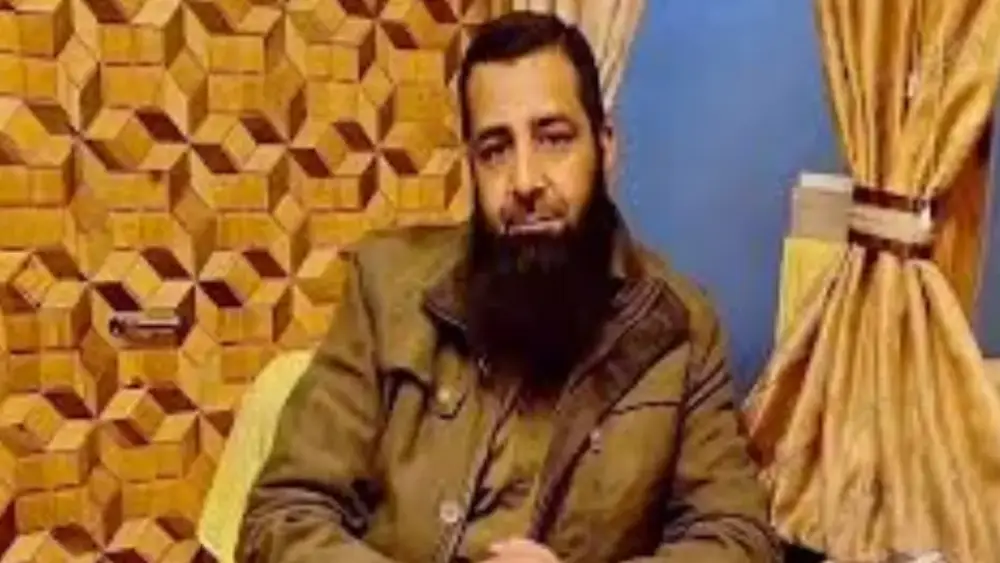
One of the dead was Inspector Peerzada Asrar-ul-Haq from Drugmulla in Kupwara, an SIA officer who had reached the Forensic Science Laboratory team as part of the investigative unit. His colleagues recalled that he had twice narrowly missed qualifying for the Jammu and Kashmir Administrative Service. A poet, he had written in 2020, on his Facebook wall, a long poem:
When I come to the end of my journey And I travel my last weary mile,
Just forget if you can, that I ever frowned And remember only the smile.
Another was Head Constable Mohammad Amin Mir, a forensic technician from Bemina, who had rang up his younger brother at around 10 pm to say he was busy and would return home soon. Barely 35 minutes later, the blast took away his life.
Among the civilians on the casualty list was Mohammad Shafi Parray, a 47-year-old tailor from Shankerpora, who had been taken to the station early in the morning to sew bags for storing the seized chemicals. He spent the day going back and forth between home and the police station, returning for prayers, lunch, and later dinner, before leaving again in the evening to finish the work. His body, found in a mutilated state, brought waves of grief to his neighbourhood. At his house the next morning, women wailed, men struggled for words, and relatives pleaded that the government support the family.
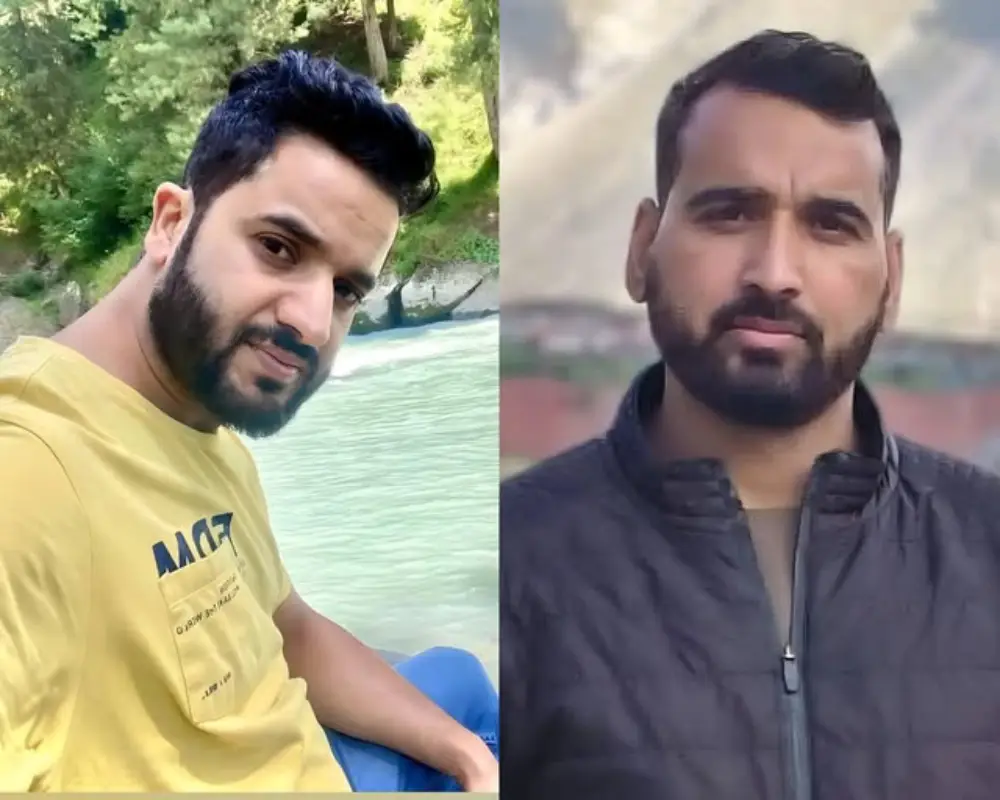
Crime Branch photographers Javid Mansoor Rather of Tral and Arshad Ahmad Shah of Kulgam were also killed. Both were second-generation cops, recording the forensic process when the explosion struck. Javid, a father of a three-year-old, came from a village where news of his death caused chaos before dawn. Arshad, the father of two young children, was remembered by his uncle as “the flower of our family”.
Naib Tehsildar Muzaffar Ahmad Khan of Soibugh had been at the police station on magisterial duty. His body’s arrival at his village triggered scenes of deep grief, shrieks, trembling voices, neighbours embracing one another, and slogans rising as he was carried to the graveyard. He is survived by his wife, two children, and extended family members who said they had never imagined his transfer to Nowgam would become his final posting.
Also killed were SIA personnel, chowkidar Suhail Ahmad Rather of Natipora (present as an independent witness during sampling), and two senior FSL members, Ajaz Ahmad Mir and Showkat Ahmad, who had been undertaking the technical and hazardous task of extracting samples for two days.
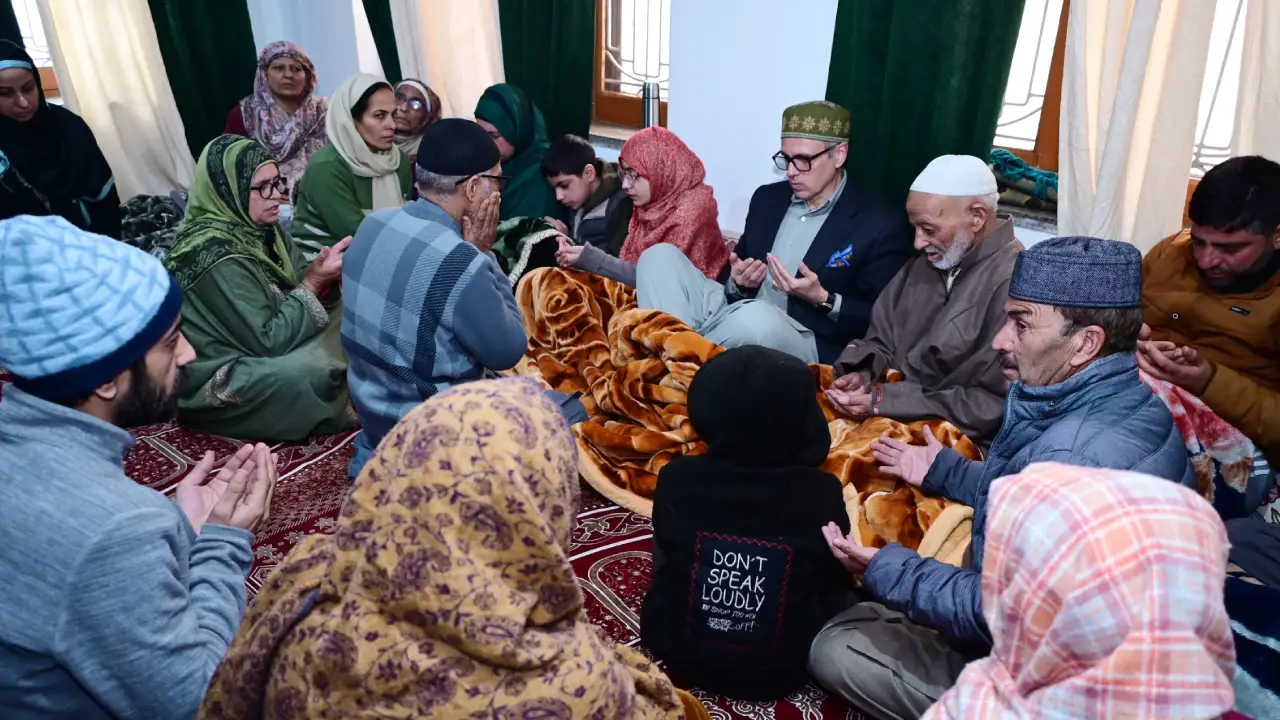
Across Kashmir, the funerals unfolded in a sombre chain: Kupwara, Budgam, Kulgam, Tral, Bemina, Nowgam, each locality mourning one of its own. In some places, district officials, MLAs, and senior officers attended the last rites. In others, neighbours carried coffins through narrow village streets still echoing with the shock of the night.
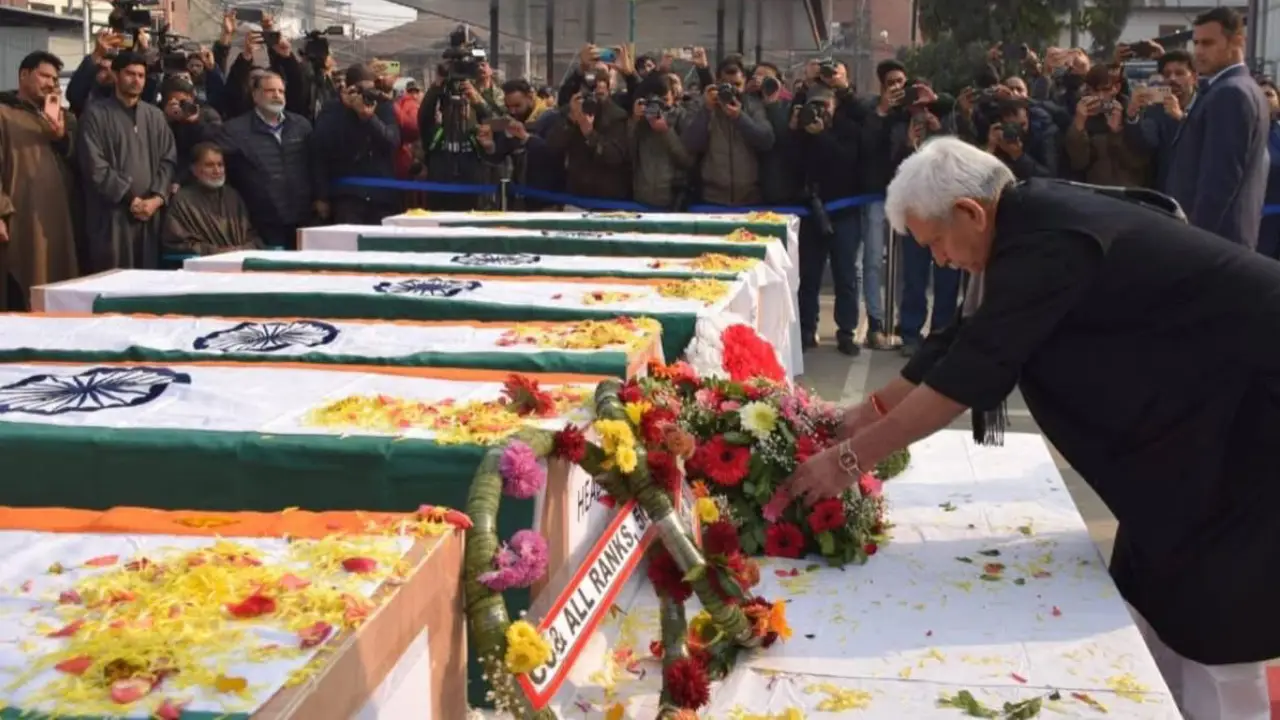
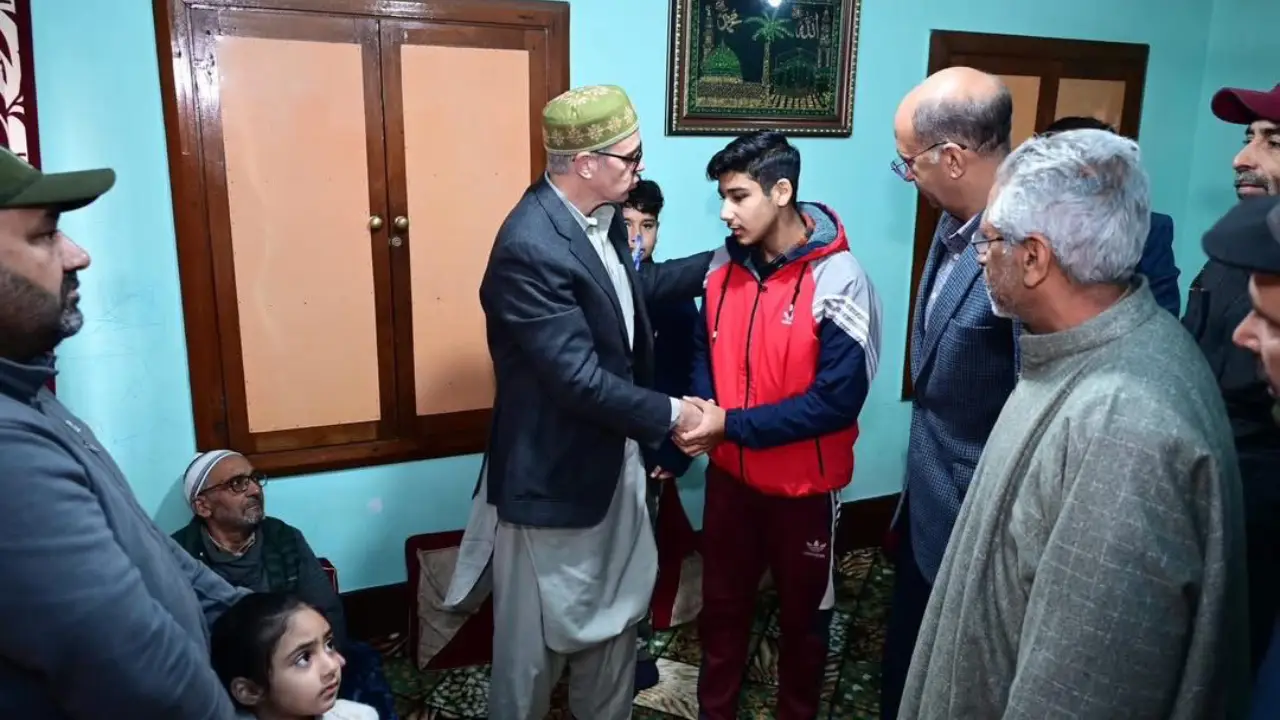
The administrative response came swiftly. Chief Minister Omar Abdullah expressed grief, announced Rs 10 lakh ex gratia compensation for each deceased and Rs 1 lakh for each injured person, and directed that houses damaged in the blast be compensated. Lt Governor Manoj Sinha visited hospitals, laid wreaths on the bodies at the Police Control Room, and assured support.
The Questions
But grief was accompanied by questions. Why was such volatile material stored in a police station situated inside a busy residential area? Was it appropriate to examine chemicals of this sensitivity in a compound not designed for hazardous storage? Residents said they had petitioned for years for the police station to be relocated because the building was originally a residential house in a densely populated lane. They mentioned a similar small blast that occurred somewhere in 1997.
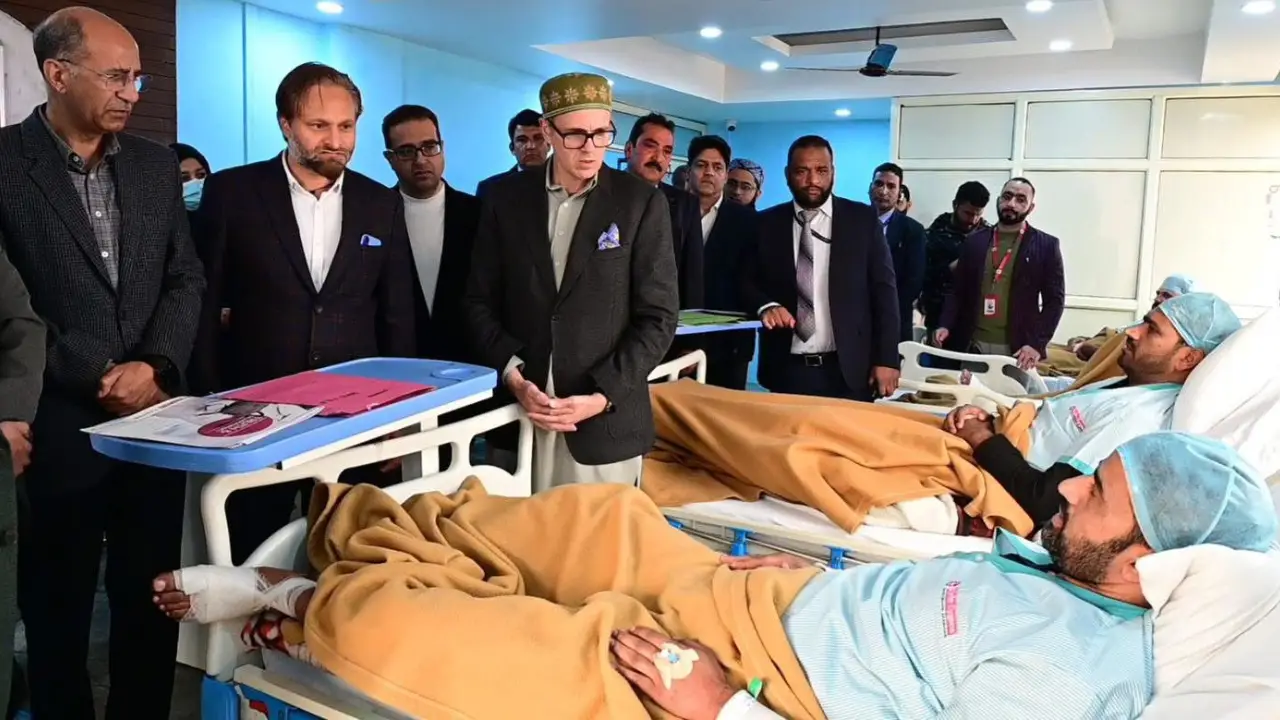
Chief Minister Omar Abdullah said the Government “owes citizens clear answers” about how a huge cache of explosives was brought into and handled inside the Station, calling the tragedy “a very sad incident” that “should not have happened”. After meeting injured survivors in a Srinagar hospital, he noted that several victims “had nothing to do with the Government, the tailor and many others”, and emphasised that the inquiry must establish “what happened and why it happened”.
Among the strongest political reactions came from Srinagar MP Aga Syed Ruhullah, who visited the blast site and the hospital. He questioned why volatile materials were stored in a residential police station.
“It is a clear case of an administrative failure,” he said. “How can such explosive material be kept in a police station located in the middle of a residential area?” He demanded accountability from those responsible for storage decisions. His remarks echoed the anger in the neighbourhood, where residents said they had long raised concerns about the location of the police station inside a former residential building. Many called the blast “an avoidable tragedy”.
PDP president Mehbooba Mufti, after visiting the family of slain SIA inspector Peerzada Asrar in Kupwara, warned that Kashmir “should not get a collective punishment for someone’s mistake in Delhi”, saying the atmosphere was becoming “worrisome and terrifying”. Calling the Nowgam blast an incident that “should not have happened”, she said experts, not policemen or revenue staff, ought to have handled material as dangerous as ammonium nitrate. “What was the need to bring 3,000 kilograms of such substances here and store them in a police station in a residential area?” she asked, urging a thorough investigation and demanding the highest bravery awards and proper support for the families who “have small children” and whose grief “the whole of Kashmir shares.”
The answers will come only after the investigations conclude. The probe is still a work in progress. Teams from the National Security Guard, National Investigation Agency, and Central Forensic Science Laboratory visited the site to collect samples. Officials examining the scene noted that the liquid mixture in certain boxes could have been at a stage of extreme volatility. Earlier intelligence assessments had already indicated that the ammonium nitrate recovered was not an ordinary fertiliser-grade substance but a chemically altered, unstable mix with fuel and sensitising agents, close to being transformed into a fully functional IED. Information appearing in the media suggested that the material was dangerous enough to detonate without a detonator, a feature seen only in advanced explosive preparations.
The Nowgam blast, though rooted in police procedure rather than militancy, did not occur in a vacuum. It fits into a long, painful continuum in which volatile stockpiles, once brought into human spaces, have repeatedly turned lethal. Kashmir’s relationship with explosives has always extended beyond battlefields and encounter sites; it has seeped into homes, neighbourhoods, orchards and barracks. And long before Nowgam’s police station became a furnace in the night, another tragedy three decades earlier had already warned how a single lapse inside a controlled space could unleash devastation. That cautionary tale came from the heart of Srinagar itself, the Badami Bagh.
1994: When Badami Bagh Burnt
In the spring of 1994, when Kashmir was gripped by the most volatile years of its insurgency, an ordinary morning inside Srinagar’s Badami Bagh Cantonment turned into one of the darkest chapters. It was March 29. By evening, the Army was counting 15 dead, among them Maj Gen B W Fernandes, the then Director of Military Intelligence, and a cluster of senior ordnance officers whose work rarely made headlines but whose role underpinned the entire counter-insurgency grid.
It went during the inspection of arms and ammunition, apparently seized from militants, that ended in a catastrophe. Inside the major cantonment of Kashmir, the experience was far more visceral. “A deafening explosion,” a resident living near the cantonment boundary recalled he heard, asserting he felt, “as if several bombs exploded simultaneously.” The shockwave tore through the adjacent structures, collapsing walls, smashing windowpanes across the neighbourhood, and briefly throwing the entire base into chaos.
Among those inside the depot that morning was Colonel ET Mathew of the Army Ordnance Corps. Termed to be a disciplined, soft-spoken officer from Pathanamthitta (Kerala), Mathew had built his career around the rigour of logistics, the meticulous checking of inventories. He was posted with the 2 Field Ordnance Depot, a unit responsible for cataloguing, storing and verifying the daily stream of arms recovered from encounters across Kashmir.
That morning, Mathew was part of the senior inspection group convened to examine a set of seized weapons. The work was routine, almost procedural, at a time when recoveries poured in weekly. Then the routine was shattered.
What precisely triggered the blast was never conclusively established. Officials in New Delhi said sabotage was not being ruled out, even as the defence ministry insisted that it was “not possible for an assailant to break into the complex to plant an explosive.” The Army said an inquiry had been ordered, but the scale of destruction left few clear answers.
What remained was the human toll. Along with Colonel Mathew and Maj Gen Fernandes, the blast killed Lt Colonel K Krishnamoorthy, Captain Subhash Soraisom Chandra Singh, Naib Subedar Stanislass, Subedar Hoshiar Singh Jangra, Subedar Kundalik Chavan and Rifleman A B Rashid Khan. Eight survived with injuries.
In the years that followed, the incident acquired a different kind of legacy inside the Army. It changed a firm and non-negotiable routine that had existed unquestioned for decades. Until 1994, recovered explosive material was routinely transported into bases for cataloguing. The process was legally convenient but operationally hazardous.
It was decided that explosives deemed unstable would no longer travel. They would be destroyed at the site of recovery. Physical proof would be replaced with exhaustive documentation, detailed inventories, measurements, signatures, photographs and later GPS-based records. Engineer units and ordnance specialists would carry out controlled detonations, and the chain of custody would rest on paperwork rather than stockpiled danger. It was a turning point and quiet revolution born out of tragedy.
If Badami Bagh exposed the fragility of procedures inside one of the Valley’s most fortified military installations, the Khundroo disaster 13 years later showed how catastrophic the consequences can become when danger is multiplied across vast quantities of stored ammunition. What happened in Khundroo did not merely echo Badami Bagh; it amplified it.
The Khundroo Disaster
In 2007, when highland villages around Anantnag were still lulled by the long August afternoons, a fire began to crackle inside the Army’s 21 Field Ordnance Depot at Khundroo. Within minutes, it would turn into one of the most destructive ammunition disasters in Jammu and Kashmir’s recent history, a catastrophe that the Army later said appeared to be “an accident caused, probably, due to mishandling of ammunition”.
Khundroo is no ordinary depot. Spread over five square kilometres, the then 61-year-old installation held nearly 21,000 tonnes of ordnance, “TNT equivalent to a 20-kiloton nuclear bomb,” as Lt Gen H S Panag later wrote, recalling the morning of August 11, 2007. It was the bulk of the war reserve for 15 Corps, sitting inside a densely inhabited belt where the one-kilometre safety zone around the depot had long been encroached. Fifteen permanent sheds and 21 temporary stacks housed everything from artillery shells to small arms and fuses.
The disaster unfolded shortly after 10 am. Preparations were underway for an inspection by the local Sub-Area Commander, and Major X, responsible for a demonstration of assorted ammunition, had gone to Shed Number 18 with an NCO and a labourer. The shed stored Bofors propellant charges, fibrous, highly combustible cartridges that burned violently when ignited. Over time, demonstration items had been permanently kept there. “This was a fundamental violation,” Panag wrote, explaining that incendiaries, high explosives, low explosives and fuses had been placed together, turning the shed into “a disaster waiting to happen.”
Giving a bit-by-bit account of the tragedy, he remembered the depot Commandant making a “zero call” to him: “Sir, the entire depot is on fire, massive explosions are taking place, many soldiers, civilian labour and firemen are missing.” A fire earlier in 2005 had already killed one soldier, but nothing prepared the region for what came next.
The chain of blasts tore through sheds and open stacks, each detonation sending up a mushroom cloud visible miles away. “Even when fire was brought under control, explosions were heard for more than five hours,” the media reported at the time, asserting the splinters flew across a radius of five kilometres. Shells rained over 13 surrounding villages, panicking residents and setting off the largest evacuation Anantnag had seen in decades. Police shifted more than 20,000 people from Somran, Nowgam, Sandru, Wakil Balan and Khundroo.
In all, 15 people were killed: one senior Army officer, a Defence Security Corps soldier, and 13 civilian firefighters who had rushed inside in the early moments. At least 38 others were injured.
But for Khundroo’s villages, the explosion was something that brought their crisis into the limelight. The tragedies had begun even before the great fire.
The area has so many people who lost their limbs in accidental explosions. In March 2007, sixteen-year-old Lateef Ahmad Shah of Pohloo lost his leg after stepping on a landmine while chasing a cow on the periphery of the depot. The stories repeated across villages, Aijaz Ahmad Bhat, who lost the use of an arm and leg while digging his land; Ashiq Hussain, who woke up with an amputated hand after hitting a fuse in his courtyard; eight-year-old Saqib of Khundroo, whose hand was blown off when he picked up a shell while dismantling their cracked home. Sombran village alone witnessed four members of one family injured in a single incident.
When the depot blew up in August 2007, artillery shells sank deep into paddy fields and courtyards. While officials said much of the scattered shrapnel had been cleared, hundreds of acres remained unusable for many years.
The explosion of August 11, 2007, ended long ago. The disaster, the villagers insist, never did.
Seen alongside Badami Bagh and Khundroo, the Nowgam tragedy becomes more than an isolated accident. It is part of a deeper fault line that runs through Kashmir’s post-partition history, one in which explosives remain embedded in administrative routines, investigative chains, logistical systems and even the security architecture. Each incident occurred in a different era, under different circumstances, yet the pattern remains stubbornly familiar: volatile material travelling through human spaces, a procedural step taken for granted, a moment of heat, friction or error, and then irreparable loss.
Whether the latest inquiry clarifies the precise trigger or not, the lesson does not shift. Across thirty years, Kashmir’s most devastating explosions have not always come from conflict; many have come from within the very systems meant to manage that conflict. For the families who have buried their loved ones, and for the communities still carrying the scars of 1994, 2007 and now 2025, the hope is that this newest tragedy will not simply join the archive of forgotten warnings but will finally compel a more durable reckoning, one that keeps danger where it belongs, and people where they deserve to be: safe in their homes, not in the shadow of another avoidable blast.