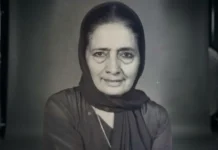
Shiraz Sidhva, the news reporter whose stories are a part of journalistic folklore and get used as resource material for scholars passed away after leaving behind a rich legacy, Babra Wani writes
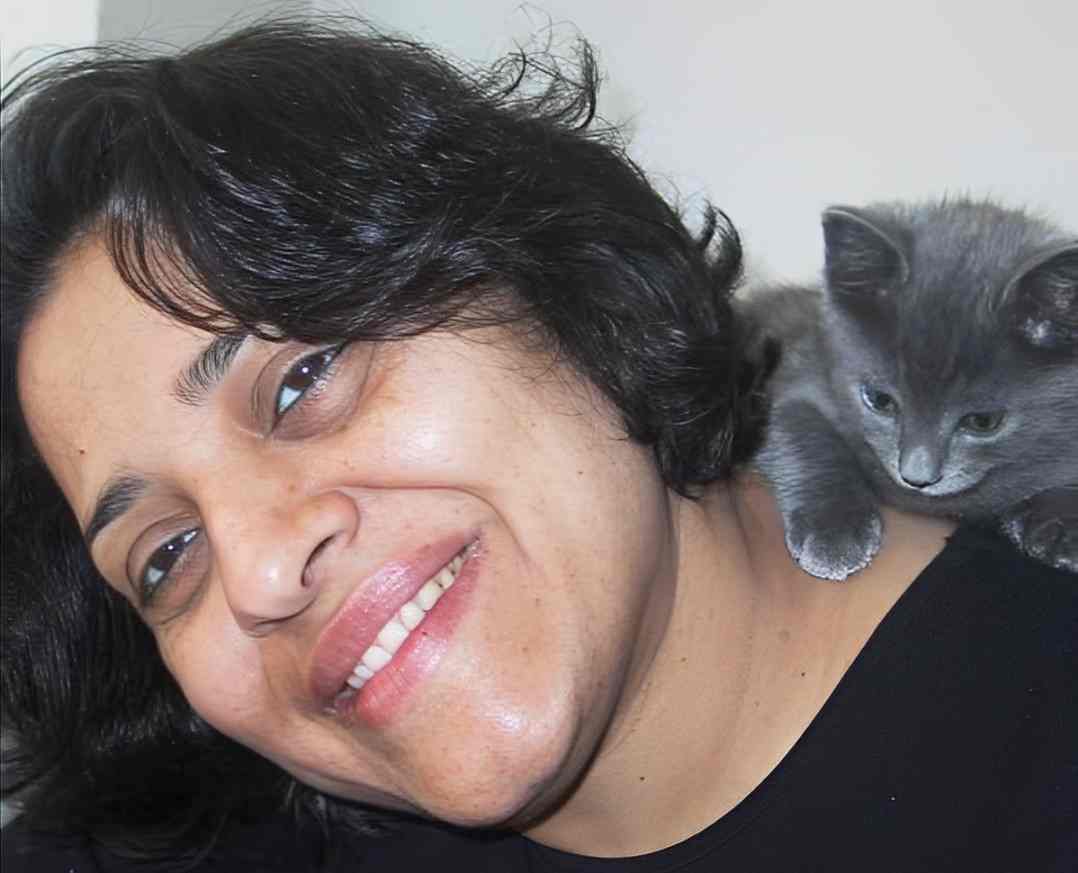
Shiraz Sidhva, a well-known journalist, known for her pioneering reporting on militancy in Kashmir during the nineties, passed away earlier this week. Shiraz, 64, died of cancer in Edinburgh, Scotland, where she had been residing for the past several years.
Shiraz was the first to report on Kashmir, from Kashmir. Till then, all the national newspapers and magazines would do desk reports with inputs from local bureaus and stringers. From 1989 to 1996, she covered Kashmir, filing untold stories for the Sunday magazine, the flagship offering of the Anand Bazar Patrika group.
She is credited as one of the first journalists to interview separatist leaders and militants and offer readers the real happenings. She reported from ground zero on Kashmir during the peak of militancy in the nineties.
In making Kashmir the big news of those times, she got enormous support from her organisation, the Anand Bazar Patrika. Aveek Sarkar, the owner and M J Akbar, the Editor of Sunday, backed her completely. Sunday gave her dispatches the due respect and display.
Shiraz was a beat reporter in the classical mould. She mined her beat, and built relationships. Tracked small leads and broke big stories. She had sources in the political circles, administrative set-up, civil society and the militants. Yet, Kashmir was never a cause for her, as it became for some of those who followed her footsteps in Kashmir.
She could report on anything because she was factual, fair and fast. Always empathetic, never ideological. No wonder then, she reported very successfully from various European countries and the United States, including New York. She worked closely with the United Nations, particularly UNESCO, and contributed to publications like the Far Eastern Economic Review and The Hollywood Reporter. Her journalism career spanned over three decades. In the later part of her career, she became more of a feature writer than a reporter.
Shiraz was a quintessential Bombay girl; social, liberal, open, and fun-loving with a huge circle of friends cutting across professions and geographies. Ram Rehman the photographer, Arundhati Roy the author, Sadanand Menon the art critic, Dashrath Patel the designer, would often party at her house in Gulmohar Park. Though she was a teetotaller who would never drink, she was a regular at the Press Club of India. Every day she would mark her presence there before heading home from work.
Born into a Parsi family, her grandfather was a jeweller who had made rare jewellery for the royalty and elite. Shiraz, one of three sisters, completed her college education at St Xavier’s College, Kolkata. Dina, her younger sibling was closest to her. She married to Jugnu Ramaswami, which ended in divorce. She later remarried a French artist, with whom she had a daughter, Tara. Bapsi Sidhwa, the famous Pakistani novelist and author, was a cousin of hers.
“She used to file remarkably truthful and accurate stories in the early 1990s. Reading her news reports was exactly what friends and relatives in the valley would tell you what was happening,” a Kashmir writer who knew Sidhva very closely and who valued her work as a reporter, remarked. “She was the only journalist who reported fairly on Kashmir at that time.”
Her reporting inspired several female reporters to cover Kashmir during the tumultuous years from 1989 to 1996. She developed a reputation for her ground reporting and was closely associated with the left-liberal media.
“Her forte was ground-reporting, and she was a member of a group of journalists who were more liberal and progressive in their writings and thoughts,” the writer noted. “She did very clean reporting and, in a way, was the pioneer of objective reporting on Kashmir.”
Known for her nomadic lifestyle, Sidhva travelled across three continents, living in places like New York, Belgium, and France, before eventually settling in Edinburgh. “She was diagnosed with cancer and treated for it, but in June this year, the cancer relapsed, and she died from that. Some say she received excessive treatment during radiation therapy,” a friend recalled.
Yusuf Jameel, a veteran Kashmiri journalist and close friend of Sidhva, recalled, “When she came to Kashmir, she must have been in her thirties or mid-thirties and a divorcee. I had known her since the 1990s when she came to Kashmir to report. She was the first outside journalist who met militants and conducted interviews.”
“Whenever she visited Kashmir, she would meet me and sometimes work from my office, filing her stories from there,” he remembers. “She attended my wedding in 1994. We stayed in touch even after she left India for Paris.”
She was very upright professionally. She never sought personal gain from a story—her reporting was always objective. She did some remarkable stories during the militancy era.”
He added that Sidhva’s approach earned her the confidence and trust of the people, allowing her to build strong contacts. “She was trusted by everyone. She covered the Hazratbal siege, conducted insightful interviews, and produced some truly outstanding stories.”
“I remember her using my typewriter to file her stories,” Jameel continued. “Back then, there were no laptops, and we relied heavily on typewriters.” Sometimes she had her typewriter, which she used either in my office or from her hotel room. “She mostly stayed at Ahdoos because most other hotels were shut down during that period.”
“There was a time when, in media circles outside of Kashmir, Shiraz came to be known as a Kashmir expert—and rightfully so,” Jameel recalled. “Unlike others, she stayed in Kashmir and worked here for quite some time. She met people, formed close friendships with local journalists, and even connected with influential figures outside the media fraternity who understood Kashmir.”
Discussing her working style, Jameel noted, “She had strong writing skills and a good command of language. She wrote in simple language because, in people’s journalism, that is crucial, and she was a people’s journalist. She wrote in a way that the common reader could understand what she was conveying. One thing that worked in her favour was that she wrote for magazines, not dailies, which gave her ample time to file her stories. When she was in Srinagar, she routinely used the telex machine to file her stories.”
Jameel also recalled how Sidhva had once sent him an email detailing how she had helped rescue an Israeli tourist from a militant outfit. “Shiraz told me that she met with members of the group, talked it through, and they eventually released the tourist from captivity,” he said.
At the same time, however, one of her stories that criticised the militants was objected to by them and they issued a long statement against her. It was the basis of her long report – the enemies of the people.
Hours after Shiraz’s passing, Jameel posted a 1992 picture of them together at his office on his X account, writing: “Goodbye, dear @ShirazSidhva. You were such a gem. The caption of the picture reads, “1992: In my Srinagar office with colleague and friend Shiraz Sidhva, who has left us. She was suffering from cancer which, I am informed, was in remission but spread suddenly.”