Violence swept Ladakh on September 24 as protests over statehood and Sixth Schedule inclusion spiralled into clashes, leaving four dead and dozens injured, even as government talks with local leaders were pending, Babra Wani reports
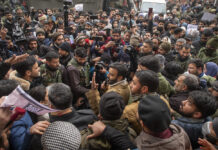
Clashes, teargas shelling, fires and protests shook the usually calm Shangri La, the arid Ladakh region, on the afternoon of September 24. It was the 14th day of the hunger strike when two people, unable to manage protracted hunger, collapsed.
Identified as Sri Anchuk and Anchuk Dolma, they were rushed to a nearby hospital. “They were aged people and their condition was critical,” a resident, privy to the developments, said. As the news spread like wildfire, the incident fuelled anger within the town, leading to stone pelting at the Leh Hill Council building.
Later, as tensions spiralled, four people were killed and more than 89 others were injured. Confirming the deaths, Chering Dorjey, the Chairman of the Leh Apex Body, said that there was intense firing in the town. Scores were wounded, and four civilians had lost their lives.
The deceased were identified as Tsewang Tharchin, 46, a retired soldier from the 3-Ladakh Scouts Regiment and a resident of Skurbuchan, Stanzin Namgyal, 24, from Igoo, Jigmet Dorjay, 25, from Kharnakling, and Rinchen Dadul, 21, from Hanu.
This was the first major unrest in the region after July 7, 1989, when the then Ladakh Buddhist Association (LBA) triggered a crisis that led to communal tensions. Three LBA activists were killed, and Muslim minorities were boycotted for 39 months. This agitation laid the formal foundation for the UT status and Ladakh’s formal cessation from Jammu and Kashmir.
The demand that emerged during the Congress rule and apparently made by the Congress led the LBA was eventually fulfilled on August 9, 2025, when the BJP government read down Article 370 of the Constitution and bisected the erstwhile state into two federally governed Union Territories. Unlike the Jammu and Kashmir UT, which has a legislature, the Ladakh UT lacks one. However, it has an LAHDC set up, an elected house, one each at Kargil and Leh.
“THANK YOU PRIME MINISTER,” climate activist, innovator and SECMOL director Sonam Wangchuk wrote on Twitter, barely a minute after the announcement was made. “It was exactly 30 years ago, in August 1989, that Ladakhi leaders launched a movement for UT status. Thank you all who helped in this democratic decentralization!”
On September 26, 2025, Wangchuk was arrested for spearheading the campaign against the Government of India that led to the arson and violence. He was on a hunger strike for 15 days, the last day of which saw the killing of four protesters.
The agitation had been called by the youth wing of the Leh Apex Body and gained momentum after two hunger strike participants were shifted to the hospital in critical condition. Wangchuk, who had been on a 15-day fast since September 10, ended his protest moments after the unrest took over the streets. Soon, the groups of youth resorted to stone pelting, prompting police action.
The Issues
Even though Ladakh got what it wanted, the “Jammu ruled” region still has issues to tackle. Political analyst and leader Sajjad Kargili said that Ladakh’s demands centred on four issues: statehood, inclusion under the Sixth Schedule, the creation of a Public Service Commission, and parliamentary representation for both Leh and Kargil.
“These demands have been raised consistently over the last four years, and protests in Kargil reflect continuing public discontent,” Kargili said. He confirmed that the four who died in the police firing were residents and that more than 70 of the injured were also natives.
Kargili explained that both the Kargil Democratic Alliance and the Leh Apex Body worked together. “We have a collective agenda and are struggling jointly. As representatives of Ladakh, we want to restore democracy. The government promised the Sixth Schedule, and we demand that Ladakh should have its own Public Service Commission,” he said. “When UT status was granted, it was not promised that people would not demand statehood. But we can still demand it. The Sixth Schedule was not just a demand; it was a promise made by the government, and it should be fulfilled.”
Kargili emphasised that Ladakhis were seeking the restoration of democracy. He insisted that the government should deliver on its promise of the Sixth Schedule and ensure the creation of a Public Service Commission.
On September 25, the Kargil district observed a complete shutdown. Residents’ scribes said protests are unlikely to ease either at Kargil or in Leh. “The people from Ladakh, who came out on the streets with their demands, especially from Leh, are not getting their demands fulfilled. Their promises are not being kept,” one journalist, speaking anonymously, said on the phone, asserting the internet is erratic.
The journalist described the protest as youth-led. Another witness recounted seeing at least 40 to 50 cars damaged. “Afterwards, the security posts at three BJP offices were set on fire, with one office staff member and a police officer sustaining burn injuries. Some furniture at the BJP offices and the council secretary’s conference hall was also destroyed in the blaze.”
Sonam Wangchuk
Sonam Wangchuk, the climate activist from Ladakh, is at the centre of the storm. The Ministry of Home Affairs on Wednesday said that his “provocative speeches” triggered the violence in the region.
After the four persons were killed, the centre’s response came in piecemeal – one formal, another informal.
“The situation didn’t spiral on its own; it was engineered deliberately,” sources linked to MHA said, adding that “Ladakh and its youth are paying a huge price for the narrow politics of certain individuals and the personal ambitions of Sonam Wangchuk.” They pointed out that the Centre had already fixed October 6 for the High Powered Committee meeting to discuss all issues raised by ABL and KDA, and even considered preponing it to September 25–26.
“The Centre has always been ready for talks. Earlier, a meeting was proposed on July 25, but it did not receive a positive response. Yet even as talks were lined up with an open mind, violence was provoked. Why?” the official asked. They alleged that Wangchuk had “long hinted at wanting an Arab Spring-style protest in Ladakh” and that his references to Gen Z protests in Nepal “now seem like a blueprint.”
Meanwhile, he added that the Congress leaders’ remarks “almost sounded like instructions, talk of pelting stones, bandhs, arson. Why were they so ready?” the official asked, insisting that “the youth are not to be blamed. They were misled, caught up in a sinister plot for political and personal gain. The Centre stands committed to the welfare and empowerment of Ladakhi people and stands with the youth.”
The formal statement issued by the Press Information Bureau (PIB) said Wangchuk’s hunger strike started on September 10, 2025, despite the MHA’s involvement in talks. The Ministry pointed out that “it is well known that the Government of India is actively engaging with the Apex Body of Leh and the Kargil Democratic Alliance on these issues. Numerous meetings have been held with them, both formally through the High Powered Committee and sub-committees, and through numerous informal meetings with leaders.”
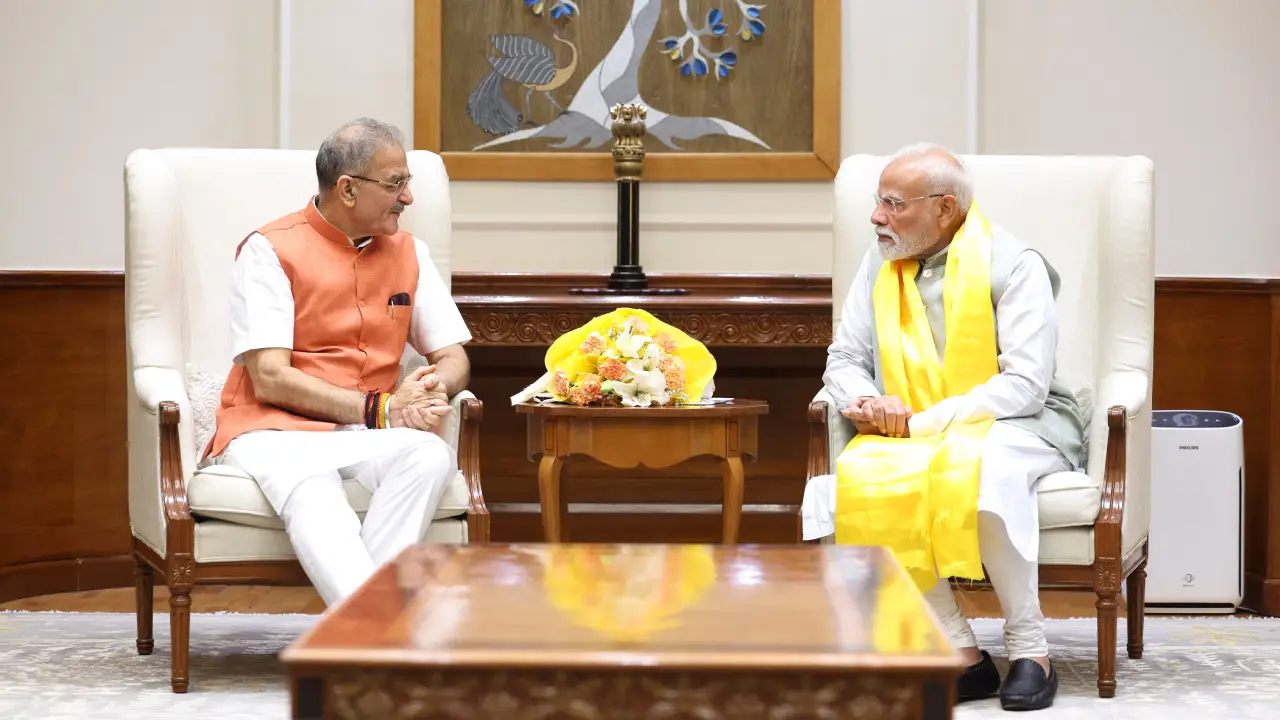
According to the statement, the dialogue process has already delivered significant results. “These include increasing the reservation for Ladakh’s Scheduled Tribes from 45 per cent to 84 per cent, providing one-third reservation for women in councils, declaring Bhoti and Purgi as official languages, and initiating recruitment for 1800 positions,” the Ministry said. However, it maintained that “some politically motivated individuals were not happy with the progress made under the High Powered Committee and were trying to sabotage the dialogue process.”
The Ministry emphasised that the demands raised by Wangchuk were already part of the ongoing discussions. “The next meeting of the High Powered Committee is scheduled for October 6, while meetings with Ladakh leaders are also planned for September 25 and 26,” the statement said. Despite this, the Ministry noted, “Wangchuk continued his hunger strike and misled the public by making inflammatory references to Arab Spring-style protests and Gen Z protests in Nepal.”
The situation took a violent turn on September 24. “At approximately 11:30 a.m., incited by his inflammatory speeches, a mob left the hunger strike site and attacked the office of a political party as well as the government office of the CEC of Leh. They set these offices on fire, attacked security personnel, and set a police vehicle on fire. The unruly mob attacked police personnel, injuring over 30 police/CRPF personnel. The mob continued to destroy public property and attack police personnel. In self-defence, the police had to open fire, unfortunately resulting in some casualties,” the Ministry said. It added that “except for the unfortunate incidents that occurred early in the morning, the situation was under control by 4 p.m.”
The Ministry alleged that “it is clear that Wangchuk incited the mob through his inflammatory statements. Coincidentally, in the midst of this violent incident, he broke his fast and left for his village in an ambulance without making any serious effort to control the situation.” Reiterating its stance, the Government said it “remains committed to the aspirations of the people of Ladakh by providing adequate constitutional safeguards.”
A Celebrated Ladakhi
With these formal official reactions, Wangchuk is emerging as the face of resistance in Ladakh. He is not an ordinary resident. One of Ladakh’s most celebrated innovators, he has spent more than three decades reshaping education, environment, and community life in the Himalayas.
Born in Uleytokpo near Alchi in 1966, Wangchuk grew up in a household where his father, Sonam Wangyal, was a politician and later a minister in Jammu and Kashmir’s government. With no schools in his village at the time, his mother taught him at home in their mother tongue until he was nine. His education journey was difficult. After struggling with language issues in Srinagar, he was sent to Delhi before eventually graduating in mechanical engineering from the Regional Engineering College, Srinagar (now NIT). Later, he pursued earthen architecture at the Craterre School of Architecture in Grenoble, France.
In 1988, Wangchuk founded the Students’ Educational and Cultural Movement of Ladakh (SECMOL), an NGO that transformed the region’s educational landscape. At the time, 95 per cent of Ladakhi students were failing government exams. Under his leadership, SECMOL piloted reforms that prioritised creative, child-friendly education, introduced curricula rooted in Ladakh’s culture and context, and trained teachers and village education committees.
With Operation New Hope launched in 1994, these reforms took hold across dozens of schools. By 2015, the matriculation pass rate had risen dramatically to 75 per cent. SECMOL’s alternative school became a model in renewable energy, sustainable technology, and confidence-building education.
Wangchuk’s out-of-the-box thinking has extended beyond classrooms. Recognising the acute water scarcity in Ladakh’s short growing season, he pioneered ice stupas, towering, conical mini-glaciers designed to store winter water and release it gradually in summer.
“The Rolex Award funds will support the project and promote ice stupas as a climate-change adaptation and desert-greening technique,” he said after winning the prestigious Rolex Award for Enterprise in 2016, becoming the first recipient from Jammu and Kashmir. These ice stupas have since drawn global attention as a sustainable solution for mountain communities facing climate stress.
A global figure, Wangchuk has been honoured with numerous awards, including the Ramon Magsaysay Award in 2018, often called Asia’s Nobel Prize. The Magsaysay Foundation recognised him for “harnessing nature, culture and education for community progress in India’s mountain region” and for creating a collaborative reform of learning systems that gave Ladakhi youth new opportunities. In his acceptance speech, he warned against an outdated education system born of the industrial revolution that had declared “a kind of war on nature,” urging the world to instead “invest in declaring peace with nature.” He dedicated his award money to setting up an international model school in Ladakh.
Over the years, Wangchuk has also designed low-cost solar water heaters, pioneered organic farming, developed affordable greenhouses, and inspired generations with his commitment to innovation. His life and work even inspired the character of Phunsukh Wangdu in Aamir Khan’s 3 Idiots. Today, he continues to pursue his vision of an “alternative university” in Ladakh, where youth from the Himalayas and other mountain regions can “find their own solutions to the challenges facing them.” A problem-solver, activist, and educator, Sonam Wangchuk remains one of the most influential voices in Ladakh, embodying his own belief that “the possibilities are endless”.
SECMOL Hit
Within a day after the violence broke out in Leh, the MHA cancelled the foreign funding licence of the SECMOL. According to the order, SECMOL had been registered under the Foreign Contribution Regulation Act (FCRA) to receive funding for cultural and educational programmes. The ministry said it had served a Show Cause Notice on August 20, followed by a reminder on September 9, asking why SECMOL’s licence should not be revoked.
It stated that violations under sections 8(1) (a), 17, 18, 19, and conditions under section 12(4)(f)(i) of the Act made the certificate liable for cancellation under section 14.
It eventually led to his arrest on September 26. It remains to be seen how the government will tackle Wangchuk, who has a huge following, international recognition and a set agenda for Ladakh. It is worth mentioning that not all governments have been friendly towards him. As early as February 2007, the local administration had accused him of illegally controlling 200 kanals of land, the land parcel that the government recently retrieved; misusing FCRA funds and even accused of resorting to anti-national activities using his “anti-national connections in China”.
A Disturbed Desert
Following the protests, the District Magistrate of Leh ordered the closure of all educational institutions for two days, beginning September 26. Government and private schools, anganwadi centres, colleges, coaching institutes, and other educational institutions were directed to remain closed until September 27.
Reports suggest more than 50 people have been detained in connection with the violence. The situation is still tense, and the administration is doing its bit to cool the situation, which is inching towards the harsh winter.
Political Voices Respond
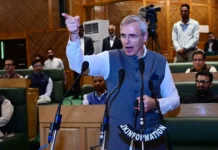
The unrest in Ladakh prompted a rapid political reaction across Jammu and Kashmir. Terming the violence in Leh as the direct result of the administration’s failure to maintain order, Chief Minister Omar Abdullah rejected the BJP’s attempt to pin blame on the Congress, saying it was the BJP’s “habit to blame others for its own failures” and reminding that the party itself had won the last council elections in Ladakh. Abdullah said it was unfortunate that four lives were lost and dozens were injured in the clashes, stressing that when such incidents occur, it is the administration that must first accept responsibility rather than pass it on.
Appealing to the people of Ladakh to maintain peace, he urged them not to take the law into their own hands and asked the Government of India to pay attention to the region’s legitimate demands. He said he hoped for an atmosphere of harmony and brotherhood between Leh and Kargil, remarking that the people had sought Union Territory status and now deserved to progress under it. He said there was no external link to the indigenous movement.
National Conference president Farooq Abdullah said the turmoil in Leh was the direct outcome of “unaddressed long-standing grievances” and pointed to the Centre’s “indifferent response” to environmentalist Sonam Wangchuk’s prolonged protests. He described the incidents as dangerous in a sensitive border region where China is always seeking to destabilise India. Stressing that the Ladakh agitation was entirely indigenous and driven by “neglect and disappointment,” he urged the Centre to “end the use of force and intimidation” and resume dialogue with the people.
Abdullah also reminded the government of its own unfulfilled promises in Jammu and Kashmir, including statehood after delimitation and elections, and said it was time to “settle the matter through sincerity and swift decisions rather than empty assurances.”
People’s Democratic Party president Mehbooba Mufti blamed the Centre’s “wrong policies” for the violence in Ladakh, saying unrest had grown out of fears that land, identity, jobs, and culture were under threat. She argued that people had welcomed Union Territory status in 2019 with expectations of greater rights, but instead, those promises were broken. According to her, anger in Ladakh stemmed from frustration over unemployment and insecurity, and attempts to hold leaders like Sonam Wangchuk or the Congress responsible were merely “scapegoating.” She said the Centre should act with wisdom and address these genuine apprehensions with concrete measures, not empty promises.
LG Speaks
Lt Governor Kavinder Gupta, speaking at a press conference, acknowledged the right to peaceful expression in a democracy but criticised the recent escalation. He asked how it could be justified that, after days of dialogue about people’s demands and clear signals from the Centre that talks were forthcoming, some had resorted to incitement and threats — “comparing it with Nepal and Bangladesh, we will set fire to some people in the future, we will do this to political parties’ offices, we will go to people’s homes and kill them,” he said, questioning what kind of method that represented.
Gupta, who is administering Ladakh with the Chief Secretary and DGP from Jammu, said the recent acts were alien to Ladakhi traditions. He noted that discussions had been underway and that dates for talks had been decided elsewhere; yet “a group chose to attend the protest, left once it ended, and then set fire to several places.” He pledged investigations into those behind the incidents and emphasised that the intent had been to disturb Ladakh’s peaceful atmosphere. He stressed that responsibility lay with those who provoked unrest and warned such behaviour would not be tolerated, urging supporters of peace not to let the region’s institutions be undermined.
Describing the morning’s events, Gupta said CRPF personnel were initially confined to vehicles while a mob attempted to set them alight and hurled stones at officers and senior officials. He asked what form of justice permitted security forces to be placed in such peril and expressed concern that the attacks suggested the presence of conspirators. He warned that “certain actors were working to weaken the region’s security for their own gain,” while reaffirming his openness to meet anyone seeking dialogue.
Gupta outlined the government’s long-term commitment to Ladakh — through tourism, education, healthcare and new employment opportunities — and warned that some sought to sabotage others’ livelihoods and records, including police files. He said curfews had been imposed cautiously and promised that those who disturbed the peace would be held to account. Appealing through the media, he asked religious leaders and political parties to help identify disruptive elements and work together to preserve calm. He concluded by offering condolences to the families of the deceased and assuring them that steps would be taken to prevent further casualties.
Sections within the Ladakh administration tried to explain the crisis by blaming people from the Chenab Valley (Doda, Kishtwar) working in the region and the ubiquitous Nepalis. This, however, was reacted sharply by resident leaders who asserted the strike was indigenous.
“Blaming the poor labourers from District Doda, by the Ladakh administration, is reprehensible and condemnable,” JKNC leader from Doda and a lawyer said. “These workers, from all communities, have long given their blood and sweat for Ladakh’s development, and scapegoating them only reflects a failure of governance. Ladakh, once a land of peace, now witnesses unrest and blood on its streets—not because of labourers but myopic decisions, arrogance of power & failure of governance.”
A Strategic Region
The region is very crucial. A year after 2019, the Chinese Red Army trespassed into the Ladakh territory, and the stand-off continues despite the two countries holding a series of negotiations for a status quo ante. After holding 21 rounds of military commanders’ talks, 34 rounds of WMCC talks, and 24 rounds of SR dialogues, the two neighbours were gradually inching towards a peaceful situation.
Indian troops deployed along the Line of Actual Control (LAC) in eastern Ladakh are focusing on narrowing the trust gap with Chinese forces by enhancing confidence-building measures on the ground.
Currently, Indian patrols dominate the LAC through regular rounds, supported by surveillance to track unusual movements. However, since an agreement was reached between both sides in October 2024, Indian and Chinese troops have also been conducting coordinated patrols to minimise the risk of clashes.

One key outcome of the 24th round of the Special Representatives’ dialogue on the Boundary Question in August 2025 was the creation of an expert group under the Working Mechanism for Consultation and Coordination (WMCC) to explore “early harvest” in boundary delimitation. Officials told the media that the idea is to first resolve low-hanging issues to build trust before tackling more complex disputes.
Despite disengagement at some friction points, full de-escalation is yet to occur. Around 50,000–60,000 troops remain stationed on each side of the LAC in the depth areas. At an August meeting between National Security Adviser Ajit Doval and Chinese Foreign Minister Wang Yi, both countries agreed to use border management mechanisms at the diplomatic and military levels to carry forward de-escalation talks, beginning with principles and modalities. Both sides also noted that peace had largely been maintained since the 23rd round of SR talks and agreed to form a working group under the WMCC to strengthen effective border management.
The process of repairing ties has been gradual. In October 2024, negotiators agreed on patrolling arrangements along the LAC, which enabled the disengagement and resolution of several issues from 2020. This was followed by a meeting between Prime Minister Narendra Modi and President Xi Jinping on the sidelines of the BRICS summit in Kazan, Russia.
While efforts aimed at improving the border situation continue, the tensions in the hinterland offer more questions than answers.
Post Script
Ladakh’s prominent Buddhist leader Chering Dorje Lakruk has admitted that while residents of the region once resented Article 370, in hindsight, they now see it as a protective shield that kept their land and livelihoods secure for decades. In an interview with The Indian Express, Lakruk, who is co-chairman of the Apex Body, Leh (ABL) and also heads the Ladakh Buddhist Association, said the abrogation of Article 370 has left Ladakh “open for the entire country” without safeguards.
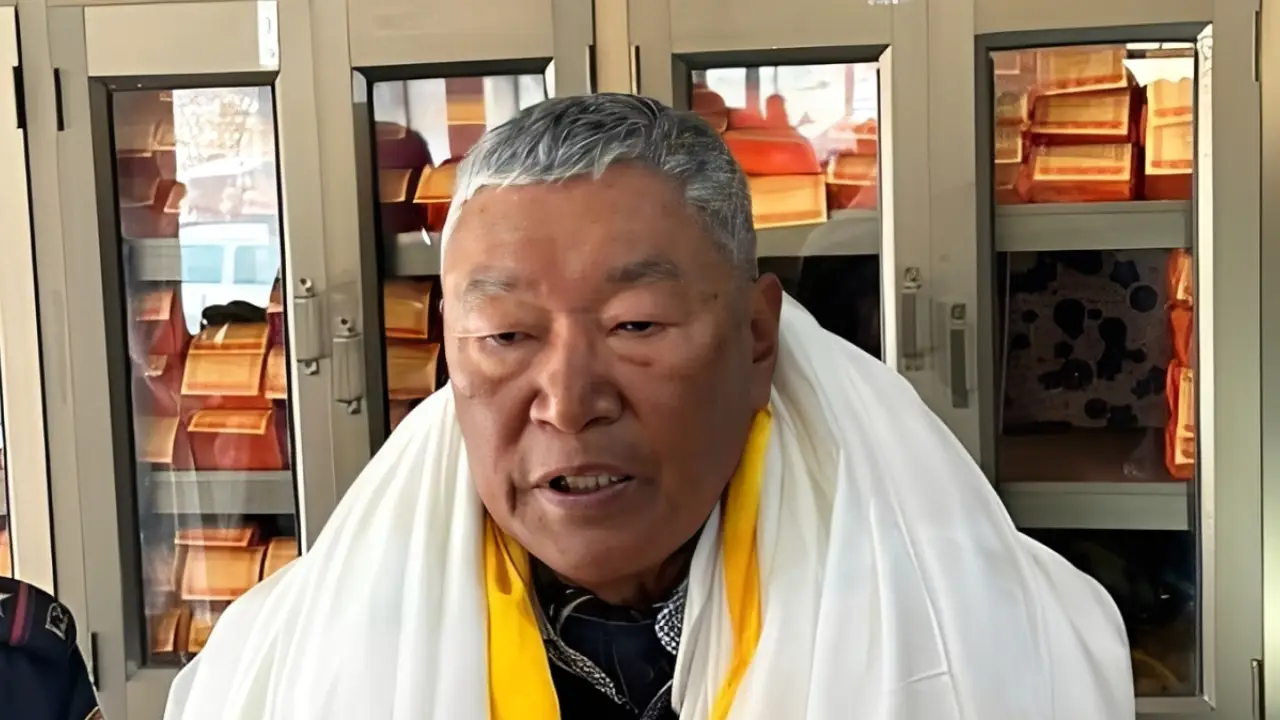
“We used to curse Article 370 because it was an obstacle in our way to becoming a Union Territory,” Lakruk, a former minister in the erstwhile Jammu and Kashmir, told The Indian Express. “But it protected us for 70 years. Our land was totally safe. Even people from Jammu and Kashmir did not come here. Now Ladakh has been opened up for the entire India. We have no safeguard.”
Lakruk said that people in Ladakh never wanted a Union Territory without a legislature. “We always wanted UT with a legislature. Srinagar was far, but Delhi is farther. Now, the funds that come from the Centre, only 10% reach the Council. If we had a legislature, all funds would have come here. Today, commissioners and secretaries have become our rulers.”