Kupwara’s Trehgam town is an ancient, multi-faith town that holds keys to various historic riddles, especially linked to medieval Kashmir. The ruins of an ancient fort may tell stories that Kashmir never knew, writes Syed Nasrullah Rashid

Barely 9 km from Kupwara, the main town in north Kashmir, is Trehgam, a historic town whose significance Pandit Kalhana explains in his Rajatarangini. This town has served as a melting pot of ancient settlers from early historical periods.
It gained importance across different ages, especially as a connecting point between Shardha and Shivloora, the earlier tehsil headquarters of Uttara. The town flourished during the Chak period and was reportedly burnt thrice during the reign of Zain-ul-Abidin, the Budshah of Kashmir. The precise historical origin of the name Trehgam remains unclear, although some people attribute it to the thirty clans that settled in the village during early medieval times.
Key Feature
The town has a Hindu temple and the nearby shrine of a great Sufi saint, Syed Ibrahim Bukhari, symbolising communal harmony and peaceful coexistence. One of its landmarks is the Naag (pond), on the banks of which are located the Jamia Mosque and the temple. The pond, abundant with fish year-round, is celebrated for its natural beauty.
The pond is believed to be thousands of years old and is the primary water source for the surrounding villages. It irrigates vast paddy fields and sustains agriculture.
A number of very well-respected people have lived in the area. Historical sources suggest that learned men like Syed Ismayeel Bukhari and Syed Ibrahim Bukhari, and later, Nutreshi Baba, have lived in the village. Oral traditions also preserve that Zati Shahwali was born and educated in Trehgam; his shrine remains at Drugmulla. The revered Sufi saint Khair Mir Sahib is buried in front of the present Jamia Masjid Shareef, while his disciple, Qadir Sahib, rests at Hirri. Panjer Baba Sahib, a Reshi, is believed to have imparted Islamic knowledge in Trehgam.
The Fort Ruins
Not known till recently, Trehgam had a fort on a summit. Spread over almost four kanals of land, now forested, the fort, according to Kupwara: Heritage and Culture, a social media page run by residents, including some having an interest in archaeology, has had double-walled structures built, including a protection wall and a fortification wall measuring 5 feet in width and 7 feet in height. The fort served as a watch tower overlooking the ancient Uttar Pargana, now the modern Kupwara. It is presumed to be of Kashmir’s Karkota era, may be seventh or eighth century.

The fort construction style resembles the Parihaspora and Avantipora archaeological sites. Limestone has also been discovered in the hills around.
Not far away from the Jamia Masjid and Shiv temple, the forest remains indicate a palace believed to have been built by Pandu Chak. Oral accounts refer to the site as Qila e Shergadi. This height may have served defensive purposes during conflicts with Zain-ul-Abidin.
Sculptures preserved in the spring below show mixed origins, Bodhisattvas, Vishnu, Vaishnavi, and Shiva. A lingam and yoni stand at the centre of the spring, whose water emerges from a large aquifer. Only a scientific study could decipher the fort’s age; terracotta and bone samples.
Historic Significance
A major settlement of Cthe hak tribe, Trehgam, has challenged the authority of the rulers of Kashmir many times. This was precisely the reason why Budshah had to mount a campaign more than once to subdue the rebellious tribes. It was during this campaign that the village went up in flames almost thrice in his half-century rule.
Right from Rajatarangini, almost every historian has ensured the significance of the village is acknowledged and written about. From Mohibbul Hassan to Muhammad Din Fauq and to Walter Lawrence, everybody has detailed the Chak–Budshah conflicts. It has been referred to as the Uttar Machipura belt, and Trehgam is supposed to have been built by Madan Chak.
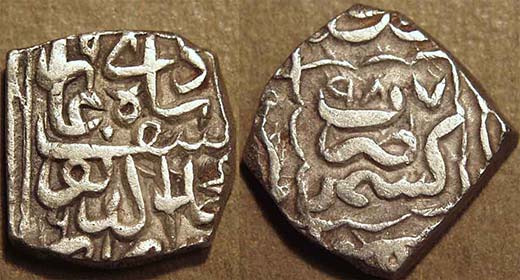
Historical accounts suggest that Pandu Chak was the first to settle in the village, and it was his progeny that rebelled against Budshah on the issue of Begar, the forced labour. Legends locally hold that Pandav Chak had provoked the rebellion. In retaliation, many of the chieftains were executed, and the village was burnt. When the state retaliated, he fled to Drava but was captured. Later, the survivors settled in Trehgam. It was his descendant, Hussain, who had ten sons and who eventually rebuilt the Chak legacy that founded the Chak Sultanate.
Surviving families settled in Kupwara and Trehgam, forming the Helmat Chak (Sunni–Hanafi) and Lankar Chak (Shia) branches.
After ruling Kashmir for slightly more than 30 years, the Chak’s were vanquished by the Mughals. They continued their rebellion and retreated into forests, becoming Galwans, the ferocious horse-lifters. Some of them were captured and executed, and some were banished.
During the Dogra rule, the temple priest enjoyed royal favour. Local legend has it that he supervised an “eternal flame,” supported by villagers of all faiths. The Dogra had exempted Trehgam from Begar.