Cradled by plateaus and flowing alongside the Jhelum, Bijbehara, known as the ‘Town of Chinars’, effortlessly weaves natural beauty with historical depth, its centuries-old Chinar trees, timeless monuments, and vibrant cultural legacy bearing witness to an enduring past, writes Babra Wani
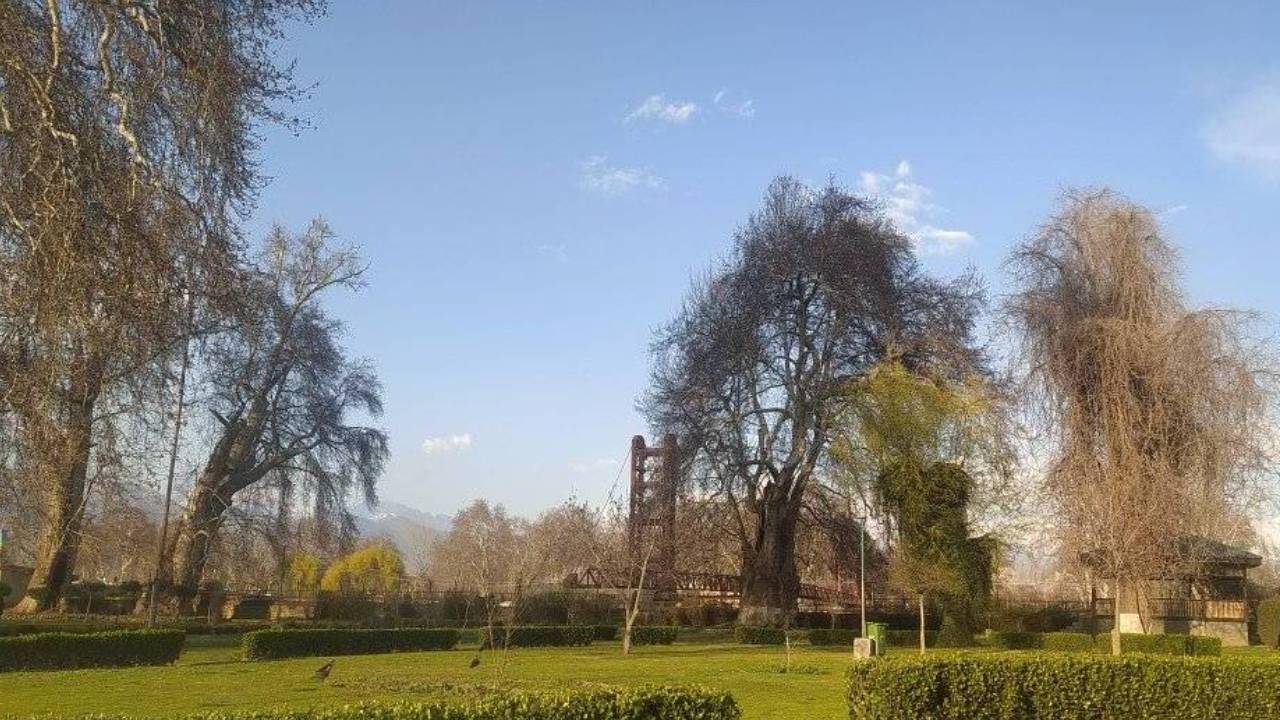
A matchless merger of past glory, natural magnificence, and cultural abundance, Bijbehara, the Town of Chinars, stands as a testament to a unique blend of both beauty and history. Known locally as Vejbyour or Yejbyour, this small town, famed for its iconic Chinar trees and grandeur of Mughal gardens, serves as a tranquil stop for those heading deeper into the vale. For centuries, it has remained on two important routes – the Mughal Road, which earlier took the Kulgam-Khanbal Road to Srinagar from Shopian, and the Jammu-Srinagar Road.
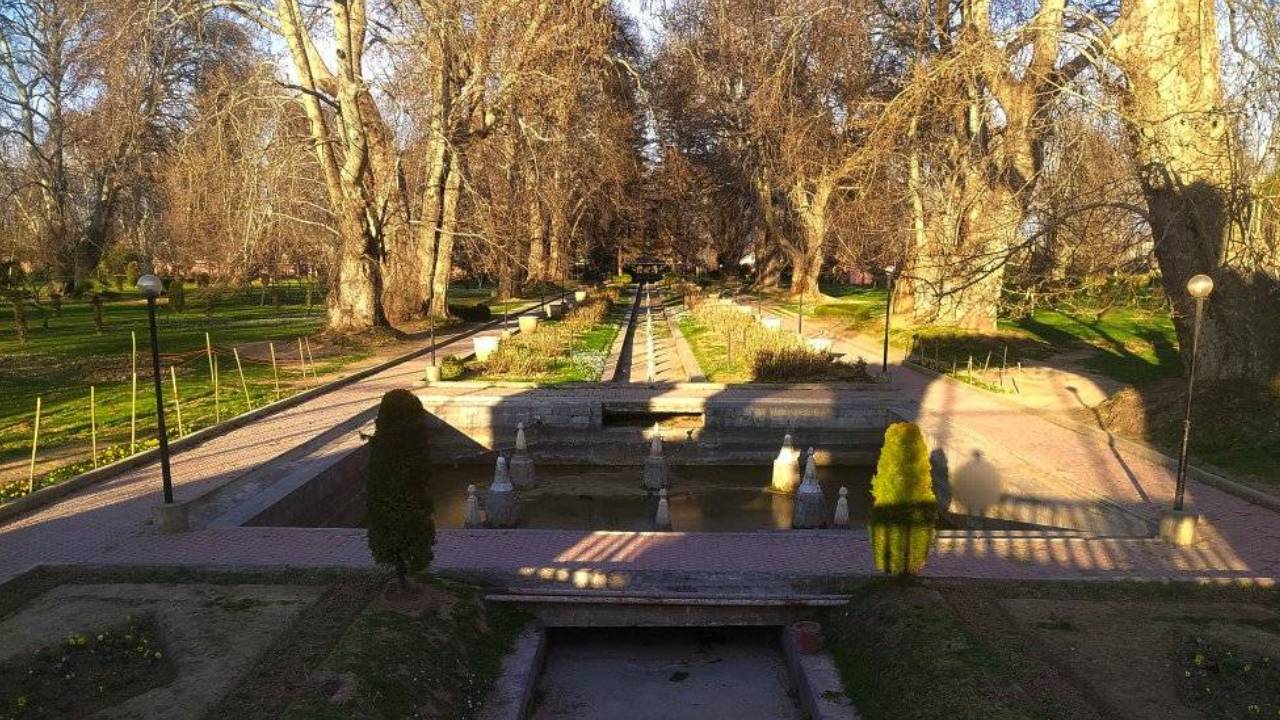
Home to two historic Chinar gardens, Paadshahi Bagh and the Dara Shikoh Garden, this south Kashmir town is attracting year-round visitors for its vibrancy and legacy. With modern infrastructure threading through its ancient streets, Bijbehara retains its rich historical significance and cultural essence. Ruins around the town reveal the richness of bygone eras.
Location
Bijbehara sits along the left bank of the Jehlum River, at an elevation of 1591 metres above sea level. Approximately 50 kilometres from Srinagar, the summer capital of Jammu and Kashmir, the town is encircled by four plateaus on three sides, the open side lying along the Jhelum.
The town includes a network of residential areas, among them notable neighbourhoods such as Goriwan Chowk, Old Town, Baba Mohalla, Zirpara Chowk, Sadar Bazaar, Vaid Mohalla, Eidgah, and Gadhanji Pora. Each area, with its history and character, contributes to Bijbehara’s enduring charm as both a historical and residential hub within the valley.
The town of Bijbehara is also known for its religious heritage, featuring prominent sites such as the Baba Naseeb-ud-Din Ghazi shrine, the Totak Shah Sahib shrine in Hill Station New Colony, and the historic Vijayeshwar Mahadev temple, which draws both devotees and visitors alike.
Renowned German traveller Baron Hugel once described Bijbehara as one of Kashmir’s historic capitals, suggesting that its name stems from Vijaypra, meaning City of Victory. According to local folklore, the name Bijbehara is derived from Vijay Bijrii, a legendary king said to have acquired the area in 67 BC, a tale that adds to the mystique surrounding this small town. During the prehistoric and early historic period, all the newer faiths, especially the Buddhists, have focused on this town and sent several preachers to spread the new faith.
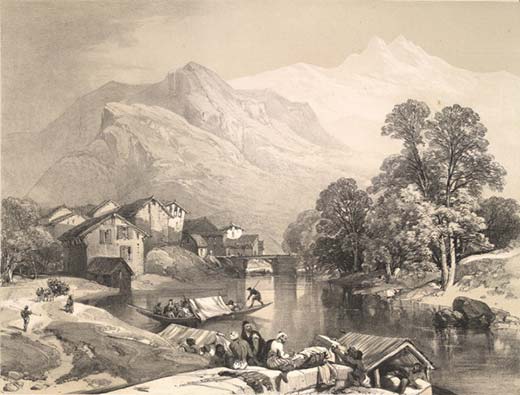
Bijbehara’s history stretches back centuries, and its famed Padshahi Bagh is home to what is believed to be the oldest Chinar tree in Kashmir. The town was once connected by a 100-yard bridge spanning the Jhelum River, constructed at the direction of Mughal Prince Dara Shikoh. The bridge, however, was eventually swept away by floods, and only remnants remain, hinting at its storied past.
Bijbehara’s legacy as a centre of learning is equally profound. It was once home to a university reputed to rival the standards of ancient institutions like Taxila and Nalanda. Such was its scholarly stature that Guru Nanak himself visited the town, and it is mentioned in various historical writings, underscoring its importance as a site of wisdom and learning in the region.
Beyond documented history, legends about Bijbehara endure. The town remains a pilgrimage site, with numerous temples scattered throughout, attracting pilgrims to this day, all drawn by both the spiritual and historical resonance of the place.
Under its CSR initiatives, Jammu and Kashmir Bank played an active role in preserving Bijbehara’s historical landmarks, investing in beautifying its renowned parks, including Dhara Shikhov Garden and Paadshahi Bagh.
Transporting Stop
The town has played a significant to the transport sector of Kashmir before the surface transport took over. For centuries, Bejbehara was the main station wherefrom all kinds of merchandise were loaded and unloaded on the transport boats. It was the last point to which a major transport boat could reach after leaving the Wullar in the Baramulla belt. That was at the peak of Jhelum Valley Road (JVR). This was the main spot which was key to the collection of the government share of the agricultural produce and later distribution of the rations by the government.
After the Jammu-Srinagar highway became the main artery of communication, all merchandise would routinely get transported from Khanabal or Bejbehara. However, this distinction was lost by the town after surface transport became popular.
Tradition Tourism
With its historical significance, Bijbehara is not only celebrated for its Chinar trees but also for its wealth of monuments and landmarks, including religious sites of significance.
The Dara Shikhov Monument, a notable architectural legacy, includes a majestic Mughal garden, Dara Shikhov, along the Jhelum River. This garden was established by Prince Dara Shikoh between 1632 and 1658. A Persian inscription found within the garden provides a record of its construction. The inscription reads: “By the grace of God, Dara Shikhov, on the 22nd day of the Ramdan in the year of the Hijri 1060 (corresponding to 1656 AD) in the reign of Shah Jahan Badshah Gazi completed this building which was erected under the supervision of Daroaga Mohammad Zahid Abdul Hassan Samarkandi.” Today, a ruined structure stands in the Dara Shikhov garden, overlooking the river Vyeth (Jhelum), serving as a memory of the Mughal legacy in Kashmir.
Historical records describe the monument as constructed from Budshahi bricks, arranged in a peri-style formation. The mortar, a mix of terracotta and lime, provided an exceptional binding quality. The architectural style bears similarities to the works of Sultan Zain-ul-Abidin, hinting at a distinctive architectural tradition unique to the region, one that mingles Mughal elegance with local craftsmanship.
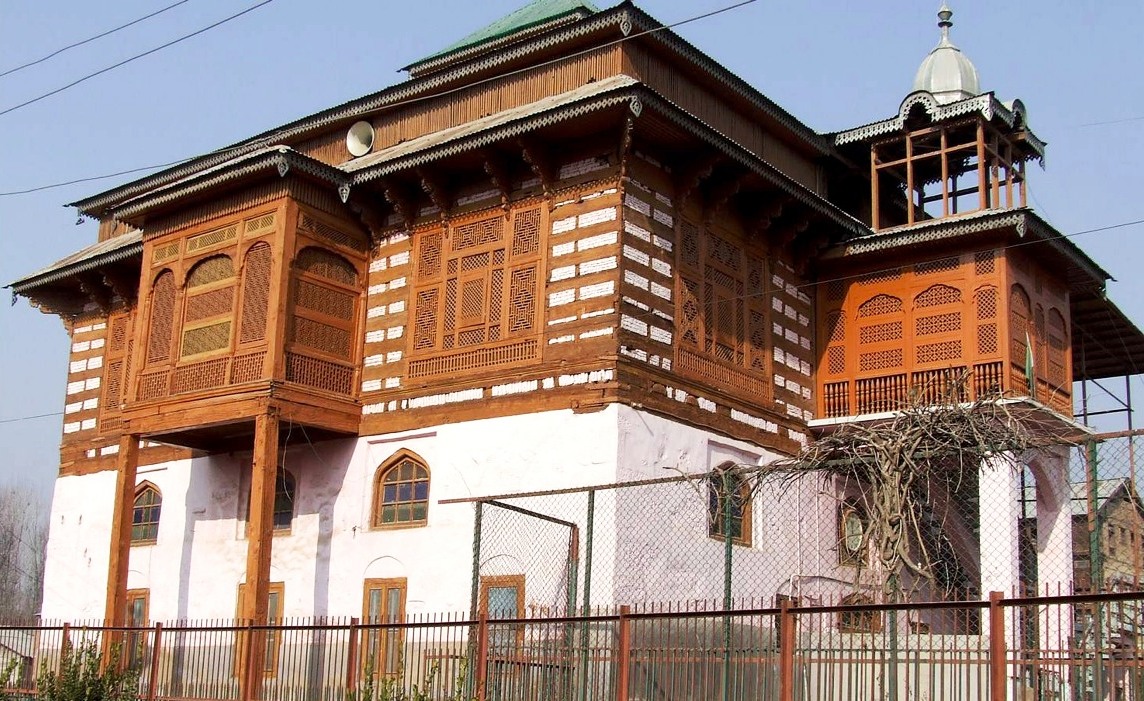
The Bued Masjid of the area, attributed to Sikander, also known as Buet Shikan, stands as an enduring example of historical architecture. The mosque is rectangular, measuring 40 by 40 feet, and consists of two storeys. Its bifacial tin-sloped roof is complemented by wooden stilts on the upper floor. The ground floor, constructed from Devri stone, is finished with a cream-coloured lime plaster, while the upper storey is built from wooden baulks interspersed with latticework and carefully fitted bricks.
The roof has been restored with a layer of soil and birch bark, adding a traditional touch. The corridors are enclosed with wooden mesh screens crafted from small pieces of wood, lending an intricate detail to the structure. Four trellised windows complete the upper storey. Locals oversee the khankah, where daily prayers are conducted, maintaining its role as a place of active worship.
Located in the southeastern corner of the Bued Masjid complex, the tomb of Lal Ded has been a site of pilgrimage for generations. The tomb itself is a quadrangular structure topped by a pyramidal minaret, built with fire-dried brick walls. Its façade features pine wood baulks and latticework bi-portal windows, while the pyramid roof culminates in an open turret crowned by a high pinnacle. This grave, considered sacred, draws pilgrims who come to pay their respects and offer votives.
Architectural Heritage of Bijbehara
Bijbehara’s architectural legacy is as remarkable as its archaeological treasures. In his book Discoveries of Kashmir, author Iqbal Ahmad describes Bijbehara’s heritage sites with particular admiration, noting that “the most interesting edifice is the Khanqah of Baba Naseeb-ud-Din Gazi (RA).” Ahmad highlights the structure, located in Baba Mohalla, as an example of Bijbehara’s well-preserved architecture. The Khanqah, believed to have been constructed during Sikander’s reign (1390-1415 CE), is square in plan, measuring 40 by 40 feet.
Ahmad describes the mosque as a two-storey building. The first storey, made of Devri stones and coated in red lime plaster, contrasts with the wooden baulks used in the second storey. Between these baulks are well-finished bricks, contributing to the building’s durability and style. The original roof, covered in earth and birch-bark leaves, has since been renovated. The upper floor includes two open verandas to the north and south, each supported by four columns and enclosed by delicate wooden mesh screens or jail screens. These verandas are complemented by four windows filled with trellises, allowing light to filter through the structure. As Ahmad observes, the local Muslim community continues to maintain the Khanqah, keeping its historical legacy alive.
He also draws attention to the tomb of Baba Naseeb-ud-Din Gazi (RA) in Baba Mohalla, another important structure. Like the Khanqah, this shrine is square in layout, with its plinth made from local Kashmiri stone, now covered in cement plaster. The central chamber, which houses the saint’s burial, is constructed from brick and wood. The exterior walls are adorned with calligraphic inscriptions of holy sayings, adding an element of reverence to the tomb’s architecture, a feature that continues to inspire devotion among those who visit.
Every spring, the town holds a large festival to mark the saint’s birth anniversary, an event that draws crowds in celebration. One of the highlights of the festivities is the Dhamali, a traditional Kashmiri dance, which remains an unmissable part of the occasion.
In Gardens of the Great Mughals, C.M. Villiers Stuart attributes the garden to Dara Shikoh, originally known as Dara Shikoh’s garden but now called Wazir Bagh. “The banks are steep, and the Bijbehara reach of the river is a beautiful one,” he observes. “The high balconied houses of the little town, and the massive forms of the chinars overhanging the stream, stand out grandly against the piled-up mountain background.” Stuart describes how the stone-edged terraces once stepped gracefully down on either side of the Jhelum, with water from the canals cascading over carved steps into the river, suggesting that Dara’s garden had a setting as magnificent as any created by his father, Shah Jahan.
Padshahi Bagh
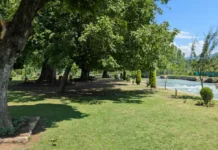
Offering quieter charm, one of the defining features of Padshahi Bagh lies in its culture of ancient chinar trees. Long avenues of these majestic trees add a timeless grace to the garden. Iqbal Ahmad, in his book, describes one of these trees, writing, “An aged chinar, which is considered the oldest standing chinar of Kashmir, is still preserved in the garden.”
Originally, the garden was laid out in two parts, stretching across the left and right banks of the river and connected by a stone bridge. A stone inscription in Persian, recovered from the site, commemorates the foundation of a building within the garden. The inscription reads, “By the grace of God, Dara Shikoh, on the 22nd day of the Ramzan in the year of the Hijra 1060 (corresponding to AD 1656) in the reign of Shah Jahan Badshah Gazi, completed this building which was erected under the superintendence of Daroaga.”
Above the garden, on the river’s left bank, stands a Hindu temple, built in rubble stone by the Dogra Maharaja in 1871. In addition to these significant landmarks, Bijbehara is also home to an array of historic dwellings, with most retaining their original wooden roofs and built from small “Badshahi bricks.” Many of these structures, found mainly in the town’s interior, embody the architectural styles of Kashmir in the early 19th century.