by Ghulam Mohammad Khan
Like Sisyphus with a PhD in self-sabotage, we roll the boulder of familial strife up the hill, only to marvel at our martyrdom when it crushes us on the way down.

In the grand theatre of modern existence, where Kashmir, like much of the world, performs its daily tragedy, the obvious or ordinary is cast as the unloved understudy, dismissed as insignificant despite constituting the bulk of our lived experience. This disavowal, as Theodor Adorno might argue, is the dialectical curse of late capitalism: a society so obsessed with the spectacle of “greatness” that it renders the mundane invisible, even as the mundane quietly scripts our days into months, our months into years. We, the unwitting actors in this farce, suppress the obvious both consciously (through aspirational hustle culture) and unconsciously (when neoliberal logic seeps into our synapses) as if life were a LinkedIn post demanding perpetual excellence.
Yet, like Kierkegaard’s aesthete chasing infinite possibilities but never choosing, we fetishise an elusive perfection—be it in careers, relationships, or even revolutions—while the unglamorous present piles up like unread emails, eventually morphing into monstrous forms: burnout, alienation, or the existential dread that arrives when we realise, we’ve spent years curating a self for applause rather than living. The irony? As Michel de Certeau noted, it is in the “practice of everyday life”, the unheroic rituals of cooking, commuting, or surviving a power cut, that resistance and meaning often ferment. But no matter; we’d rather romanticise Himalayan treks than acknowledge the quiet heroism of a parent packing lunchboxes, or the resilience of a people who persist amid erasures.
We treat the ordinary—properly lacing our shoes, keeping a decent pen, remembering a water bottle, or fixing a fan before summer turns our homes into kilns—with the disdain of a postmodern flâneur who’d rather theorise about urban decay than pick up litter. These trivialities, these petits récits of daily life (as Lyotard might dismiss them), are beneath our aspirational self-image. Why bother with rice portions or bolting the door at night when we could be chasing the sublime, or at least a promotion?
And so, like Foucault’s docile bodies, we internalise the neoliberal mantra that productivity is holiness, while the actual liturgy of existence—hygiene, measured speech, pre-emptive repairs—is left to the unenlightened, the petit bourgeois, the tragically un-optimised. The joke, of course, is that this boring upkeep is the infrastructure of being. As Freud gleefully exposed, the repressed always returns: skip exercise long enough, and your back pain will philosophise for you; neglect the umbrella, and the rain will teach its dialectics.
Yet we cling to the fairy tale that achievement is teleological—that some final success will retroactively sanctify our chaos. But Nietzsche’s eternal recurrence laughs at this: you will re-live every half-laced shoe, every forgotten water bottle, forever. Perfection? A Kantian regulative ideal, useful only to sell us planners, self-help books, and the lie that we are projects rather than persons. The ordinary is the uncanny double we disown—until it throttles us awake at 3 AM, whispering, this is what you are. This is all you have.
We are the architects of our relational catastrophes, incapable of sustaining simplicity until it metastasises into complexity—and then, like Kafka’s Josef K., we are shocked by the bureaucratic absurdity of our own making. Consider the salam, that fleeting gesture of respect to elders: a nod, a word, a moment’s pause. It costs nothing, yet we hoard it like misers as if acknowledging another’s humanity might bankrupt our own. The irony is thick enough to choke on: in Confucian ethics, where “to respect parents and elders is the root of humanity”, such acts are the mortar of social cohesion. Yet here we are, posturing like Nietzschean Übermenschen over who deserves our mumbled greetings as if basic decency were a meritocracy.
The Freudian slip here is a landslide: our refusal to salam often masks an ego too fragile to bend, a petty rebellion against hierarchies we secretly crave to dominate. Bourdieu would smirk at how this performative defiance— “they’re arrogant, why should I?” —reveals our habitus: the internalised classism and generational spite that masquerade as individualism. And oh, the consequences! Like a plot twist in a telenovela, your withheld salam ricochets through the gossip networks, branding you “ill-mannered,” until even the matchmaker (that unsung theorist of social capital) strikes your name from the ledger.
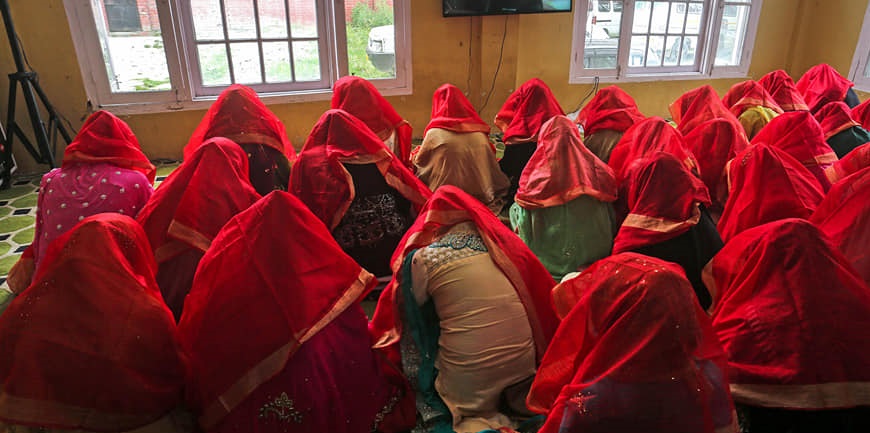
And, marriage—the grand aspiration we dissect with the gravity of Hegelian dialectics, yet fail to see how its possibility crumbles under the weight of our neglected petits gestes. We wax poetic about “union and legacy, blind to the truth Rumi unearthed centuries ago: “You are not a drop in the ocean. You are the entire ocean in a drop.” The salam is that drop. The Filipino mano po, where the young touch an elder’s hand to their forehead, embodies this truth: respect is not transactional but constitutive—it shapes the self as much as the society. Yet we, in our neoliberal delirium, treat it like an optional subscription service.
Behold the modern Sisyphus, not pushing a boulder but perpetually underdressed for winter’s whims! That sunny morning when you, like a bad Sartrean protagonist, exercised your radical freedom to reject the sweater (“I choose cold!”), only to spend the afternoon shivering at your desk, embodying Camus’s absurd hero in his most pathetic iteration. The car sits useless, devoid of spare clothing, mocking your false sense of preparedness. Yet when the cold bites (and it always does), your suffering becomes uniquely yours, a personal affront rather than what Buddhist monk Thich Nhat Hanh might call “the predictable fruit of unmindful living.”
Now, let us discuss the dust! Those swirling particles of our civic neglect coat our streets and lungs with equal indifference. You perform your daily slap-dance with the grime, a grotesque pantomime that Frantz Fanon might analyse as the physical manifestation of colonial urban planning’s lasting violence. Your lungs wheeze in protest, yet the mask remains forgotten – not in your pocket but in your performative discourse about “hygiene.” How Foucault would chuckle at this disconnect between your biopolitical lectures and your bodily negligence!
And then there’s the neighbour, that eternal Other who exists in your Hegelian drama. You build walls (literal and metaphorical) in the name of “privacy,” that sacred cow of bourgeois individualism. Yet when the conflict ignites, these walls crumble faster with each livid accusation stripping away another layer of that precious privacy you claimed to cherish. Your performative boundaries, like Žižek’s ideological fantasies, exist only until reality comes knocking.
We are the hollow men of modernity, chanting mantras of quality while our shoes pinch, our socks reek, and our guts churn with the processed refuse of late capitalism. Like Nietzsche’s last men, we blink in the fluorescent glow of our hypocrisy, obsessed with the aesthetics of wellness yet incapable of the most basic acts of self-preservation. The Japanese concept of kaizen—continuous improvement through small, mindful changes—mocks us from across the Pacific, for we are masters of the grand gestures and failures of the mundane. We would rather philosophise about “optimal living” than wash our socks or choose a meal that doesn’t leave us groaning in digestive distress.
And now, the workplace! That theatre of performative indifference, where we perfect the art of the ghosted glance—a skill so refined that Levinas himself would shudder at our ethical evasion. “I didn’t see you,” we lie as if our selective blindness absolves us of the basic recognition that, as Martin Buber insisted, all true existence is I-Thou. Yet when relationships fracture under the weight of these accumulated slights, we summon Freudian defence mechanisms with the desperation of amateur psychoanalysts: projection, rationalisation, the whole pathetic arsenal of the self-justifying ego. “It must have been their insecurity,” we conclude, never considering that the rot began with our refusal to smile.
And then, the pièce de résistance of our absurdity: we manufacture drama where none needs to exist. Like characters in a Bollywood farce, we slander, distort, and connive—activities that require far more energy than simple decency—all while clinging to the delusion of our righteousness. The Indian poet Kabir laughed at such fools centuries ago: “What you call salvation belongs to the ego. The real is nearer than near.” But we are too busy playing chess with gossip to notice the pawns are our dignity.
The ultimate joke? We posture as stoics, ready to face challenges with grim determination, when in truth, we are merely cleaning up messes of our own making. The Senegalese cultural theorist Léopold Sédar Senghor understood this when he wrote of negritude as a philosophy of care, of tending to the small, the immediate, and the human. But we? We are the protagonists of a Beckettian farce, waiting for some heroic suffering to validate us, all while stepping on the same rake, day after day, and blaming the rake.
The family—that first institution of love and terror, where the ordinary is both sacred and profane, where a single careless word becomes an heirloom of hurt. Here, in this microcosm of Hegel’s dialectic, thesis and antithesis collide over who left the dishes unwashed, and the synthesis is never a resolution, just simmering resentment. A father’s momentary outburst, fleeting as a storm in the desert, etches itself into the son’s psyche with the permanence of a Kafkaesque verdict. No amount of later tenderness can erase it, for we are creatures of narrative, not nuance—like amateur Freudians, we pathologise the outburst, turning it into the cornerstone of our mythos, while the thousand ordinary kindnesses evaporate like morning dew. And the mother! That silent architect of domestic control, whose disapproval of a daughter-in-law’s demureness or boldness (pick your poison) becomes the spark that burns the bridge. The irony? As Chimamanda Ngozi Adichie warns, “The single story creates stereotypes, and the problem with stereotypes is not that they are untrue, but that they are incomplete.” Yet we cling to these fragments, these shards of perceived slights, and build entire fortresses of separation around them. The Japanese call this uchi-soto—the rigid divide between “inside” and “outside”, but we’ve weaponised it, turning family into a minefield of unspoken rules and unyielding grudges.
Love, that most ordinary of miracles, suffers the same fate. We enter relationships not as they are, but as we imagine they should be—grand, cinematic, a Bollywood epic without the dance breaks. When reality dares to be mundane (as it always does), we revolt. The poet Rumi whispered, “Your task is not to seek love, but merely to seek and find all the barriers within yourself that you have built against it.” But no, we’d rather romanticise the struggle, turning petty squabbles into Shakespearean tragedies, because suffering feels profound, while compromise feels like defeat.
The great joke, of course, is that we choose this. Like Sisyphus with a PhD in self-sabotage, we roll the boulder of familial strife up the hill, only to marvel at our martyrdom when it crushes us on the way down. The African concept of ubuntu— “I am because we are”—mocks our isolation, reminding us that harmony is not the absence of conflict but the grace to navigate it. Yet we, the enlightened moderns, would rather dissect the wound than heal it, because scars, at least, make for better stories.
(Born and raised in Sonawari (Bandipora) on the shores of Wullar Lake, the author is an Assistant Professor at HKM Degree College, Bandipora, Kashmir. Ideas are personal.)