Unlike Kashmir, a chain of militancy-related incidents has led the security grid to quickly locate the loopholes and prevent the escalation of crisis to a region that has historically remained peaceful, reports Syed Shadab Ali Gillani
In the scorching heat, when a group of soldiers deployed down south witnessed four young men moving around with their pherans on, they suspected them to be abnormally dressed. The long loose gown is usually a winter dress and is mostly woollen.
A watch-out led soldiers to Chinigam village where it eventually led to an encounter on July 6, 2024. Another gun battle broke out in neighbouring Modergam. In the twin Kulgam villages, six militants and two soldiers were killed. “Wearing pheran in hot weather was suspicious,” Brigadier Prithvi Raj told reporters after the 24-hour operation was over. “We activated our sources and surveillance devices and kept this area under constant watch.”
Jammu Kashmir Police identified all six as residents of Shopian and Kulgam villages. The two slain soldiers were Para commando Pradeep Kumar Nain (Jind, Haryana), and havaldar Prabhakar Praveen (Akola, Maharashtra). A soldier since 2015, Pradeep was expecting his first child after marrying two years ago.
The sensational details came only later. This group of militants had been operating from sophisticated hideouts. “In Modergam, the hideout was inside the house of Yawar Ali Dar and was in use for several months,” DIG South Kashmir, Javed Mattoo said. “In Chinigam, a hideout was constructed inside the house of Mushtaq Ahmed Bhat, a mason. It was concrete and sophisticated.”
Initially, it was the resident population who provided injured soldiers the first aid. They had brought out them from their vehicles and offered whatever they had. Six injured soldiers were driven to the local hospital in the cars owned by the residents. One of them later died.
DGP RR Swain said the twin encounters indicated the security architecture in place and the flow of human intelligence. He said it was an attempt to revive militancy but the plot was neutralised well before.
The Kathua Attack
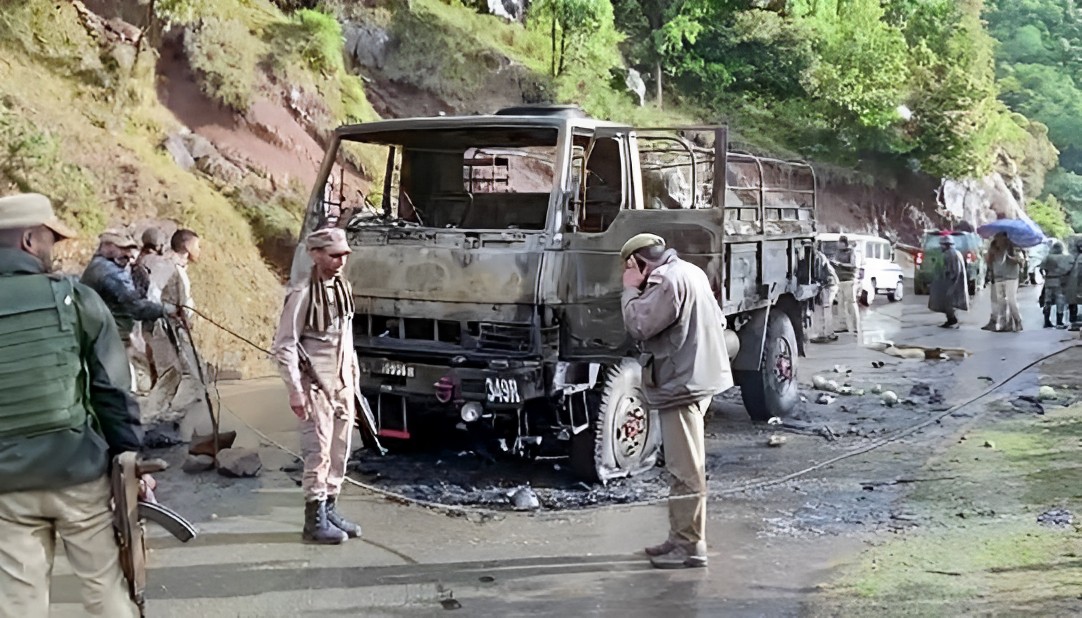
A day after the twin Kulgam encounters, militants hit at a distant location in Kathua. On July 8, at around 3 pm, they attacked an army truck carrying 10 soldiers at Badnota village on the Machedi-Kindli-Malhar road in Billawar. The attack led to the killing of five soldiers as five others were injured.
Police sources said the assailants had positioned themselves on a hilltop where they targeted with a precision of the army truck. The spot is almost 65 km away from Kathua district headquarters. Media reports suggest as the truck slowed down to negotiate the kucha road, they lobbed grenades and later used rifles to fire at them. After around 15 minutes, the militants disappeared.
Reports appearing in the media suggest that the soldiers from the 22 Garhwal regiment, who were in another truck, fired more than 5189 rounds to protect their injured colleagues and force the militants to retreat into Kathua’s wooded hills. Reports said after the attack, they attempted to descend and take weapons but it was foiled. They were reportedly wearing body-cams.
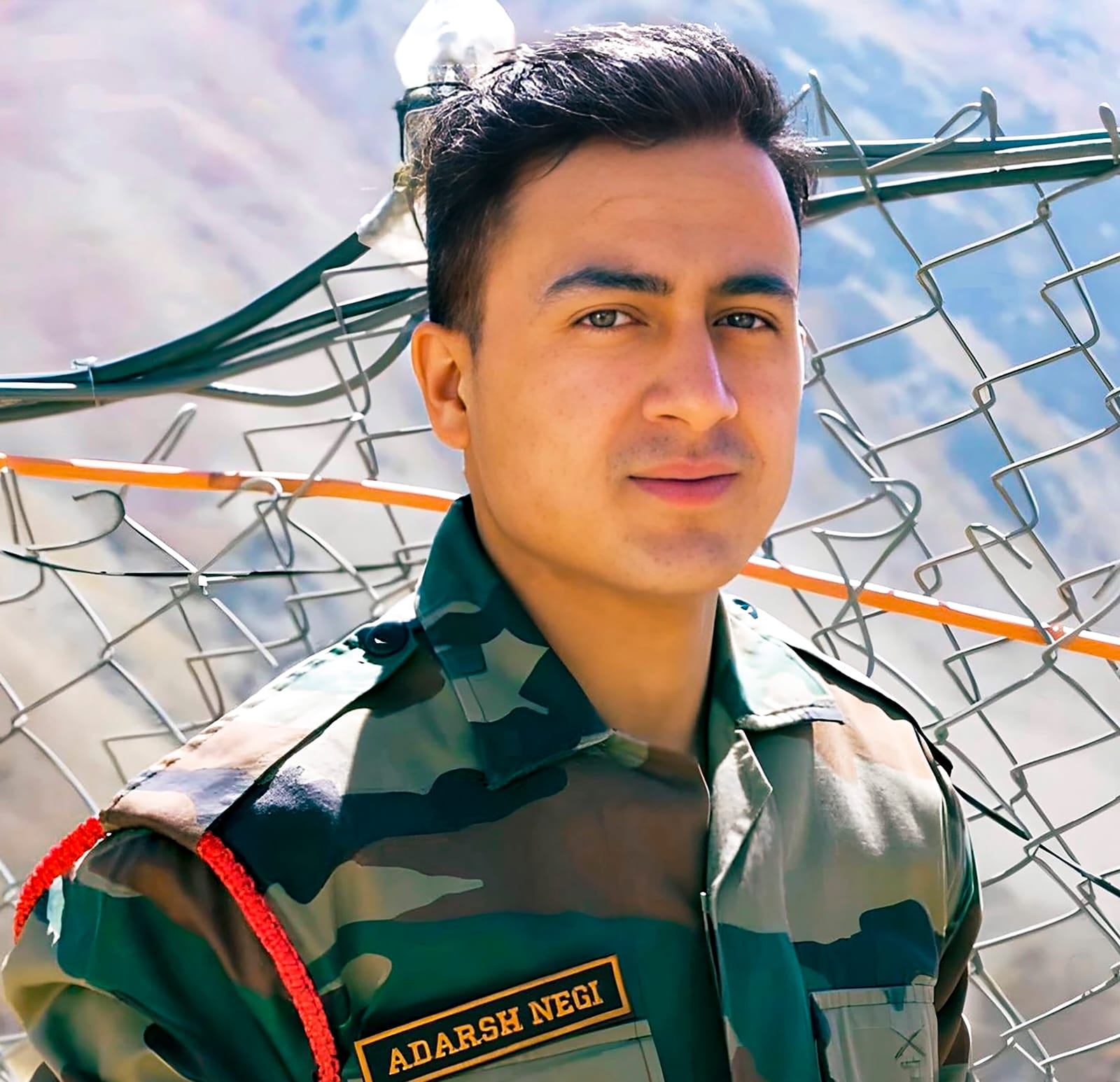
In this attack, all the slain five soldiers were from Uttarakhand. These included Rifleman Adarsh Negi, 25, a resident of Thatti Dagar village, who joined the army in 2018. Negi’s cousin Major Pranay Negi died on duty in Leh, two months ago.
The others were identified as Naib Subedar Anand Singh Rawat from Kandakhal (Rudraprayag), Havaldar Kamal Singh from Papri, Rifleman Anuj Negi from Dobariya village (Pauri Garhwal), and Naik Vinod Singh from Chaund Jaspur (Tehri Garhwal).
After the five killings, an anguished Defence Minister Rajnath Singh said the armed forces are determined to usher in peace in the region. Defence Secretary Giridhar Aramane expressed his “profound grief on the loss of five Bravehearts” and insisted the sacrifice “will not go unavenged”.
The Jammu and Kashmir political class condemned the attack. NC vice-president Omar Abdullah stated that the “terrible” attack was “a bad day when you lose four brave Army personnel in the line of duty.” Mehbooba Mufti said it was “shocking to see soldiers losing lives in the line of duty in places where one found little to no trace of militancy before 2019”. She added: “Tells you all there is to know about the current security situation in J&K. Deepest condolences to their families.”
American Weapons
The shocking incident has triggered a serious introspection within the rank and file of the army. “Officials are looking at the evidence on the site, the bloodstained helmets, the bullet shells and the vehicles with smashed windscreens and flat tyres, and talking to the injured soldiers to understand how that fateful July 8 afternoon panned out,” a media report said, insisting the militants are believed to be a group of three, who “positioned themselves at two different locations and targeted the vehicles and the army men.” The injured soldiers are undergoing treatment at the army hospital in Pathankot.
Media reports quoting investigators suggest that the militants have used American-made M4 carbine assault rifles in this attack also. This has triggered a huge debate as the sophisticated weapon’s entry into Kashmir is a major development. The carbine is a lightweight, gas-operated, shoulder-fired weapon and has been in the NATO use since 1994. It offers high manoeuvrability and a firing rate of 700-970 rounds per minute.
A general impression among the experts is that the weapon might be part of the huge cache of arms that NATO forces left in Afghanistan before they fled in 2012, in the wake of the Taliban takeover.
It was for the first time on November 7, 2017, when an M4 carbine rifle was recovered after the nephew of banned Jaish e Muhammad chief Masood Azhar, Talha Rasheed Masood, was killed in Pulwama. The same rifle was recovered from Pulwama when Azhar’s other nephew Usman Ibrahim was killed.
On July 11, 2022, one M4 carbine rifle was recovered from an encounter site in Awantipora where Jaish-e-Muhammad commander Kaiser Koka was neutralised. After NATO left Afghanistan, the recovery of these weapons started. In all major attacks in the Jammu region, this rifle has been used. Before Kathua, this rifle was used on June 9, in Reasi in the attack on a tourist bus that left nine people dead and 41 injured. On June 26, an M4 rifle was recovered from Doda, after a gun battle.

Follow Up
The entire security grid went quickly into investigations as the manhunt for the elusive assailants continued. Reports appearing in the media suggest 37 additional Quick Reaction Teams (QRTs) of the Army have been mobilised in different districts of the Jammu region. These teams comprise well-trained counter-insurgency soldiers.
Army and police personnel have been deployed in forests in different parts of Udhampur, Samba, Rajouri and Poonch districts. Another group of soldiers are scanning the forests from the Bhaderwah side that connects the spot of the Kathua attack.
To help the police investigate the case fast, the federal investigator NIA has also dispatched a team. So far 50 people have been detained for questioning. These include the driver of a tipper, who had slowed down his truck before the attack by overtaking the convoy. Though unconfirmed, reports appearing in media suggest the militants had reportedly forced a woman in the village Sadota, near Badnota, to cook food for them at gunpoint about four days before the attack. They had left her home with cooked food.
A Jammu newspaper reported the initial police investigations suggest there were four militants involved in the attack and they had two individuals guiding them. It said the residents had located suspicious movements but owing to poor connectivity – both telecommunication and road, they could not communicate things. “As per the inputs, four terrorists and two guides facilitated the terror attack. It, however, will be part of investigations as to whether the terrorists and guides came from Basantgarh or were part of the freshly infiltrated group. All of them escaped after the attack,” the newspaper reported. “The Badnota, Machedi attack mirrored a similar pattern to the Bhimbher Gali-Mendhar terror incident involving an Army truck on April 20, 2023, where five soldiers lost their lives. The terrorists initiated firing targeting the driver first, firing on the vehicle’s wheels, followed by bursts of gunfire targeting its front and left sides.”
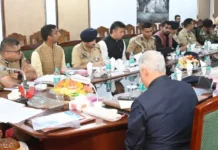
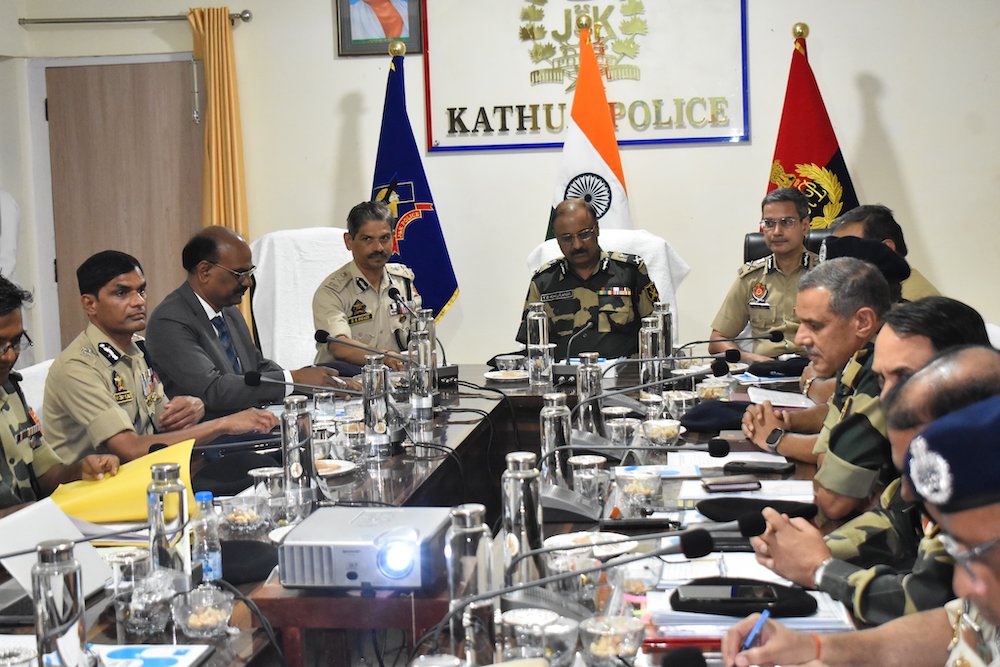
Given the fact that the spot of the attack is closer to Punjab, the BSF, Jammu and Kashmir Police and Punjab Police had a joint meeting to review the situation along the International Border with Pakistan. Border Security Force (BSF) Special Director General, Western Command, Y B Khurana, DGP JK, RR Swain and his Punjab counterpart Gaurav Yadav discussed the issues of infiltration, possible tunnels, smuggling, and narcotics for three hours.
The focus of the meeting remained on coordination, real-time sharing of actionable intelligence, joint vigil and use of technology to strengthen the security grid. Two police officers were mandated to start the coordination initiative.
Focus Jammu
With Kashmir, by and large calm, the militancy is showing a surge in the Jammu region. Earlier, it was being seen as a close-to-LoC phenomenon but now major attacks are taking place in the plains of the region. At the peak of militancy, Kathua was always peaceful but now major attacks are taking place there.
“Figures show that the number of civilians and security forces personnel martyred in terrorist incidents in the Jammu region has doubled since January 2023,” Congress leader Deepender Hooda said. “Whenever the Modi Government introduces any scheme, it links it to terrorism and says that terrorism will be eradicated. When demonetisation took place in the country and Article 370 was removed from Jammu and Kashmir, even then there was talk of elimination of terrorism. But now the Government should think about the situation that has arisen.”
Reports appearing in the media suggest that 43 soldiers were killed in the region since October 11, 2021, when the 10-day encounter was reported in Surankote.
An Irrelevant Target?
While the security experts are discussing the factors that have led to the militancy spurt in Jammu, a hugely peaceful area of the erstwhile state, a section of the rightwing media has started talking about further delays in elections. The Supreme Court has fixed September 2024 as the deadline for the assembly elections. Jammu and Kashmir had the last assembly election in December 2014 and the BJPDP coalition fell under its weight in 2018.
The attacks, reports said have triggered “renewed discussions” about the impending assembly elections. MHA data has suggested that so far 26 attacks have taken place in Jammu and Kashmir and 10 of them were in Jammu. In these attacks, nine security men, and 28 militants were killed. Though the political class in Jammu and Kashmir is unwilling to believe that the elections can take place after the last gun falls silent, Omar Abdullah has stated that any delay would mean the Government’s surrender before the militants.