Iran has made a deep mark on the cultural, demographic and political landscape through a certain amount of interactions, which is visible in the old, vernacular houses, arts and crafts, and traditional shrines in Kashmir. Muhammad Saleem Beig says that the historical narrative on Iranian influence has yet to do justice to its great impact and influence.
To a large extent, the culture of Kashmir bears a heavy imprint of Persian culture, as well as an appreciation of the arts, “moulded and refined” in Iran. Though it seems highly plausible that a certain amount of cultural interaction between the two areas would have taken place even in ancient times, especially during the Seculid period (200BC onwards), the enduring effect of Iran on Kashmir began with the establishment of the Sultanate rule in the 14th century. Henceforth, men of Iranian origin, well versed in the arts, sciences and crafts of the medieval world, embarked on an easterly route from their native land in Fars, Khurasan and Mawra-ul-Nahar into the valley of Kashmir.
Iran, from the latter half of the first millennium, denoted a vast geographical expanse encompassing much of present-day Central and Middle Asia, extending as far as Afghanistan. Yet its significance was never confined to cartographic boundaries. In cultural and linguistic terms, Iranian influence radiated far beyond its territorial limits. Iran, therefore, represented not merely a defined landmass but a civilisational force — a culture, an enduring influence, and a deep historical reservoir rather than a strictly geographic entity. The historic links between Kashmir and Iran, and indeed the broader Persian-speaking world, were immortalised by the poet-philosopher Muhammad Iqbal, who evocatively described Kashmir as Iran-i-Sagheer, the smaller or lesser Iran.
Some were drawn by a pious missionary zeal, some by a sense of travel and some by a promise of court patronage. Those emigrants included men of trade, of sword, of pen, as well as governance.
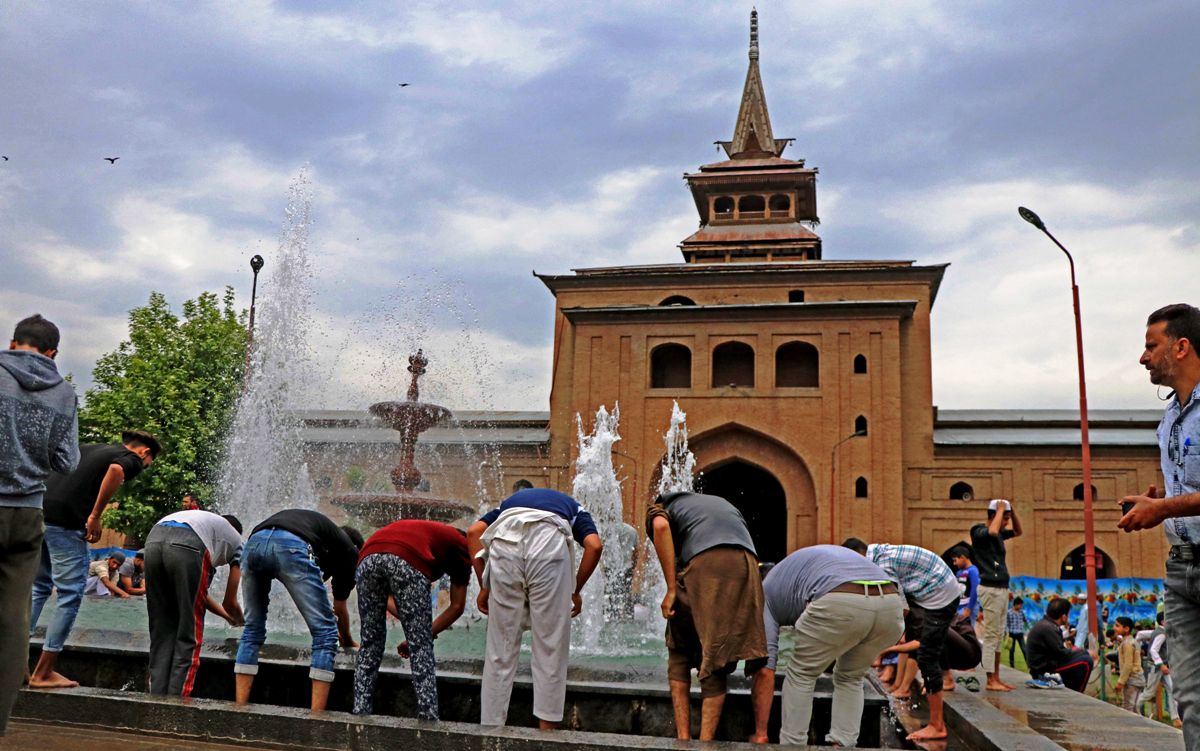
It is in the reign of Sultan Sikander in the late 14th century (1393-1419 AD) that we witness the construction of the new Jamia Masjid under the supervision of Mir Sayyed Mohammed Hamdani, the illustrious son of Mir Syed Ali Hamdani, popularly known as Shah-e-Hamadan. The new Jamia was constructed on the pattern of the traditional courtyard plan with four iwans surrounding a central open courtyard.
The four-iwan plan, which was introduced in the Islamic world in the 11th century and is associated with the Seljuks, had by now become the most prominent and widespread form of the Friday or Jamia mosque in Iran. Thereafter, it remained as an essential feature of what may be defined as the “Iranian mosque”, a form that did not remain confined to the land of its origin alone, but became an accepted model for areas as widespread and diverse as Transoxiana and India.
The first four iwan mosque in India, the Begampur Friday mosque, was constructed by the Tughlaqs at their capital Jehanpanah in 1343 AD, virtually around the same time when the Shahmiri sultanate was being set up in Kashmir. The adoption of this plan in Kashmir for the first time, which came nearly a century after the establishment of Muslim rule in the area, was complemented by the steady arrival of missionaries and artisans from the Persian-speaking world.
The design of the mosque is also reflective of the architects chosen, Sayyed Mohammed and Khawja Sadr-ud-din, both being Iranians. Traditional Kashmiri sources record the name of Sayyed Mohammed as Sayyed Mohammed Luristani, which would tend to indicate that he hailed from Luristan, a region in the south-west of Iran. His co-architect in the project, on the other hand, was from Khurasan, the vast and culturally rich eastern province of Iran. Together, the two men could be said to be drawn from two opposite ends of the land of Iran.
It is interesting to note that while the finest example of the iwan-courtyard mosque in Iran, dating back to the Seljuk period, Masjid-i-Juma at Isfahan has a central courtyard measuring 196 x 230 feet, in comparison, the architects at Srinagar designed the mosque around an impressive central courtyard of 235 x 250 feet. While there is no implicit record of the desire to outsize the Isfahan mosque courtyard, the architects, as well as their spiritual mentor, the Persian Sufi Mir Sayyed Mohammed Hamdani, must have been well aware of the fact that the Isfahan mosque comprised the largest courtyard mosque of Iran, their native land.
The desire to outbuild it could certainly have been there. In fact, the anonymous Kashmiri medieval historian of Baharistani Shahi, while recording the construction of the mosque, takes obvious pride in the size of his native mosque, “Throughout the lands of Hind and Sindh and the climes of Iran and Turan, one cannot come across a mosque of such grandeur and magnificence, though, of course, such grand mosques do exist in the lands of Egypt and Syria”
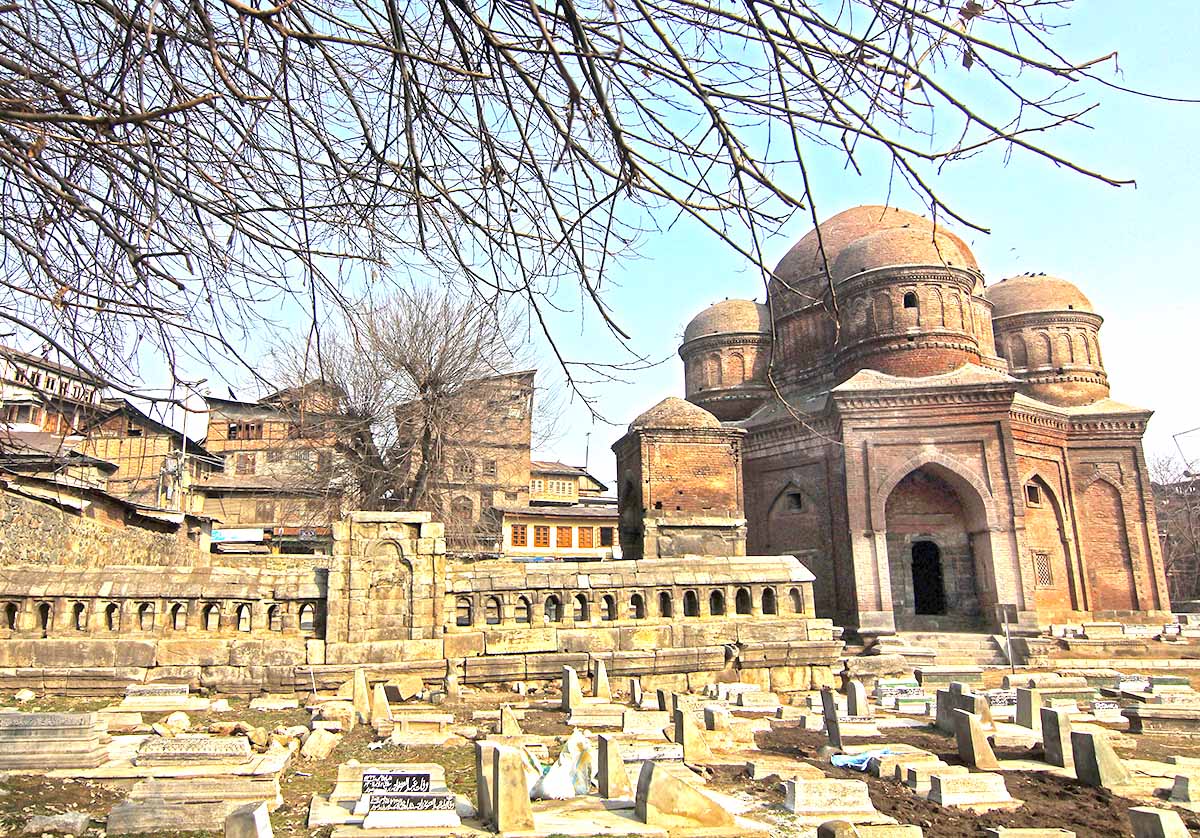
The ascent of Zain-ul-Abideen to the throne marks a new impetus towards the promotion of arts and crafts. The architecture of this period follows two distinctly different traditions, a continuation of the indigenous system of wooden and masonry construction best exemplified by the mosque of Madni and a more “Iranian style” of masonry construction with domes and arches as seen at the Dumath.
While continuing to patronise the local building traditions, the Sultan made a conscious endeavour to promote a sense of cultural unity with the rest of the Islamic world, especially the Persian world. This resulted in the creation of buildings constructed to vie with the architectural monuments created, theoretically in any part of the Islamic land but essentially to the immediate west of Kashmir, especially Central Asia, with its deep Iranian cultural imprints.
The art of Kar-i-Kalamadan (Papier Machie), paper making, Khatamband, Pinjrakari, etc., all trace their origin to the Persian world. Even today, we find old, vernacular houses and traditional shrines which retain these architectural features, the dalan, from a similar element in the Iranian architecture known as Talar, the Varussi form the Persian word Urussi, all point to the land of their origin.
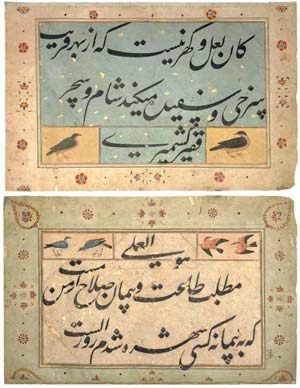
The fall of the Sultanate and the establishment of Mughal suzerainty in Kashmir helped further deepen the Iranian traditions of Kashmir. The Mughal Empire was Timurid in its form; in fact, they took great pride in it and used to refer to their suzerainty as Salateen-i-Chugtaiai. Their system of governance and culture canvas was heavily dominated by the Iranian influence. Given the fact that Persian culture had already made a deep mark on the cultural landscape of Kashmir, Kashmiris were received well and encountered deep appreciation at the Mughal court. These included Kashmir calligraphers like Mohammed Murad as well as theologians like Sheikh Yaqub Sarfi, musicians, painters and, to the surprise of later historians, the men and women of the sword.
Thus, we have references to Kashmiri women armed guard serving as the protectors of the royal seraglio (Haram) of the Mughal princesses. During the reign of Mughal emperors, especially Shah Jehan, several Iranian poets settled down in Kashmir, giving a fresh impetus to the literary arts in the area.
The school of Mulla Mohsin Fani, Mirza Darab Joya, etc., trained a host of Kashmiri poets who found the favour of both the Mughal Subedars as well as occasionally the Emperors themselves. Unfortunately, as most of these poets were associated with ‘Sabak-i-Hindi’, they did not find much appreciation in Iran. On the other hand, several Kashmiri theologians have, by their composition, left a permanent mark on the religious sciences of the Persian-speaking land as well as the wider Muslim world.
The Mughals also introduced the notion of “Paradise Gardens” into Kashmir, an idea highly indebted to Iran both in its concept and form. Though a large number of gardens had previously been constructed by the Sultans of Kashmir, the Mughals brought the concept to a sublime level of refinement. The historic narrative on Iranian influence has yet to do justice to the great impact and influence on the onetime flowering of Kashmir as Iran-i-Sagheer. But then, this is a tragedy of all narratives on Kashmir.
( A former state government officer, Beig heads the J&K Chapter of INTACH)