Aharbal offers Kashmir’s tallest waterfall, dense forests, trout-rich rivers, and nearby Mughal gardens across every season, reports Wajeeha Hajira
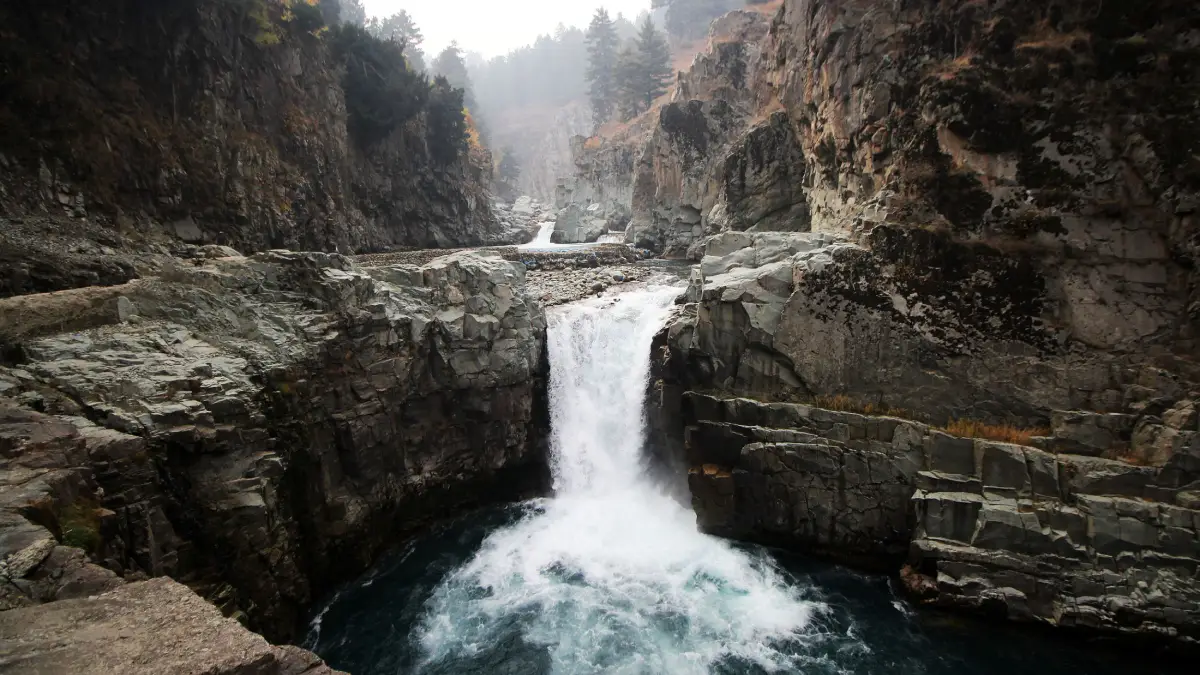
Tucked away in Kulgam district, but more accessible from Shopian, roughly 75 km from Srinagar, Aharbal is one of Kashmir’s most striking hill stations. Sitting at an elevation of 7,434 feet above sea level, the destination is ringed by dense pine and fir forests and framed by the towering Pir Panjal mountain range. Its clear mountain air, thick vegetation, and abundant fresh water have made it a long-standing favourite for trekking, photography, fishing, and simple sightseeing away from the city.
It is also one of those rare destinations that rewards a visit in every season, each lending the place a distinct character. Spring brings the surrounding hillsides to their greenest, with a mild, pleasant atmosphere that makes for easy walking. Summer is when the waterfall is at its most powerful, swollen with snowmelt and monsoon runoff. Winter transforms the entire landscape, blanketing the forests, meadows, and rock faces in snow and giving the destination an altogether different, quieter beauty.
The Focus
The centrepiece of Aharbal is, of course, its waterfall, often called the Niagara Falls of Kashmir for the sheer volume of water that thunders over its rocky cliffs. Fed by the Veshaw River, a tributary of the Jhelum, the falls send up a constant fine mist and produce a roar that can be heard well before the cascade itself comes into view. The Veshaw River originates from the high-altitude lake of Kausar Nag, deep in the Pir Panjal range.
The crystal-clear mountain water, crashing down into a narrow gorge, is what gives the site both its name and its reputation as one of the valley’s most dramatic natural landmarks.
Unlike many broad waterfalls, Aharbal cuts through a narrow rock chasm. The water has carved the hard rock over thousands of years, producing cliffs, swirling pools, and a rugged landscape that changes with the seasons.
The surrounding forest is equally rich in character. Deodar, silver fir, and blue pine dominate the higher slopes, while broad-leaved trees such as maple and willow line the lower banks and riversides. This mix of vegetation supports a genuinely diverse range of wildlife.
The forests around Aharbal are home to the Himalayan black bear, the grey langur, the leopard, and the red fox, all of which rely on the area’s abundant water and plant life for survival. The Veshaw River itself, cold, clean, and rich in oxygen, provides ideal conditions for the breeding of trout, a detail that draws anglers from across the region. The ferocious rivulet later bifurcates and gives rise to Toungri, which irrigates the main agricultural belt in South Kashmir.
Basic Infrastructure
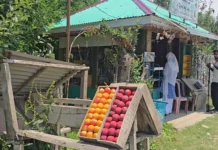
Visitor infrastructure at the site has been developed with some care. Well-maintained pathways lead from the parking area to designated viewing platforms and fenced viewpoints, allowing visitors to take in the falls from multiple angles. Cafeterias and food stalls are positioned at intervals for meals and snack breaks, and safety barriers with protective railings line the gorge, making it possible to view the falls up close without undue risk.
There is no shortage of things to do once at the site. Anglers can fish the Veshaw River for trout between April and October, provided they first obtain a permit from the Jammu and Kashmir Fisheries Department and follow the applicable rules and regulations. Local pony and horse owners offer rides along the pine forest trails, through meadows, mountain paths, and past nearby villages. Photographers are drawn to the striking contrast between the white rushing water and the dark rock it crashes against. In winter, the landscape transforms completely, with snow-covered slopes and frozen edges offering an entirely different spectacle.
Fascinating Surroundings
Aharbal’s surroundings hold their own attractions for those looking to extend the trip. Kausar Nag, the glacial lake that feeds the Veshaw River, lies within the Pir Panjal range and is a popular spot for camping. It is a huge high-altitude lake that has too many myths surrounding it. In peak summer, youth go on long treks and spend a night on the banks of the lake where clouds look like quilts.
Trekkers can head 10-12 km further to the Kungwattan valley, known for its dense forests and network of trails.
The waterfall’s popularity has translated into a steady economic footprint for the wider region. Tourism sustains local taxi drivers, pony and horse owners, hotel operators, and shopkeepers, and has also created a reliable market for Kashmiri handicrafts, traditional garments, and other souvenirs sold by local artisans.
The steady flow of visitors has, over time, driven tangible improvements to the area’s infrastructure, better roads, pathways, parking facilities, and accommodation. These changes have in turn generated further local employment.
Aharbal remains one of the more complete destinations in the Kashmir valley: a waterfall dramatic enough to earn comparisons to Niagara, a forest ecosystem home to bears and leopards, a river suited equally to trout and anglers, and easy access to two of the region’s most storied Mughal gardens. Whichever season one visits in, the destination offers something distinct, and enough infrastructure in place to make the trip comfortable for families and solo trekkers alike.