As fintechs eat into payment systems, banks in Jammu and Kashmir are losing not just market share but also relevance. With digital platforms now handling the bulk of transactions—from utility payments to instant credit—banks are increasingly ceding ground, often without a fight. What makes this drift more alarming is the broader economic mood: credit appetite across the region has stagnated, signalling a climate of caution and financial strain. Households are saving more, spending less, and steering clear of debt. In this shifting financial ecosystem, banks find themselves adrift—technologically outpaced and economically sidelined, writes Masood Hussain
By all accounts, banking in India has witnessed a tectonic shift over the past decade. From how transactions are conducted to where credit flows and who controls it, the transformation has not just altered institutions but redrawn the geography of banking itself. Jammu and Kashmir is no exception.
For years, Jammu and Kashmir Bank (JK Bank) held unchallenged sway over the region’s financial landscape. As one of India’s oldest private sector banks, and the only scheduled commercial bank owned by a state government, JK Bank became more than a lender; it was an institution of stability in both peace and turmoil. When nationalised banks pulled back during difficult times, it was JK Bank that kept its counters open, becoming the lone financial refuge for the public, businesses, and the government.
When India’s economic liberalisation and technological boom reshaped the financial sector in the 1990s and early 2000s, Jammu and Kashmir was navigating through its most fragile years. Yet, it is to the credit of the bank’s leadership that it did not lag. It modernised against all odds, plugged into digital reforms, and built itself into a universal bank for the region.
But that monopoly is no longer intact.
The past decade has redefined what it means to be a bank in India, thanks to three key shifts. First, the explosive convergence of finance and technology gave rise to a new species altogether: the Fintechs. They blurred the boundaries between bank branches and mobile apps, bringing credit, payments, and customer service to the fingertips of even remote users.
Second, the Department of Financial Services (DFS), Government of India, took financial inclusion from slogan to strategy. The DFS now regularly interacts directly with bank officials and allocates government business to banks based on their performance in social security and credit-linked schemes, forcing even the traditionally aloof private sector giants to align with public mandates.
The third tectonic shift came from the banking regulator, the Reserve Bank of India (RBI). Its cautious embrace of innovation allowed Small Finance Banks and Payment Banks to emerge. Suddenly, telecom giants and NBFCs were offering basic banking services. Meanwhile, peer-to-peer lending, digital credit scoring, and UPI-based micro transactions began to dominate what was once the stronghold of legacy institutions.
These shifts changed Indian banking, but in Jammu and Kashmir, they hit closer to the bone. In just three years, JK Bank has been steadily losing market share in a region it once entirely commanded. As digitalisation spreads, footfall in branches has declined, deposit growth has slowed, and traditional retail lending has come under pressure.
Recent outages in the bank’s digital infrastructure, caused by increasing traffic loads, have made headlines. Meanwhile, the financing of consumer durables, from refrigerators to mobile phones, has moved out of the bank branch and into retail showrooms, facilitated by instant fintech loans. In many towns and villages, customers no longer visit the bank for loans; they simply tap an app. Even microloans of Rs 5,000 are now just a swipe away.
This new normal has redrawn the rules of competition. It is not legacy or loyalty that will decide market leadership, but agility, innovation, and digital depth, market insiders suggest. Banks that fail to invest in cutting-edge platforms, APIs, and partnerships with fintechs risk becoming irrelevant.
For JK Bank, that continues to be the big daddy of banking in Jammu and Kashmir, the path forward demands more than survival instincts; it demands reinvention. To retain relevance, it may require shedding its resistance to change and confronting the digital challenge head-on. The advantage of incumbency is slipping. The era of banking that belonged to tellers and tokens is over. In the age of apps and algorithms, only those banks will endure that truly understand the new market and are brave enough to build for it.
Regardless of the changes that are taking place around, the show is going on. How was the show in the fiscal year 2025 that concluded in March 2025?
The Network
Evolving technologies have a visible impact now. Apps owned or hosted by the banks or cell phone companies, and the online services of the banks, are gradually taking over part of the transactions. Now, the banking sector has made room for payment banks that were mandated to make payments through digital platforms. Now, they can appoint business correspondents (BC). This is gradually changing the traditional brick-and-mortar banking space in Jammu and Kashmir. This has started triggering a change.
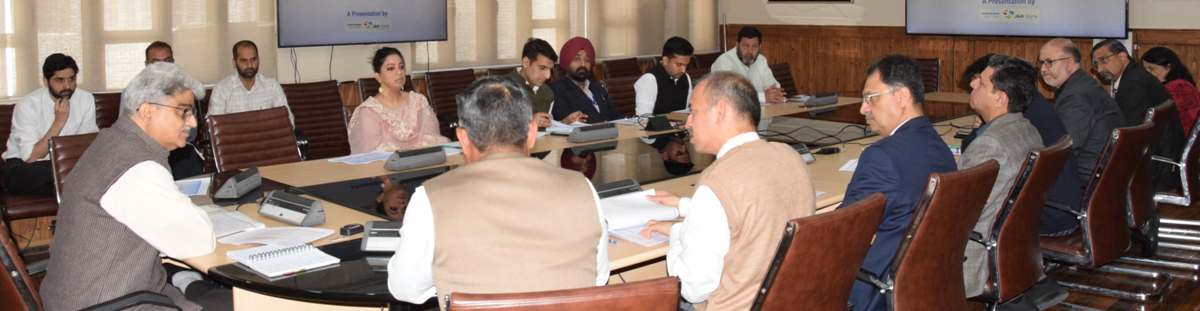
In fiscal 2025, ending March 2025, the banking network improved differently. While the bank branches increased from 2158 to 2197, a mere two per cent increase, the banking correspondents had a 121 per cent growth, from 4010 to 8865.
Though 8865 BCs stand engaged, only 6,512 are active, while 2,353 remain inactive. Of the active BCs, the highest numbers are from Airtel Payments Bank (2421), followed by JK Bank (1275), India Post Payments Bank (1517), JKGB (412), HDFC Bank (147), and smaller contributions from banks like SBI (309), PNB (234), Axis Bank (112), and others.
The ATM network had got compromised by one per cent as the machines fell from 2682 to 2661. Diversity of payment systems is playing a major role in changing the banking landscape.
Interestingly, more and more banking bands are getting into Jammu and Kashmir. However, concern remains: they are urban heavy. Of 40 new public sector branches planned earlier, only 27 have come up, with a mere 9 in rural areas. The underserved Kashmir periphery is paving the way for BCs and the cell phone operators.
Deposits
With impressive financial inclusion, the banking sector in Jammu and Kashmir has better deposit growth. By the end of March 2025, the bank across the erstwhile state had Rs 196968.02 crore in its vaults, an increase of 9 per cent over Rs 113730 crore of March 2024. Interestingly, 63.17 per cent of the deposits are with the JK Bank, the major banking network in Jammu and Kashmir.
With a 10 per cent increase, the private sector banks have an upper edge in deposit growth, unlike the public sector banks that recorded 6 per cent growth, even kisser than the 9 per cent growth of regional rural banks now consolidated into one bank.
Almost all the banks operating in Jammu and Kashmir have a better CASA ratio as their clientele is not exposed to the better money-making products that banks offer. JK Bank leads on these parameters as it always has because of having the major deposit share.
Advances
The main bread and butter of the banks, advances, are emerging as a real challenge in Jammu and Kashmir. Advances were recorded at Rs 1,13,730 crore in March 2024 to Rs 1,20,424 crore by March 2025, marking a modest year-on-year increase of 6 per cent. Among the banking categories, RRBs posted the highest growth in advances at 12 per cent, rising from Rs 4,443 crore to Rs 4,984 crore. Private Sector Banks also recorded a healthy 7 per cent rise in lending, with advances climbing from Rs 76,775 crore to Rs 82,158 crore. In contrast, Public Sector Banks saw a sluggish 2 per cent growth, with advances reaching Rs 31,642 crore. Cooperative Banks remained almost stagnant with a marginal 1 per cent increase.

The interesting part of the loan book is that of JK Bank, the leader of the sector. With overall advances of Rs 70551.145, the JK Bank has a share of 57 per cent in Jammu and Kashmir’s loan book. It is a slight fall in comparison to March 2024, when the bank had a 57.54 per cent share (Rs 67152.15 crore) in the overall loan book. By the end of March 2023, JK Bank had a market share of 58.51 per cent (Rs 60568.38 crore) in the overall outstanding advances. The bank’s loan share in Jammu and Kashmir was 61.60 per cent (Rs 55429.24 crore) by the end of March 2022.
Since 2019, JK Bank has gradually given up its market share to its competitors. The bank’s loan book grew by an impressive 15 per cent in the last year when Jammu and Kashmir was a state. Soon, it started falling. It fell by one per cent in 2019-20, three per cent in 2020-21, and 4.62 per cent in 2021-22. By March 2018, JK Bank had a 62.71 per cent share in the loan book with a Rs 68969.07 crore exposure.
Desperate Districts
Jammu and Kashmir is exhibiting a serious lack of credit appetite, and it essentially indicates a low economic activity. District details offer the real dread of the mess. Of 20 districts in Jammu and Kashmir, 13 show a negative growth in credit uptake in 2025 in comparison to March 2024. Three have shown a growth of less than half per cent on a year-on-year basis.
For the last many years, the tiny district of Shopian has been leading the growth story with the highest CD Ratio, the percentage of credit demand in comparison to the deposit availability. Apparently owing to the apple economy, it was followed by Pulwama and soon by Budgam, perhaps because of the real estate. The last to join the growth story was Kupwara.

Now, all of them are either stagnant or negative on the credit demand side, in comparison to the last fiscal year. Shopian has reported a fall in credit growth by 16.11 per cent to reach a CDR of 116.78 per cent, followed by a fall of 10.99 per cent in Baramulla, Srinagar by 5.06 per cent, and Kulgam and Kupwara by more than four per cent each. Now, it is not Shopian but Kupwara which is topping the CDR graph with 126.8 per cent.
The overall banking sector has exhibited a fall in the CD ratio. It was 64.39per cent in March 2014, which fell to 62.83 per cent in March 2015, a net fall by 1.56 per cent.
Dip Across the Board
The year-on-year growth is modest in almost all sub-sectors. In agriculture, the overall lending has gone up from Rs 11407.09 crore, in both priority and non-priority sectors, in March 2024 to Rs 12369.47 crore, a year later, marking a growth of 7.78 per cent. Insiders said it is better in comparison to the growth in the last fiscal, FY 2023 to FY 2024, when the growth was only 0.57 per cent.
According to the RBI, Indian and foreign banks operating in India with 20 or more branches must give 40 per cent of their total loans to certain important sectors of the economy. This is called Priority Sector Lending (PSL). Out of this, 18 per cent must be given specifically to the agriculture sector.
Lending to the manufacturing sector has improved from Rs 25,569.61 crore to Rs 27,783.90 crore in the last one year, marking a growth of 8.66 per cent. Interestingly, advances in the industry had witnessed 37.27 per cent growth in the fiscal year ending March 2024.
Education loans of all kinds have gone up from Rs 719.33 crore in March 2024 to Rs 828.62 crore in March 2025, registering an improvement by 13.18 per cent. In the preceding fiscal, advances to education had a sluggish growth of 10.72 per cent.
Housing has always remained a major credit-intensive sector in Jammu and Kashmir, especially in the urban space. The lending to the sector surged from Rs 13581.41 crore to Rs 15120.11 crore, an appreciation in credit growth of 10.17 per cent in the last year. The major sector has seen credit growth reaching 16.15 per cent in the preceding financial year ending March 2024.
Personal loans have remained a major player in credit uptake. This portfolio grew by a modest 8.27 per cent to improve from Rs 24,973.30 crore to Rs 27,037.45 crore in the fiscal year ending March 2025. Bankers are happy that the portfolio that witnessed a negative growth of 27.69 per cent in the fiscal 2024 grew by 8.27 per cent by March 2025.
Bad Assets
Jammu and Kashmir has been passing through interesting ups and downs for a long time. It was civil unrest in 2010 and 2016, a devastating flood in 2014, and a Himalayan shift in governance and identity in 2019, besides the COVID-19 pandemic that closed Kashmir, like the rest of India, for almost a year. These developments took place at a time when the markets were shifting from real to virtual. A series of post-2019 political interventions started changing the framework in which a number of socio-economic sectors were operating. All these events had a disastrous impact on the economy of the place. Some best companies making a profit ceased to exist. The bad assets surged.
Witnessing the changes in the economic system, the bankers ceased the routine banking for a while and started getting into managing alleged impaired assets. If a loan account is not serviced for three months, RBI guidelines put it in almost NPA basket. There were takeovers, sales, mergers, and even the banks took possession of the assets they were holding as collateral. The post-2019 bookish banking was in contrast to the traditional banking, in which the bank would understand the crisis of its client and had stakes in his success. Campaigns launched to recover loans created a situation where people started disposing of their assets to pay the banks. The top priority of the people was to avoid any kind of public humiliation. While banks made momentary profits but their top lines dwindled to an all-time low, a crisis they will feel seriously in the coming days.
Right now, the entire banking sector in Jammu and Kashmir has an NPA basket of Rs 4695.45 crore, which is 3.79 per cent of the overall advances outstanding. The position is slightly improved in comparison to March 2024, when 4.02 per cent of the advances fell in gross impaired assets.
Of the entire NPA basket, Rs 3041.25, which is 64.77 per cent of the overall NPA, is in Kashmir, the 10 districts that have historically remained the main bread and butter of the banking sector. Srinagar tops with Rs 1902.48 crore, followed by Jammu with Rs 1135.17 crore. Almost 65 per cent of the NPA is in the twin capital cities of Srinagar and Jammu. Though Srinagar and Jammu cities do not have a huge difference in advances, the fact remains that the banking sector’s 53 per cent loan book is in the Kashmir region. More than 64 per cent of the NPAs belong to the JK Bank because it 57 per cent share in advances across the erstwhile state.
Sponsored Schemes
In the post-2019 Jammu and Kashmir, there is a massive emphasis on the schemes sponsored by the central government or the Jammu and Kashmir administration. With sovereign guarantee in hand, banks are also managing to hit targets, even though a low ticket size is adding spread pressures to them. Now, even these low ticket size loans get bad.
In 2024-25, the bankers said they have Rs 249 crore of bad assets in the KCC (crops) basket, which is 4 per cent of the portfolio. Similarly, Rs 34.2 crore were declared gross NPA (2 per cent) under KCC (AHF).
All schemes are reporting defaults. The Mumkin scheme, launched by JK Bank under the title J&K Bank Commercial Vehicle Finance Scheme as part of the Mission Youth initiative, aims to generate sustainable livelihoods for young people through commercial vehicle ownership. By the end of March 2024, the scheme had extended loans worth Rs 220.35 crore. Despite its broad reach and promise, it reported defaults amounting to Rs 5.50 crore, a default rate of 2.5 per cent, reflecting emerging concerns about loan recovery under youth-focused livelihood programmes.
The Tejaswini scheme, implemented by JK Bank under the Mission Youth initiative, is a self-employment programme aimed at empowering young women entrepreneurs across Jammu and Kashmir. Designed to support women in launching and sustaining their own ventures, the scheme has shown encouraging results. As of March 2024, total outstanding lending under Tejaswini stood at Rs 34.29 crore, with non-performing assets (NPAs) amounting to Rs 0.75 crore, an NPA ratio of 2.19 per cent.
Launched as part of the Union Budget for FY 2016, the MUDRA scheme (Micro Units Development and Refinance Agency Ltd) was established by the Government of India to boost the non-corporate small business sector by facilitating easy credit access through last-mile financial institutions such as banks, NBFCs, and MFIs. Under the Pradhan Mantri Mudra Yojana (PMMY), the scheme has seen significant uptake in Jammu and Kashmir.

As of March 2024, total outstanding under MUDRA loans stood at Rs 12,305.51 crore, with non-performing assets amounting to Rs 513.43 crore, marking an NPA ratio of 4.17 per cent. The higher default rate in comparison to other livelihood schemes highlights both the scale and risk involved in unsecured micro lending.
Other sponsored schemes have their own defaults. Under the National Rural Livelihoods Mission (NRLM), total outstanding loans stood at Rs 521.86 crore, with NPAs of Rs 6.06 crore, a default rate of 1.2 per cent.
The Prime Minister’s Employment Generation Programme (PMEGP) showed an NPA of Rs 85.57 crore against an outstanding of Rs 2,971.31 crore, resulting in a 2.9 per cent NPA ratio.
The most concerning is the National Urban Livelihoods Mission (NULM), where gross NPAs stood at Rs 13.42 crore out of Rs 124.09 crore lent, translating into a high NPA percentage of 10.8.
As of March 31, 2024, the Prime Minister’s Employment Generation Programme (PMEGP) in Jammu and Kashmir had an outstanding loan portfolio of Rs 3,828.64 crore. Of this, Rs 119.75 crore was classified as non-performing assets (NPAs), putting the scheme’s NPA ratio at 3.1 per cent.
Financial Inclusion
Owing to the impressive network that JK Bank has, Jammu and Kashmir emerged as a major territory where almost the entire population is linked to the bank. But not many people know that while inclusion is an ongoing process, exclusion is also taking place, simultaneously.
In the banking sector, accounts that remain untouched by the customer for a set period, usually two years, are categorised as inoperative or dormant. Separately, frozen accounts are those whose operations have been restricted due to legal, regulatory, or court-related interventions. Both categories present significant challenges for the financial system in Jammu and Kashmir, particularly in ensuring the smooth delivery of Direct Benefit Transfer (DBT) schemes and other welfare entitlements.
To address these concerns, banks have been advised by the RBI to intensify efforts to reduce the number of inoperative and frozen accounts. Ensuring that accounts are KYC compliant, through linking Aadhaar, PAN, and other required documents, has become a central recommendation to mitigate risk and facilitate hassle-free service delivery.
The latest data paints a mixed picture. As of April 30, 2025, the total number of inoperative accounts across banks in Jammu and Kashmir had declined from 40.38 lakh to 35.96 lakh, a net reduction of over 4.86 lakh accounts since March 31, 2024. JK Bank led this improvement with a significant reduction of 4.68 lakh dormant accounts. Other banks such as SBI and PNB also recorded net reductions of 11,728 and 49,394 inoperative accounts, respectively.
On the other hand, the number of frozen accounts showed a worrying rise. Between March 2024 and March 2025, frozen accounts surged from 10 lakh to 16.5 lakh, an increase of over 6.48 lakh accounts. SBI alone reported a steep rise from 54,601 to over 5.08 lakh frozen accounts, accounting for nearly 70 per cent of the total increase. JK Bank also saw a substantial rise of 1.8 lakh frozen accounts in the same period. In contrast, some banks such as IndusInd, Axis, and IDBI managed to reduce their frozen account numbers, indicating that compliance and dispute resolution mechanisms can make a difference.
The Takeaways
The banking sector in Jammu and Kashmir in FY 2024–25 presents a picture of progress mixed with unevenness. There is respectable growth in deposits, credit disbursement, and financial inclusion efforts. Yet, the sector suffers from structural weaknesses: limited rural branch penetration, underperformance by cooperative banks, inactive BCs, and skewed credit delivery that favours urban centres and large borrowers.
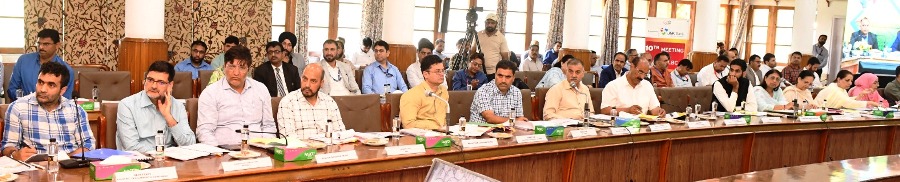
The private sector, led by JK Bank, is more agile in driving credit growth, while public sector banks lag, especially in rural and priority sectors. The region’s credit-deposit balance remains fragile, and unless credit delivery is made more regionally equitable and sector-diverse, the development potential of banking will remain underutilised.
The deposit mobilisation is strong. The Annual Credit Plan (ACP) has been exceeded. The ACP for 2024–25 was overachieved at 135 per cent, with Rs 69,777.77 crore disbursed against a target of Rs 51,839.99 crore, indicating an overall expansion in credit flow. Rise in Priority Sector Lending: Lending to agriculture, MSMEs, and renewable energy sectors showed meaningful growth. Agriculture credit rose by 39 per cent, MSMEs by 3 per cent, and renewable energy lending surged by 534 per cent.
Kishtwar, Reasi, Udhampur, Samba, and Kathua districts showed improved CD ratios, suggesting that these areas are gradually developing a healthier credit culture.
Advances grew by only 6 per cent, trailing deposit growth, indicating a lag in credit absorption capacity or risk-averse lending by banks. Cooperative banks performed below average. They contributed just Rs 1,403 crore in advances, showing negligible credit growth (1 per cent) and extremely low performance in priority sector lending (just 6 per cent target achievement).
Despite increased disbursements, the overall CD ratio remains stagnant at 62.83 per cent, indicating credit is not growing proportionately with deposits. There is a visible urban bias in branch expansion.
Districts like Udhampur, Shopian, Baramulla, Kulgam, and Ramban failed to achieve even 75 per cent of their credit targets, showing persistent regional credit exclusion. Housing and education lending shrank, with housing credit under the priority sector falling by 50 per cent and education lending dropping by 4 per cent, despite growing public demand. The NPA concentration in urban areas suggests possible overleveraging, credit concentration, or poor recovery in these urban districts.