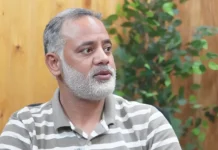
Over the past decade, Jammu and Kashmir Bank has weathered turbulent times, from rising non-performing assets to restrained lending and a slow digital transition. In an unreserved conversation with Kashmir Life, Managing Director and CEO Amitava Chatterjee discusses his vision, challenges, expansion plans, and the bank’s strategic recalibration aimed at revival and rebuilding trust with its loyal customers and workforce. Babra Wani brings the details of the exchange.
Kashmir Life (KL): Mr Amitava Chatterjee, bank results are often seen as indicators of how things are going. In the last few years, we have had three occasions when the bank booked losses and started afresh with a clean balance sheet. But if we compare recent quarterly results, they suggest little visible growth, if compared to the last quarter or the same quarter from the last fiscal year. Is there a particular reason for that?
Amitava Chatterjee (AC): Sometimes numbers do not tell the complete story. A recent development under the government’s one state, one RRB (regional rural bank) policy led to the merger of Ellaquai Dehati Bank with Jammu and Kashmir Grameen Bank. It was a central government decision that we endorsed, recognising the broader vision behind it.
Ellaquai Dehati Bank had been struggling and had accumulated significant losses. Under government guidelines, the investment made by the State Bank of India (its sponsor bank) had to be replenished by the new sponsor, Jammu and Kashmir Bank. This required a one-time provision of nearly Rs 180 crore due to impairment in our investment in the merged entity. Although this reduced our reported profit for the half-year, it accounts for only about 10 per cent of last year’s Rs 2,000 crore profit, given our size.
If this one-time provision is excluded, our profit growth stands at around 20 per cent year-on-year. Deposits have grown by nearly 10 per cent, while advances have increased by about 9 per cent year-on-year. The top line has grown, but the bottom line reflects the impact of that one-time impairment.
This intervention has led the new RRB, the Jammu and Kashmir Grameen Bank turn profitable this quarter, both operationally and net, due to capital infusion and improved management. Once profits stabilise (in the RRB), we will be able to write back these provisions, which will add to our profits.
KL: In the past many years, the bank’s top-line was compromised?
AC: Definitely. Challenges evolve; they are different at different points in time. When the bank was facing losses, regulators and owners believed strong governance was necessary. The management then succeeded in turning the bank around by addressing the weakest link, our non-performing assets (NPA).
Over the past three to four years, a large share of our profit came from recoveries and write-backs from provisions. Our NPAs dropped dramatically, from 20 per cent earlier to 12 per cent, and now to just 3.32 per cent. We have maintained a sound provision coverage ratio, but that source of profit is now smaller.
We cannot rely on recoveries alone to sustain profits. The focus must now return to our core business, deposit mobilisation and lending. The bank had become overly cautious to avoid new NPAs, and that caution limited core business growth. That phase has ended. We are now regaining momentum through interest income and healthy credit expansion.

KL: There seems to be a strategic shift. The bank appears to be focusing more on the rest of India and relatively less on its traditional stronghold in Jammu and Kashmir. Given your deep roots here, is that not risky?
AC: That perception is partly correct, but not entirely. We are expanding outside Jammu and Kashmir, but not at the expense of our home market. It would be unwise to do that. Our strength lies here, and we continue to grow within the region.
In the first half of this year, loans worth Rs 3,000 crore were disbursed, and about Rs 2,000 crore were advanced within Jammu and Kashmir, mostly in agriculture. It would be wrong to reduce our focus here. However, the bank’s growth is tied to the growth of the regional economy. We cannot grow faster than the economy of this geography, which has its vulnerabilities, weather, floods, and connectivity issues.
To sustain our support for Jammu and Kashmir’s economy, we must also build earning strength elsewhere. Many government-sponsored schemes here are not designed for profit but for social and economic support. For long-term stability, we need profits from other markets to sustain that role.
Therefore, while we remain committed to the local economy, we are expanding into the rest of India. Our focus there is on quality retail and home loans. In the last quarter, retail lending outside Jammu and Kashmir grew by 16 per cent. This focus on retail growth across 22 states is new for the bank.
At present, 70 per cent of our business comes from Jammu and Kashmir and 30 per cent from the rest of India. We are aiming for a 50:50 balance to reduce concentration risk. Concentration is risky, particularly in a region as sensitive as ours. A balanced portfolio is essential for stability.
Meanwhile, we are also reclaiming our lost ground at home. Other banks have entered aggressively and taken some of our share because we did not improve customer support. We waited for clients to come to us instead of approaching them. Now we are changing that approach. We are reconnecting with people in Jammu and Kashmir to regain more than 10 per cent market share we lost over the past decade.
KL: Loan book is the bank’s core strength, but that strength appears compromised. Once, 63 per cent of your entire loan book was in Jammu and Kashmir, and now it stands at 58 per cent.
AC: In fact, our loan book within Jammu and Kashmir has risen from 52 per cent to 58 per cent, which shows that our strategy is working.
For example, we disbursed Rs 2,000 crore in agricultural advances in just two quarters, all within Jammu and Kashmir, not a single rupee outside. We also launched a new long-term agricultural investment credit product in March, designed to promote capital investment and genuine working capital use in agriculture. It is an open-term loan, lasting ten to twelve years, and will help transform agriculture from consumption-based to investment-based funding.
The response has been excellent, particularly from Kashmir, where agriculture remains the true backbone of the economy, even though many associate the region’s growth primarily with tourism.
KL: Your loan book shows strong growth, especially in personal loans, which are mostly availed by government employees. The growth in the rest of the verticals is modest. What is happening?
AC: When you look at personal loans, you need to interpret the figures carefully. The growth in this segment has actually dropped quite sharply this year, while other sectors have shown improvement.
Our lending to MSMEs has increased, and agricultural advances have also grown. We are additionally strengthening the home loan segment, which is one of our three key focus areas.
As for personal loans, the segment dominated by government employees, the numbers have still gone up year-on-year. However, many government employees are already highly leveraged. Their repayment capacity has weakened, which is pushing some to borrow from other sources, and that is not a healthy financial pattern.
We have consciously limited lending in that segment to promote financial sustainability. People must not spend beyond their means. It is our responsibility to ensure that lending remains prudent.
We have avoided excessive or unnecessary loans. The idea is to grow responsibly, exploring other viable sectors rather than depending entirely on a single segment. It is easy for a bank to keep lending to a ready pool of salaried customers, but that does not guarantee long-term repayment or stability. Prudence, not convenience, should drive our approach.
KL: In the late 1990s, the ministers would fly and encourage banks to improve lending. Then the argument was that Jammu and Kashmir is not creditworthy, as there is no credit appetite. Over time, the scenario shifted, and the credit-deposit ratio went through the roof at places where you hit 110 per cent. Then there was a squeeze as the customer satisfaction was impacted, and the reluctance to lend started showing an impact.
AC: From the customer’s perspective, we did not deploy outreach the way we should have. Our customers in this region have shown remarkable loyalty, yet we have not always reciprocated in the right way.
Frankly, we often made people wait and said “no” more often than “yes.” That mindset needs to change, and it has begun to change. We are now converting our branches from simple service points into combined sales and service centres. This transformation is already underway.
Beyond structure, what truly matters is empathy. We need to listen and connect with customers, not treat them as case numbers. Culture takes time to change, but the process has started.
I acknowledge that some people may have felt disappointed or disheartened in the past. That will not continue. Our teams have begun reaching out again. We have realised that business does not come by waiting. We must step out, engage, and earn back trust.
This rebuilding is happening step by step. Of course, the situation also emerged from difficult times that affected everyone. Yet, through all that, Jammu and Kashmir Bank continued to stand with the people. That mutual trust and interdependence remain the foundation of our strength today.
KL: We are living in the twenty-first century, in which cell phones have taken over part of the banking, and AI is dictating the client priorities. There is a perception that the bank’s digital transformation has been slow. Why has Jammu and Kashmir Bank lagged in IT adoption?
AC: That is a fair observation. We were indeed late, almost two decades behind other banks, in adopting modern IT systems. The reasons were both financial and strategic. Earlier, we lacked resources and perhaps the right mindset.
Now that has changed. We are investing heavily in IT, and being a late adopter has given us a unique advantage. Technology has become more advanced and more affordable, allowing us to acquire the best systems at competitive costs.
Our board believes we need to accelerate implementation, and we are working on it. Going forward, our IT infrastructure will be state-of-the-art. In today’s world, no bank can survive without robust digital systems. Customers expect convenience, and we must deliver that, even as we continue serving rural areas through physical branches where digital literacy remains limited.
India will remain phygital for some time, blending physical and digital banking. Urban customers are moving rapidly towards digital services, but in rural areas, physical presence will remain essential for nearly a decade.
KL: Your bank has a strong geography and a loyal customer base, but perhaps your greatest asset is your workforce, who have built deep emotional equity in this institution. Yet over time, they seem to have been reduced to being viewed merely as workers rather than as integral stakeholders in the bank’s legacy. They are being punished for bad loans in their careers, while banking, I believe, is a business where profits and losses are normal. Why does that culture persist, and how do you intend to change it?
AC: We are a regulated entity, and that means we must balance compliance with the interests of our stakeholders. Ignoring either can threaten the bank’s survival. Regulations must be respected, but humanity must also prevail.
I firmly believe that punishing someone today for a mistake made twenty years ago is wrong. That is not how institutions should function. We are working to build an atmosphere where employees feel free to make decisions without fear. From my first day in office, I have prioritised that.
Changing a culture built over a decade cannot happen overnight. It requires patience and consistent effort. The key is to recognise the problem and begin addressing it.
For instance, within two months of taking charge, I personally met every branch manager, every single one. I did not lecture them; I listened. Their feedback helped me shape procedural strategies that guide day-to-day operations. The broader business strategy is my responsibility, but operational insights must come from the people who run the bank.
If our employees are not motivated and do not work with heart, the organisation cannot prosper. We are rebuilding that confidence and sense of belonging from within.
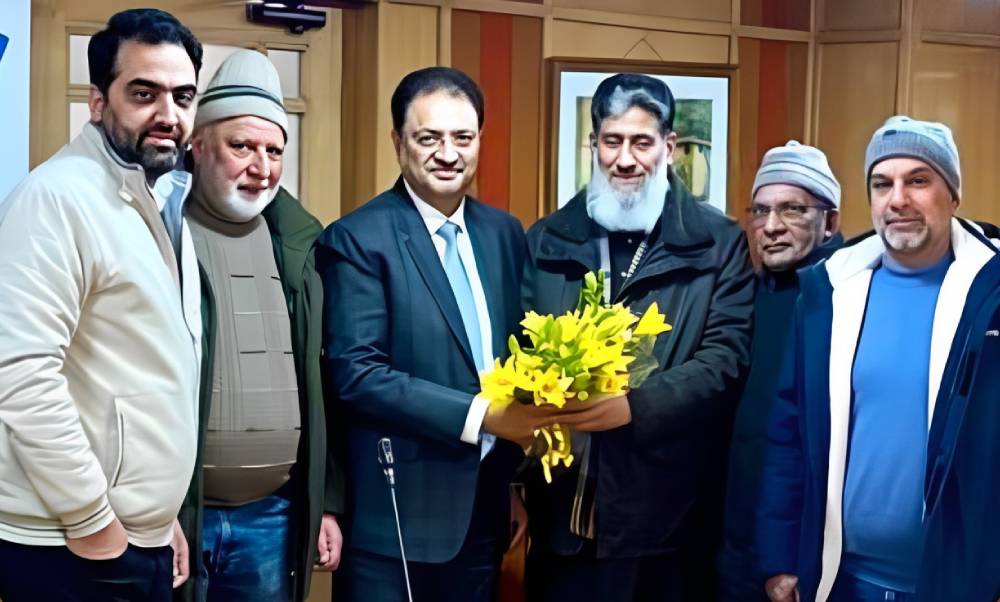
KL: Given that around 300 employees retire every year and cannot simply be replaced with computers, staffing your branches remains a critical challenge. How do you plan to ensure branches are adequately staffed and fully utilised, while maintaining operational efficiency and employee engagement?
AC: If we look across the banking industry, most banks, except HDFC, average around ten employees per branch when you divide total staff by the number of branches. In our case, it is 12. HDFC is higher, at around sixteen to seventeen, because they also employ contractual staff. Compared to other public sector banks, we are not short in sheer numbers.
Second, rationalisation had not been carried out properly for many years. Staff working in shortage areas remained, while other branches with excess employees ran comfortably. That imbalance had not been addressed. We have now begun a rationalisation process, aiming for the optimum number of people at every location.
Third, we have a workforce that is currently underutilised. I am working to make them productive. Once these three factors are in place, we will clearly understand how many people need to be recruited.
Recruitment has not been carried out yet, partly because staff costs are high. I do not see that as negative; if productivity and returns are good, the cost is justified. Until we use our existing workforce productively, recruitment will follow. We will make recruitments.
KL: As you noted, Jammu and Kashmir’s unique geography means that even minor events can have major ripple effects. Historically, brief disruptions have challenged both the banking sector and regulators. Currently, road connectivity issues are impacting the apple crop, with consequences for agriculture and banking exposure. How is J&K Bank managing these risks, and what measures are being taken to support farmers and safeguard the banking system?
AC: The first half of this year has shown improvement. Our non-performing assets have decreased since March, and our special mention accounts (SMA) have fallen by fifty per cent. I credit the people here for their resilience, not just the bank.
Across the country, average non-performing assets in cash credit, agriculture cash credit, and Kisan Credit Cards range between eight and twelve per cent. In our case, it is only four per cent. I am confident that with support from the bank, the Reserve Bank of India, and the implementation of the Master Circular and rehabilitation measures, we can overcome the situation quickly.
So far, nothing significant has gone wrong, which is a good sign. I hope there are no delays, and I am confident that we will manage and navigate this situation effectively.
KL: The board obviously is the bank’s policy maker. A significant portion of the bank’s operations and revenue comes from Jammu and Kashmir. What steps are being taken to strengthen its composition and effectiveness with a focus on core geography?
AC: When the board was first created, it was designed to bring in experts from the industry to support the bank during a period of underperformance. This achieved two things: we gained the expertise needed to stabilise and guide the bank, and the board was given extensive powers, with limited delegation down the line.
As the bank’s situation improved, we addressed these structural issues. Recently, we included a director from the local community, and we plan to continue adding more local and independent experts.
Industry experts provide a third-eye perspective, helping navigate situations that a local person may not immediately see. At the same time, including local voices ensures balance and insight.
Going forward, I expect the board’s effectiveness to increase further. As the bank reaches higher profit and business levels, around Rs 5000 to Rs 6000 crore in profit and four to five lakh crore in business, the impact of these changes will become even more visible. Progress is promising, though I admit I am eager to accelerate the pace.