by Asad Mirza
Last week, US President Donald Trump began his West Asia tour with a high-profile stop in Riyadh, followed by visits to Qatar and the UAE, pointedly excluding Israel. In a move that raised eyebrows, he also met with Syria’s President, Ahmad al-Sharaa, a former Al Qaeda figure. Far from being a conventional diplomatic mission, the tour appeared designed as much to advance the Trump family’s business interests as to pursue foreign policy goals.

Believe it or not, Trump has pulled another of his maverick tricks, which his opponents are describing as naked corruption, in full public glare. This time, it relates to his West Asian tour, during which he visited Saudi Arabia, Qatar, and the UAE, all extraordinarily wealthy nations, making them ideal partners for Trump.
Each sought to outshine the others in currying favour with him. Saudi Arabia pledged a staggering US$1 trillion in US investments, having already signed deals worth US$600 billion with Trump. Not to be outdone, Qatar gifted Trump a US$ 400 million jet, a controversial move that, despite widespread criticism, appears set to be accepted.
All three countries possess vast reserves of oil and gas. More importantly, they are actively working to harness these resources to achieve long-term economic diversification. They are steering away from war, which they see, as Trump does, as a poison to economic development.
Their foreign policies are based on tactical and strategic interests, rather than ideological underpinnings. For them, it matters little whether those interests are aligned with the United States, China, or Russia. They have also become active players in global and regional crisis mediation, particularly Qatar.
Moreover, Trump has never shied away from dealing with authoritarian leaders, indeed, he seems quite at ease among them. In the past, he met with figures that previous US presidents treated as pariahs. This time, he met with Ahmad al-Sharaa, Syria’s new ruler.

In contrast, Democrats have generally been less willing to overlook human rights abuses in favour of realpolitik. Their relatively greater emphasis on democracy and human rights in foreign policy has diminished the importance of these Gulf monarchies in their eyes.
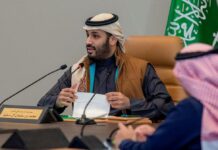
However, both Trump and the Democrats use the Gulf states’ disinterest in democracy and human rights as leverage in their favour. Trump, in particular, quite explicitly. Just a month ago, he publicly stated that his visit to Saudi Arabia would be contingent on the kingdom committing to US$1 trillion in investments in the US, a demand the Saudis accepted, paving the way for his high-profile visit.
Trump has repeatedly stated that only countries that are profitable for the United States can remain its allies. Saudi Arabia, Qatar, and the United Arab Emirates fall under this category.
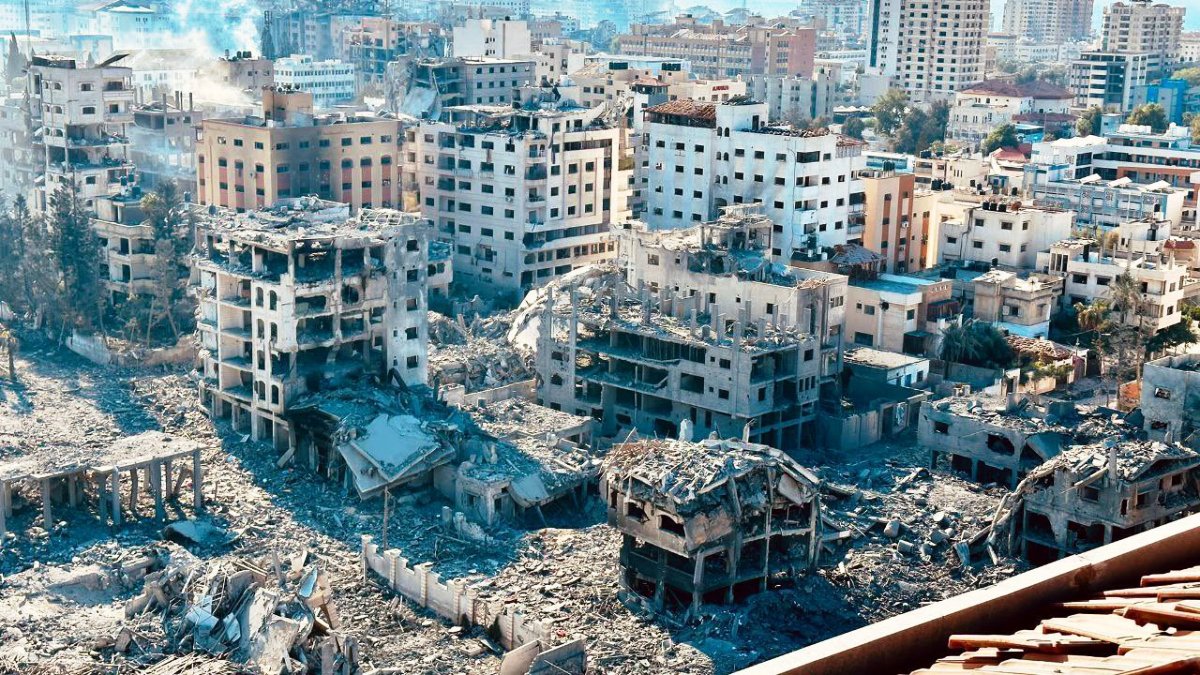
However, this time around, Israeli security does not appear to be a central item on Trump’s travel agenda. Furthermore, Trump’s delegation was notably absent of prominent pro-Israel lobbyists. Instead, it featured high-profile billionaires and business magnates whose focus is expanding commercial ties with Arab nations and attracting hundreds of billions of dollars in Arab investment to the United States.
This focus may dilute Israel’s security and its importance, as Israel views its safety rooted in the collapse of the Islamic Republic of Iran and the dismantling of the so-called “Axis of Resistance.” Trump’s push for economic engagement and investment-driven diplomacy does not align with Israel’s more militarised priorities.
While Trump made numerous actions in his first term that pleased Netanyahu and the right wing in Israel, this time around, he is acting in ways that have startled and displeased the Israeli leader and his associates.
Had Trump chosen to visit Israel first and emphasised his unwavering support for its war on Hamas, Riyadh and other Arab capitals might have responded with displeasure, possibly undermining the enthusiastic reception he received and dampening prospects for economic cooperation and US-bound investments.
Trump may also be using his visible shift toward Arab capitals and his lack of focus on Israel as a form of strategic pressure. By signalling to Tel Aviv that its position is not guaranteed, he may be attempting to coax Israeli leaders toward a ceasefire in Gaza. This would allow Trump to frame any cessation of hostilities as a direct outcome of his regional diplomacy.
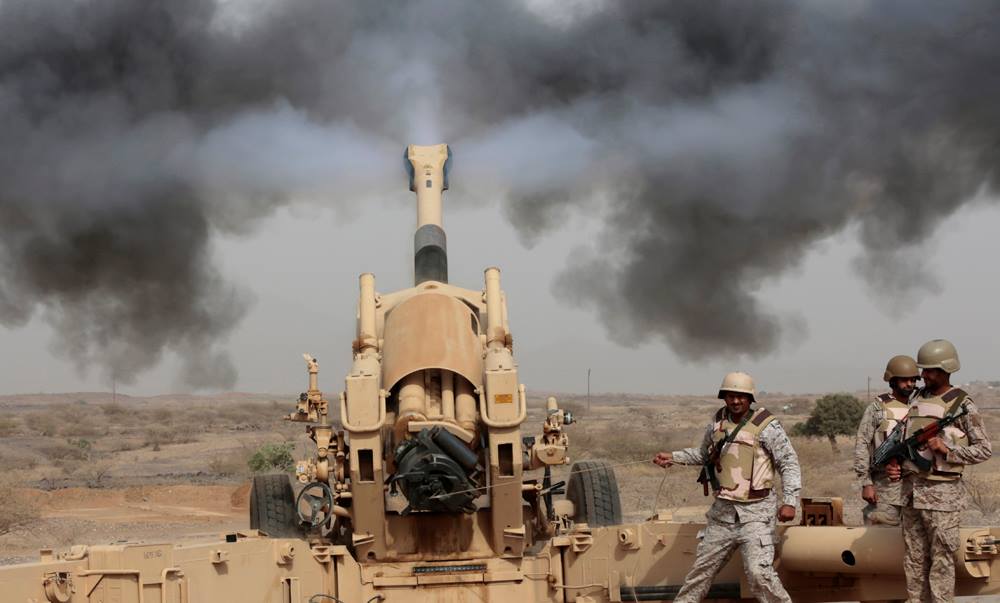
Yemen is another place where clear divisions between US and Israeli interests are apparent. Last week, President Trump announced, again to the surprise of many, and again without Israel’s knowledge, that the US had struck a separate ceasefire agreement with the Houthis in Yemen, brokered by his ME envoy, Witkoff, through Omani mediation.
Trump, the businessman turned president, seems to have decided that a Syria open for global investment and growth is better than one constantly subject to Israeli domination. Netanyahu is not going to be thrilled with this decision either. Nor will Netanyahu, who has long championed the use of American power to reshape the Middle East, be happy to hear Trump lambaste neo-conservatives, nation-builders, and interventionists.
Democratic Senator Chris Murphy from Connecticut described Trump’s ME Tour as a public corruption tour. Giving out details of Trump’s financial gains in the Senate, Senator Murphy said that for Qatar, it is a US$400 million luxury plane, a personal gift to the US president, not to the American government. The Trump Organisation recently signed a US$5.5 billion real estate deal between Dar Global (a Trump company) and Qatar Sovereign Fund.
For Saudi Arabia the figure is much bigger. During his first term, his son-in-law Jared Kushner, created a US$200 billion private equity fund, funded by the Saudi Sovereign Fund. Objections to it raised by the fund’s board were waived off by the Saudi crown prince.
Within three weeks of his second term, Trump convened a meeting with the head of the Saudi Sovereign Fund, not to discuss matters of state but to negotiate a deal between the PGA and Saudi-backed LIV Golf Tour for trying to bring the PGA tournament to Trump’s golf courses. The Trump organisation is also partnering with a Saudi firm on a $1 billion Trump-branded hotel and tower in Dubai. Anybody investing in this investment stands to get a Ten-years Golden Visa to the US.
For the UAE, the prize is somewhere to the north of US$2 billion. Last week Eric Trump and World Liberty Financial’s Zach Whitcoff announced in Dubai that MGX, a firm backed by the Emirati government to invest US$2 billion, in a company run by the president’s son and the son of the US ME envoy. And the firm’s StableCoin became the fifth most stable coin in the world because of the Emirati investment.
Everywhere Trump looks across the region, he sees opportunities for progress and deals that can be made in America’s interests, and might even someday bring him that Nobel Peace Prize he covets. And mind you, the way he steers his every campaign, this one too, he might win.
(The author is a senior commentator based in New Delhi, specialising in national and international affairs, defence and strategic issues, and environmental concerns. Ideas are personal.)