Former Jammu Kashmir Police officer Ali Mohammad Watali witnessed uprisings from within and systemic injustice from above. After going through his new book, Babra Wani uncovers how Kashmir’s institutions turned against the very people they were meant to serve
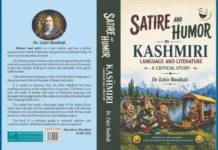
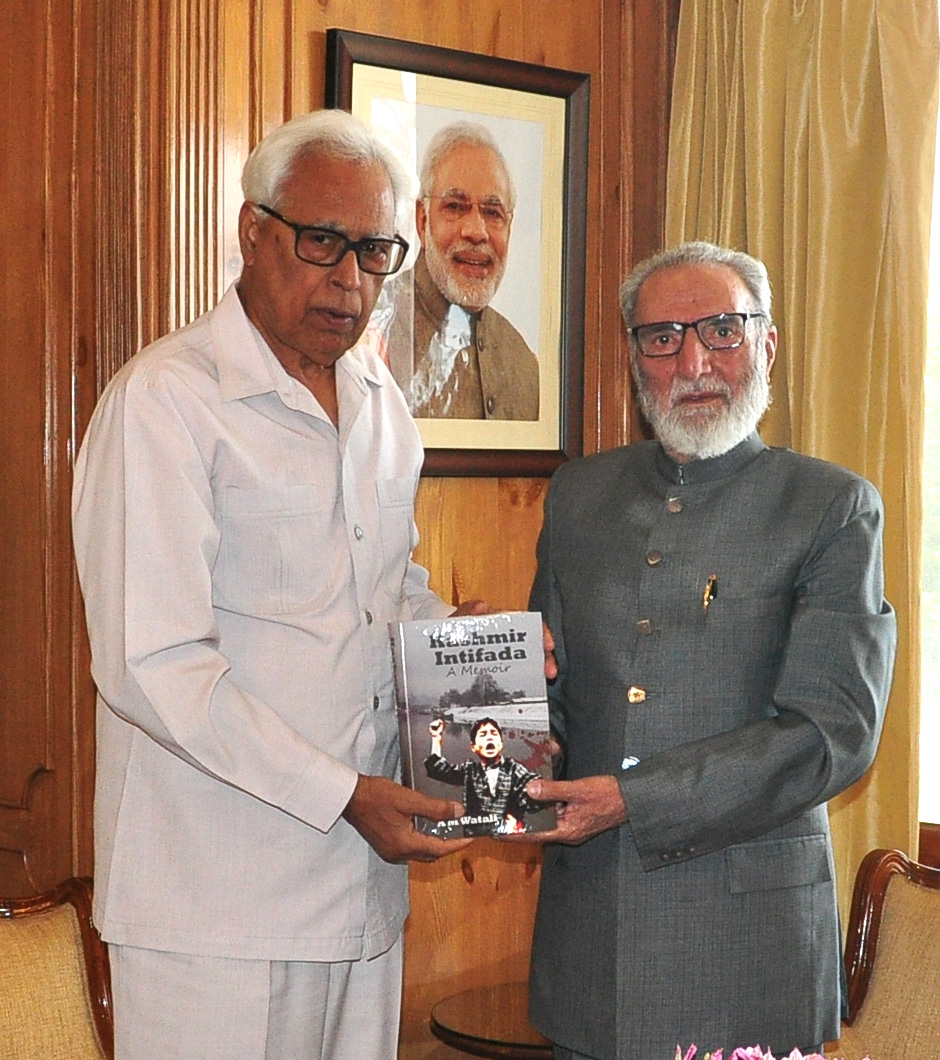
In his just-published book Reminiscences: Untold Stories, Ali Mohammad Watali, one of Kashmir’s known police officers, has reflected on Kashmir’s fractured institutions, recounting decades of unrest within the police force, the politicisation of justice, and the deep structural flaws that enabled impunity. Drawing from first-hand experience and official records, his memoir exposes how executive overreach and judicial subservience eroded public trust in the system meant to protect it.
The book details his efforts to combat female exploitation and other social crimes that were prevalent at the time. Through personal anecdotes, Watali traces how he worked against superstition, drug abuse, and political corruption. His narrative critically examines how individuals and institutions shaped the moral fabric of society, revealing both their achievements and failings.
Non Native Women
One of the most vivid episodes in the book involves two non-Kashmiri women who had arrived in Srinagar seeking asylum from traffickers. They were apprehended at Lal Mandi Park by a plainclothes constable from Sherghari Police Station while walking with two Kashmiri men. Watali admitted that he initially found the constable’s intervention unwarranted, as the group appeared to be simply enjoying a public space.

Confident and sharply dressed in a sari, the book details how the duo stormed into his office shouting in English. “Why have you brought us here? You are harassing us. We are tourists!” Her companion, lean and withdrawn, remained silent, her gaze fixed on the floor.
Watali tries to calm the agitated woman. The constable defended his actions, explaining that tourists seldom visit Lal Mandi Park, which had no appeal for non-natives. He had found the women’s presence suspicious. The outspoken woman responded quickly, saying they were tourists from Bombay and had only come to the park for a walk.
Watali was about to admonish the constable for causing unnecessary trouble, but a quiet instinct urged him to probe further. The silent woman’s demeanour unsettled him. He asked the constable to take the outspoken one outside, keeping the quieter woman back.
The woman broke her silence and described her ordeal. She had been kidnapped as a child and forced into prostitution. The confident one had a similar past. Both had escaped and travelled to Kashmir, hoping to start anew.
Moved by their account, Watali has written that his seniors had initially ordered the women to be booked under the relevant law. Watali persuaded him otherwise, offering to handle the matter personally. Granted permission, he took the women to Kothi Bagh Police Station, where they were placed in a secure room. He instructed the Station House Officer (SHO) to ensure their safety and personally bore the cost of their meals.
Later, both women were legally rehabilitated and married to two Kashmiri Pandits.
According to Watali, they went on to live peaceful lives. Their traffickers were also brought to justice. With the cooperation of the Bombay Police, the brothels where they had been held were shut down, and those involved were arrested.
In the pages of his memoir, Watali recounts how he and his team worked to protect women in distress and ensured that justice was done.
Policing Exploitation
In Female Exploitation, Watali has detailed police abuse. A woman from Ganderbal was forced by the police to strip naked and lie beside her also-naked brother in full public view. The officers suspected the siblings of committing a burglary.
The case came to light when an Urdu newspaper carried a brief news item. In follow-up, an inquiry was ordered. The constable responsible was dismissed from service, and the SHO lost his rank. The SHO was later diagnosed with a brain tumour and passed away, but not before rising to a higher position in the police force.
During his tenure as SSP Baramulla, with additional charge of Kupwara and Bandipora, Watali also confronted another exploitative practice. In parts of Kupwara, young women were being “sold” under the guise of marriage.
Once he became aware of this, Watali initiated a series of open-air discussions and settlements. These meetings unsettled those who profited from the practice, yet earned him support from those who genuinely stood by the victims.
Watali also references several interfaith marriages in the book. Some of these led to protests, while others were resolved peacefully. He recounts how he supported some of the women who had fallen into prostitution, offering them protection and rehabilitation.
War on Drugs
Asserting that Kashmir once became a crucial link in the Golden Crescent drug route, connecting Afghanistan’s opium fields to South Asia. By the late 1960s, farmers in South Kashmir began replacing fertile rice fields with hemp cultivation. The lure of easy profits drove the shift. “They tasted quick money,” Watali writes, recalling how “about 300 Kanals (37.5 acres) of cultivable land was under hemp (Bung) cultivation in 1968 alone. Without any action against growers, the higher revenue authorities also slept over the entries in revenue records.”
Smugglers purchased crops in advance, employed local labour to extract resin, and trafficked the drugs to Delhi, Mumbai, and beyond for export. Watali’s anti-narcotics operations exposed a vast and intricate network involving rural cultivators, urban traffickers, interstate smuggling rings and foreign couriers.
Among his most notable arrests was that of a well-connected socialite, known locally as the Prince of Kashmir. Watali apprehended him at Srinagar airport with suitcases of charas. “His luggage tags were seized along with the keys of suitcases… large quantities of well-packed and sealed packets of high-quality Charas” were recovered. In another case, during an ambush, he recalled, “I suddenly fell into a roadside ditch and got drowned neck deep into an algae-covered water ditch, resembling a green patch of land in the moonlight,” before his men caught South Kashmir’s Charas King.
Even tourists were drawn into the trade. “We were shocked to find Charas in large quantities wrapped neatly in polythene packets” hidden inside a German traveller’s van.
The Decline of the Takia
Watali noted that the Takia (Charas-eh-Takiya), once a sacred space for Sufi gatherings, had been overtaken by drug use. Traditionally, a Takia was a resting place or modest assembly point, often built near a saint’s grave, where Fakirs and their followers gathered for prayer, music, and spiritual reflection.
As a child, Watali had watched these gatherings. “Shodas would assemble in the evening at the Takia and indulge in group smoking of Charas with Hubble Bubble, called Jajeer in Kashmiri… Sufiana music would fill the air, some would even go into a trance with Zikir, the recitation of Allah’s name.” But over time, these gatherings changed. The spaces were taken over by addicts who began luring adolescents into drug use.
The first public outcry came from Maisuma. Residents reported that the Gaw Kadal Takia had become a full-scale drug den. Teenage boys were not only smoking charas but also engaging in petty crime to support their habits. In response, police launched raids. “All Shodas were thrown out lock, stock and barrel,” he recounts. The abandoned site was then converted into a girls’ school, guarded by residents to keep dealers from returning.
Similar efforts followed across Srinagar, with other degraded Takias also transformed into schools. However, in some areas, such as Gurgari Mohalla, operations faced resistance from entrenched drug cartels and had to be managed cautiously to avoid violence.
Complex Coexistence
Watali documented the fragile yet intricate relationship between civilians and the military in the border villages. He has written about how locals often worked as porters, transporting supplies and rations along treacherous mountain routes. In return, army officers occasionally reciprocated with small gestures, especially during festivals. One such moment stayed with him: during Diwali, soldiers gave villagers “a large piece of decoration as a token of goodwill.”
Schemes like Operation War Victims were initiated to rehabilitate families displaced by conflict, enabling some who had crossed into Pakistan-administered areas to return. However, Watali observed that the efforts were undermined by bureaucratic inertia and political hesitation.
He also uncovers the administrative exploitation that many villagers endured. The Block Development Officer of Buduaab, he wrote, had been embezzling funds earmarked for development, while forcing locals into unpaid labour. He describes a corrupt storekeeper, or munshi, who refused to measure out rations fairly, and when angered, concocted false allegations against villagers, accusing them of assaulting a public servant.
Watali mentions that he and his team made sustained efforts to assist those living in border areas, using all available resources to support them.
Watali’s book discloses his involvement in a high-profile case against a former prime minister of Jammu and Kashmir. The leader faced 37 charges of political corruption, 17 of which were eventually proven. He was arrested. Watali wrote that he was part of the investigation team and that the experience sharpened his investigative capabilities. His work involved extensive travel between Delhi and Kashmir, collecting documentation and case material that was vital to the prosecution.
The Sampat Prakash Case
One of the most significant cases he handled was the arrest of prominent leftist trade union leader Sampat Prakash in the mid-1970s. Describing the arrest as a “chance catch,” Watali recalled spotting Prakash near Wessu, Qazigund, while he was driving a jeep. He noticed a passenger in a passing bus attempting to hide his face. “Lo and behold, the man on the front seat was none other than Sampat Prakash, the wanted leftist trade union leader. It was this case of his arrest and detention, which I was supposed to follow before the Supreme Court.”
At the time, Prakash was underground after the state government had issued a preventive detention order against him. His case escalated into a landmark legal battle that reached the Supreme Court, where the constitutional validity of detention laws under Article 370 came under scrutiny.
Initially, a rare full bench of twelve judges, led by then Chief Justice M Hidayatullah, convened to hear the matter after Prakash’s lawyers challenged a previous ruling in the Gopalan case. However, proceedings took an unexpected turn when the Attorney General CK Daphtary, highlighted a key constitutional point. He informed the bench that the President of India, under powers granted by Article 370, had already modified the relevant preventive detention provisions as they applied to Jammu and Kashmir.
Chief Justice reportedly irked that the defence had not disclosed this crucial amendment, disbanded the full bench.
The judgment in Sampat Prakash v State of Jammu & Kashmir became a cornerstone in constitutional jurisprudence. It reaffirmed the operational status and legal scope of Article 370, upholding the state’s power to enforce preventive detention.
The case drew prominent legal minds. Prakash was represented by the veteran leftist lawyer Ramaswamy and his team, while Attorney General Daphtary argued for the state. During the proceedings, Daphtary stated that Article 370 was temporary until a United Nations-sponsored plebiscite determined the will of the Kashmiri people. The remark sparked protests from leftist lawyers, who questioned the basis of his assertion. Daphtary responded curtly, “Leave my instructions to me.”
Watali also includes significant political moments in his memoirs significant political moments. He recalled Indira Gandhi’s final visit to Kashmir, just two days before her assassination. While visiting the Makhdoom Sahib shrine, she stumbled. In local tradition, such a stumble was considered a bad omen. One of her bodyguards stepped in to support her.
Policemen’s Uprisings
During the 1970s, the police force in Jammu and Kashmir erupted in a series of protests, pressing for their long-denied rights. Watali recalled that there were more than three such uprisings. In those days, policemen lacked even the most basic provisions.
One of the first uprisings began when police personnel demanded housing facilities and other welfare measures. Under Watali’s guidance, the officers submitted a memorandum to the then-chief minister, Sheikh Mohammad Abdullah. Moved by their emotional speech, Abdullah accepted their demands.
A second uprising was sparked when Sheikh Abdullah’s son-in-law allegedly slapped an on-duty traffic cop. Outraged, the police force united in protest. Eventually, Sheikh Abdullah issued an apology on behalf of his son-in-law, diffusing the tension.
The third major incident occurred during Farooq Abdullah’s tenure as chief minister. A cop was allegedly killed by army personnel, igniting widespread anger within the police ranks. Though retired by then, having served for more than three decades, Watali once again stepped in to guide his juniors. Acting on his suggestion, a committee was formed, and he was appointed a member.
A Fractured System
Watali turns critical towards the judiciary and governance. He describes how institutions such as the State Judiciary and the Public Service Commission lacked independence, leaving them vulnerable to political misuse and impunity. Political workers, in particular, suffered under the weight of misused laws.
During G M Sadiq’s era, efforts were made to reform the imbalance when the Jammu and Kashmir Separation of Judicial and Executive Functions Act was passed in 1966. Despite these reforms, he regretted that changes on the ground remained slow. Judicial officers continued to serve the interests of the executive, undermining the spirit of the law. In one glaring instance, he noted that a judicial officer recorded a confession under Section 164 of the Criminal Procedure Code in the accused’s absence from the courtroom.
Although judicial reforms progressed slowly through more transparent appointments by the Public Service Commission, the authority to grant remand under the CrPC remained with Executive Magistrates, District Magistrates, Additional District Magistrates, Assistant Commissioners, Tehsildars and Naib Tehsildars.
Watali documented how these officials often abused their authority by remanding accused persons to police custody without following due legal process, sometimes even in the absence of the accused. “They neither insisted on the production of the accused nor examined case diaries, creating havoc with the rights of innocent people arrested by the police.”
He observes that the process of granting remands had become mechanical. “It became routine for remands to be granted without applying the judicial mind, resulting in gross miscarriage of justice,” Watali revealed.
In one particular case, a District Superintendent of Police sought a remand in a national security case without producing the accused. The DM, who later became the state’s Chief Secretary, refused the request, citing legal procedure. Although a complaint was lodged against the magistrate with Chief Minister Sadiq, no action was taken, as the officer had acted within the law.
Police and Judiciary
Although the police and judiciary are both pillars of the criminal justice system, their relationship has not always been harmonious. In his memoir, Watali recounts several episodes that illustrate this often fraught dynamic.
In one such instance, SHO Pahalgam, also a witness in an ongoing case, found himself in conflict with the presiding judge. During a hearing, the judge abruptly adjourned proceedings and cited the SHO for contempt of court, taking issue with his improper uniform. Watali, regarding the matter as one of indiscipline rather than contempt, instructed the SHO to appear in proper attire at the next hearing. The SHO complied. Yet, when the hearing resumed, the judge ordered the seizure of his uniform after the SHO failed to correctly identify the colours of its components.
Humiliated and incensed, the SHO began constructing favourable evidence to defend himself. Immediately after the court session, he approached the Additional District Magistrate, now serving as Chief Judicial Magistrate, and requested a written certificate confirming that he had appeared in uniform on the specified date and time. Though taken aback, the ADM issued the certificate. The SHO then obtained a similar one from the District Superintendent of Police.
What followed was a calculated act of tampering. At the Pahalgam police station, the SHO altered the Daily Diary: he erased entries, replaced pages, and fabricated a narrative aligning with his defence. He even persuaded local shopkeepers to serve as corroborating witnesses.
In the revised diary entry, the SHO claimed that during the judge’s last visit to Pahalgam, he had seen the Munsiff in a market, accompanied by two young women “of questionable character.” According to the SHO’s account, he had greeted the judge respectfully, only to be asked to arrange private transport to Anantnag via the vehicle of a local hotel owner. The SHO allegedly refused, unwilling to seek favours from civilians, and instead offered the Munsiff accommodation for the night. The diary stated that the judge took offence, particularly in front of the two women, and threatened the SHO with consequences.
The report named tourists and local shopkeepers as witnesses. It reached the SP, who forwarded it to the High Court without remark. An inquiry was ordered, led by Justice Jia Lal Kilam. All the “independent” witnesses backed the SHO’s version.
The fallout was significant. The Munsiff was superseded in the judiciary, while his junior, who had supported the SHO, was promoted to sub-judge. “The poor Munsiff eventually retired as a Sessions Judge,” Watali writes. “True, he had requested the SHO to help arrange a car. But perhaps he refrained from following through because he didn’t want to compromise his position if the hotel owner refused.”
Following the Munsiff’s transfer, the contempt proceedings were quietly dropped. Watali observed that his replacement and the SHO “ushered in a new chapter of cordial relations between judiciary and police.”
In another case, tensions between the two institutions flared once more when a judge was arrested after being caught in a compromising situation with a woman during Ramazan. The incident sparked public outrage. Watali was tasked with containing the situation before it escalated further.
The Janak Singh Case
Watali earned a reputation for cracking tough criminal cases, one of the most notable involving a man named Janak Singh.
When he was posted as SSP Anantnag, the district was grappling with a sense of lawlessness. A high-profile case of theft and murder had just shaken the region. It was, Watali recalled, the most serious incident since the notorious Hazratbal bank robbery. Suspecting the involvement of an organised, possibly non-local, gang, he kept all investigative options open.
Around this time, a series of letters reached his office. One, from the manager of the very bank that had been robbed, stood out. It mentioned Janak Singh, a known forger. Though Singh’s name wasn’t directly tied to the case, it caught Watali’s attention. Upon assuming charge in Anantnag, he instructed his team to keep a discreet watch on Singh.
Eventually, the investigation broke open. A security guard had been found strangled, and near his body were items that traced back to Janak Singh of Hutmurah. It turned out that Singh had carried out the crime with two others, Deedar Singh, an Intelligence Bureau employee, and Jaswant Singh, a soldier. While Deedar and Jaswant confessed, Janak Singh denied any involvement.
With the stolen money recovered and the accused in custody, the case was solved. The people of Anantnag hailed Watali’s success as a turning point for the district.
Emboldened by this outcome, he turned to two older murder cases that had remained unresolved before the bank incident.
Watali also reflected candidly on the darker side of policing, instances where individuals were wrongfully implicated. Some officers, he noted with dismay, would even boast about framing innocents just to avoid prolonged departmental inquiries.
His memoir recounts a number of other high-stakes cases he either solved or tactfully defused. He emphasised how his rapport with influential community figures proved critical in maintaining order. Among them were two rival Shia leaders, Moulvi Iftikhar Ansari and Agha Sahib of Budgam, who once led competing Ashura processions. The rivalry had endured until Sheikh Mohammad Abdullah’s intervention in 1975 led to a fragile truce.
Watali believed that cultivating trust with the public often accomplished more than force. His approach combined strategy, intuition, and community engagement, a blend that defined his career.