Kashmir recorded over 12,800 animal bite cases in a year, with cat exposures rising sharply amid growing pet culture. Experts warn of rabies risk and stress the urgent need for public awareness, reports Syed Shadab Ali Gillani
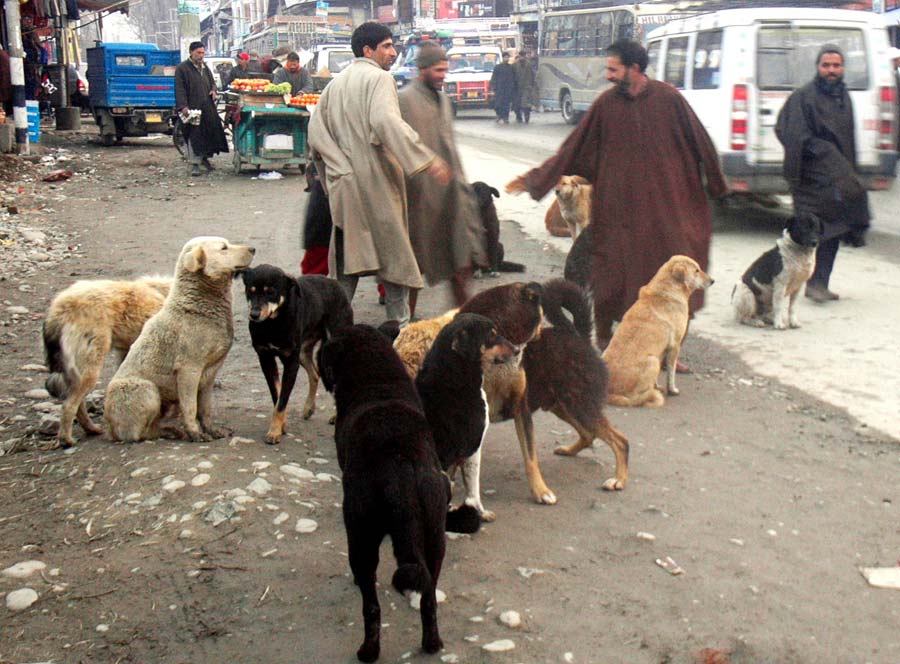
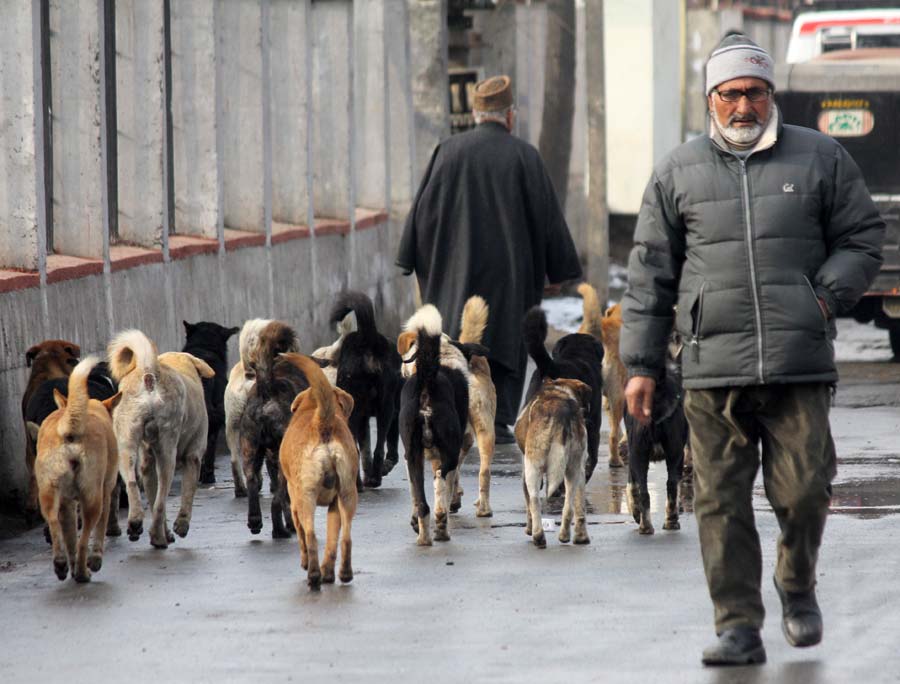
Kashmir is caught between the pets and the pariahs. From June 2024 to May 2025, the health facilities recorded 12833 cases, comprising 6258 dog bites, 6095 cat exposures, and 480 other animal bite cases. Officials attributed most dog bite cases to stray dogs. At the same time, the rising trend of domestic cat ownership has contributed significantly to the pet culture that many see as an antidote to depression.
“If someone is bitten by a cat or dog, the first thing they should do is to wash the wound thoroughly with running tap water using antiseptic soap or detergent,” advised Dr Aqib Hussain Parray, Veterinary Assistant Surgeon posted at Frisal. “Proper wound cleaning is critical before dressing the bite area to reduce the risk of infection or rabies.”
Left untreated, a dog bite or even a cat bite can trigger rabies, a cruel disease that leads to death. Kashmir has had almost a dozen rabies deaths in the last five years.
Explaining the clinical signs of rabies in animals, Parray said, “There are two distinct forms of rabies. One is the excite form, where the infected animal becomes hyperactive and aggressive; it may bite any inanimate object placed in front of it. The second is the dumb form, characterised by paralysis. Symptoms may also include jaundice visible in the mouth and hydrophobia, or fear of water.”
“It is extremely important to clean litter boxes regularly because parasites and their eggs are shed through faeces,” Parray explained. “If not removed in time, these can easily spread infections. Whether a pet is kept indoors or outdoors, routine vaccination and deworming are essential.”
Even indoor cats, like the ones that never go outside, should be vaccinated and dewormed from time to time, and their surroundings disinfected regularly. “Parasites like mites or ticks tend to reside in specific places, so it is important to treat those areas with care. Using spot-on treatments can also help prevent infestations.”
Hafsah, a pet owner who owns three cats, said that she makes sure to groom her cats regularly. “I always make sure that they are vaccinated and dewormed timely manner. I even had myself vaccinated.” This, she said, helped her survive with a clean ecosystem, barring a minor fungal infection, once.
Pets and General Health
“People assume only dog bites transmit rabies, but that is incorrect. Bites from cats, rats, bats, even rabbits, can also spread the virus,” a local physician warned, stressing the need for greater public awareness about lesser-known sources of rabies. “Families bringing home pets must get pre-exposure rabies vaccination themselves, and also vaccinate the animals. Sadly, in Kashmir, very few people do this,” the doctor said.
Cat scratches, the expert added, can lead to two serious diseases, rabies and cat scratch fever. “Both adults and children are at risk, even if the cat appears healthy.”Toxoplasmosis is another disease that can be transmitted from cats to humans through their faeces, which can be serious, particularly for the immune-compromised.
“Another thing that is transmitted through cats is the cat dandruff, which is not just a hygiene issue. It is a medical concern. It can trigger allergic reactions, fungal infections, and even asthma, especially in children,” according to the physician. “If a child in the household is allergic to cats and a doctor advises rehoming the pet, most families struggle to do so because of the emotional bond they have developed with the animal. This creates psychological stress and sometimes becomes a psychiatric concern.”
Children are more vulnerable to zoonotic diseases than adults. Their immune systems are still developing, and they often handle pets more roughly or carelessly.
Fatal, Manageable
According to Dr S Muhammad Salim Khan, professor and head, Department of Community Medicine (SPM), Government Medical College Srinagar, Rabies is a cent per cent fatal, but also 100 per cent preventable.
“Any case of dog or cat bite we receive is treated strictly according to WHO guidelines,” Dr Salim begins. “We administer anti-rabies vaccines and immunoglobulin completely free of cost. Timely intervention is everything.”
Dog bites are often the focus of public health discussions, in Kashmir, where pet ownership leans more toward cats, Dr Salim points out a growing concern. “Dog bites are not the only threat. Cat bites, both from strays and house pets, can be equally dangerous. But even among pet owners, not all are diligent about regular veterinary checkups. That leaves a huge margin for infection.”
The real danger, he says, lies in underestimating the threat. “People assume house cats are safe, but that is not always the case. Even vaccinated cats can, in rare instances, carry infections, especially if they have been exposed to other animals. Rabies can remain asymptomatic in an animal for some time.”
The Fatal Rabies
Khan offers a chilling reminder, “Rabies is a 100 per cent fatal disease. Once symptoms appear, there is no cure. It takes time to travel from the site of the bite to the brain, but once it reaches the central nervous system, it is over. That is why we say, treat every bite or scratch as a potential exposure.”
Human symptoms of rabies start subtly, with fever, fatigue, and anxiety, before progressing to more terrifying signs, hydrophobia (fear of water), aerophobia (fear of air), difficulty swallowing, and eventually coma. “Death from rabies is painful, and it is entirely preventable; that is the tragedy.”
In animals, rabies manifests in two forms: the excited form, where the infected animal becomes aggressive and erratic, and the paralytic form, where it appears sluggish. “Ninety per cent of the cases we see are the excited type. The animal might bite everything in sight, chew on stones, or even attack inanimate objects. Their saliva becomes extremely infectious.”
“First, wash the wound thoroughly with soap and water for at least 10 to 15 minutes. That is non-negotiable. Then go to the nearest centre that provides the anti-rabies vaccine. Do not bandage or stitch the wound; it must be left open.”
“Even a scratch from an infected animal’s claw can transmit rabies if saliva is present. There have been cases where children ignored small scratches, only to present weeks later with full-blown rabies.”
But rabies is not the only threat. They transmit other zoonotic infections like toxoplasmosis and brucellosis.
As Kashmir sees a rise in pet ownership and a parallel surge in stray animal populations, the public health implications are serious.
“Every bite, scratch, or contact with an unknown animal, no matter how minor, must be treated seriously. Rabies is 100 per cent preventable. But once it begins, there is no turning back.”
Toxoplasmosis
Toxoplasmosis is a parasitic disease of cats. “Owning a cat does not mean you will be infected with Toxoplasma. First, your cat should get Toxoplasmosis before it becomes a source of infection for you,” pet clinician Dr Qazi Mudasir said. “Cats get Toxoplasmosis by eating infected rodents, birds or any other small animals. Indoor cats do not hunt prey or consume raw meat and are unlikely to be infected with this.”
Humans can get Toxoplasmosis by ingesting something that is contaminated by the parasite shed in the faeces of cats positive for Toxoplasma, for example, eating unwashed fruits or vegetables, eating raw or undercooked meat, drinking unboiled water, or eating with unwashed hands after gardening.
The possibility of infection after gardening in soil that has been contaminated with cat faeces also exists, and this possibility can be mitigated by wearing gloves and by washing hands after gardening, he explained. “It is also unlikely that you would become infected through cat bites or scratches. People are much more likely to become infected by eating raw meat and unwashed fruits and vegetables rather than by handling cat faeces.”
Pregnant women and immunocompromised individuals are mostly at risk of developing health problems because of this. Pregnant women can pass such an infection to the foetus as well, causing abortions or signs of disease in later life. “So it is advisable that pregnant women should not handle cat litter.”
Too Many Cases
Officials said that more than 1,000 animal bite or scratch cases occur each month at the ARC SMHS. This year’s total marks the highest figure recorded in over a decade, reflecting the urgent need for focused intervention and public awareness. Monthly data showed dog bite cases ranging from 423 in November to a peak of 625 in April. Similarly, cat bite cases were highest in January with 692 cases and lowest in September with 414.
Officials highlighted that cats, like dogs, are capable of transmitting rabies, and the number of cat exposure cases has grown significantly in recent years. They said that while the trend of keeping cats as pets increased post-COVID, many pet owners fail to observe necessary care measures such as vaccinations, deworming, and maintaining hygiene. According to ARC staff, nearly half the cases now involve cat exposures.
Since April 2015, ARC SMHS has recorded nearly 70,000 animal bite cases. The clinic reported 7,061 cases in 2015-16, 5,832 in 2016-17, 6,802 in 2017-18, 6,397 in 2018-19, 6,139 in 2019-20, 4,808 in 2020-21, 5,469 in 2021-22, 6,875 in 2022-23, and approximately 8,800 in 2023-24. The trend indicates a steady increase in incidents, with a particularly sharp rise in the last three years.
Officials noted that pet ownership in Kashmir has increased substantially over the past decade. In contrast to livestock, which provide milk, meat, or eggs, pets are kept mainly for companionship. However, this shift demands a greater sense of responsibility. Officials stressed that those who choose to keep pets must commit to their proper care, including feeding, behavioural support, shelter, and access to veterinary health services. They added that maintaining hygiene, such as regular grooming and dental care, is important to prevent zoonotic diseases like skin infections and oral illnesses in animals.
Dog bites remain a serious public health concern in the region. Thousands of residents have been exposed to bites, especially from stray dogs, with some cases resulting in rabies infections. Rabies is a universally fatal viral disease that causes around 59,000 human deaths globally each year, with 95 per cent of these occurring in Asia and Africa.