From the Ceasefire Line to the Line of Control, Jammu and Kashmir’s working border is a scar of conflict and broken peace. Humaira Nabi offers a chronology of the ceasefires the border has witnessed since the cartographers drew it

For the first time in over two decades, the Line of Control (LoC) dividing the erstwhile Kashmir state has erupted in violence, shattering a prolonged period of uneasy peace. The intense escalation, spanning four days, finally ceased on May 10, 2025, under a US-brokered ceasefire. The confrontation, marked by drone strikes, missile attacks, and relentless artillery fire, left dozens dead and thousands displaced.
The crisis began on April 22, when 26 tourists were massacred at Pahalgam. India blamed Pakistan for sponsoring the assault, downgraded the High Commission, enforced a new visa regime and kept the Indus Waters Treaty in abeyance. Islamabad retaliated by imposing trade restrictions, closing its airspace and border crossings, and suspending the Shimla Agreement.
On May 7, India launched Operation Sindoor and hit nine sites across the border. Pakistan responded with Operation Bunyan Marsoos and retaliated. The hostilities claimed at least 66 lives, including civilians, marking the gravest cross-border confrontation since the 1999 Kargil War.
Amid escalating tensions, international pressure mounted for a ceasefire, which was formally announced by the US President and accepted by both sides. The fighting’s started, and the post-ceasefire developments are still going on.
But this was not the first ceasefire between the nuclear-armed neighbours since they were born in August 1947.
1949: The Karachi Agreement
The first war erupted in 1947 over the princely state of Jammu and Kashmir. The conflict tore through the region, shattering lives and homes as neighbours turned against each other. The region’s ruler, Maharaja Hari Singh, sought to remain independent despite a Muslim-majority population. His fragile neutrality crumbled in October 1947 when tribal militias, backed by Pakistan, stormed Kashmir. To push the invaders out, the Maharaja signed the Instrument of Accession, aligning the state with India. As the army landed to help, the war broke out.

Amid the chaos, India approached the United Nations in January 1948, seeking international intervention. The global community, alarmed by the scale of bloodshed, responded swiftly. On December 31, 1948, a UN-mediated ceasefire came into effect, formally ending the first war over Kashmir. The armistice was later codified in the Karachi Agreement, signed on July 27, 1949, by military officials from both countries and UNCIP representatives. This agreement drew an 830-km Ceasefire Line (CFL), dividing the princely state into Indian- and Pakistani-administered territories.
The CFL became a scar across the land — a jagged, unhealed wound that cleaved villages and families in two. Oversight of the ceasefire was entrusted to the newly established United Nations Military Observer Group in India and Pakistan (UNMOGIP), whose monitors bore witness to the simmering tensions that refused to dissipate.
1965: The Second Ceasefire
In 1965, skirmishes in the Rann of Kutch escalated into a broader war over Kashmir. Pakistan launched Operation Gibraltar, sending insurgents into Kashmir to incite rebellion. India struck back, launching offensives into Pakistani Punjab.
The conflict left thousands dead and shattered countless lives. The United Nations Security Council’s Resolution 211 called for a ceasefire, and global powers, fearing Cold War entanglements, urged restraint. Under mounting pressure, India and Pakistan agreed to a ceasefire on September 23, 1965.
But the scars of war were deep. In January 1966, under Soviet mediation, Prime Minister Lal Bahadur Shastri and President Ayub Khan met in Tashkent, Uzbekistan. The world watched as they signed the Tashkent Declaration on January 10, agreeing to pull back troops to pre-war positions by February 25, restore diplomatic and economic ties, and refrain from further hostilities.
1972: The Shimla Agreement
The third war between India and Pakistan erupted in 1971, as a consequence of Pakistan’s brutal crackdown on Bengali separatists in East Pakistan, a crackdown that forced millions to flee to India, sparking a humanitarian crisis of unimaginable scale.
India’s support for the Mukti Bahini guerrillas and Pakistan’s retaliatory airstrikes in December 1971 escalated the conflict into a full-scale war. On December 16, 1971, after a swift and devastating Indian offensive, Pakistani forces in Dhaka surrendered. The war ended with Pakistan losing East Pakistan, which emerged as Bangladesh. India captured 93,000 Pakistani prisoners of war and over 13,000 sq km of Pakistani territory.
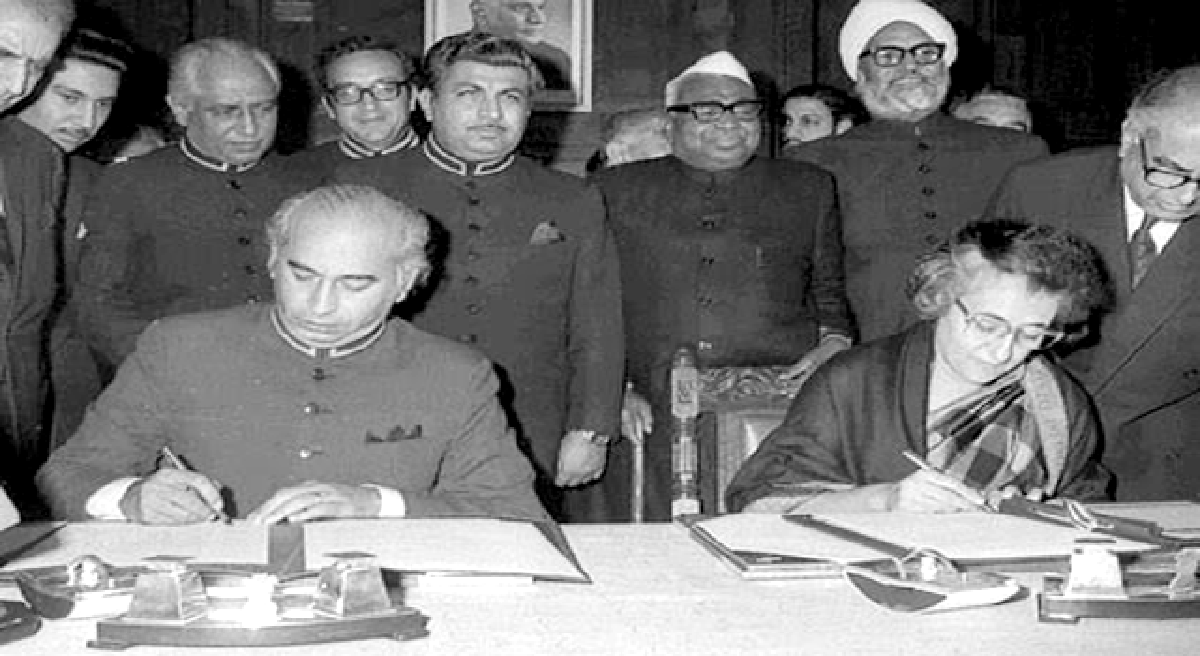
A ceasefire was declared the following day. Negotiations culminated in the Shimla Agreement, signed on July 2, 1972, by Prime Ministers Indira Gandhi and Zulfikar Ali Bhutto. The agreement re-designated the Ceasefire Line as the Line of Control (LoC).
The Shimla Agreement called for the resolution of disputes through bilateral dialogue, rejecting third-party intervention. India returned Pakistani prisoners of war and territory by 1974, but the vague wording on Kashmir allowed both sides to interpret the agreement differently. India saw it as a final settlement, while Pakistan insisted it was a foundation for further dialogue.
1999: The Kargil Ceasefire
In February 1999, hope arrived in the form of a bus. Prime Minister Atal Bihari Vajpayee undertook a historic journey to Lahore, a gesture of goodwill aimed at breaking the cycle of conflict. The Lahore Declaration, signed by Pakistani Prime Minister Nawaz Sharif, promised a new era of peace and restraint.
For a brief moment, it seemed that old wounds might finally begin to heal. The people dared to dream of a future where the guns would fall silent, where sons would return home, and where the mountains would echo with songs, not screams.
But that dream was shattered just three months later. In May 1999, as the snow melted in the high-altitude Kargil sector, natives discovered that Pakistani troops had infiltrated strategic heights. The infiltration had begun in secret, a calculated move to sever the lifeline to Ladakh and disrupt Indian defences.
India launched Operation Vijay, a relentless military campaign to reclaim the peaks. The fighting was fierce, the terrain unforgiving. Soldiers climbed icy cliffs under a barrage of artillery fire. Many fell, their bodies sliding down the slopes they had fought so hard to conquer. For those left behind, the wait for news from the frontlines was a torment. Letters ceased, phone lines went dead, and every knock at the door brought a chill of fear.
The conflict unfolded barely a year after both nations had declared themselves nuclear powers, indicating that nuclear bombs are no deterrent.
International pressure mounted. Eventually, Nawaz Sharif flew to Washington and was willing to announce a truce if asked by the US. On July 4, 1999, Sharif agreed to pull back his troops. By July 26, the guns fell silent, and the Kargil War officially ended.
Kargil War undid the Lahore Declaration, and the trust between the two countries was shattered. In Pakistan, Sharif’s decision to withdraw angered the military, and General Pervez Musharraf seized power in a coup later that year.
2003 Ceasefire
The early 2000s were marked by a simmering hostility that threatened to ignite into full-scale war. The 2001 attack on Parliament and the 2002 Kaluchak massacre, both attributed to Pakistan-based militants, pushed the two neighbours to the brink. India launched Operation Parakram, mobilising over a million troops along the border. Pakistan responded with its massive deployment, creating a tense military standoff that drew the world’s attention.
For months, the two nuclear-armed nations stood poised for conflict, their guns aimed across the LoC and IB. The border villages bore the brunt, their fields charred, their homes shattered, their nights filled with the screams of the wounded.
Diplomatic pressure from the USA and UK eventually eased tensions, averting a catastrophic war. Yet, the LoC remained a battlefield. Shelling and militant attacks persisted, claiming lives daily. Fear hung heavy over the borderlands, where families huddled in bunkers, praying for the guns to fall silent.
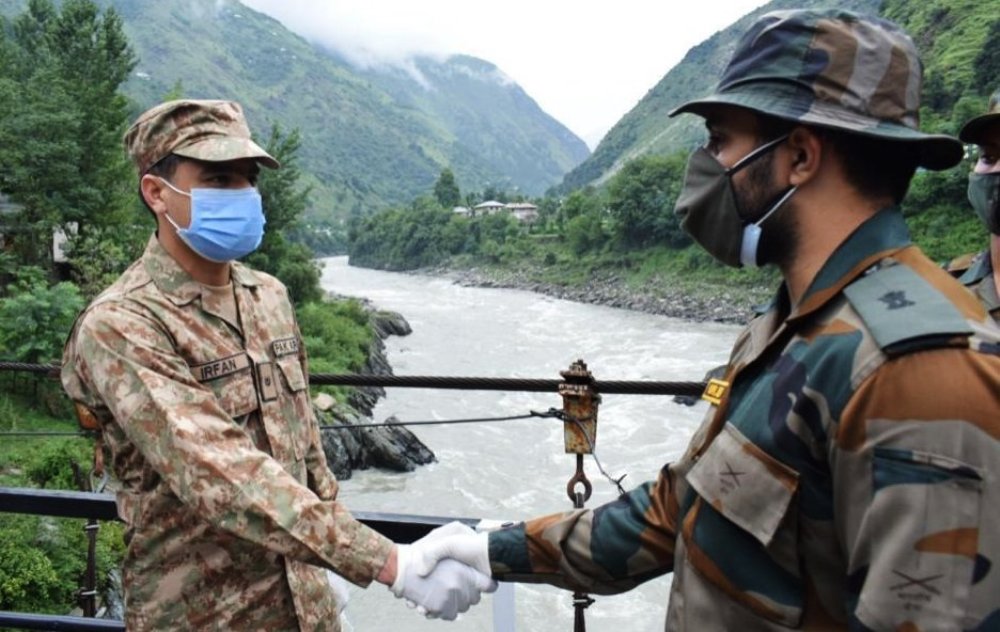
In 2003, Prime Minister Vajpayee extended a hand of peace, a gesture that found a receptive audience in Pervez Musharraf. Facing mounting pressure along the Afghan border, Musharraf sought respite on the eastern front. On November 26, 2003, a ceasefire was announced along the LoC, the International Border, and the Siachen Glacier.
The agreement reached through backchannel diplomacy came into effect at midnight. It called for a halt to all cross-border firing, mandated military restraint, and reactivated hotlines between the two countries’ Directors General of Military Operations (DGMOs).
For the first time in years, the guns fell silent. Farmers returned to their fields, children dared to step outside without fear, and the echoes of war receded into the mountains. The 2003 ceasefire, the most enduring since 1949, brought a rare and fragile calm to Kashmir. It was based on this agreement that the LoC was opened for travel to reconnect divided families and trade.
But the peace was tenuous. Despite the truce, militant infiltration continued, and attacks like the 2008 Mumbai bombings strained relations further. Violations along the LoC surged after 2013, with India reporting over 1000 breaches by 2017. The ceasefire, built on goodwill rather than a formal treaty, proved vulnerable to mistrust and provocation.
2021 Reaffirmation
By the late 2010s, the 2003 ceasefire had all but disintegrated. Tensions flared anew after India’s 2016 surgical strikes in response to the Uri attack, a cross-border raid that killed 19 soldiers. The violence escalated further in 2019, when a suicide bombing in Pulwama claimed the lives of 40 CRPF men, prompting India to launch airstrikes in Pakistan’s Balakot region.
Pakistan retaliated with airstrikes of its own, and the two countries engaged in a dramatic aerial dogfight. The LoC, once again, became a theatre of relentless shelling, displacing thousands of civilians. Fields lay in ruins, homes reduced to rubble. Entire families fled, leaving behind the only life they had ever known.
On February 25, 2021, in a joint statement, the DGMOs of India and Pakistan announced a reaffirmation of the 2003 ceasefire. They pledged strict adherence to its terms, vowed to maintain regular contact through the hotline, and agreed to implement past understandings “in letter and spirit.”
For a moment, it seemed that calm might return to the LoC. Cross-border firing decreased, trade gestures followed, and Pakistan briefly lifted its ban on Indian cotton imports. People dared to hope that the worst was behind them.
The gains were lost in the wake of tensions that emerged in 2018 summer when the BJP government withdrew from the BJPDP alliance and all CBMs between the two sides were withdrawn. A year later, Jammu and Kashmir was sliced into two Union Territories, and Article 370 was read down. These developments did not put LoC afire quickly. But there were three serious confrontations between the two countries, the most recent triggered by the Pahalgam massacre.
The guns are silent for now, but in the villages along the LoC, the fear has returned. The skies remain heavy, the mountains echo with the memory of explosions, and the people wait, caught between fragile hope and familiar dread.