As Jammu and Kashmir’s political class races to the assembly in the first election since the fall of 2014, Syed Shadab Ali Gillani reports on the gory details of how former lawmakers offered the ultimate sacrifices in defence of democracy over the past 35 years.
“Every time there is an election, it reopens my chronic wounds”, said Ghulam Rasool, who retired from government service just days before the Election Commission of India announced the long-overdue elections for the Jammu and Kashmir assembly. “An election fades, and I begin to heal, but when it returns, it adds to my melancholy.”
Rasool, who eventually moved to Srinagar, after a series of assassination attempts on him in the Kashmir periphery, is the son of Ghulam Qadir Wani Niloora, one of Kashmir’s earliest lawmakers. His brother Nazir Ahmad, a lawyer, was also elected to the assembly later. In the early years of the militancy, a year apart, both were assassinated.
The Wanis’ of Niloora in Pulwama are among those in Kashmiri society who have contributed to politics and felt devastated as their lawmaker relatives were specifically targeted over the years. Elections, or any large-scale political activity, are an emotional ordeal for them.
Violent Polls
As hundreds of people rush to secure seats in an assembly with diminished authority, the occasion serves as a trigger for these families and their wounds open up. In Kashmir and parts of Jammu, where politics has been the most dangerous profession since militancy erupted in 1989, elections are a significant event. Dozens of people used to get killed in the lead-up to the polls and immediately after, a situation that has phenomenally changed.
Political motivations have driven many of the killings across Kashmir, affecting both mainstream politicians and separatists. Most civilians who lost their lives over these decades were entangled in the ideological divide that defines politics in Jammu and Kashmir.
Political Killings
No political party in Kashmir has escaped the toll of militancy. In fact the larger parties have borne the brunt. Ruling parties were often prime targets, and as elections brought changes in power, so too did the direction of the violence. During the peak of the insurgency, political killings became routine, sparing no one, not even local Panchayat members.
Practicing politics during those years was perilous. “In 1994, when I visited my village in Kulgam, two people shook my hand,” recalled Communist leader Yousuf Tarigami, who is contesting for his fifth consecutive victory from Kulgam. “One was Abdul Gani Bhat, a Jamat-e-Islami sympathiser, and the other, was Shabir Ahmad, a handcart vendor. Both were shot in the legs and left with a warning.” Tarigami vividly remembers 1996, when a grenade was thrown while he was addressing a terrified crowd in Kulgam town. Seven people were killed on the spot.
In September 2002, at the height of the campaign season, the Jammu and Kashmir Police took several days to recover the head of JKNC’s Deputy Block President in Bandipore, Haji Ghulam Hasan Bhat, who had been butchered by militants, leaving only his trunk behind.
Initially, members of the JKNC and the Congress were the primary targets of militant violence. It started with them but soon expanded to include all mainstream politicians, leading to a mass migration of the political class to Jammu. The city, however, lacked sufficient infrastructure to accommodate everyone affiliated with the parties.
In retaliation, counter-insurgents later targeted all parties that were or were seen to be, supportive of militancy. This decimated a vast pool of human resources that had been the driving force behind the political waves Kashmir witnessed in every election. No political party, on either side of the divide, has fewer than two digits of slain workers; in some cases, the numbers run into the thousands.
Lawmakers
Lawmakers have been primary targets in the struggle to outmanoeuvre political and ideological rivals. Nearly 30 members of the legislative assembly and the now-undone legislative council have been killed, with many details well documented. The violence began soon after the first shot was fired in Kashmir.

One of the earliest assassinations was that of Moulana Mohammad Sayeed Masoodi. Bedridden with cancer for months, doctors had predicted his death within days. However, fate had other plans. On December 13, 1990, assailants stormed his home and shot him multiple times while he was in a semi-conscious state, fighting for his life, according to family sources.
A senior figure in the Quit Kashmir Movement, Masoodi was a scholar and an early mentor to separatist leader Syed Ali Geelani. He later served as a member of the Constituent Assembly of Jammu and Kashmir, which drafted the now-abrogated constitution of the state. Very popular within the political circles in Delhi, Masoodi was one of the few members nominated by the Jammu and Kashmir government to the Lok Sabha.
Dr Abdullah’s power minister, Ghulam Hassan made a fierce speech in the assembly and left for his home in Dooru. While crossing a culvert, an explosive hidden underneath exploded. The body was destroyed beyond recognition and was identified with the shreds of the clothes he wore.
Mufti Sayeed’s Education Minister, Dr Ghulam Nabi Lone was assassinated in his official residence at Tulsi Bagh. Tarigami, his neighbour miraculously survived.
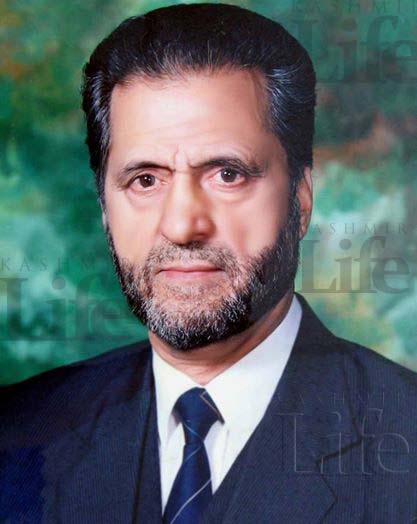
The violence persisted. During the 2002 assembly election campaign, the law minister, Mushtaq Ahmad Lone, was addressing a gathering of children, women, and a few men in Takipora, near his Lolab residence. A young man suddenly stood up, drew his weapon, and shot the minister multiple times. Before the minister’s security detail could respond, the assailant swiftly killed them as well.
Three days later, when Chief Minister Dr Farooq Abdullah attended the fourth-day prayers, militants and the army continued exchanging fire in the nearby forests. To unravel the mystery, the government dispatched a counter-insurgency specialist to investigate, and the findings were shocking. The militants had colluded with the police, and a year later, following the investigation, seven officers were arrested. However, in court, some were acquitted due to lack of evidence.
Those were terrible days, recalled M Iqbal Ganai, the then Secretary of the legislative assembly. We had to constantly reschedule because “untoward incidents” were so common. When Sheikh Maqbool of Baramulla was attacked after prayers, he was with his brother. His brother died, but he somehow survived. It was in almost a similar situation that Sheikh Mansoor’s brother lost his life in the Kachdoora village of Shopian.
Ganai, who also served as the law secretary of Jammu and Kashmir, now lives a quiet life post-retirement, but the memories of those days still haunt him. One day, former Speaker Wali Mohammad Ittoo called me in Jammu asking for help with a rail reservation so he could visit his daughter, Sakina, who was then a medical student, Ganai recalled. I told him we could meet after Friday prayers. While I was waiting in my office, I received a call saying his body was lying outside the mosque in a drain.
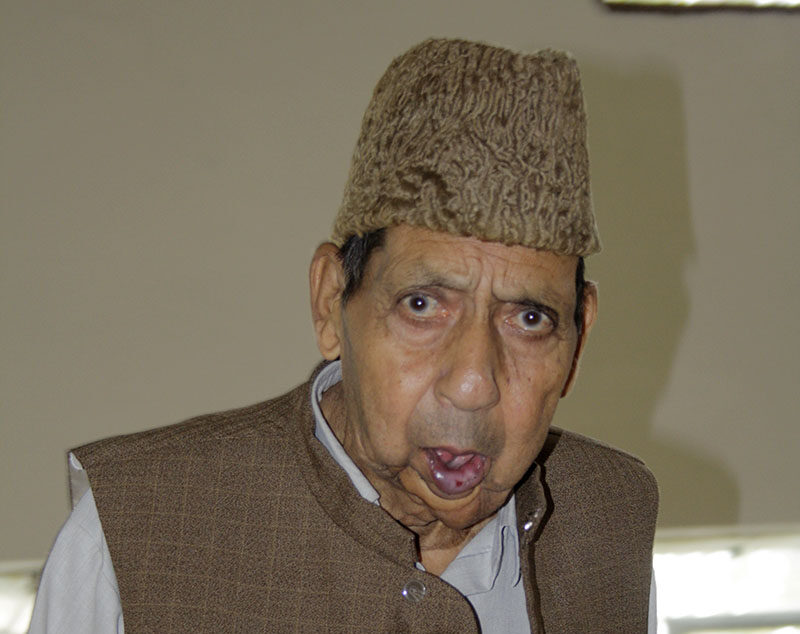
Former Speaker, Ali Mohammad Naik survived an assassination bid in which the assailants emptied many magazines in 2006. Most of the bullets he took on his face, which eventually defaced him. He was re-elected and passed away peacefully in April 2017.
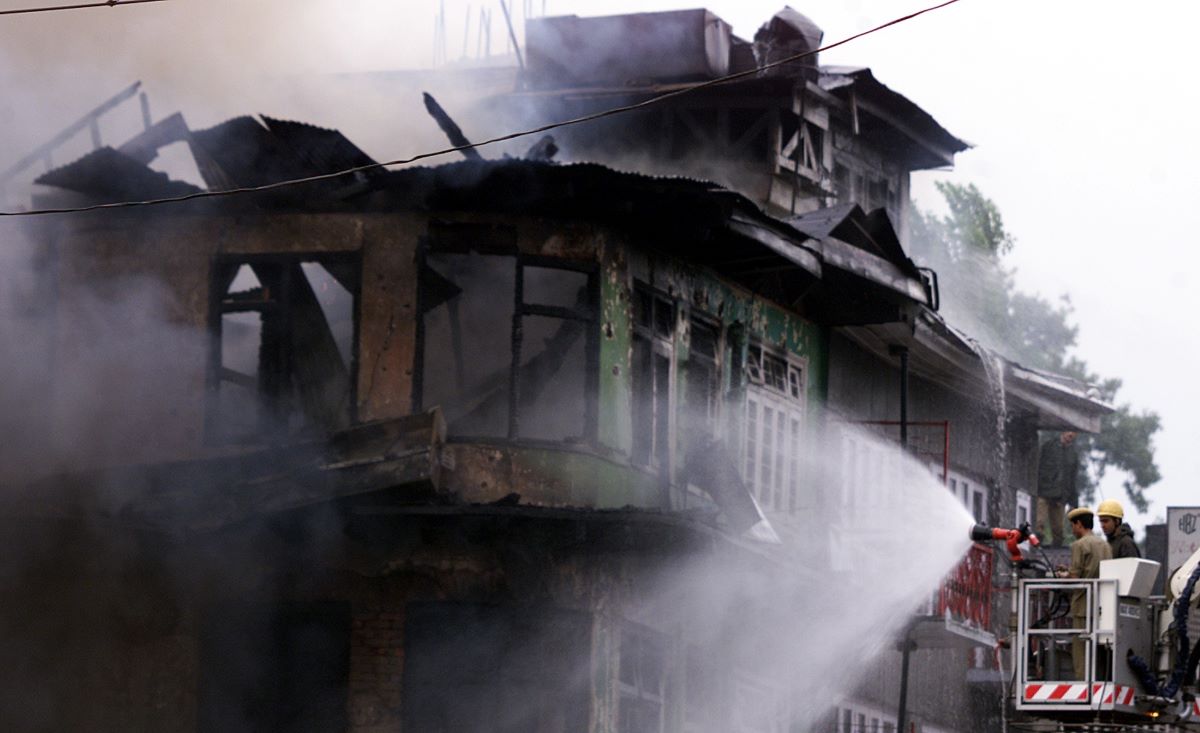
The situation reached a stage when, the militant outfit Jaish-e-Mohammad carried out a suicide attack on October 1, 2001, killing 38 persons. It took the police many hours to scan the premises and declare it safe. Police later said three militants had loaded a huge quantity of explosives in a TATA Sumo and they drove it and hit the main gate of the assembly.
The timing helped save the situation. It happened at 2 pm after the first sitting of the assembly was over and the lawmakers had gone for lunch. Speaker Abdul Ahad Vakeel was in his office but was escorted to safety. Several employees of the assembly secretariat and police died in the attack including the three members of the suicide squad. The attack was condemned from across the globe.
Orphaned Generation
These attacks instilled fear among the political class. Many families abandoned politics, but some refused to relent.
“My father was a landlord with almost 400 Kanals of land. He joined politics, went to jail, became a member of the assembly, and was eventually killed,” Rasool said. “When I distributed his inheritance among his sons, we were left with barely half of the land. Every election, he would sell something to fund his campaign, and in the end, he gave his life too.”
Rasool’s brother, a lawyer who also joined politics, met the same fate. “We decided to leave politics. We felt the pain as the party for which my father and brother sacrificed their lives did not care much,” he lamented. “Almost a decade later, one of my brothers—against the advice of the rest—resigned as an engineer and entered politics. The party refused him a mandate. He is now contesting for Ghulam Nabi Azad’s party.”
This, however, did not lessen the harassment Rasool and his brother faced while working for the government post-2019. We were harassed for being from a JKNC family, though we had nothing to do with politics, so we retired honourably, he asserted.
In Tral, Dr Ghulam Nabi Bhat, a former MLA, was also denied a mandate. Over the last 30 years, he has lost his father and two brothers. With the JKNC contesting in a pre-poll alliance with Congress, Tral now has a Congress candidate. “We are there on the ground to get killed, while the party reserves two city seats for father and son,” a party insider said, requesting anonymity. Most of the families who lost their lawmaker members avoided talking. Those who talked were very angry with the parties their relatives belonged to.
This scenario has given rise to a generation of politicians who entered politics after their fathers were slain during the turmoil. Several candidates contesting the ongoing assembly elections have either lost close family members or survived assassination attempts themselves. Many of them were orphaned by the situation and inherited the “profession”.
The Bigger Regret
The pain of loss is universal, and the political class in Jammu and Kashmir feels it acutely. However, their deeper crisis lies in the growing belief among some new policymakers that they are not trustworthy enough to govern the region.
A very senior police officer recently claimed there was overwhelming evidence linking mainstream Kashmiri leaders to militancy, asserting that Pakistan had successfully infiltrated all important aspects of our civil society when Jammu and Kashmir was still a state.
Speaking at an academic institution in Jammu, the officer’s remarks sparked widespread condemnation, prompting his colleagues to suggest that it was merely his opinion. The political class publicly expressed its outrage over the slur, with the families of slain lawmakers seething in anger.
“How can those who sacrificed their lives for their cause be labelled as saboteurs?” asked the brother of one slain lawmaker. “This commentary is brutally inhuman.”
That is not the only reason why Kashmir’s post-2019 political class is in pain and is unable to exhibit it. “What will we tell people,” one young politician, currently in the race for assembly election said. “First our forefathers put up a bloody struggle to come out of exploitative despotic rule. Then they got some basic rights for the people. Then they were killed defending those rights. Then a situation came that all those rights were taken away. And now we are fighting against a tide to restore things. We promise people, but can we?”
With these regrets, the political class is out in the first election in a decade for an assembly that had changed in composition and complexion. The only supportive situation is that the security situation in the plains is improved and accessing people is less challenging. Other than that, these elections are the most difficult ones in recent history.