The Jammu and Kashmir government’s recent decision to reverse the controversial March academic session has met widespread approval. The change, announced by Education Minister Sakina Itoo, restores the region’s academic year to its traditional timeline. This shift aims to better align the academic calendar with the region’s unique climate and needs, ensuring a smoother educational experience for all, Babra Wani reports
In addition to the recently passed resolution in the new Assembly session, which has reverberated across the former state of Jammu and Kashmir, the newly formed government has made a decision that has garnered widespread approval. This is the reversal of the academic calendar, a significant shift that aligns the academic year with the region’s unique needs and conditions.
The Education Minister of Jammu and Kashmir, Sakina Masood Itoo, announced the change a few weeks ago: “For now, we will restore the academic session to November-December up to 9th standard. For students in 10th to 12th, the academic session will be restored from next year.” This move overturns the academic calendar introduced by the Lieutenant Governor (L-G) administration, which had set the session to begin in March, shifting away from the traditional November start in Kashmir’s winter zones.
Academic Calendar Reversal
In 2022, the LG administration introduced a standardised academic session for Jammu and Kashmir to match the rest of the country. The decision, however, faced widespread criticism.
“It was a harsh decision on the part of the administration,” said Shabnam, a teacher in the region. “Kashmir’s topography and climate are unique, which made it difficult for both students and educators to adapt.”
The demand for a return to the old academic calendar was strong, particularly from parents and students in the winter zones of both Kashmir and Jammu. Supporting the restoration, newly elected Chief Minister Omar Abdullah stated that the demand had been overwhelming. “Both parents and children from the Kashmir and Jammu winter zones requested that the school exam timetable be adjusted back to the old system,” he said.
The Education Minister has proposed a shift in the academic calendar, approved by the Cabinet, which applies to students in classes 1 to 9. Examinations for these classes will take place before the winter break. The Minister expressed gratitude to Sakina Itoo for highlighting the issue. “For classes 10, 11, and 12, we could not alter the schedule this year due to board exams, but we promise that the calendar will be uniform from next year,” Omar said in a video message.
The unified academic calendar was first suggested in 2022 by former Chief Secretary Arun Kumar Mehta, aiming to align with the national schedule. The move affected 7.39 lakh students in Kashmir.
Exam Schedule Shift
With the reversal of the calendar, most schools in Kashmir are preparing to conduct exams for classes 1 to 9 between November 20 and December 5. This change is driven by persistent dry weather and cold mornings and evenings, prompting schools to complete exams before harsher winter conditions set in.
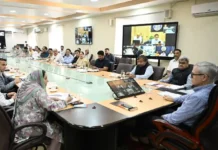
The formal notification for the November-December exams was issued on November 7, following Itoo’s proposal in a recent cabinet meeting. The proposal, which received unanimous approval, ends the March exam session for classes 1 to 9. However, students in classes 10 to 12 will maintain the March schedule for now.
Additionally, Itoo announced that students preparing for mid-November exams will receive syllabus relaxations to help ease their adjustment to the new academic calendar.
The adjustment follows a shift in the academic session from March to November, prompting earlier exams to accommodate the region’s winter conditions, including potential snowfall in higher altitudes. Itoo assured that concerns from students would be addressed through syllabus relaxations up to class 9, after consultations with relevant stakeholders. “This will ease the concerns of students and parents in Jammu and Kashmir and ensure a smoother transition to the new academic schedule,” Itoo told Kashmir News Trust.
In parallel, schools across the region have begun issuing admission notifications for lower grades as part of the broader academic calendar change.
Many parents have welcomed the move, suggesting that exams be concluded by November and results released by December 5 to prevent disruption from the harsh winter.
“The new schedule was tough for my older daughter, who did not perform as well as expected,” said Tariq Ahmed, a resident of Srinagar’s Downtown. “The March exam session was a mess, but this decision has brought us relief.”
However, some students remain critical. Malaika, a class 12 student from Anantnag District, said, “The reversal does not affect me directly, but the administration has been unfair to 12th-grade students.” She added, “Our exams ended in May, results came out in July, and now they are saying exams will be held on February 15. It is absurd.”
“Do they think we are machines?” she asked. “The March session was stressful, even though we had a break, as we were always worried about the exams.”
With the November session in place, students feel it is more manageable than the March schedule. A class 12 student said the March session was intense, especially with entrance exam preparations. “If they think every student is at the top level, they are wrong,” she said. “Managing both is hard, but no one seems to consider that.”
Hafsa, a class 9 student, welcomed the reversal. “We were confused with the March session, always wondering how we would retain what we studied,” she said. She added that students who failed the regular exams and were aiming for the biannuals often struggled with exam dates. “For example, the results for the latest biannual exams came out just days ago. My brother was among them, and he was left depressed. It is almost the end of the year, and he only cleared his higher secondary recently.”
Rafiya, a parent from Kulgam, highlighted the mental strain caused by the March session. “The new session started in the middle of the year, which was mentally challenging for students used to the November schedule,” she said. “In Kashmir, the winter break is usually a time for self-study, but with the March session, everything changed. It was tiring, as results were delayed and the new session followed late.”
Rafiya believes the November session is far better. “Students now have enough time to study and prepare for the new class. The government has finally got it right.”
Reversal Benefits
The move has been praised not only by students and parents but also by teachers.
A government teacher, speaking anonymously, acknowledged that while government policies aim for public benefit, the March session was problematic. “Now, with the Education Minister’s decision, things can return to normal. Students, parents, and teachers are all happy, and we hope that in 2025 everything will run smoothly.”
G.N. Var, President of the Private Schools Association of Jammu and Kashmir (PSAJK), welcomed the change and expressed his gratitude. “All stakeholders have supported the decision,” he said. “This shows the March session was a mistake for several reasons.”
He cited the lack of sufficient working days and the importance of vacations as key factors. “Vacations provide relaxation and a chance for students to prepare for the next class. Holding exams before the break allows students time to recharge. This is a vital part of academic development, just as Sundays are for us.” He criticised the March session, describing it as unfair to students. “It was like telling them to finish their syllabus by December, then study for exams during the vacation and return in March to sit the tests. How did that make sense?”
Var also pointed to a “controlled mechanism” in the system, suggesting some want to maintain rigid oversight for personal interests.
He questioned the purpose of exams under the Continuous and Comprehensive Evaluation (CCE) system, mandated by the Right to Education Act in 2009. “The issue was not the exams, but the evaluation process,” he said. “We were assessing students until December and then promoting them to the next class.”
Reflecting on the academic session shift, Var said there had been no logical explanation for it, nor had stakeholders been consulted. “The decision had more drawbacks than benefits. The reversal is now widely welcomed.”
On implementation, Var suggested completing assessments for classes 1 to 9 by November or December, with exams for classes 10 to 12 in March. He recommended scheduling their exams in February to ensure the academic year returned to normal without losing working days.
Var welcomed the government’s decision to consult stakeholders, which he said made it easier to conclude examinations promptly. “This is the difference between autocracy and public governance,” he noted. “Since the change is well-received, we are doing our best to get academics back on track.”
Criticism of Calendar
Var criticised the LG administration’s academic calendar, which he claimed caused significant disruption over the past three years. “There were fewer working days, the schedule was shattered, and vacations were not fully utilised,” he explained. “Students had to rely on coaching. This reversal will help repair the damage and alleviate psychological stress. Some students even developed suicidal tendencies, while others dropped out. This change will undo much of that harm.”
Var also pointed out that the focus had shifted too much to extracurricular activities. “Schools are not centres for music, dance, or rallies. These activities should be conducted at vocational centres, not schools. They have now been stopped.”
He stressed that the reversal would allow students to use their vacations more productively. “Students and parents will be able to follow a schedule that meets academic needs without the pressure of exams hanging over them. Sessions will proceed smoothly.”
Var highlighted the benefits for rural students, who had been most affected by the March session. “In rural areas, students often get distracted by agricultural work after exams in March and results in May. The November-December session will give them more academic time and allow them to focus on their education,” he said.
“Overall, the change is positive,” he concluded.
The decision has also received support from regional political parties. People’s Conference (PC) chairman Sajad Gani Lone expressed his approval on X, stating, “Welcome reverting academic session up to class 9, back to end-of-year exams in November. This should extend to classes 10, 11, and 12, where it matters most. It is good that a wrong decision has been reversed.”