As Jammu and Kashmir is polling for the first phase next week, Masood Hussain writes about the state and status of the political situation within and outside the political class
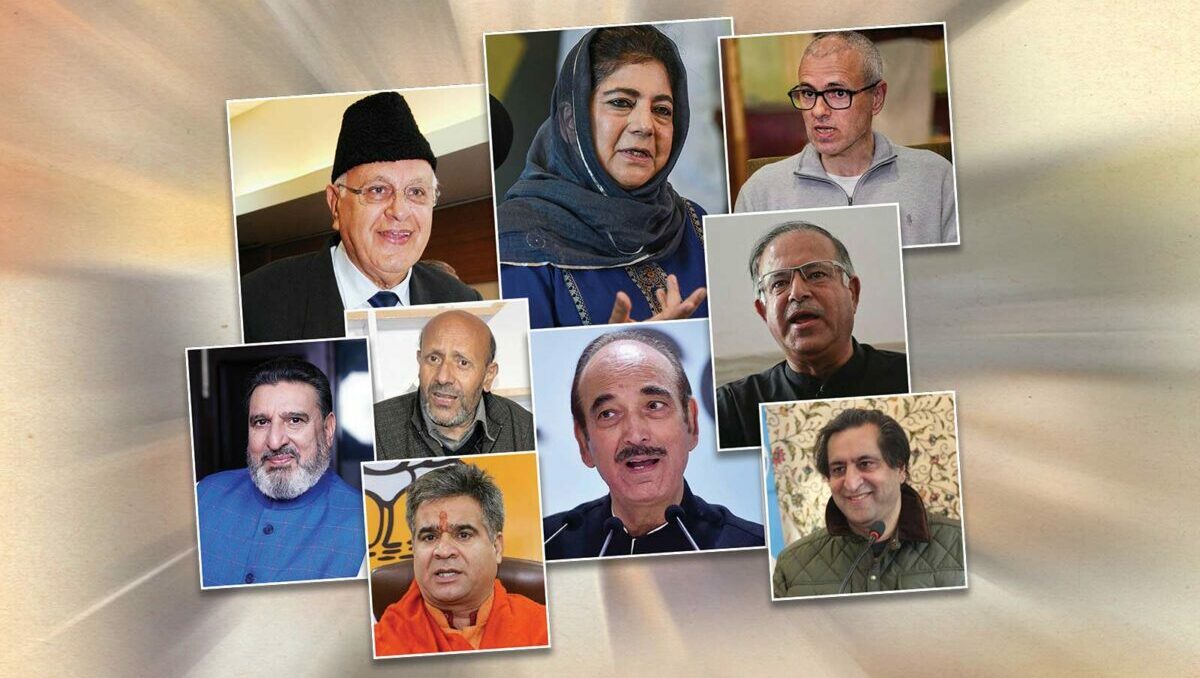
Unlike Jammu, campaigning in Kashmir is a low-key affair. There have been a few good pre-militancy-type election battles between rivals but most of the campaign is on social media. Engineer Rasheed’s rallies are, however, an exception.
That does not mean that Kashmir will not vote in hoards. If not breaching it, the chances of participation equalling the Lok Sabha elections are possible.
The debate in Kashmir is very basic: Who will form the government in Jammu and Kashmir? Will it have any powers to do anything with Delhi still operating like a municipal corporation?
King Maker Jammu
“The upcoming elections in Jammu and Kashmir are historic because, after Independence, the polls are happening for the first time under our national flag and Constitution, unlike the past practice of two flags and two Constitutions. From Kashmir to Kanyakumari, we have only one Prime Minister and he is Modi,” Home Minister Amit Shah thundered in a Jammu rally on September 7. “A decision as to who will form the next Government in the UT will be taken by the people of the Jammu region.”
Soon after the reading down of Article 370, Article 35A and bifurcating the erstwhile state into two federally governed Union Territories, the BJP enforced a delimitation increasing the strength of the house to 90 with Jammu region getting 43 berths and Kashmir 47. While it has narrowed down the numerical difference in representation between the two regions to a new low, buttressing it with five nominated lawmakers with voting rights, the idea is to have a house where a regime should not go against the August 5, 2019, decision-making. Right now, the priority is to ensure the BJP emerges the single largest party.
This makes both Jammu and Kashmir important for very different reasons. In 2014, the last time when Jammu and Kashmir polled for its empowered assembly, BJP had won 25 of 37 seats in the region. Then, the PDP had 28 seats while NC and Congress had 15 and 12 seats respectively in the 87-member house. Now the rightwing party is aspiring to have 30, if not more.
Tense Party
The party, however, faces a catch-22 in Jammu, especially in the Hindu heartland. The rollout of the naya Kashmir started from Jammu and hurt the interests of the region, especially the baniya community. Abandoning the traditional durbar move, giving stakes to almost everybody in Jammu and Kashmir’s business and encouraging stake-holding of national players in Jammu Kashmir’s vikas story left the natives gasping for survival. This is being felt on the ground, in balance sheets of major industries and the state of visible joblessness.
In Kashmir, the trickling down of the rightwing vision impacted the incomes and triggered a liquidity crunch. This added to the Jammu crisis, as historically, especially post-partition, Jammu has remained the main manufacturer of Kashmir consumption.
This situation has triggered the undercurrent of a change at ground zero. The party that has been sweeping the polls of late is now facing music. “No insider calculations offer BJP more than a score odd seat basket despite the high octane rallies and high-voltage star campaigners touring the region daily,” journalist Amjad Shah said. “There are disputes within the party at the same time. The party dropped some of its major faces, gave them party positions and got freshers into the contest. At a few places, this led the dissidents to challenge the official candidates.”
Erstwhile BJP lawmakers are now contesting independently in three separate cases after being denied party tickets. “I have served the party for 35 years and preferred it over everything else,” Pawan Khajuria, former Vice President of Jammu and Kashmir said, after submitting his papers as an independent candidate from Udhampur East. “The workers got dejected after the party decided to give the mandate to a person who indulged in anti-party activities. So, I responded to the call of the workers and jumped into the fray.” Some have crossed the floor and joined other parties.
Pir Panchal Range
Apparently, in a bid to score off the losses from the Hindu heartland, the party is too focused on Rajouri and Poonch. This includes Pahari Speaking People (PSP) into the reserved category basket by taking away 10 per cent from the open merit and has fetched it a beeline of leaders. Almost everybody who matters in the region is now a Lotus follower.
This is the first time that two tribes are vying to win the election in five reserved seats. While BJP has picked the influential, rivals are out with credible faces too. A major section of the PSPs are supportive of the BJP but Gujjars are keen to vote on traditional patterns, preferring the regional parties.
This may lead the party to take a few seats but not too many, reports from the region indicate. “The region will follow Mian Altaf Ahmad and there is sizable Congress influence,” Shah said. “No major surprises will be there.”
Chenab Valley
Unlike the plains of Jammu and Rajouri-Poonch, the Chenab Valley is being treated slightly differently. Mostly Kashmir-speaking and with enormous Kashmir influence, it is being tackled with the Kashmir pattern. The major players supposed to upset the calculations of the Congress-JKNC alliance could be Ghulam Nabi Azad’s start-up, Jammu Kashmir Democratic Progressive Azad Party. He has, however, not performed very well in the Lok Sabha polls, and some of his veterans have mended fences with the parent organisation and deserted him.
“Any vote that Azad Sahab’s party will take will not make him win,” one Doda-based lawyer said. “But that vote will reduce the margins from the JKNC-INC alliance.” In this region, the ruling BJP is hoping to manage its numbers from the division of the majority electorate. The majority vote will be divided between JKNC, Congress, Apni Party, Azad’s Party and independents, in comparison, the consolidated minority vote is likely to go to BJP.
Kashmir Scene
Unlike Jammu which can go either of the two ways – Congress versus BJP—Kashmir is exhibiting a massive mandate fracture as the fragmentation is widespread and brutal. Kashmir has always remained a party-abundant political space that could throw up more Chief Ministerial candidates than the ground zero political workers.
Once it was JKNC and Congress and when the two became too friendly, the opposition took the PDP route. The hunt for alternatives led to a series of start-ups that is a huge basket now: the People Conference, the Apni Party and now the Engineer Rasheed-led Awami Itehad Party.
The fragmentation followed the proverbial cyclic theory in which the beginning was crafted ideally and then forces of governance interrupted to generate a web in which everybody got caught. The pre-2018 scene would suggest a red (JKNC) and green (PDP) divide in which the two would prefer an alliance with Congress or BJP. JKNC was once part of BJP-led NDA and PDP was a Congress ally. Then PDP chose NDA and now both the parties are part of the grand INDIA alliance.
The reading-down of Article 370 took the political class to a new like-minded forum, the PAGD (Peoples’ Alliance on Gupkar Declaration). Sajjad Lone, who had immensely contributed to the making of the loose alliance, took the DDC election route to desert it. By then, business tycoon, Syed Altaf Bukhari had taken away most of the PDP flock and launched his Apni Party. This compromised PDP status within the PAGD and the alliance gradually fell apart. Eventually, the JKNC, the oldest regional party, decided to go solo.
In 2024
Well before the campaigning started, it was looking as if the popular sentiment may give JKNC a proper mandate along with its ally, Congress. The two national parties – BJP and Congress, were expected to focus on Jammu where their strength lies. BJP did it, unlike Congress, which is attempting to take its share from Kashmir too. BJP has fielded 19 candidates in Kashmir and the possibility of any victory looks remote though party leaders claim they will win two border seats.
In the Congress-JKNC alliance, tensions within are hurting them both. At more than six seats, they have a “friendly contest”, which is getting nastier daily. Till recently, it was JKNC versus PDP versus Congress as Peoples Conference and the Apni Party were on the margins of the contest. This is now changing.
Engineer Factor
In Lok Sabha, Engineer Rasheed, the two-time lawmaker from Langate wrested the Baramulla Lok Sabha seat from JKNC, trounced Omar Abdullah and pushed Sajad Lone to a distant third. Of late, his Awami Itehad Party has started reviving itself and is contesting most of the Kashmir berths. Days ahead of the first of the three-phase polls, Rasheed was granted bail for 20 days and has started a high-voltage campaign. He has been in jail for more than five years on terror funding charges and no politician has talked about him in the last five years.
Out on parole, he is hitting almost everybody equally. He even raises fingers at some of them for contributing to his crisis. While his brother has put in his papers and is contesting from Langate, Rasheed is hitting the political dynasts of Kashmir – Omar and Mehbooba, something that the BJP is also talking about high-pitch. This factor has added a new element to the contest.
Right now, it is Omar’s JKNC that is the key target. It gradually is emerging as JKNC versus almost all including PDP, Apni Party, Peoples Conference, Awami Itehad Party and Ghulam Nabi Azad’s party. This seems to be the reason why Omar is contesting from Ganderbal as well as Budgam, but where this division ends up remains to be seen.
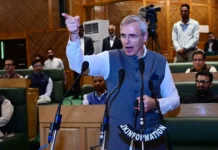
“BJP can form the government if the people in Kashmir allow division of their votes. People must vote wisely to avoid division of votes,” Omar told a gathering in Kupwara, forgetting that he contributed to the division by ensuring PAGD lost its weight and mass. “Engineer Rasheed’s release is a ploy to divide votes, but I trust the intelligence of the people to see through this manipulation. We cannot afford to have our voices fragmented when our very identity and dignity are at stake. We must stand united and resolute against such tactics.”
Almost everybody is contesting including nine members of Jamaat-e-Islami which has been banned for many years now. Hafiz Mohammad Sikander Malik, one of its members filed his nomination papers with a GPS-anklet on. Though a minority of the Jamaat is supportive of getting into the contest, those who are in the fray insist it is the party’s “new beginning” because their assets worth Rs 5000 crore have been seized and a “lot more is at stake”.
This election is witnessing more than 40 per cent of candidates being independents. They will add to the fracture of the mandate and elect a “hung house” where stability will be a victim.
This is simple to understand, one political pundit said. “In Lok Sabha BJP stayed away from polls in Kashmir but the entire election was contested on one thing – you are either pro or anti-BJP. This helped the party to stay in debate,” the expert who knows Kashmir politics very intimately, said. “This election, it is the BJP that will decide who forms the government.”