After the protracted silence of the media in Jammu and Kashmir, the Omar Abdullah-led government is keen to restore freedom so that institutions can be rebuilt for the greater good. Humaira Nabi writes about some of the challenges that the embattled fourth pillar of democracy is facing

Omar Abdullah underscored his commitment to safeguarding media freedom in his inaugural address as Chief Minister of Jammu and Kashmir. “You will not be punished for writing anything against me. Although I may not like reading or watching it, in a democracy, we cannot strengthen our institutions if we do not allow the media to do its work, “Omar told party members and leaders in Jammu, reaffirming his government’s dedication to press freedom. At the same time, he acknowledged the precarious situation faced by journalists and mentioned the pressing issue of accreditation. “There are many press colleagues whose accreditation or registration has been endangered. Their registration and press cards have not been issued. This will be corrected gradually, and we will work to strengthen your institution.”
The statement came a day after Omar was sworn in as the Chief Minister, a ceremony the coverage of which was denied to numerous journalists and media organisations as part of the ‘new apartheid’ that the Jammu and Kashmir administration has put in operation for many years now. Reporters representing regional, national, and international outlets were denied entry to the function on the same pattern as the Raj Bhawan, which was selectively accessible to a few.
While campaigning for the 2024 assembly elections, all major regional political parties in their manifestos have pledged to restore press freedom in the region. “We recognise the challenges journalists face regarding accreditation and are committed to addressing them effectively,” the JKNC said in its manifesto, a pledge that now faces its first major test under Omar’s leadership.
While Omar’s assurances inject a cautious optimism into the media landscape, but the gap between political promises and actions remains a challenge.
Media Policy
The media in Jammu and Kashmir has traditionally operated within the constitutional guarantees and the established norms that are in vogue across the country. On June 2, 2020, however, the Jammu and Kashmir administration introduced the Media Policy, which marked a significant shift in the relationship between the media and the government. Intended to ensure that all forms of media contribute to fostering public trust and enhancing the government’s image, the policy immediately sparked strong reactions from journalists and media organisations within and outside Jammu and Kashmir. It was seen as an infringement on press freedom and editorial independence.
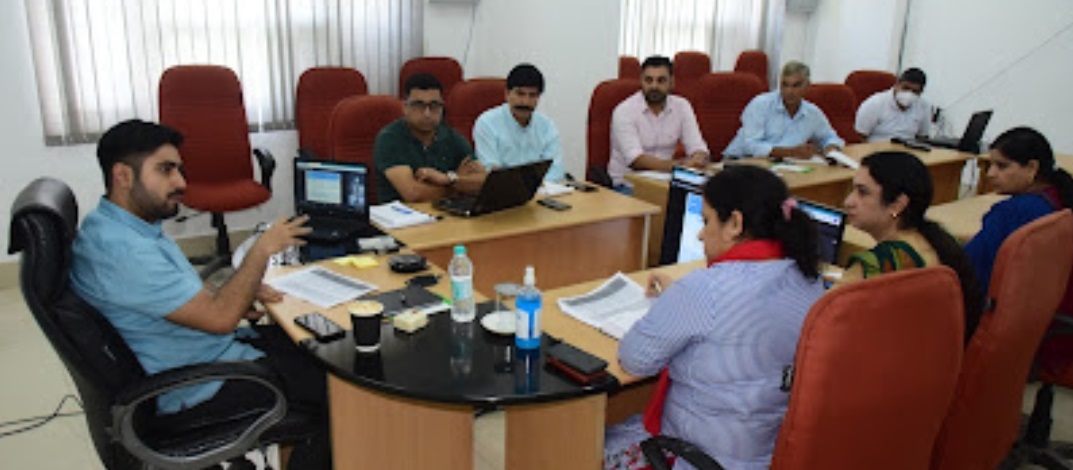
The policy represented the first media framework put forward by the BJP-led federal government in any state or union territory, establishing a model that goes beyond existing national regulations. Central to the policy is the Department of Information and Public Relations (DIPR), which has been empowered to monitor and regulate media content rigorously. The DIPR was tasked with examining print, electronic, and digital media for instances of fake news, plagiarism, and what it categorises as anti-national reporting. This authority allows the department to de-empanel and take legal action against individuals or groups found violating these norms. The policy specifies that publications seen as inciting communal tensions, promoting violence, violating public decency, or undermining India’s sovereignty and integrity will be denied government advertisements.
The oversight role granted to the DIPR marks a stark departure from previous norms. Under the national guidelines outlined by the Bureau of Outreach and Communication (BOC), a body formed in 2017 through the amalgamation of the Directorate of Advertising and Visual Publicity (DAVP), the Directorate of Field Publicity (DFP), and the Song and Drama Division (SDD), advertising strategies had been more neutral. The DAVP’s 2016 policy emphasised that political affiliations or editorial policies of newspapers were not considered in the distribution of advertisements, with exceptions for publications that incited communal passions or violated India’s integrity. The broader Print Media Advertising Policy 2020 reinforced this approach, establishing processes for empanelment and suspension based on journalistic conduct, including misrepresentations in circulation data and criminal convictions.
In contrast, the Jammu and Kashmir policy, implemented in Kashmir adopted a much harsher approach. The DIPR acquired sweeping powers that include not only evaluating content but also enforcing compliance with government guidelines. The policy dictates that empanelled publications are obliged to publish government advertisements; failure to do so can lead to de-empanelment for up to six months. To manage oversight, the DIPR was set up as an internal monitoring mechanism (it lacks even professionals to manage this) and handles appeals through a review committee led by the administrative secretary of the information department, along with senior officials from the home and finance departments and the director of DIPR. This gives the department significant leeway to act as both regulator and enforcer, effectively becoming a dispensing authority with the power to monitor, adjudicate, and impose sanctions.
The policy’s reception among Kashmir’s media community has been largely negative. Journalists argue that it places severe restrictions on the independence of the press and encourages self-censorship, particularly on issues that may be perceived as critical of government actions.
“The Media Policy 2020 is a blatant attempt to muzzle press freedom under the guise of fostering positive relations. By granting unchecked powers to the DIPR, this policy compromises journalistic integrity, making media outlets an echo chamber for government propaganda. Forcing publications to toe the government line or face harsh penalties is nothing short of censorship. Such overreach not only undermines the freedom of the press as guaranteed by the Constitution but stifles the democratic spirit of independent journalism, a core pillar of our democracy,” said Tahir Bhat a Kashmiri scribe based in Delhi. “The first step towards fulfilling the promises made in the National Conference’s manifesto would be to do away with this policy.”
Not many voices against the policy were audible in the region for many years. Of late, however, some people within the tribe have started talking, albeit anonymously. “The entire decision-making of August 5, was aimed at integrating Jammu and Kashmir fully with one set of rules in vogue,” one editor said. “By promulgating a special policy for media violated this spirit and made Jammu and Kashmir a special territory. It works at cross purposes with the spirit of August 5.”
Banned Ads
Policies regarding the distribution of advertisements have significantly impacted the financial stability of news organisations in the region. Currently, more than three media outlets, including one of the highest-circulated newspapers in Kashmir, are facing an advertisement ban. This has further strained the already struggling media sector in Kashmir, where job security is far from guaranteed.
Journalists, despite holding university degrees and professional skills, are often paid meagre wages. The lack of financial security has driven many journalists to abandon their careers in media and pursue alternative paths. The advertisement ban has exacerbated these challenges, deepening the financial crisis for both media organisations and their journalists on rolls.
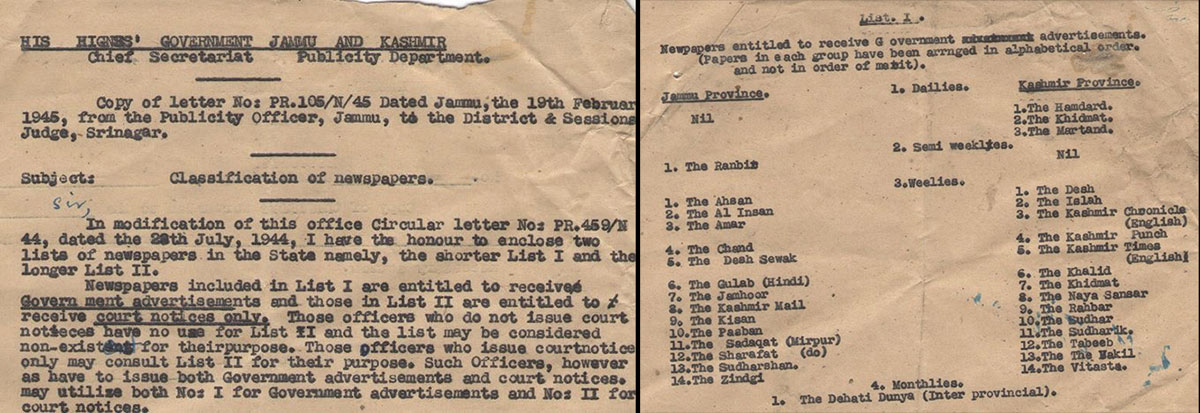
“Journalists in Kashmir receive the lowest salaries in India, but can we really blame the news organisation owners? I don’t think so,” said a journalist working with a daily newspaper in Srinagar. “Advertisements are the main source of income for any news outlet. With the ban on government ads and the limited presence of a private sector in the region, where is the money for employees supposed to come from?”
The ban has not only affected reporters’ well-being and livelihoods but also led to a brain drain, as local journalists increasingly seek better-paying opportunities outside Kashmir. This shift has directly compromised the quality of journalism in the region. “Three of our main reporters left simultaneously to work in Delhi, forcing us to rely on replacements who had minimal writing experience,” shared an editor of a daily newspaper. “We frequently receive criticism over the quality of our reporting, but with these financial constraints, this is the best we can offer to our readers.”
An Altered Eco System
The restrictions on the media in Jammu and Kashmir came at a time when the mass media was already transitioning. The print order of every publication has gone to the “archival” levels as the “democratisation of news” by the internet-driven social media has changed the eco-system completely. “The news cycle has completely changed,” one editor said. “It is no longer a 24-hour news cycle. Now news breaks and within minutes the reactions land, pushing the journo to move faster than the machine.”
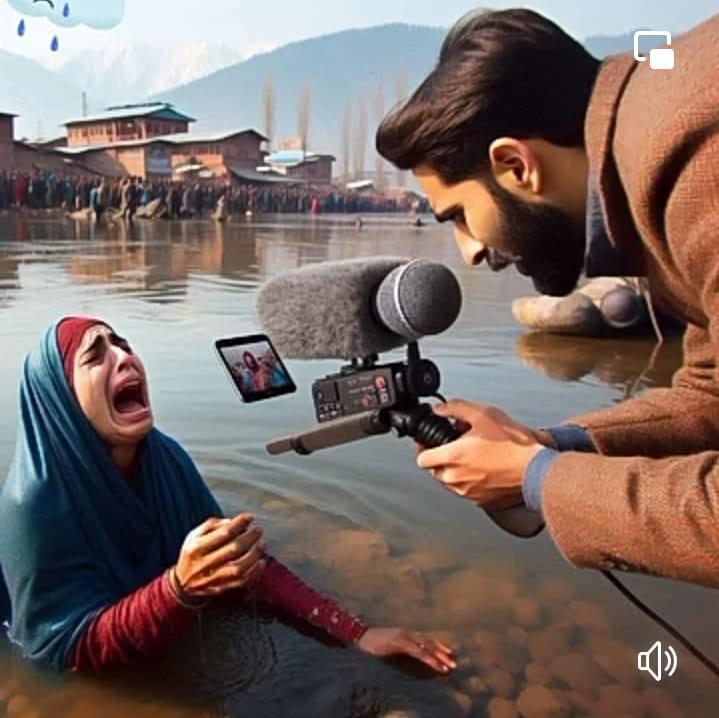
With earnings falling, the pressure of the new ecosystem is building up fast. “Earlier, a reporter was required to cover his or her beat, write, submit the reportage and it was all over,” insisted a senior editor. “Now, all this exercise is just part of the job. The overall requirement is to contribute to its audio or video recording; the additional capacity would be to edit it too. In certain cases, there is an expectation that reporters should have an impressive social media following. This trend is not here but in Delhi and elsewhere it has started mattering. If a reporter is an influencer in his own capacity it adds to his profile within the organisation he works for.”
The democratisation of news has led individuals to get into ‘citizen journalism’. “They lack costs because they are not supposed to know newsroom, study mass media, follow or even know any ethics and their material requirements are almost nothing barring a mic and a phone,” said a reporter. “On this front, the media organisations and the individual reporters are facing a serious challenge. It has added a new competition as people are unwilling to understand the fine distinction between formal media and citizen-driven over-ambitious social media.” How systemic and systematic interventions contributed to this crisis in Kashmir in the last five years is a subject that can throw up chilling thrillers for any independent filmmaker.
In Kashmir, most of the formal media is racing to retain its status in the overall ‘media’ pyramid. “It works slightly differently from the food chain, fish eat fish in this dog fight and the hyenas make the best on the streets because they have no rules to play with,” added the editor. “It is a game reserve where the lion is no more the king.”
Press Club
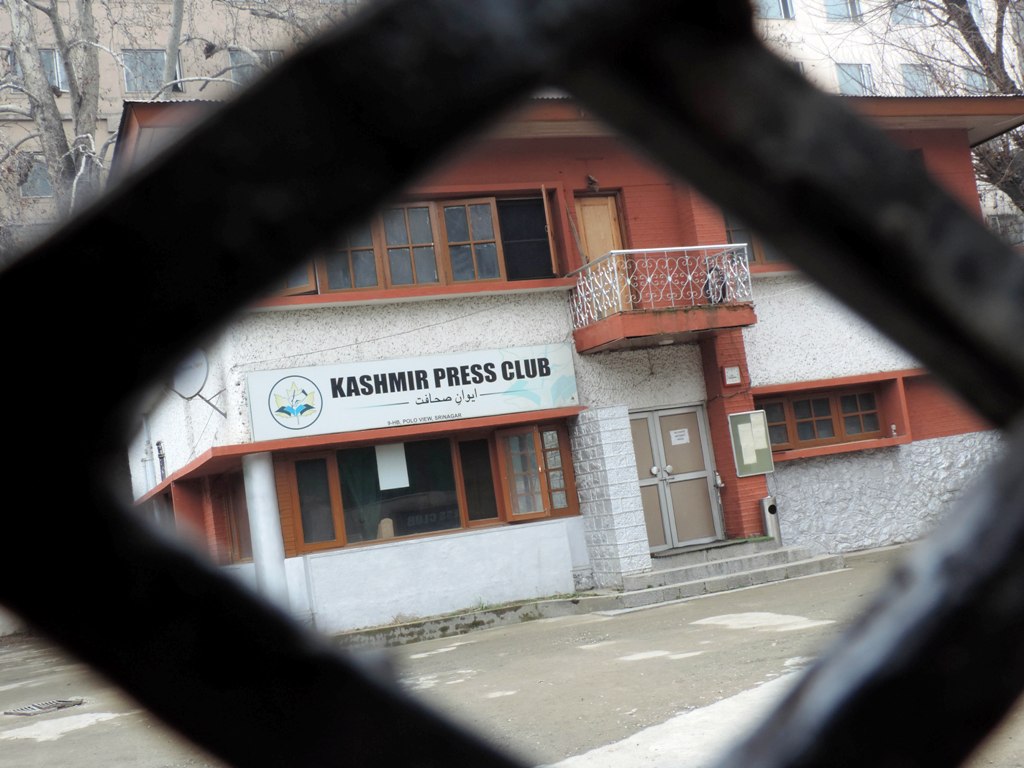
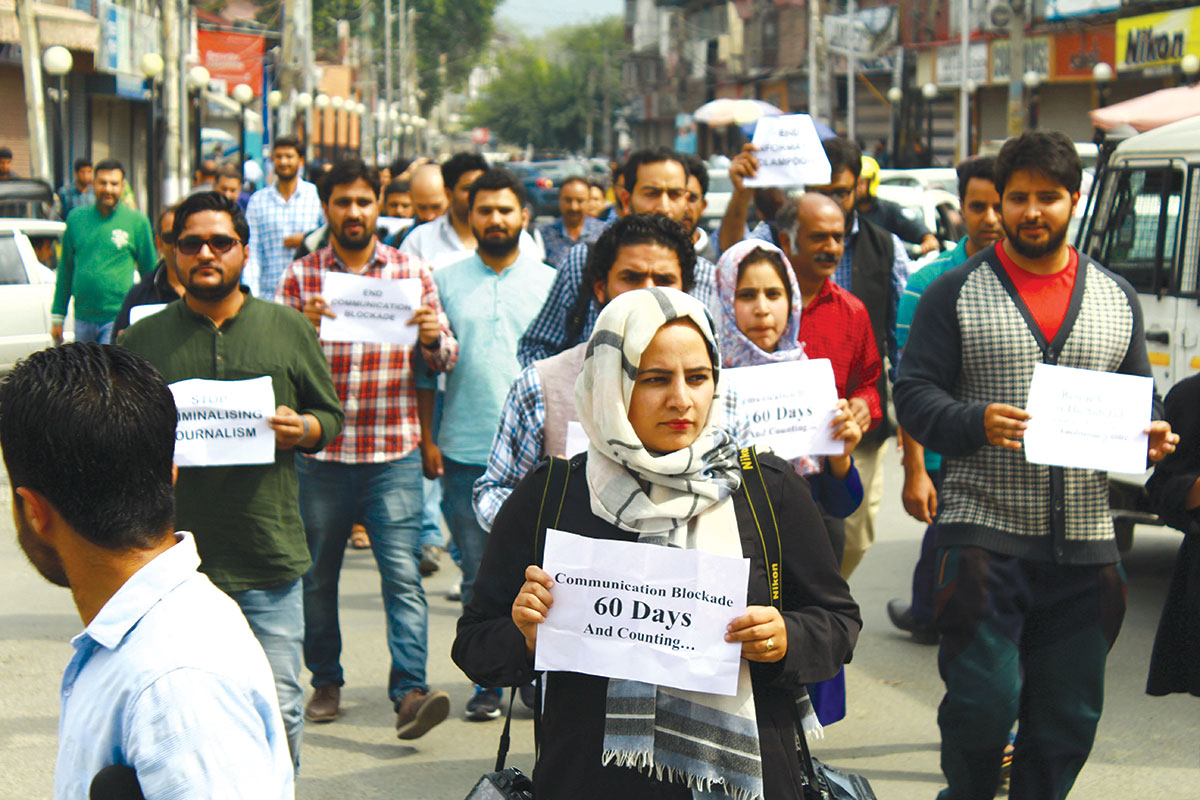
Amid several arrests (some are in jail and many are fighting court cases to retain the bails they have secured), frequent summoning and the questioning of various journalists, the closure of the Aiwan-e-Sahafat, the Kashmir Press Club in January 2022, enacted under controversial circumstances, marked a significant shift in the media landscape. The administration cited procedural lapses and security concerns to justify taking control of the premises. The closure occurred shortly after a group of journalists, who had lost their elections in the only exercise ever, declared themselves the interim managing body. The move was strongly opposed by many journalists, intensifying tensions within the press community.
The government, claiming that there was apprehension of violence, took control of the building, which was later given to the Jammu and Kashmir Police. It was the last space that the Kashmir media had for interactions and media-linked activities.
In the aftermath, several journalistic associations emerged, but many have struggled to establish credibility among established media professionals in the region.
“When we form any association, it’s crucial to have a democratic process in place. This means ensuring that decision-making power isn’t concentrated in the hands of a select few. It helps maintain credibility and transparency within the organization. Press club in any place should be a safe space for journalists. People should learn from each other, communicate well and give training to young journalists,” Quratulain Rehbar, a freelance journalist said.
One of the newly formed organizations recently expressed grave concerns regarding individuals posing as editors and allegedly operating “fraudulent media organisations” in the region. It happened days after Omar Abdullah’s swearing-in as Chief Minister. However, the group approached the Prime Minister to take decisive action against the ‘blackmailers’, emphasising the need for accountability to preserve media integrity in Jammu and Kashmir. They resolved to send letters detailing alleged “fraudulent editors and media houses” to the Prime Minister’s Office, the Home Minister’s Office, and the Chairperson of the Press Council of India. By reaching out to national leaders, and bypassing the Chief Minister, this group generated the perception that the leadership in Jammu and Kashmir might be less effective.
A few months earlier, the Jammu and Kashmir Media Accreditation Committee (JKMAC), led by Director DIPR, Jatin Kishore, convened to finalise accreditations for media representatives. Reviewing 412 applications (207 from Jammu and 205 from Kashmir), the committee ultimately accredited 262 applicants. However, this process met with notable resistance. Many journalists boycotted the accreditation process, criticising the lack of professional journalists on the committee and arguing that this absence undermined the committee’s credibility and its ability to effectively assess and recognise qualified media professionals.
Evaporated Archives
In the post-2019 situation, thousands of write-ups simply disappeared from digital archives, with many journalists reporting that their previously published work has been deleted.
A journalist who wished to stay anonymous, while sharing her experience, explained how the erasure of her work felt like a loss. “I started my career in early 2020. My passion for journalism drove me to pursue stories with sincerity. Losing all of it only in a year felt like a theft in the night,” she said. “My hard work was undone in an instant; a year of my career has vanished into a black hole. I have no proof of having worked at all.” For a journalist, a by-line is the identity and a certificate of existence and experience. “There should be a way to restore it,” she added.
Fozia Yasin, a former editor at a local newspaper, also found her entire body of work wiped out. “Omar Abdullah has repeatedly spoken about the importance of media freedom,” she said. “It’s time for him to act on those words. Authorities must recognise that press freedom is a cornerstone of stability and normalcy in the region. The government must also understand that press archives are invaluable to any nation, providing essential information for researchers across disciplines and preserving our history for future generations.”
In Retrospect
The wide angle of the existence of media in the past has not been so hanky dory. However, every time the media was in a crisis, it was the state apparatus that ensured it survived the onslaught. Militancy apart, the media has taken its hit in remote central rules as well as the elected governments. At the peak of the 2016 unrest, the BJPDP government seized printed newspapers after getting into all the printing presses in Srinagar one night. It suggested the media seize publications till the situation becomes normal to the extent distribution of newspapers becomes possible.
In retrospect, the relationship between the JKNC and the media in Kashmir has historically remained a love-hate affair. One of the earliest incidents occurred on April 9, 1953, when Sheikh Mohammad Abdullah, the JKNC founder reportedly slapped the editor of the Hamdard newspaper in his office. This incident took place during a period of political turbulence in the region, where Sheikh was facing growing opposition from both within his government and from external forces, including the central government. The slap was a direct response to the criticism of Sheikh in the newspaper, which had been highlighting the rising dissent against his leadership.
The second major instance that has been recorded in history was somewhere in 1975 when the Press Club established under the tenure of Mir Qasim was abruptly shut down by Sheikh Mohammad Abdullah. The building where the Club was operating was, reallocated to Srinagar Municipality. With no alternative space offered to house the club, it was disbanded, leaving journalists without a designated place to organise.
With Omar Abdullah returning as Chief Minister for the second time, regional journalists have raised their expectations. They hope that, unlike in the past, his leadership will prioritise supporting the media. There is a growing sentiment among journalists that Omar’s tenure should embrace a more inclusive approach to media rights in the region.
“I truly expect the government to protect press freedom in Kashmir, which is worse since many years now,” Qurat said. “Journalists should be able to report without fear of reprisal or censorship. I believe no matter who’s in the government that shouldn’t a journalist shy away from being critical of government policies or initiatives. So, government should take criticism constructively and communicate properly whenever there is a need.”