Amid heightened tensions along the Line of Control and the International Border, residents are back to their past horrors. Amid uncertainty, little preparedness and rumour mongering, the population at the margins is face to face with an existential crisis, yet unwavering in resolve to defend their territory, Babra Wani reports

Asleep but uncertain. Muffled sounds under the cold moonlight filtering through a dense canopy of branches betrayed a quiet urgency. Beneath homes of stone and timber, hands moved swiftly. Brushing dust from thick concrete walls, narrow passages choked with cobwebs are being cleared. Long-forgotten bunkers, silent witnesses to past horrors, were being readied again. War, here, never ends. It merely waits. These are the scenes from the border villages of Jammu and Kashmir,
As the echoes of the Pahalgam tragedy dimmed and fresh threats of ceasefire violations stirred old fears, villagers resumed familiar routines: listening for the distant thud of a Bofors shell, herding families into underground shelters, and praying the night would pass without an incident.
A Life Below Ground
The bunkers, compact and sunken just below ground level, were built for emergencies. Reinforced with thick concrete, each was designed to house 20 to 30 people. They offered safety, but no comfort.
“There is always an uncertainty looming over our heads,” a Uri resident said. “Especially for somebody who lives near the IB, LoC or LAC. You never know whether you will survive the night or not.”
The geography of Jammu and Kashmir is burdened with a trifecta of military demarcations. The International Border (IB) marks the line between Jammu and Pakistan’s Punjab province. Further north, the Line of Control (LoC), drawn after the 1949 truce, which separates the two parts, remains a hotspot of conflict. In the east, the Line of Actual Control (LAC), which serves as India’s de facto boundary with China, is not tension-free either.
Following the deadly attack in Pahalgam’s Baisaran meadow, which claimed 26 innocent lives, an air of renewed fear and readiness returned to the remote border hamlets of the region. Bunkers were swept clean, checked for supplies, and prepared to receive frightened families. In places without such shelters, residents identified safer rooms within their homes, rooms with no windows, tucked farthest from the line of fire.
Continous Firing
In some villages, the fear has come true. As per the reports, the Pakistani army’s shelling along the LoC had entered its seventh night. The unrelenting assault targeted forward Indian posts, sowing fear across settlements.

“During the night of 30 April–01 May 2025, Pakistan Army posts initiated unprovoked small-arms fire across the Line of Control opposite Kupwara, Uri and Akhnoor in the Union Territory of Jammu & Kashmir,” a statement issued by the Army said, adding that the Indian side responded proportionately. Over the past week, the Pakistan Army carried out 17 such ceasefire violations. The rival armies had agreed to a ceasefire, and it was respected for all these years till the Pahalgam massacre took place.
“On the seventh consecutive day, the shelling along the LoC continues, heightening fear among the locals,” Mohammad Suleiman, a resident of Rajouri, told a local news gatherer. “After years of peace, we are now seeking shelter in underground bunkers, fearing we might be caught in the crossfire again.”
Kashim Khan, a farmer from Poonch, recalled how the ceasefire had given their children hope. “Now, with the shelling restarting, we are worried their education will be disrupted, and we may be forced to flee again,” he said.
Preparing for the Worst
While many villages near the LoC braced for the worst, others remained relatively calm, yet cautious. A journalist from Karnah reported that the situation there remained peaceful, amid simmering anxiety.
“No incidents of mortar shelling have been reported anywhere in the Karnah-Tangdhar sector since the attack,” the journalist noted. “Nevertheless, residents have taken precautionary measures and readied underground bunkers to safeguard themselves in case of emergency.”
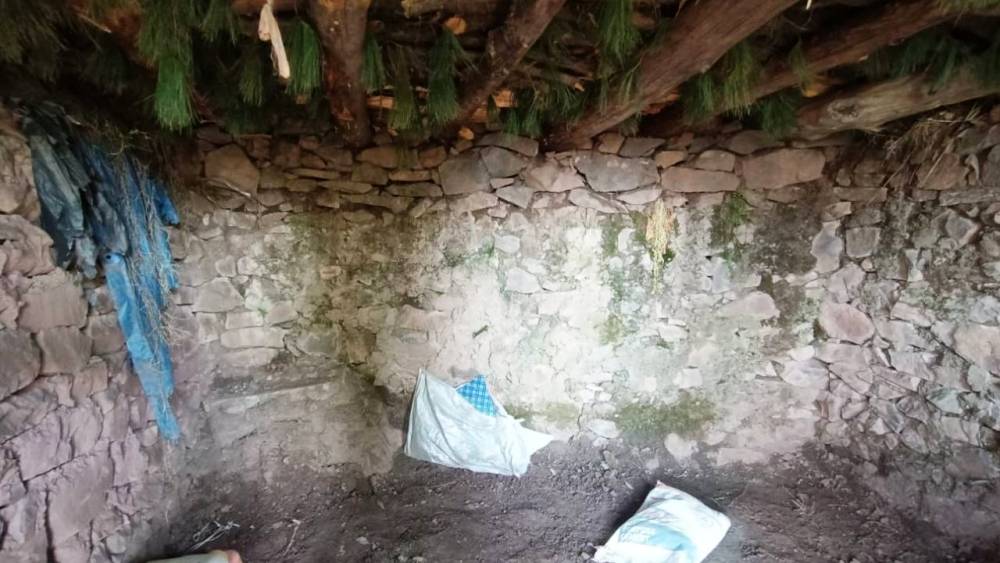
In anticipation of emergencies, the local food and supply department had stocked rations in advance. “The current stock is sufficient and expected to last until July or August. So, for now, there is no shortage, and the needs of the local people are well covered,” the journalist added.
Besides, the government had constructed community bunkers in nearly every neighbourhood to ensure the safety of residents in the event of an emergency.
The Vanishing Livelihood
The ripple effects of the tensions were being felt beyond safety concerns. A resident explained that tourism, once a rare, promising enterprise in these parts, had come to a halt. “We have developed border tourism here. And many of us depend on tourism activities for our livelihood. But now the district administration is not granting permission for visitors to travel here due to the prevailing circumstances. And our livelihood has come to a halt.”
Much like Karnah, the border town of Uri, nestled close to the LoC, had long endured cycles of calm and conflict. A resident of Garkote village said that a lingering fear had become part of their existence. “Right now, the border is quiet, there are no violations because the ceasefire is in place. But the fear remains. We have seen and tolerated too much. Since Uri is covered by the border lines on almost three sides, whenever there are ceasefire violations or tensions, the biggest casualty is the common man.”
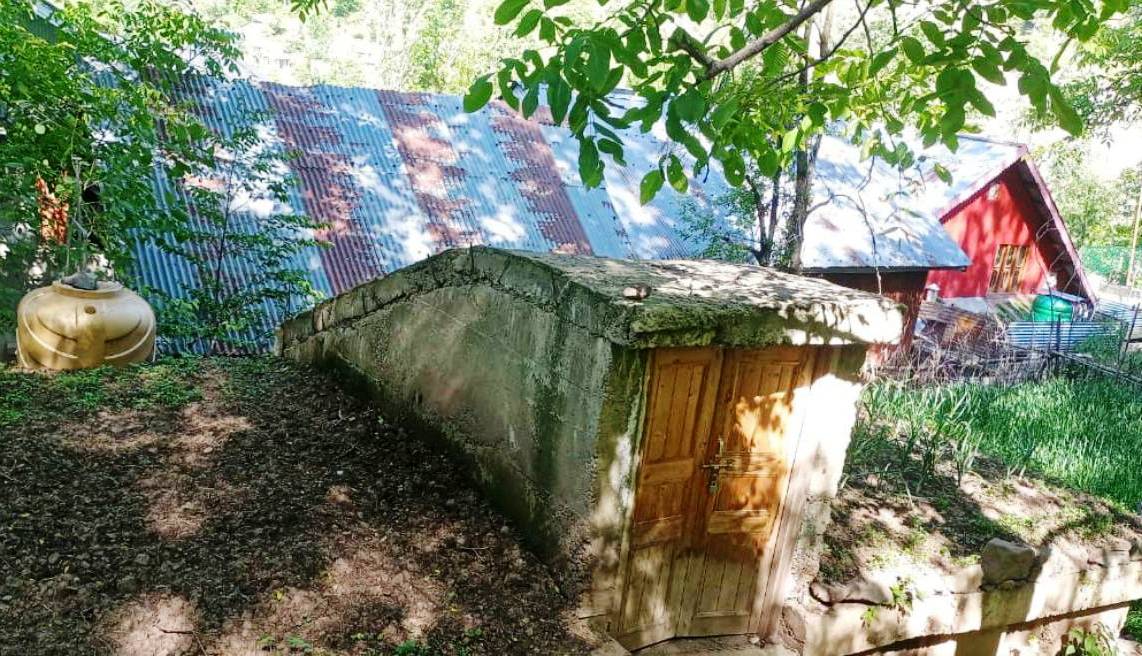
Asserting the “war is never a solution”, the resident said, “We have seen so many people dying, or getting injured. We have seen bullets and a lot of destruction. We know how war affects and impacts society.”
Uri’s economy, heavily reliant on agriculture, particularly fruit farming, suffered immediate setbacks with each bout of shelling. “When shelling begins, our fruit business suffers immediately, leaving us vulnerable economically,” he said.
The Disrupted Classroom
Education remained among the worst-affected sectors in border villages. When life is at stake, education takes the backseat. “When tension rises, parents are scared to send their children out,” said a resident of Uri. In these hilly terrains, where children often walked long distances to school, even the threat of shelling could bring all learning to a halt, he explained.
The greatest fear, he said, was the prospect of war-like situations. “Once there is an escalation, it is never easy to get back to normal.”
“It all starts with firing one bullet,” he added, “and then Allah he hafiz hai, (Allah alone is the guardian).” Moreover, so far, there have been no special arrangements for schools.
Broken Bunkers
Uri’s infrastructure still bore the scars of previous conflicts. Following the shelling of 1998, the government had allocated bunkers to vulnerable sectors like Haji Pir and Kamalkote. Built jointly by the government and residents, these structures were severely damaged in the 2005 earthquake. “We had constructed very safe and good bunkers but…” he paused, leaving the sentence unfinished.
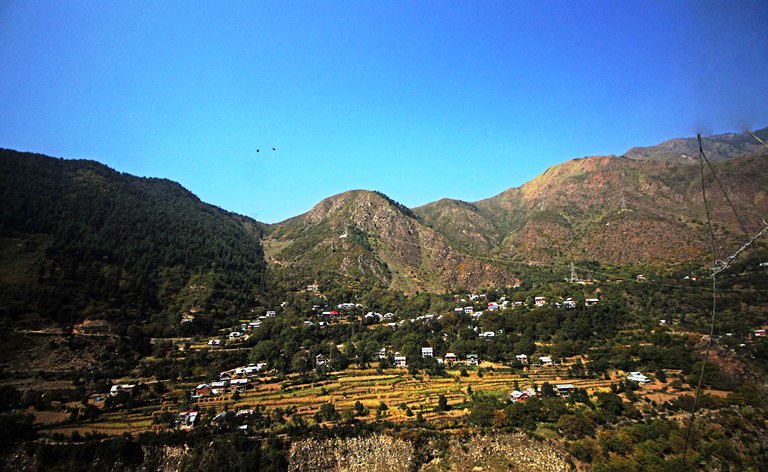
While community bunkers had also been provided by the government following major shelling incidents, their utility remained limited. In Uri, community bunkers were not successful. “Since it is a hilly area, the houses are constructed far from each other, and God forbid if shelling starts at night, getting to these community bunkers becomes impossible.”
Meanwhile, some bunkers remained under construction, and a few of the old ones had begun to be cleaned out and prepared again.
According to media reports, the Modi-led government has constructed nearly 15,000 community and private bunkers across sensitive border villages in the last ten years.
An Uneasy Existence
Life in these border areas came with its own set of challenges. The major one is accessibility to essential services. “Since the area is hilly, roads are difficult and vehicles are not easily available, and in case of shelling, everything closes and shuts down,” said a resident.
He reflected on the persistent sense of insecurity. “Nothing is very safe here,” he said. “I mean, schools are considered the safest, right? But here, the bullets even land in schools sometimes.”
There were two truths, he said. One, a ceasefire was in place; two, the situation remained extremely fragile. “The people have no idea what will happen next,” he added. “This is the first time we are encountering such a situation. In the past, when there was no ceasefire, we were at least prepared. Now we do not know.”
In villages such as Garkote, Namla, Balkote, Charunda, and Batgran, basic health services remained sparse. “We have a sub-district hospital, but reaching it is the problem. The few available ambulances have become non-functional over the years. In case of a medical emergency, God forbid, we have no means to reach help.” In the event of renewed shelling, the absence of emergency medical transport could prove disastrous.
Psychological Strain
The psychological toll on Uri’s residents was heavy. “Even when there is no actual firing, news reports sometimes exaggerate the situation. I receive ten calls a day from people asking if we are safe. It adds to the panic.” Many who had moved out of the area for their livelihoods remained deeply disturbed by these exaggerated reports. “Honestly, when shelling or cross-border firing happens, God forbid, everything becomes gusty.”
Children lived with the same dread. “When shells fall, windows shatter, homes tremble. You start wondering if you will see the next sunrise.”
At the schools, students were routinely trained to respond to shelling since 1998. “The school buildings can keep the students safe from bullets, but not from shells. So, we train our children, both at school and at home, in how to safeguard themselves.”
Uncertainty
Border tourism in Uri had virtually ended. “The government issued a ban on our Kaman tourist spot. It is among those 48 tourist spots which have been closed down recently.” He added, “Our waterfalls, wildlife sanctuaries, everything has closed down now.”
Despite residing on a volatile frontier, most residents remained underprepared. “Earlier, people were mentally ready for shelling; today, they are not. There are no food stockpiles, no functioning bunkers in many houses, and certainly no evacuation plans. The forces stationed here manage their posts. Civilians are not guided or moved during emergencies.”
Villages closer to the Zero Line, Charunda, Batgran, Soora, and Balkote, were particularly vulnerable. “During shelling, some people leave on their own, often to stay with relatives in safer areas. But there is no official evacuation.”
He summed up the prevailing sentiment in Uri: “War is not the answer. People here do not want conflict, they want peace. When a shell lands near your home, you stop cheering for war. You start praying for calm. It is easy to sit relaxed in a studio in Delhi and demand a war, but come here once, feel the force of these shells, and then say whatever you want to.”

Isolation
In the village of Gurez’s Tulail valley, near the LoC, people were bracing themselves. One of the village heads explained over the phone that the villagers were deeply patriotic. “Even the women here are ready to take on the enemy laden with axes.”
Kilshay, a Zero Line border village, was among the most exposed. “We are a 35-minute walk from Pakistan. The other part of our village lies there. And it is one of the most vulnerable villages. Whether a bullet or a bomb, it lands straight here. I head nine villages and I try my best to keep the scared people motivated.”
He described a persistent unease. “Even though there have not been any violations, we feel that something bad is going to happen. These villages are very remote. No government official visits us, so I feel it adds to my responsibility.”
Mobile phones, while ubiquitous, have brought new anxieties. “Everyone sees the news, and it adds to the fears.”
Kilshay was home to more than 400 households. The cluster of villages included Kilshay One, Kilshay Two, Boashcai, and Rafuzi One and Two. “All of these villages are located near the borders. And we only have access to a limited network here. There are no schools, no healthcare facilities, nothing. The people here are serving the land just like how the army serves the country.”
He added, “We have nothing in stock. The climatic conditions are not favourable. The infrastructure is weak, and unfortunately, we lack safety measures too. We have to walk more than eight kilometres to reach any facility.”
Vigilance
Like residents in other border areas, the people here continued to pray for peace. One local remarked that the villagers remained vigilant, constantly on the lookout for suspicious individuals and activities. He asserted that the people were deeply loyal and fully prepared to defend India, stating they were ready to resist any invasion from Pakistan with sticks and axes if necessary.
He noted that a few military bunkers had been vacated to accommodate civilians and assured residents that they would be directed to these shelters in the event of an emergency. Recalling the events of the 1965 war, he said the villages had been shut down, and people were rescued. That memory, he added, offered hope that if a similar situation arose, they would be saved again.
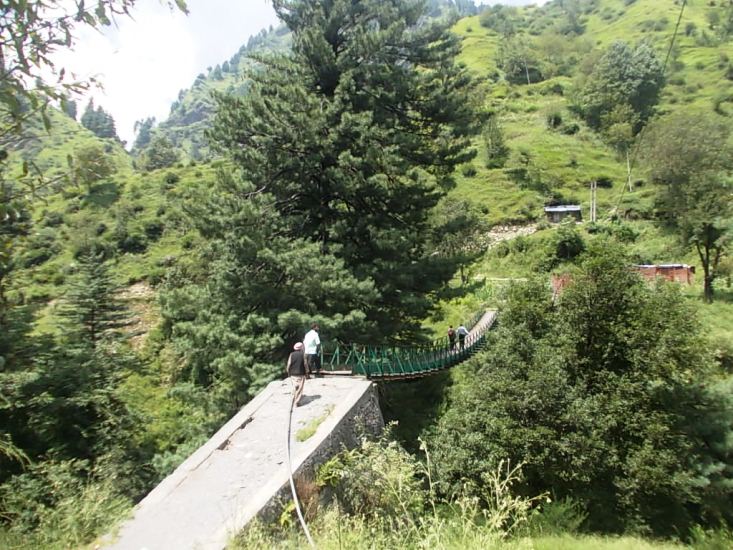
In Mendhar, a border village in Poonch, the deportation of nearly eleven Pakistani nationals had triggered widespread anxiety among the local population. A woman from the area observed that people had begun considering the possible consequences of these actions, even though they remained unprepared. She added that ceasefire violations had already caused fear in some places, while rumours were spreading panic in others. Some households, she said, had begun stockpiling rations and other essentials.
Amid different rumours around, she said, “Apart from the deportation of Pakistani citizens and sporadic ceasefire violations, no other incidents had been formally reported.”