Amid relentless shelling in Kashmir’s border districts, as global attention centred on human suffering, a quiet band of unsung heroes braved the chaos to rescue the voiceless, the wounded, the stranded, and in certain cases, animals, reports Babra Wani
Jammu and Kashmir was in deep slumber when a feeble phone ring woke Aftab Kohistani in his room. Eyes half-closed, he answered, only to be told to check his WhatsApp. There, he found news of heavy shelling along the borders, including his hometown, Uri.
A citizen journalist, Aftab, braced himself, realising his responsibility to inform people had intensified. “I witnessed and lived through the recent shelling. At around 2:45 am, I received a message on WhatsApp. The shock was so severe that I momentarily lost consciousness.”
After regaining his composure, he stumbled to the kitchen, grabbed a glass of water, and went straight to his mother’s room. “I quickly informed my family, and we rushed to the bunker, a shed where we used to store grass and hay. What was meant for five or six people ended up offering refuge to over 20,” said the 25-year-old.
The Citizen Journalists
From that moment, everything changed. Aftab began documenting what he saw, and one of his videos, filmed in the bunker, went viral, reaching millions and drawing attention from the national media.
For Aftab, it was his first experience covering a war-like situation. “I started a routine of visiting the market early in the morning and returning in the evening to document the horror.”
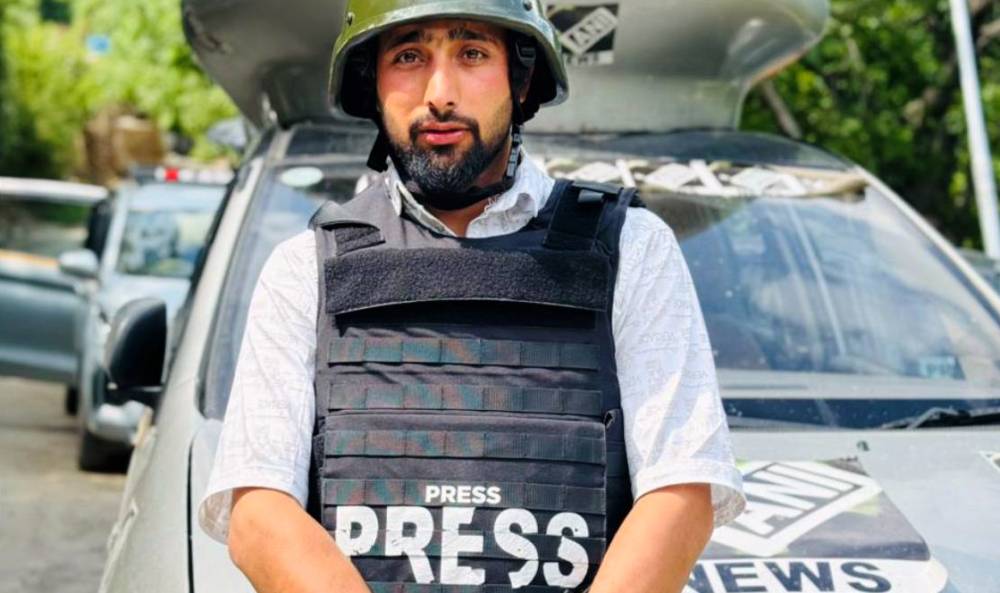
“But beyond the footage, what I saw with my own eyes was more compelling, the extraordinary resilience and humanity of ordinary people,” he said.
He described how the people of Uri rallied together. “I saw people opening their homes to displaced families, some even installing doors and windows in under-construction houses just to provide safe shelter. In one instance, a family in Rangwar took in strangers, feeding them without hesitation. Many people coordinated to help move stranded families.”
Uri, a red zone, lacked organised langhars, the community kitchens. Instead, locals did what they could. “Young volunteers from Boniyar arranged food in Uri, transported people in private vehicles, and ensured communication with authorities. Local health workers distributed free medicine for minor injuries and shock-related issues.”
“The administration, especially the officers, responded commendably,” Aftab said. “Along with local media, we posted updates online, and ambulances or police vehicles would arrive at the exact location within minutes. Over 700 buses were arranged from Uri’s mini-stadium to evacuate people. That level of coordination was unprecedented here.”
He acknowledged the efforts of both the civil administration and the local population. “Despite never having faced such a situation before, the administration worked tirelessly. The MLA of Uri was equally involved in helping residents. Volunteers, families, media houses, and youth groups all came together.”
During his three days in the bunker amid constant bombing, Aftab witnessed fear, but also courage. “People were terrified but showed incredible strength.”
Same Story
In Poonch and adjacent border areas, too, people, administration, and politicians coordinated relief efforts. More than 100,000 people were evacuated to safer areas.
Speaking anonymously, a resident of Poonch said he helped many injured people in his locality. “Since our area witnessed the most casualties and injuries, it became our responsibility to help,” he said.
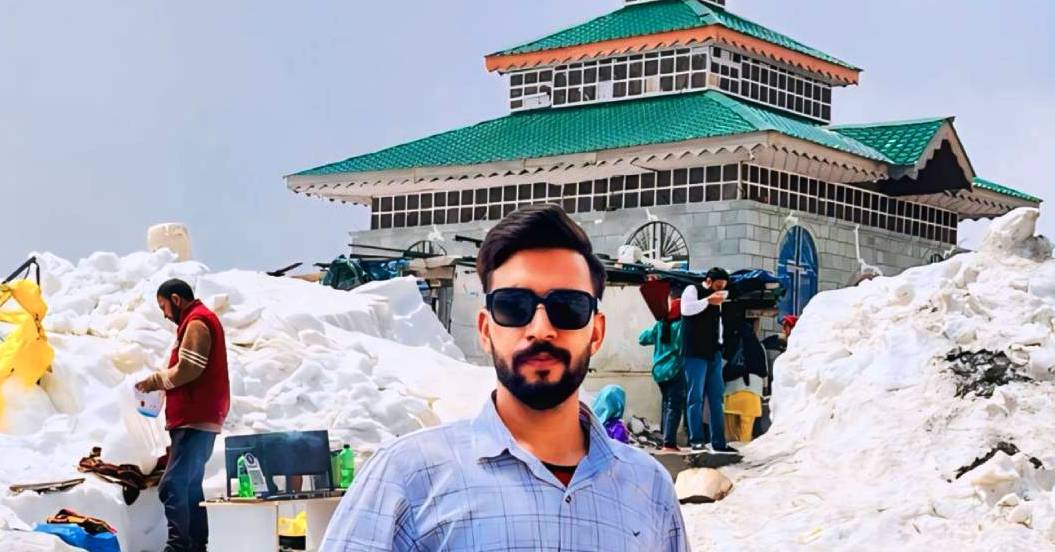
Like Uri’s Aftab, Zubair, a resident of Poonch, also took it upon himself to update people. His Facebook page, Mughal Road Updates, with over 38,000 followers, became a vital source of information during the shelling. Zubair shared videos and photos with local media, keeping people informed while risking his life.
“Whatever I thought people should know, I posted,” Zubair said.
Despite the danger, Zubair ventured daily into shell-affected areas. “Since it started, I have not slept. I kept updating people every minute while looking after my family.”
In the Pir Panjal belt, others like Zubair took on similar roles, becoming citizen journalists. “We learned about many casualties through their videos and updates. These people were heroes,” said a Jammu resident.
Locals in the border areas believe the real heroes of the crisis were the administration, local volunteers, frontline workers, citizen journalists, and the lawmakers of their respective areas.
The Unsung Heroes
While citizen journalists like Zubair and Aftab drew attention to the crisis, many worked quietly behind the scenes, risking their lives to help those caught in the crossfire. These were the frontline workers, ambulance drivers, health professionals, relief volunteers, and civilian rescuers. As shells rained down across Jammu and Kashmir’s border districts, they ferried the injured, evacuated families, provided medical aid, and comforted the terrified.
Khwaja Fayaz Ahmad, a senior ambulance driver in Uri, was one such worker. With over two decades of experience, he remained at his post even as his family fled to safety. “The recent shelling in Uri was unlike anything before,” he said. “As soon as the firing began, we knew our duty. We dispatched two ambulances for every call, ensuring backup. At the peak, we had over ten ambulances in rotation, including those under the 108 emergency service. I worked continuously for seven days without a break.”
On the first day, Fayaz transported four injured civilians from Salamabad. Later, he responded to a collapsed concrete slab incident that trapped seven people. “Fortunately, most were unharmed,” he said. On the third day, a civilian was injured in Garhkot. Fayaz intercepted a private vehicle carrying the man, administered first aid, and referred him to a higher facility.
Throughout the shelling, Fayaz and his colleagues faced immense danger. “There were times we thought a shell would hit our vehicle,” he said. “That is why we always sent two ambulances.” He recalled a colleague who brought two women to the Baramulla hospital, one of whom died. “He was shaken. We see horrific scenes, and we are human too.”
SDH Uri was relatively prepared, having stocked extra supplies days before the shelling. “Our BMO ensured that all staff stayed on duty,” Fayaz said. “District-level medical teams arrived with surgeons, orthopaedic specialists, and doctors.” Despite the preparations, staffing remained an issue. “Many staff members had retired without replacements,” Fayaz noted. “Some peripheral staff could not reach their sub-centres and were stationed at the headquarters, where we expected more patients.”
In Poonch, where more than ten people died and 200 were injured, the frontline workers faced similar challenges. Dr Manjeet and his team worked without adequate resources, treating the injured amid the chaos. MLA Poonch-Haveli Ajaz Jan praised the efforts of police officers like Mohan Sharma, who, despite a previous bullet injury, led rescue efforts. “Every officer in the administration worked together to help the people in distress,” Jan said.
In other border areas like Karnah, where no casualties were reported, frontline workers remained on high alert, ready to respond.
Community Heroes
In the chaos, ordinary residents like Mir Mushtaq, a physical education teacher from Nambla, Uri’s largest village with nearly 15,000 residents, emerged as unexpected heroes. When the shelling began, Mushtaq mobilised a local group called Volunteers of Nambla, comprising 700–800 members. While many fled, he urged those who remained to stay and help. “This is not the time to run,” he told them. “This is the time to stand by our people.”
Mushtaq coordinated through voice messages, collecting reports of damage, identifying those in distress, and directing relief efforts. “I asked people to tell us who was stranded, where evacuation was needed, and whether vehicles were on the way,” he said. Amid the chaos, he kept urging, “Do not be afraid. Remember Allah. Stick together. The elderly, children, mothers, and the sick were our responsibility.”
Despite the overwhelming responsibility, Mushtaq drew strength from his community. “Even those who had evacuated kept calling, praying, saying, ‘You are our voice on the ground.’ That gave me strength,” he said.
The administration responded with vehicles and support, but Mushtaq and his team ensured the help reached the right people. “Some were so weak they could not walk to the relief points. Where buses could not go, we arranged lighter vehicles. No one was left behind,” he said.
For four days, Mushtaq and his team barely slept or ate. They moved from house to house, coordinating help, calming residents, and providing vital information. “Even small things, like telling someone when the electricity would come back or where they could charge their phone, made a difference. It meant they could call their family,” he said.
In Poonch, Ajaz Jan acknowledged the role of locals in the rescue efforts. “Most evacuations in Poonch were carried out with local support. I formed committees in different blocks, assigning them to rescue people in distress,” he said.
Jan highlighted how residents in Poonch and Jammu came forward to donate blood, with over 60 people volunteering without being asked. “We later registered them as blood donors. They stepped up on their own,” he said.
The efforts of political leaders like Jan and his Uri counterpart, Dr Sajjad Shafi, were also noted. “Ajaz sahib stayed on the ground, helping with evacuations, sometimes using his vehicle,” said a Poonch resident. Jan admitted he was afraid but felt compelled to act. “I do not even own a bulletproof car, despite asking for it countless times. But I could not stand by while my people suffered,” he said.
Shafi remained at ground zero, ensuring that no one was overlooked. The leaders and the administration worked together, striving to reach every corner of their constituencies.
In a poignant moment, Jan recalled speaking to two young girls, one clutching a cat, the other a hen. “When I asked them why they were carrying their pets, they said, ‘We cannot leave without them. They go with us.’”
The Forgotten Victims
While the world focused on human casualties, Advocate Nafiya Wani, an animal rights activist from Baramulla, received a distressing message on May 10 about a dog injured by shelling in Uri. “We wanted to go immediately, but it was already late, and we lacked resources,” she said. The next morning, she and a young boy set out for Boniyar. When they arrived, the sight was haunting. The entire area had been evacuated. Homes stood empty, and animals wandered, hungry, wounded, and terrified.
In Uri, they located the injured dog. “He was in pain and terrified. We fed him gently, trying to gain his trust,” Nafiya said. Once the dog calmed down, they administered first aid and brought him to safety. But he was not the only one. “There were so many others, starving, with mange, skin infections, and untreated wounds. We fed them and gave basic medical care, but it was not enough.”
“There were only two of us,” she said. “People are afraid to enter conflict zones, but we had no choice. NGOs and rescue teams had evacuated people, but the animals were forgotten. They could not call for help, but their suffering was just as real.”
Nafiya spoke of the silent agony of the animals. “They hear the explosions, the gunfire. Imagine how they feel: abandoned, confused, terrified. God gave us a voice, not just for ourselves but for those who do not have one. Every life matters, human or animal. It is a misconception that only people suffer in conflict. These animals suffer too, but in silence. And that silence is what hurts the most.”