In the neglected corners of Kashmir’s healthcare system, hundreds of haemophilia patients struggle to survive without reliable treatment or life-saving medication. As government support falters, families are forced to sell everything they own, young lives are lost, and silence only deepens the stigma. Babra Wani reports a story of pain, paralysis, and a relentless fight for dignity
With a limp in his left leg, Shahid often walked miles to reach his shop in a rustic South Kashmir village. Each step required caution. His condition demanded it. Now 26, Shahid had lived with haemophilia since he was a toddler. The rare blood disorder turned a childhood injury into a lifelong ordeal.
He was just two years old when he injured his leg while playing. Blood started dripping, and panic gripped the family. Born seven years after his parents’ marriage, he was their only child.
Shahid’s father recalled how the bleeding would not stop. “We took him to a nearby healthcare facility, but they could not help. We rushed him to the district hospital, and from there, to SKIMS Soura. It was a nightmare disguised as an injury,” he said. The diagnosis confirmed haemophilia.
Since then, Shahid had lived with the condition and the limp. “I manage daily tasks, but I must stay vigilant,” he said.
After completing his Bachelor’s in Science, he wanted to leave the region for higher education. But his parents, gripped by fear, refused. “They were scared for my life. I understood. I am their only child living with this condition,” he said.
Rare Disorder
Haemophilia is a rare disorder in which the blood does not clot properly due to a lack of clotting proteins. As defined by the Mayo Clinic, this can cause people to bleed longer after an injury and may lead to spontaneous internal bleeding.
Shahid is not alone. Kashmir had 443 registered patients living with haemophilia, a silent crisis affecting hundreds.
The disease affected men far more than women. About 93 per cent of the patients are male. Among them, 85 per cent suffered from a severe form of haemophilia, while 15 per cent had moderate or mild cases.
A Battle for Every Drop
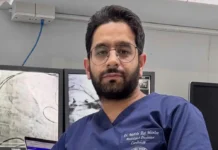
Syed Majid Qadri, a founding member of the Haemophilia Society of Kashmir, explained that patients lacked blood clotting proteins, leading to both internal and external bleeding. Repeated bleeding in joints and muscles often resulted in permanent disability.
“Life-threatening bleeds can occur in the brain, gastrointestinal tract, neck, and abdomen. Even a minor cut can lead to prolonged bleeding,” he said. Bleeding episodes could begin without cause. When that happened, anti-haemophilic injections were needed within one or two hours to prevent fatal outcomes.
Qadri stressed that these life-saving medicines must be available at all times. According to World Federation of Haemophilia (WFH) guidelines, prophylactic treatment was essential. “Prophylaxis means administering anti-haemophilic drugs two to three times a week. Recently, Monoclonal Antibody drugs have become available. These are especially for patients with Haemophilia A and are given once a month,” he said. The newer drugs significantly reduced the risk of fatal bleeding and improved quality of life.
Speaking the Unspoken
Majid, 35, lived with the same burden. Diagnosed with haemophilia, he stood apart for one reason: he never concealed it.
“In Kashmiri society, every health condition is stigmatised. People hide their illnesses,” he said, explaining why many haemophilia patients remained silent. Speaking out, he believed, was the first step toward awareness.
After years of personal struggle and watching others die from preventable complications, Majid founded the Haemophilia Society of Kashmir. For him, the problem was not the lack of treatment but the failure to ensure consistent, quality care.
The NGO was established in 2017 with a clear goal: to help patients and spread awareness.
Majid was diagnosed at two, after unexplained bruises and prolonged bleeding from a tongue injury. His parents had no idea what was happening until the bleeding became relentless. A doctor finally identified it as haemophilia. For his family, life changed instantly.
Born in Ganderbal, Majid now lives with his mother and his brother’s family. His brother, a doctor, made him feel fortunate, but treatment was never easy.
In earlier years, patients had to arrange medicines on their own. They were expensive and often imported. A single episode of joint bleeding could cost between Rs 30,000 and Rs 40,000. Bleeding in the gastrointestinal tract or brain pushed costs into lakhs. Many families sold land and jewellery, yet still lost their children.
Majid often stressed that bleeding did not always follow trauma. In haemophilia, spontaneous internal bleeding was common. “You could be resting and still suffer a brain haemorrhage. People do not understand this,” he said.
Systemic Failures
That lack of understanding had fatal consequences. He recalled a case where a haemophiliac with a broken leg was admitted to the Bone and Joint Hospital in Srinagar. The doctors did not know how to handle the bleeding. Majid rushed there, but as a non-doctor, he could not authorise treatment. Only a clinical haematologist could approve factor replacement. The only such specialist never arrived.
Majid began advocating for haemophilia awareness in 2008. The turning point came after a near-death experience. He suffered a gastrointestinal bleed, and medicines worth Rs 3 to 4 lakh failed to stop it. That moment, he said, made him realise that if he did not act, no one would.
Since then, he had worked relentlessly. His advocacy now extended to thalassaemia patients as well. They required two or three blood transfusions a month and often suffered from iron overload, cardiac issues, and liver complications. Yet they, too, lacked comprehensive care.
A Failing System
Majid explained that irregular supply or complete unavailability of life-saving medicines often led not only to death but to permanent joint deformities. In the absence of anti-haemophilic drugs, patients were instead given Fresh Frozen Plasma (FFP) or Cryoprecipitate, temporary solutions that carried serious risks. Many had contracted Hepatitis C and B, and one case involved HIV. Around 100 patients in Kashmir had tested positive for Hepatitis C. More than half of the known haemophilia patients had developed lasting physical disabilities.
There was no comprehensive care centre in Kashmir, he said. SMHS Hospital in Srinagar had just one clinical haematologist, serving over 440 patients across the region.
Majid recalled how trained doctors had been transferred arbitrarily, leaving nurses to manage the centres in their absence. Promises to appoint replacements remained unfulfilled.
Majid spoke quietly of children who had died under his watch. Families had sold land and jewellery, yet still lost their loved ones. “Some never recovered,” he said.
One such family in Kulgam lost their child after doctors failed to stop his bleeding. He was rushed to the hospital but died soon after. His mother still mourns. Had she known it would be their last meeting, she said, she would have abandoned everything just to hold him a little longer.
Legal Relief, Limited Reach
A 2011 ruling by the Jammu and Kashmir High Court had directed that anti-haemophilic drugs be provided free of cost. In response, treatment centres were opened at GMC Jammu and GMC Srinagar, and medicines were made available. But due to funding gaps, the drugs were distributed only on demand and were often in short supply.
Though the government did provide some medicines free of cost, Majid said, the supplies were insufficient and erratic. Imported factor concentrates were expensive, and locally produced alternatives did not always meet international standards.
Besides, he pointed out, there was no dedicated budget for prophylactic treatment, the internationally accepted standard for managing haemophilia. In Kashmir, drugs were administered only after bleeding began, a system that undermined the very purpose of preventive care.
Prophylaxis, or the regular administration of clotting factors to prevent bleeds, could nearly eliminate life-threatening episodes. But patients in Kashmir often waited for a crisis before receiving even partial treatment.
Interrupted Promises
After 2018, the government increased funding and began offering prophylaxis. However, intermittent shortages and long delays in procurement repeatedly disrupted the treatment. Majid said these disruptions had caused multiple fatal bleeding episodes.
Since 2020, there has been some progress. Budget allocations improved, and procurement delays reduced. But by October 2024, the situation worsened again. Budgetary constraints resurfaced, and the Jammu and Kashmir Medical Supplies Corporation had delayed procurement for several months, once again putting patients’ lives at risk.
Vanishing Supplies
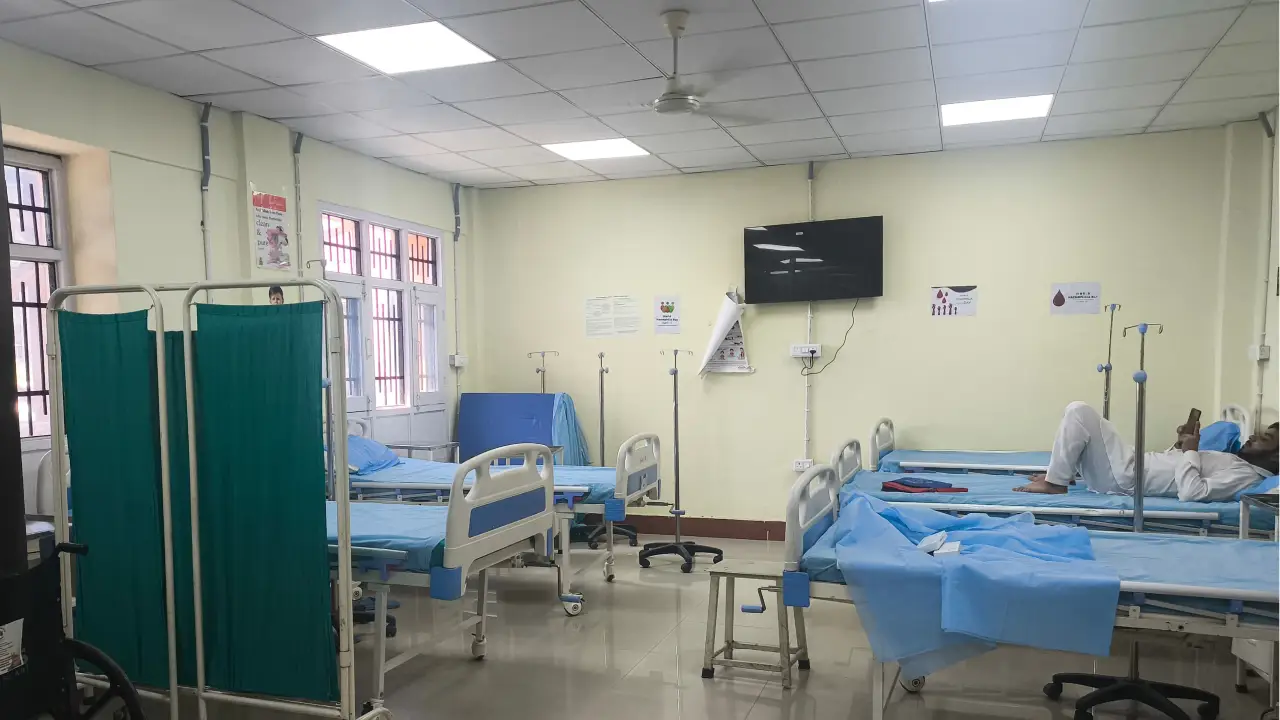
Majid explained that in October 2024, GMC Srinagar submitted a requisition for supplementary anti-haemophilic drugs to the Jammu and Kashmir Medical Supplies Corporation. The request was denied, with the corporation citing lack of funds. Since then, prophylactic treatment had stopped for nearly half of the patients, and even on-demand treatment remained available only briefly.
For the 2025–26 period, the user department again submitted a demand to GMC Srinagar. But by mid-year, less than half the required supply had arrived. Of the 6,000 vials of Factor VIII requested, only 696 had been received. For Factor IX, not a single vial was supplied, despite a demand for over 5,000. The entire consignment of 6,000 vials for Von Willebrand Factor was also missing.
Only Monoclonal Antibody drugs and Factor VII had been supplied in full. This shortfall meant that on-demand treatment was no longer available for half the patients, placing their lives at constant risk.
Majid, who had spent most of his life advocating for haemophilia patients, pointed out that the National Health Mission (NHM), which once contributed funds, had not released any money for two years. According to 2005 guidelines, NHM was supposed to provide 60 to 80 per cent of funding for such procurements. In Union Territories and tribal regions, that share was to exceed 80 per cent.
Despite repeated appeals, Majid said, authorities remained unmoved. Letters had been sent to the Principal of GMC Srinagar, the Health Secretary, and the administration, but none had replied. “The policy does not exist. The will does not exist,” he said.
Frustrated, he asked, “Why appoint health ministers who know nothing about health? It is not just about knowledge. It is about empathy.”
Hidden in Silence
“In Kashmir, people hide it,” Majid said. “If a girl is a carrier or has symptoms, families stay silent. They fear she will not find a husband.”
He explained the genetic pattern: haemophilia is carried by females but manifests in males. If a male patient marries a carrier, the child is highly likely to inherit the disease. Yet families rarely disclose or test. The stigma keeps them quiet.
Majid, though unmarried, insisted the decision was his own. “For me, my condition was never a barrier. But for others, it often is.”
Shame and Rejection
For Zainab, 34, from Budgam, the stigma became personal. She had been in a relationship for five years. When her partner spoke of marriage, she hesitated. She had not told him about her diagnosis.
“I feared he would not marry me,” she said. When he mentioned marriage, she finally shared the truth. “The worst happened. He backed off.” A tear slipped from her eye and turned red almost instantly.
Her mother, visibly distraught, said, “If we talk about it openly, who will marry her? In our society, women live under constant scrutiny. Even a small flaw becomes a curse.”
Like Zainab, many women chose silence. Even when they spoke, it was in whispers, not voices meant to be heard.
(Note: Some names in this story have been changed to protect the privacy and identities of individuals, especially those sharing personal medical details.)