In The Madhouse at the Lotus Lake, Erna Hoch’s memoir of psychiatric practice in 1980s Kashmir, the Swiss psychiatrist explores psychiatry’s fragile intersection with culture, duty, and human dignity in the Valley’s troubled heart. Muhammad Nadeem revisits her account, where reform arises not from grand theories but through quiet acts of presence amid bureaucratic neglect and political scandal
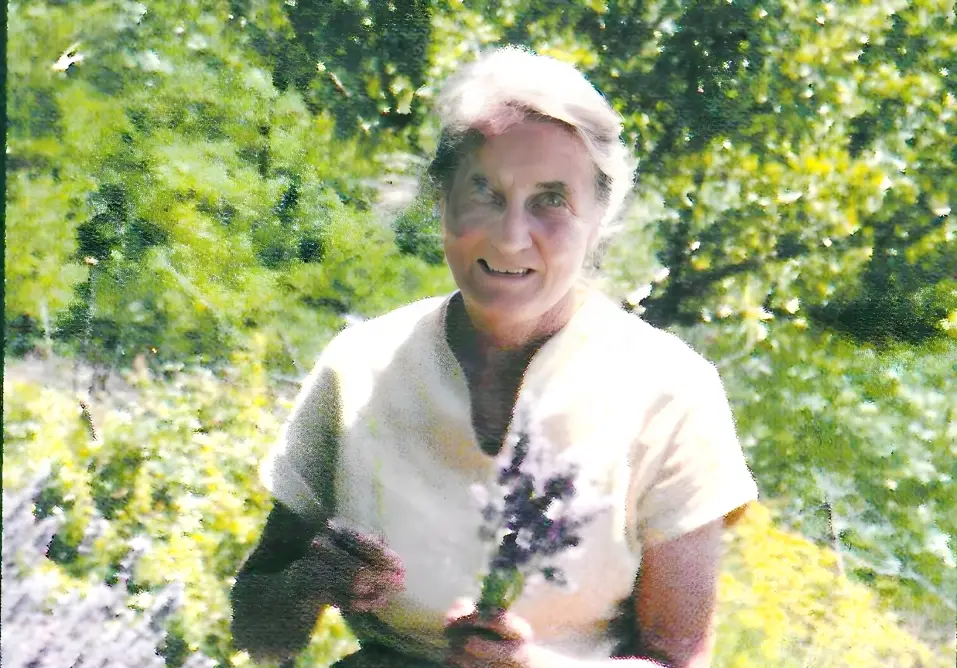
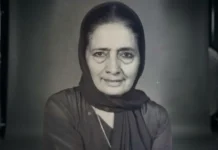
Erna Hoch (1919-2003) was a Basel-born Swiss psychiatrist. She trained in medicine and psychiatry at Swiss institutions, developing an early interest in child and transcultural psychiatry.
From the mid-1950s to the late 1980s, she held clinical and academic positions across South Asia, contributing significantly to the development of child and community psychiatry in the subcontinent. Her career spanned major South Asian institutions, pioneering research on child mental health, and leadership of the psychiatric hospital in Srinagar. There, she combined administration, teaching, and bedside care. Colleagues and later hospital histories recall her as an exacting clinician and inventive administrator, intent on adapting psychiatric practice to local cultures, languages, and daily life. Her name was eventually affixed to child and adolescent psychiatry units in recognition of her work.
Entering the Madhouse
The Madhouse at the Lotus Lake is Hoch’s memoir of her years in Kashmir. It is a first-hand account of clinical days among largely illiterate patients, of the hospital’s courts and wards, and of the lake and orchards that framed daily life around the institute. Written from the perspective of a clinician who improvised policy as much as prescribed treatment, the book traces institutional repair, small human reconciliations, and the ways local custom and environment shaped symptoms and care.
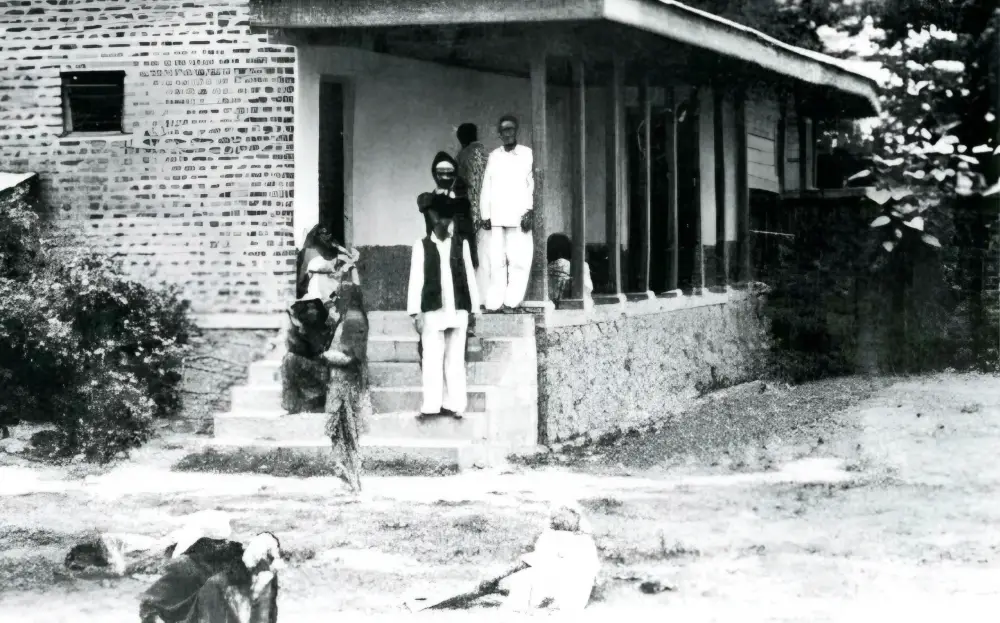
The narrative opens with the sharp crack of a whip. From that first sound, the reader follows Hoch as she rides atop household goods, hauled by a skinny horse through an ancient stone gate into a world where outcasts are arranged in a cruel geography: prison, leper colony, madhouse, burial grounds, all pressed against the castle hill above Srinagar. Temples, mosques, and a Gurdwara stand shoulder to shoulder with a hospital that had been more custodial than caring.
This scene is not a historical aside; it is sensory and immediate: the cool vault above street vendors, half-wild dogs, almond trees that turn the slopes into seas of blossom each spring, and just behind, the hospital compound that becomes the spine of the narrative. Her arrival feels both exile and adoption. She came to establish a department of psychiatry, and gradually the hospital became home to the patients and their companions.
Daily Battles
The memoir is not a textbook. It describes life lived in rooms where glass windows are broken, straw serves as bedding in some wards, and latrines are once emptied into open drains. Hoch moves with impatience and care to remake the institution by degrees. She rejects the large doctor’s house for a small, manageable flat. In that choice, the book’s tone is established: practical intimacy over pomp.
She cultivates a garden on soil fertilised by wandering cattle and children. The garden becomes an index of slow transformation, yielding shade, fruit, and small victories against neglect. It is also a vantage point. She observes neighbours, bargains with a local shopkeeper turned protector, and learns that reform requires not only good intentions but an understanding of daily economies and petty resistances. The hospital gate remains wide open by day, and the courtyard’s intermittent grass and flowers are visible. Yet openness here is ambivalent, as bars and shutters signify protection as much as confinement in a place where thieves and wild animals are real threats.
Hoch sketches the old name of the institution without apology: pagalkhāna. She refuses modern euphemisms that would sanitise what is both alarming and meaningful. Her prologue asserts that the foreign need not always be folded into Western categories. The blunt words of another time often better capture the life she found there. The book is at once a practical manual on conversion and a polemic on language, development, and cultural respect.
It is written by someone who spent years balancing indignation at cruelty with the patience required to coax dignity from a decrepit system. It is a confession of stubbornness. She arrived to teach but accepted responsibility for administration. It is in that role that the human shape of the hospital changes.
Reconstructing Care
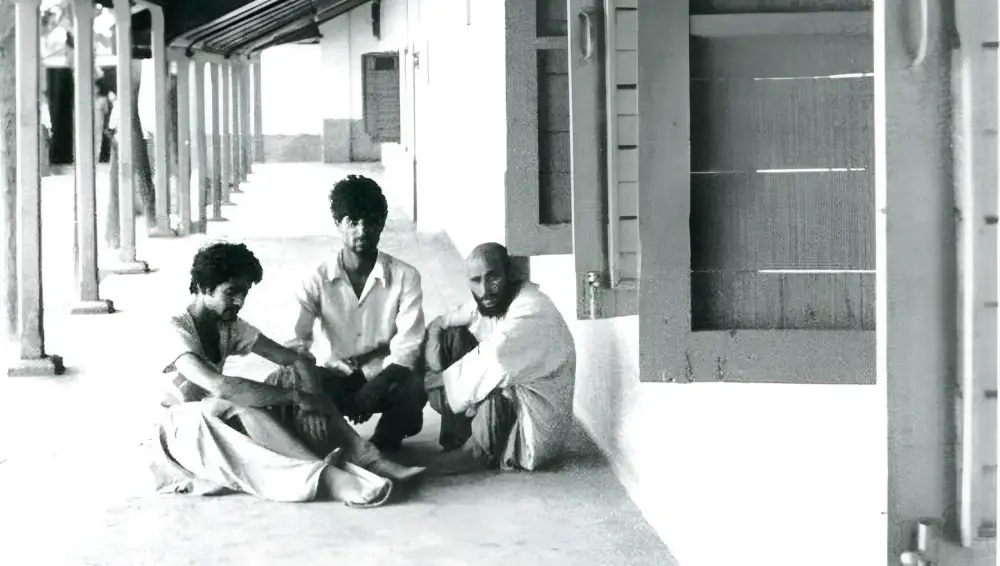
The hospital emerges through Erna Hoch’s eyes as both architectural design and clinical mission. A rectangle of single-storey buildings encircles a garden, a covered gallery runs along three sides, and a cell courtyard is grafted on like a scar. Beds are tubular steel or, in shameful corners, straw. Hoch reimagines windows as wooden shutters with small ventilating gaps, converts a straw room into a latrine, and rearranges medication supplies so that psychotropic drugs reach psychiatric patients instead of funnelling into a neighbourhood polyclinic, which had become an informal welfare network for staff and acquaintances.
That last reform provoked a confrontation. Without melodrama, Hoch recounts the negotiation that follows: a speech to the neighbours, an appeal to dignity, and the reconfiguration of a system of patronage into one of genuine care. The book never suggests that such changes are simple. Staff habits, the lure of side gains, the culture of casual leave, and entrenched hierarchies render every improvement a small battle.
Portraits of the Forgotten
The book’s tenderness lies in its attention to the lives of patients whom the hospital had abandoned. Hoch meets Shivraj, a scavenger who mends his rags with a spike, content if his corner and meal are assured. She watches Om Prakash, once a promising student, wander wrapped in a blanket until depot psychotropic drugs awaken him, leading to his discharge and return to teaching.
Karim’s story is pivotal. Caged in a cell for years as dangerous and recorded in government reports, balancing paranoia and need, he is eventually freed under the guard of new medicine. At times affectionate, at others terrifying, he obeys voices that command him to strike, remorse following as second nature. A single scene stands out: Karim meets his son, a child born the year of Karim’s internment. The father stuffs candy rolls into the boy’s mouth; the child’s tears are raw and sudden. Legal formalities turn into a fragile reunion destined to be brief.
Nazir offers another revelation. A shy middle-aged man, he holds tiny objects in his palm and speaks to petals and crumbs as though they carry the world. Assistants dismiss his words as irrelevant, but Hoch insists that no utterance of a psychiatric patient is meaningless. She draws a stump and makes twigs grow on the page. Nazir’s reply, snakes, spiders and scorpions would grow on an uncut tree, yields a moral insight: perhaps some choose madness to avoid becoming evil. This clinical gesture becomes an act of imagination and an expression of the hospital’s growing capacity to listen.
Nature Therapy
The narrative extends beyond the wards. Hoch argues that air, water and earth matter as much as drugs and gowns. In a Western ward, the four elements disappear, she writes, but here the hospital breathes in the open. Meals are taken in the garden, days unfold in the courtyard or by the lake, and patients accustomed to village life thrive amid wind, trees, and slow rituals of outdoor labour.
The lotus lake, Nagin, becomes a therapeutic arsenal. Shikaras drift among pink and white blooms, kingfishers flash turquoise, and boat trips offer reprieve from institutional intensity. The Kashmiris use the lotus stem, nadur, in their cuisine. This detail stands as a metaphor for a culture sustained by water and floating gardens, mud islands grown for tomatoes and cucumbers. When summer scarcity dries, drains and floods courtyards, staff and patients walk to the lake to fetch water, a comic yet emblematic image of dignity, shared labour and resilience.
The Weight of Legacy
Colonial legacies and local hierarchies shape the staff. Warders outrank nurses in dignity, sweepers hail from menial labour clans, their jamadar is more father than manager, orderlies trained in psychiatric nursing go unused, and casual absences turn rot into habit. Amid ordinary lives, there are heroes: the kitchen staff, a hygienist who leads cleaners with cheer, a tailor who remakes a Ladakhi patient’s robe after zealots destroy it, and a young Muslim assistant who stands loyally beside Hoch in administration.
The author neither sentimentalises nor hides their flaws. She notes petty thefts and card games in attics but names those whose genuine care makes reform possible.
The narrative does not shy from failure. Tsering, the Ladakhi with powerful teeth and the last link to his homeland in a handwoven robe, dies after zealots discard his identity in the name of cleanliness. The Habscha dies alone following a clumsy mistake. Old Kothini, who rules the women’s chambers with sarcasm and tenderness, returns from a brief home visit because the family cannot accommodate her authority.
Yet the book does not catalogue tragedies. It returns repeatedly to a central conviction: that with attention, medicines, a garden and the simple habit of listening, lives can mend. “Chronic” is not synonymous with “incurable” in Kashmir. Depot injections and outpatient services reduce permanent stays, and a liberal system of leave offers families the security to take a loved one home, if briefly. The hospital evolves from tomb to hinge between crisis care and return.
Anthropology of Attire
Hoch writes with an anthropologist’s precision about the pheran, the wide outer garment sheltering women and men, tailored and embroidered differently across communities, sometimes worn with a burqa in middle-class circles. She records headgear, caps with ventilation holes, shepherds’ leather slippers, straw sandals of mountain folk, the elaborate turban twist, and silver jewellery that signals caste, faith and marital status. These details are weighted with meaning, explaining why the hospital must dress outgoing patients to prevent their being shunned at home.
She pays particular attention to the Gujar and Bakarwal communities, semi-nomadic shepherd tribes mapped by altitude and season. Thin and afflicted by vitamin deficiencies and smoke-related diseases, they respond quickly to rest, nutrition and vitamin therapy. One exhausted shepherdess dies quietly, her husband carrying her to a sunny spot and accepting her passing as God’s will.
Erna Hoch treats clothes as the hospital’s grammar, an alphabet where care, dignity and economy are written. Her memoir unfolds a practical pedagogy about preserving what matters from slipping into neglect. Ragged patients are dressed in institutional suits, lighter cotton in summer, heavier pyjama sets in winter, sometimes topped with the local wide outer garment, the pheran, for warmth. Items deemed too valuable are entrusted to relatives or the head guard, because desire forms swiftly among the wards. A stolen waistcoat or pair of shoes can vanish overnight into private worlds of staff and neighbours.
Barter and theft develop into a parallel economy. Hoch approaches this not as moral theatre but as a problem to solve, counting threads and cataloguing rags with the steady hand she demands of her staff.
Fossilised Neglect
Hoch observes that neglect often fossilises into policy. Rotten mattresses and stinking bundles of cloth accumulate because no one bothers to write them off properly. She imposes stock control, spends evenings reconciling ledgers, and personally checks nails, thread spools and light bulbs, until the storeroom yields its few trustworthy storekeepers. These men, relieved and grateful, become small allies in a larger struggle against casual corruption.
More than thrift, Hoch insists on a moral economy of repair. The tailor learns to stitch two usable garments from three worn scraps. The rehabilitation of rags becomes a metaphor for the rehabilitation of people discarded by society.
Her solutions blend cunning practicality and cultural sensitivity. When machine-made sheets fail to arrive due to unreliable deliveries over high mountain passes, she turns to hand-woven Kashmiri chain stitch embroidery. She buys bales from local weavers, and home-spun fabric, cut and sewn by the hospital tailor, becomes durable sheets and sensible summer clothes. This approach saves money, supports local producers, and replaces bureaucratically imposed but unsuitable items with garments patients actually keep.
The battle against theft is fought with colour and theatre. Red government blankets, easily misappropriated due to their uniformity, are replaced by state-weaver-supplied blankets of differing colours when ordered early and in bulk. The result is fewer stolen blankets and a clearer inventory.
Hoch organises a jumble sale for tourists’ abandoned Western clothes, exchanging each coveted foreign shirt for a piece of Kashmiri attire. The swap preserves patient customs while satisfying staff appetites for the exotic. It works because it offers dignity without displacing identity, a small proof that charity must reflect local terms.
Small Talismans of Trust
For Hoch, these scenes are not exotic curiosities but foundational to hospital practice. Nomadic lives necessitate durable, humane wards. She recounts how children are often nearly unclothed until toilet training and how marriages are arranged early. The procession of pack animals and woven blankets down the mountain forms an unforgettable picture.
Small human talismans figure prominently. A packet of buttons, thread and a single Pakistani coin, handed by a Gujar boy on admission, is never reclaimed; perhaps a silent pledge should confusion return. A comic tenderness emerges when a dog appears in Hoch’s garden on a shepherd’s advice. The animal buries itself in the rhythms of the place, later returning with a litter of puppies. These moments affirm that care includes watching over the smallest creatures and possessions. Carelessness risks the habit of stewardship.
Bureaucracy stands as a field of battle. Hoch enters it armed with precise detail rather than rhetoric. She records clashes of departments: the Medical College draws salaries while the hospital belongs to the Health Department; a deputy superintendent with private ambitions delays essential supplies by withholding signatures.
She learns the logic of intrigue, promises made and quietly reneged, the habit of sitting on the fence until advantage appears, the tribalism of officials who avoid speaking alone with subordinates to evade compromise. Her tone is unsparing. She notes sycophants, petty rivalries and colleagues whose vanity imperils the hospital’s mission. Her account offers methodical clarity, cataloguing governance as it corrodes.
Winter Crisis
Erna Hoch confronts a crisis brewing into a catastrophe. A harsh winter of inadequate heating and misapplied stoves, combined with administrative neglect, results in a spate of deaths. Her account reads like a careful inquiry, reconstructing events through ward inspections, staff interviews and examination of thin medical notes later seized by officials. She argues that the deaths were not due to cold alone, but to poorly monitored artificial heat. Primitive stoves and the kangri, a small earthen fire-pot pressed inside the folds of the pheran, posed lethal risks to seizure-prone and confused patients. Hoch rejects easy assumptions, advocating for measures that reduce fire hazards while respecting Kashmir’s cultural logic of warmth.
The kangri emerges as a small, intimate danger. Both an emblem of local ingenuity and a weapon, it causes burns, cancer and mutilated hands among seizure patients. Hoch details how the warming pot becomes a projectile in fights. Her clinical rationale for banning them is neither foreign imposition nor moralising; it is rooted in observation. She describes the awkward replacement of folk practices with safer alternatives, making clear that safety is not cultural arrogance but necessary kindness.
From Scandal to Stewardship
When the press smells a scandal and government inspectors arrive, Hoch is summoned from holiday to take charge. She learns that “in the last six weeks, 14 patients had died either in the hospital itself or shortly after transfer to the general hospital of the Medical College”, she writes. The inquiry reveals administrative abdication, night duty shirked, and grievous failures in basic safeguards. Her tone remains sober. She recalls meetings with a pompous visiting director, her methodical explanations of how misapplied heat can kill as surely as neglect, and the small victories following her assumption of undisputed authority.
There is no triumphalism, only a steady reassertion of responsibility. Progress is slow; innovations take years to implement fully. The sacrifice of lives shadows the arrival of authority. Hoch wrestles with administrative ethics: whether to withdraw from conflict or to fight in small clinical spaces. She admits regret at having to step back when politics obstructs action. She is neither hero nor scapegoat but a clinician learning the architecture of reform, convinced that saving even one life argues for itself.
Hoch turns clinical work into pedagogy, not for scholars but for those who live alongside their patients. She shows how a single conversation, image or mechanical trick can change a life’s course. She listens to people who insist their trouble is merely a bodily fact, a pain or failing organ, and meets that insistence where it lives, in the shared visible world.
Her chosen parable is local: a horse and a two-wheeled cart. Examine the horse, check the axle, feel the load; only when these are sound might the driver himself be the reason for the stumble. This simple story becomes a therapeutic tool. Hoch explains to an anxious man that his tremor or fainting is not a trick to embarrass him but a misfiring of the reins that steer his nervous system, and that with help, he might relearn control. Her language is plain, full of concrete details drawn from country roads and market carts, making compassion a practical lesson.
Voices Regained
With a clinician’s patience, Hoch describes the work of coaxing patients from a fragile admission of illness to a deeper understanding of their symptoms. The first step is listening, offering the dignity of speech rather than treating the patient as an object. She records how relatives readily narrate a person’s failures while the patient remains silent, and how simply being heard can calm a patient in a single sitting.
She observes local logic: illness becomes visible when it is a public nuisance. Admission often follows a loud breakdown. Hoch demonstrates how recognising grief or fear behind the noise can restore peace through brief, human exchanges.
Explanations must align with a patient’s daily world. When someone expects a physical test, Hoch does not simply tell them they are “mental.” Instead, she demonstrates the link between feeling and body through stories, images and small parables from local life. These sections read less like a manual and more like bedside instructions in common sense.
Her caseload becomes a series of lived parables. A girl from a nomadic shepherd family arrives paralysed, her legs refusing to carry her. The diagnosis emerges like archaeology: fear of an arranged marriage. The symptom is not a theoretical riddle but a social message. Hoch tactfully advises the family to alter the marriage contract slightly, prescribes painless daily massages and arranges gradual standing exercises. The girl reclaims her gait without public shame. Her cure is a reconstruction of agency.
Ritual and Symptom
Hoch reveals how closely ritual and body are intertwined. Men complaining of urinary dribbling, with no physical cause, almost always observe strict ritual purity for prayer. The symptom functions as a psychosomatic protest against the obligation to worship. Hoch’s insight is clinical, neither dismissive nor sensational. She names the cause quietly and links it to a path back into communal life, showing how patients can find relief and restored belonging.
Her account does not shy from the limits of therapy in a world shaped by family and clan. The sympathetic foreign therapist constantly weighs the realistic horizons available to patients. Economic and social constraints are not abstractions but the scaffolding of daily life. Young people, once earning, are expected to support wide families. Emancipation is not gradual but an immediate leap into responsibility.
Therapy, Hoch observes, often teaches strategies for acceptance and endurance. It seeks small, meaningful ways to expand a patient’s options, rather than promise impossible autonomy.
Erna Hoch turns her outsider’s position into a tool rather than a weakness. When patients doubt the safety of confiding in a local doctor because of gossip networks, the foreign clinician’s separateness becomes a form of confidentiality. She deploys this paradox deliberately. Sometimes, she instructs her interpreter to voice scepticism in a way that compels the patient to reveal a hidden wish. Their response, whether protest or assent, guides her next move: to press or to protect. A mother overwhelmed by too many births, confronted with doubt, either clings to tradition or shows readiness for change. This bedside diplomacy respects shame, described with an honest eye for strategy.
When the subject of sex arises, Hoch’s tone is corrective and measured. She rejects lurid journalistic accounts that reduce patients to caricatures. Instead, she traces how sexual life is governed by custom, sleeping arrangements and early, arranged unions that leave many young people unprepared for the intimate exam of a wedding night.
She listens to students and newlyweds, counselling moderation: no hormonal stimulants, no rehearsals with paid partners, but slow mutual negotiation and small public deceptions that permit privacy. Her stance is a defence of ordinary tenderness, a manual for navigating fear and desire within a conservative framework.
Contagion and Scandal
Moments of bleakness punctuate her narrative. Hoch recounts a family’s shared breakdown following an evening with a holy man and intoxicants, which led to a public, terrifying frenzy. The story unfolds through interviews, a sparse police report, and the gradual unpeeling of grief and ritual. It becomes a small ethnography of belief, loss, and local authority converging into mass distress.
A scandal emerges in the wards: the seduction of a vulnerable woman by staff. Her response is pragmatic anger: demands for transfer, accountability and clearer lines of responsibility. These stories serve as a moral inventory of what fails when power meets neglect.
The idea of substitution recurs, not as a metaphor but as a social technology. Women’s customary offers of self-sacrifice emerge as pleas and manoeuvres, shifting responsibility from one person to another. Hoch connects these behaviours to local rituals of atonement and broader human tendencies to exchange loss for imagined gain. In this family, devotional drama becomes an instrument of denial.
Hoch moves unshowily from family to theory. She notes how induced delusions root most firmly among the emotionally interwoven, suggesting that mood spreads more readily than coherent belief. Clinical reflections trace how nightly exchanges of dreams within a household prime the mind for collapse.
Her account rejects exoticism while recognising that cultural grammar shapes distress. The clinician must learn to read local signs rather than translate them into foreign categories.
Saints and Disorder
Interwoven with the epidemiology of belief are portraits of holy figures blurring saint and disordered person. One, nicknamed Ahmed, combines mischief and menace, devouring non-food items, loosening locks, upsetting order, yet attracts devotees who treat his mutterings as prophecy. Another preacher rails against modern dress, becoming both an irritant and a political symptom. His zeal and eccentricity are admired and feared alike.
The narrative explores modern tropes of spiritual awakening. A locally influential teacher writes of an inner force to be roused. Hoch describes experiments in breath control and meditation, sensory phenomena reported by aspirants, and the thin line separating mystical episodes from destabilising symptoms. Drawing on outpatient notes, she offers a cautious conclusion: unsupervised practice exposes fragile minds to bewilderment. The remedy lies not in prohibition but in guidance, supervision and early intervention.
Case studies ground abstract thought on a human scale. Not every inward upheaval is pathology. Hoch asks whether public institutions can recognise interior conversion as a reason to reshape work and welfare. She collects histories of seekers who overreached, of those who fell into bewildering states after unsupervised practices, and of community saints whose odd behaviour folded into accepted practice.
Her stance is containment and supervision, insisting that interior intensity must be guided so perception’s opening does not become a path to ruin.
A Practical Ethic
Hoch refuses grand theory, favouring small but precise counsels: supervise transformative practices, respect devotion while assessing risk, use pictorial instructions for non-literate patients, and build community structures that protect rather than punish. Her examples are anchored to names and moments, where a house becomes contagious and a courtroom mercy made real.
One case describes a Scandinavian man, unstable yet possessing official proof of identity, who is returned home once the embassy intervenes. Another recounts a bearded visitor who, lost in mountain monasteries, declaimed in an unrecognised tongue before recalling his past with shy pride.
The Ripple of Novelty
The influx of restless Western youth rippled into the local population. Initially, it touched houseboat sons and students, who watched glamorous guests with hunger, not just for dress or music, but for a freedom that resembled abandonment. Drugs and loose habits spread among people who had not imagined such freedom. Hoch charts this without moral panic, observing how fashion begins at the edges and migrates inward, how imitation of appearance precedes understanding of the life it represents, and how a neighbourhood’s equilibrium tilts under novelty’s pressure.
A man without a name emerges, a presence defying ordinary categories. Found half-naked and mute by border guards, first lodged in a remand cell, then delivered to the clinic, he arrives as an interrogative: who, where, why. His body bears clues: dental gold, a surgical scar, a long white beard framing a face quick with gesture.
He does not speak, but he communicates in other ways: writing letters that vanish into cloth, stitching symbols into a thin scarf, composing scenes on a bedside bottle label. These ephemeral acts become the only traces he will permit.
The Language of Music
Music becomes the first and most humane instrument of translation between Erna and the nameless man. With modest humming and recollected melodies, she produces an effect no charted note could predict. She hums choruses drawn from public ritual: a Beethoven line, a carol, a folk tune. The man turns his body into an orchestra conductor, his limbs dictating crescendos and rests. The mute wall between them thins. The assembled ward and curious guards sense a communal stirring, a shared mood beyond diagnosis. In that sound, he becomes less a subject of state procedure and more a human figure.
His traces are messy and symbolic. He assembles collages from medicine bottle labels: half-incoherent graffiti mixing declarations against drugs, proposals of intimacy and an invented manifesto blending love and social critique. He draws a cloth map where big fish swallow small ones, where space men float above a globe, where yin and yang and torn numerals rub shoulders. These images suggest a private cosmology, holding scorn and yearning in one hand.
When speech finally emerges, hesitant and laced with English and German, it delivers a tangle of claims: childhoods across borders, vanished relatives, hunger strikes at universities, a self chased and fled.
That fragile relationship does not escape exploitation. His words turn corrosive: grievances, stinging accusations, insinuations crafted to wound. Erna identifies the pattern as psychological pressure, a systematic effort to push her into self-doubt, manufacturing a double bind where every reply betrays her. Recognising the trap, she changes strategy, meta-communicating instead of defending, puzzling, withholding, refusing confessions that prolong his power.

Between Crisis and Care
Progress does not follow a straight path. The man makes two daring escape attempts, once wandering naked into town until a stunned crowd brings him back, and another time injuring a guard in desperation. Each escape alarms and instructs: the hospital lacks manpower to police such exits, but has the capacity to absorb the aftermath.
Small mercies punctuate the crises. Peppermint tea from her own kitchen, a bamboo flute coaxed from a music teacher, a typewriter lent for a furious manifesto. Eventually, a long, trilling outpouring of words appears in typed form, a mélange of love, complaint and political fever, a human faucet unleashed after months of pressure.
Hoch frets over relatives in distant countries, bristles at the slow-moving consular machinery and laments how the nameless man becomes merely a problem to pass on. Yet she allows small, improvisational acts of care: an embroidered shawl deciphered as verse, a daffodil placed by a bedside, a patient’s first whistled tune encouraged and applauded.
Witnessing Without Defining
The book teaches less about curing than about witnessing, less about the triumph of therapy than about the fragile craft of holding another without defining them. The hospital learns to measure success not only by discharge papers but by new ways of listening, improvising and offering company to someone who rejects usual terms of belonging.
The final pages leave the reader with a sense of careful, unresolved tenderness. Care is portrayed as a practice of patience. The most radical act may be to remain present long enough for a stranger to begin, in his own time and language, to return.