Kashmir’s psychological landscape, shaped by faith and conflict, has evolved through psychiatry. Dr Mushtaq Margoob tells Azra Hussain how the region’s shift from stigma to scientific inquiry can help address PTSD and substance abuse through professional intervention
Kashmir, with its complicated landscape both historically and culturally, has always been an important case study of how a society is shaped by its circumstances. From the spread of Islam to the near-constant turmoil Kashmir has gone through, psychology as a field has had several opportunities to take root and flourish in the Valley.
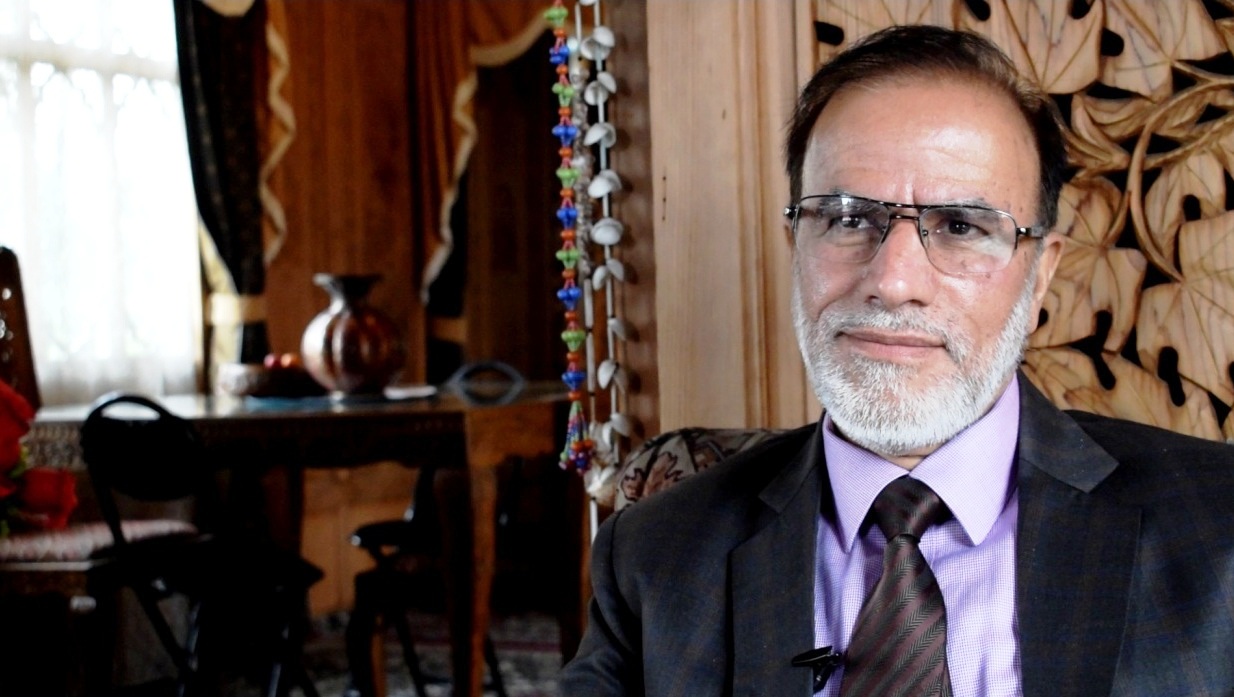
“A human is, first and foremost, a social being and a cultural shift impacts the individual by impacting their surroundings,” said Dr Mushtaq Margoob, a celebrated psychiatrist responsible for some of the most significant breakthroughs in Kashmiri psychology. “The most noticeable effect Islam has had on Kashmir is not a psychological or philosophical one, but a social one.”
Faith Matters
While it is true that Kashmir, much like the rest of the subcontinent, has followed a more Western framework when it comes to psychology, the influence Islam had on Kashmir has shaped everything from law to belief in an undeniable way. Islam has a rich history of psychological and philosophical enquiries typically forgotten by the Western world, focusing on the heart or the qalb as the centre of psychological thought rather than the brain.
“An important thing to remember about Western psychology is the influence of the Dark Ages, a period during which science and by extension all knowledge was limited to the Church’s teachings and what it deemed appropriate,” asserted Margoob. “After that period ended, there was an extreme switch from doctrine to pure logic. More metaphysical things were disregarded in favour of what was considered real and observable, which included the brain.”
A Soulless Psychology
What has been very lacking in Western psychology ever since the rejection of metaphysics is the concept of a soul. This idea, present in every culture from Greek to Buddhist, is ignored in modern psychology. “This illusive soul that has been the subject of study for mostly oriental societies is something deeply examined in Islamic literature and practice,” added Margoob. “Islam establishes a clear dualistic model of a living organism, including the body and the soul as separate entities.”
It is only now that Western psychologists and psychiatrists have begun looking into a ‘potential’ soul and its connection with spirituality, especially with the resurgence of religion, particularly Christianity, in the West. There has been a noticeable dichotomy between philosophy and science in the West — one that has influenced most of psychology. There are several inquiries worth making, including but not limited to the connection between emotional resilience and religious beliefs, and a hypothetical upsurge of depression and nihilism in atheists.
Mental Wellbeing in Kashmir
It has been almost a century since the establishment of the first, albeit unofficial, psychiatric asylum, which was located in the backyard of the Srinagar Central Jail. This place functioned more as a prison for the dangerous and unstable than a place for rehabilitation, but with the efforts of several people, it is now a hundred-bedded, fully functioning facility addressing not only patients from Kashmir but also from neighbouring areas like Ladakh and Jammu as well.
The status quo began to change in the seventies, thanks to Swiss psychiatrist Professor Erina Hoch taking the helm as the first professor of undergraduate psychology in Government Medical College, leading to an increased awareness about the various kinds of psychiatric illnesses present. Late professor AA Beigh also made significant contributions to psychiatry in Kashmir, establishing it as a proper branch of medicine. This led to more people seeking psychiatric consultations and further increased the credibility and usefulness of the field. The number of patients during this period ranged from eight to ten cases a day, a small number in comparison to more than 48000 cases a year in 2003, showing how much the landscape can change in a matter of decades.

“Back when I was working at the psychiatric facility, there was an extreme stigma surrounding mental illness and treatment, and after the facility burnt down, it was very unlikely that people who needed help would be able to get it,” Dr Margoob recalled. “The first mental hospital in Kashmir was built in Badamvari, with several kanals of land belonging to a certain trust. I wanted there to be a place where rehabilitation was possible for people in need.”
An important turning point in Kashmir’s opinion on mental illness, according to Margoob, was when the then Divisional Commissioner, invited by Doctors Without Borders, gave a moving speech regarding the hospital, confessing that he also struggled with mental illness and was greatly aided by the doctor. “He remarked that he might have ended up in one of those cells, had it not been for my aid.” His candour came as a shock to most people but was equally inspiring.
“When Kashmir was in serious turmoil, NGOs were popping up in every neighbourhood, and gradually, international organisations started establishing contact, which brought much more credibility to these movements,” Dr Margoob remembers. “Doctors Without Borders specifically trained mass media students to provide counselling since there was a shortage of any sort of support system in the nineties. There were no psychologists or psychiatrists because we lacked the infrastructure and resources to push the field further. I was, as many others, dissatisfied with the situation and decided to personally address the authorities.”
This baffling yet dire situation led to the development of an actual department of psychology in Kashmir, focused on applied psychology. “When psychology was officially integrated into Kashmir’s syllabus, I was in the first batch attending the classes,” recalled Margoob. This was a much-needed development, as Kashmir desperately required trained, professional psychologists to deal with the trauma caused by the hostile conditions of the time.
Kashmir followed the same path as the rest of India in terms of the development of psychology, beginning with the establishment of clinical psychology. There is, however, still a lack of growth in certain areas. “We still only have a department of psychiatry, known as IMHANS. One department is not an institute — that is why I worked on the establishment of a community centre in SMHS, which deals with all things ranging from child support to rehabilitation,” remarked the top psychiatrist.
Deficits Exist
“It is a hard thing to script out,” replied Dr Margoob when asked about the future of psychology in Kashmir. “Psychology is a multifaceted discipline and requires an equally multifaceted approach and a multifaceted understanding.” As a science that is as much theoretical as it is practical, there are a lot of fields in which growth is possible. “In an institutional sense, psychology does have a significant position in academics and research, which is much better than its status ten years ago.”
Psychologists are in major demand in Kashmir due to the constant rise of mental illness, especially among adolescents. The most common mental disorder in Kashmir right now is depression. Anxiety is also on the rise. The widespread chronic helplessness and despair the population still suffers from is an important thing to address.
“Like all mental illnesses, the treatment for both these conditions involves a lot of community support. Everyone has lived through traumatic experiences in their lives, and societal acceptance goes a very long way,” Dr Margoob said. The stigma surrounding mental illness still prevalent among Kashmiris has proven to be a massive hindrance in the treatment of these conditions, despite efforts being made to educate the masses.
Another factor required in proper treatment is professional expertise. “I prefer taking trainee psychiatrists with me to the field so they can get first-hand experience and learn how to deal with sensitive situations,” Dr Margoob added. While theoretical knowledge is important, practical knowledge is crucial in a field as hands-on as psychology. “Exams are important, but if a psychologist does not have any real-life experience, they might not be able to fulfil their potential.”
Yet another concerning trend is the rise of personality disorders in the public, especially teenagers and young adults. Negative coping mechanisms and unhealthy practices can create a cycle of shame, guilt, and anger, providing personality disorders the perfect environment to take hold of an individual. “Depression and anxiety are far more manageable than a personality disorder is, and the brunt of the adversity has to be borne by the family,” shared Dr Margoob. Recklessness, defiance, and anger issues often affect the caretakers as much as the patient, making any situation unmanageable and volatile if no professional help is sought. This is typically a hard pill to swallow for parents due to deep-seated beliefs about mental illness and may cause them to be reluctant to ask for help.
PSTD, Substance Abuse
Unsurprisingly, post-traumatic stress disorder is an illness the people of Kashmir have long struggled with. “It is not that the rates are low,” Dr Margoob said. “The actual problem is that people, especially from older generations, lack an in-depth understanding of how traumatic experiences can affect people.” In a place rife with tragedy and violence, trauma can become a fact of life, or a regular occurrence, not prompting much thought or examination. “People here don’t understand what trauma is.”
Substance abuse is also a steadily increasing threat. The numbers had fallen in the 1990s simply because they were not reported. Now there is an upsurge. The near-constant reports of drug-induced illnesses like seizures are a clear indicator of the fact that the fight against addiction is far from over.
Perpetual Violence
Kashmir has been a conflict-torn place for centuries, leading to lasting scars on the people. In addition to that, several new factors are now being added into the mix, such as easily accessible drugs and social media. The people of Kashmir must let go of old beliefs and stereotypes regarding the mentally ill, and not see them as caricatures or burdens. With the constant rise in mental illnesses of all kinds, the greatest priority should be to provide a society that can rehabilitate and support the mentally ill instead of ostracising them. “The reason why the West overcame this hurdle before us is that they started thinking objectively about mental health and disorders. It is very important to eliminate biases while considering a person’s health, be it mental or physical,” added Dr Margoob, maintaining an optimistic outlook. “There is a lot of scope in this field. We just need a visionary, revolutionary approach to make it prosper.”