Across Kashmir, educated and financially independent women are quietly but firmly rejecting marriage, shaped by heartbreak, toxic homes, and the hard-won joy of living on their own terms, reports Babra Wani
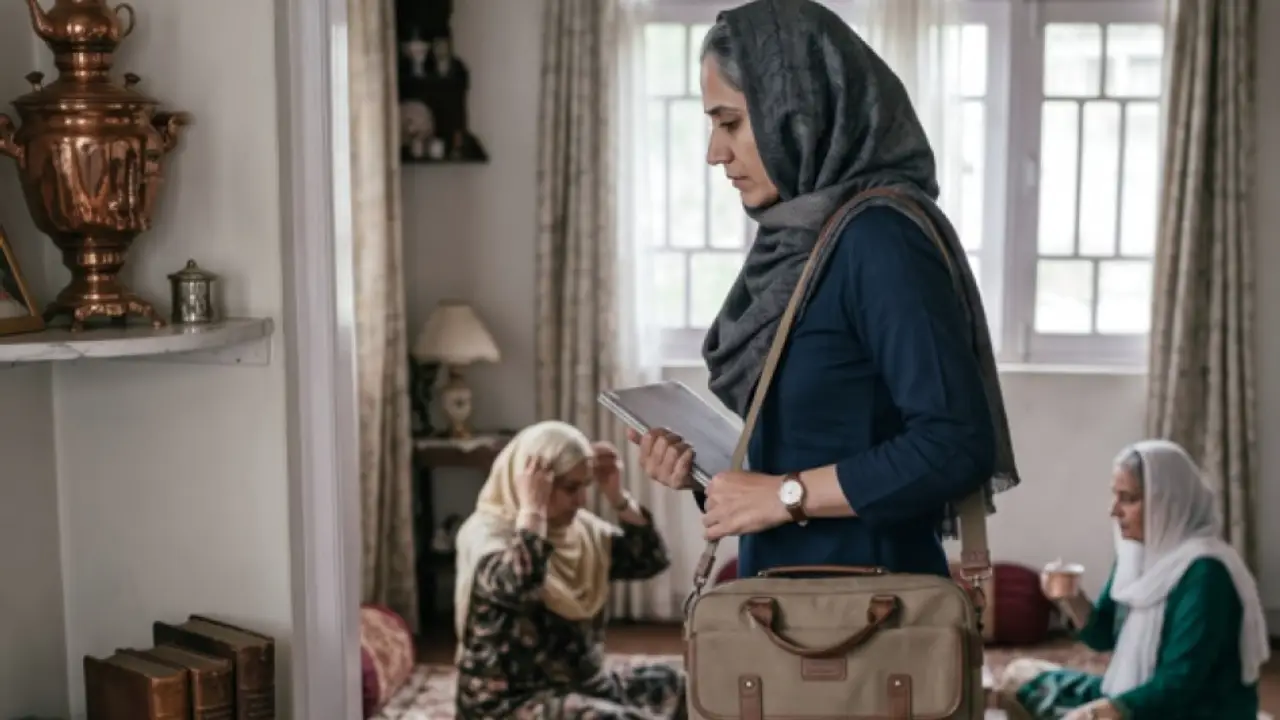
Every morning, when Sana wakes up, she is greeted by the same remark from her grandmother: “bedith niyi ne kehin“, nobody will take you in marriage as you are ageing.
The 35-year-old Srinagar resident, who teaches at a private school, has heard it so many times that it no longer stings the way it once did. “I have told them that I do not want to get married,” she said, firmly. “Initially, they thought I was joking around. Then they realised the seriousness in my tone and accepted the fact. My grandmother still has a problem, but it is okay, she has lived a different life altogether.”
Sana’s road to this decision was not one she had planned. Years ago, she was deeply in love, certain she would marry the man she had spent eight years with. At 28, he ‘betrayed’ her, cheated on her and went on to marry someone else.
“I had given everything to that relationship,” she said. “Love, loyalty, care, almost everything. And he betrayed me.” That day, she made up her mind. “I decided not to fall for any man ever.” More than seven years on, she has held firm. She also finds grounding in faith: “In Islam, marriage is not obligatory, it is Sunnah. If I decide to lead a pious and chaste life, I can do so without marriage.”
What strikes those around Sana is not the decision itself but the quiet certainty with which she holds it. There are no dramatic declarations, no public arguments, just a steady, daily refusal to be moved. Her grandmother’s remark lands every morning and every morning Sana lets it pass. That, perhaps, is where Kashmir’s changing relationship with marriage is most visible, not in protest, but in patience.
The Fear
For 29-year-old Isra, who works in the media industry, the decision is rooted not in heartbreak but in something she has observed her entire life, what marriage does to women.
“I have seen many women lose themselves after marriage because society expects them to adjust endlessly,” she believes. “I want a life where my identity, career, and decisions remain my own. For me, marriage should never happen because of pressure, age, or log kya kahenge.”
Her family, parents, siblings, and even some extended relatives, are aware of where she stands. Her parents, characteristically pragmatic, have even told her: “The money we would have spent on your wedding, we will give you to buy a house of your own.” A few in her extended family still believe she will change her mind. “Which I know is impossible.”
The hardest part, Isra feels, is not the decision itself but what society does with it. “The biggest challenge is that society constantly questions unmarried women and makes them feel incomplete,” she regretted. “The expectation that a woman’s life is incomplete without a husband or children is obviously not correct.” Her response has been to set boundaries, sidestep unnecessary conversations, and remind herself that she owes no one an explanation for how she chooses to live.
“It feels empowering because I can make my own decisions and live life on my own terms,” she said. “But society can be very judgmental towards single women. Still, I believe a woman should have the freedom to choose the life that makes her genuinely happy.”
Isra is part of a generation of Kashmiri women who grew up watching the world open up, education, careers, financial independence, while the social script around them remained largely unchanged. The tension between those two realities is something she navigates every day. She has made her peace with being the subject of whispered conversations at family gatherings. What she refuses to make peace with is the idea that her life is somehow less whole because she has chosen it alone.
This is a new tribe. They want to live on their own. They are a microscopic minority but the fact is that they exist.

A Decade of Struggle
Tanzeela has been fielding marriage questions for over a decade. She no longer lives in Kashmir, but when she visits home, she knows her parents must bear the weight of it. Those pitying glances, the “why is she not married yet?” conversations at gatherings are a routine. She carries that guilt with her, even as she remains resolute.
For her, the resistance to marriage is not about rejecting companionship. It is about not having found it. “Marriage, for me, is about companionship,” she believes. “So far, I have not been able to find someone I truly see as a companion with whom I can spend the rest of my life.”
Tanzeela believes the growing feminine resistance to marriage that she sees around her is not arbitrary or rebellion. “It is a result of long patriarchal conditioning, unequal emotional and domestic labour, and generations of women witnessing sacrifice being glorified while their individuality, ambitions, and well-being were often side-lined.”
She is unsentimental about what staying single means in practice. “Your money is yours. You can travel on your own terms. You can spend on your parents, siblings, or friends without seeking permission. You do not have to spend your day at work and then your mornings and evenings catering to everyone else’s needs,” she explains the financial independence that she is visibly enjoying. But she is also clear-eyed about its challenges: “Staying single is a big decision. It means you are entirely on your own. But getting married does not guarantee a lifetime of happiness or stability either.”
The Consuming Careers
Not every woman in this story made an active choice to stay single. For Khalida, 38, it simply happened, one degree at a time.
After completing her doctorate and joining a college as a teacher, marriage was always something she would get to eventually. “That took years,” she said. “Most of my youth was already gone. By the time I realised I had to get married, I was past 35.” Matches were proposed, but most were less qualified than her, and she found herself unable to justify what felt like a compromise. “The cycle continued. Then I thought, maybe I should just wait and not rush into it.”
Her parents are worried now, not just about her aloneness, but about time. “They tell me you are past your fertile age, how will you conceive later,” she admitted. “But I cannot help it. Maybe God does not want me to get married. How do I help that?”
There is a particular loneliness in Khalida’s situation that is rarely spoken about, the loneliness of having done everything right and still arriving somewhere you did not plan to be. She studied hard, built a career, earned her place in a room that few women in her family had entered before her. And yet the very achievements that set her apart also, quietly, set her aside.
In Kashmir’s marriage market, professional excellence in a woman is still more complicated than it should be, admired in the abstract, but difficult to accommodate in practice.
A senior academic who has observed these changing social patterns in Kashmir points to Khalida’s situation as increasingly common. “Girls study better and work harder than boys,” he said. “Naturally, they get better jobs and salaries. But then they do not get a proper match.”
The academic cited women assistant professors in their mid-to-late thirties who remain unmarried because they have struggled to find partners they consider intellectually or professionally compatible. “They expect doctors, engineers, officers, professors. Otherwise, they feel they have to compromise.” Last count, somebody from the higher education sector told him were staggering 75 women assistant professors still trying to find a partner.
The Sister’s Marriage
For 36-year-old Saliqa, the turning point came not from her own experience but from watching her elder sister’s marriage unravel from close range.
“When my sister got married, she was subjected to a lot of torture, both physical and emotional,” Saliqa recalled. “She would come back home crying and complaining, and my mother would console her. And I used to think, is this how marriage looks? All the glamour, the spending, the glory that lasted three days at our home when she got married, was that all a façade?
As a child, Saliqa’s favourite game was dressing up as a bride. “I cannot believe I am that same person who does not even want to see herself as a bride now,” she said, emphasising on every single word.
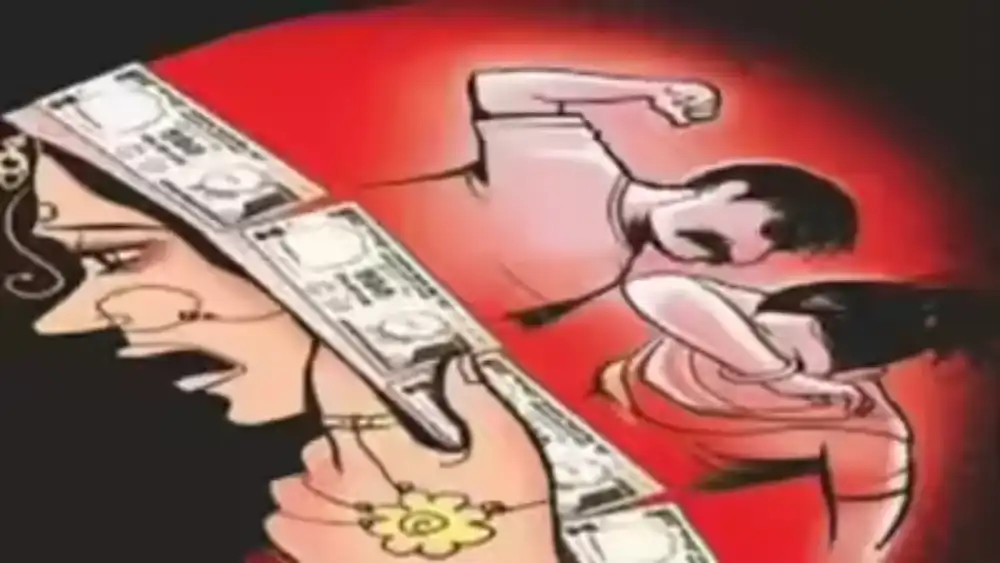
Her mother understands the source of her reluctance but cannot quiet her worry. “We are worried because everyone needs a companion in their lives. We will not be here forever with her. After us, who will take care of her?” She pauses. “I know our older daughter’s marriage did not work and that has changed our younger one’s stance. But we are worried to death. We are getting older.”
It is a grief that sits on both sides of the conversation, the mother who fears her daughter’s future aloneness, and the daughter who fears repeating her sister’s past. Neither is wrong. Both are navigating the wreckage of a marriage that ended badly, each drawing a different lesson from it. This is how opinions on marriage are often formed in Kashmiri households, not through ideology, but through proximity to pain.
Saliqa, for her part, said she is financially stable and at peace. “I feel like the most important part is if I do not indulge in any haram acts or activities, I can live a good life. With my cat, I can navigate through the highs and lows of life.”
Choice Compulsions
Not every woman in Kashmir who remains unmarried has chosen to be. For Saiqa, 36, staying single was never the plan; life simply left her no room for anything else.
She had wanted to marry by 25. But she belonged to a poor household and had become its breadwinner. The years passed. “Now I do not feel like it anymore,” she said. “I feel it is too late and I have gotten used to the loneliness. I feel like I do not want to fill the void anymore.”
There is also the social arithmetic she has quietly calculated. “I know how society views a mature bride. I know how women are constantly age-shamed, even if they are more accomplished than the men. So I feel it is only right to look after my family and not get married at all. It will not harm anyone, not me, not anyone else.”
Saiqa’s story is perhaps the most quietly devastating of all. Not because she is unhappy, but because she never got to make the choice that the others did. Her singlehood was not claimed; it accumulated. And yet she speaks about it with the same steadiness as the women who chose it deliberately. Whatever path led them here, they have all arrived at the same place: a life that is entirely their own, with all the freedom and all the weight that carries.
Experts Speak
The academic observing these shifts in Kashmiri society describes a pattern that plays out quietly, often across families. He recalls a woman working in a private bank, successful, financially stable, who after marriage and motherhood found herself buried under expectations. She was expected to work, raise a child, manage the home, and go on fulfilling everyone else’s needs. Her younger sister watched all of it. “She said, ‘If this is what marriage means, what my sister is tolerating, then I do not want to get married.'”
Another case he references involved a married government employee whose domestic life became suffocating despite her professional success. “Everything about her was monitored, her appearance, food, mood, clothing,” he said. “Her health deteriorated because of the environment inside the house.” And another: a young woman who grew up watching constant conflict between her parents, and who eventually said, categorically, that she was not going to marry.
The academic also noted the role of growing urban independence among women, the ability to live alone, manage one’s schedule, travel freely, and enjoy autonomy that traditional marriage structures may not easily accommodate. “If I can wake up whenever I want, sleep whenever I want, eat whenever I want, go out with my friends whenever I want, then why would I willingly enter a life where all of that changes?” he said, paraphrasing conversations he has had with some of these ‘maturing’ women.
Faith and Culture
Dr Aqsa Nourain, an Islamic Life Coach and scholar, is careful to separate religious teaching from what she sees as cultural distortion.
“Islam never intended marriage to become a burden,” she asserted. Marriage in Islam is meant to be a source of sakoon, peace, companionship, mercy, emotional security, and protection. While it is not considered farz (obligatory), its significance and virtues remain immense. “Islam encouraged marriage, not isolation.”
At the same time, she also believes many women in contemporary Kashmir are distancing themselves from marriage not because they reject family life, but because they fear losing themselves within unhealthy relationships. “Many girls grow up witnessing emotionally neglected mothers, women carrying endless domestic burdens, constant conflict inside homes, a lack of appreciation, and emotional abuse being normalised. Such experiences shape how younger women perceive marriage itself.”
Nourain pointed to a particular contradiction that modern women navigate: “A woman today is expected to earn like a modern woman but serve like a traditional woman.” She is expected to look perfect, tolerate disrespect silently, raise children near single-handedly, manage family relationships, and continue adjusting without complaint.
The real crisis, Aqsa argues, is not between men and women. “We have lost healthy relationships,” she said. What is needed, she believes, is better emotional intelligence before marriage, and an end to the glorification of female sacrifice within it. She is not arguing against marriage. She is arguing for the conditions that would make it worth choosing: mutual respect, shared labour, and the basic understanding that a woman who enters a marriage does not surrender the self she built before it.
What connects all these women, whether they chose singlehood after heartbreak, arrived at it through circumstance, or are still quietly negotiating with family and society, is a growing insistence on being seen as complete without a husband. As Tanzeela puts it: “Whether married or not, financial independence and mental well-being are extremely important. We need to learn to care for ourselves the same way we care for everyone else.”
(Names have been changed to protect identity of the characters profiled in the report.)