Kashmir was overflowing with tourists, and life was completely peaceful. Then a killer gang descended onto an off-track Pahalgam meadow, massacred 26 tourists and pushed the Valley into an unprecedented crisis, reports Masood Hussain
Gloom hangs heavy in the air of Pahalgam. Men with hollow eyes sit silently on shopfronts, cigarettes burning slowly between their fingers. A few security personnel stand still, watchful, while stray dogs wander through deserted streets. Postcard-perfect with its alpine charm, this once bustling valley has been stripped of its usual life and colour.
A day after 26 innocent visitors were massacred in the off-track Baisaran meadow, Pahalgam wears the look of a ghost town. Eateries are shuttered, shops half-closed, and the voices of handcart sellers, once echoing through the main market, are missing. Even the parking lots, which until recently were split over with tourist vans and cheerful chaos, lie abandoned, eerily quiet. They look like abandoned fields.
The little valley nestled in the Himalayan foothills connecting vast landscapes of Ladakh, Chenab Valley and even Poonch, apart from various areas down south, had enjoyed a hectic revival in recent years. Just days ago, traffic moved at a crawl through its central market. Horns honked, cameras clicked, and laughter echoed. Now, the entire road lies empty, save for those who dare to walk through a picnic spot that feels more haunted than heavenly.
In a place once known for its warmth and welcome, silence now speaks louder than anything else. The breathtaking landscape that once welcomed thousands now seems to grieve in stillness.
“What can I say?” a middle-aged shopkeeper selling Kashmir crafts told a group of reporters in a tone, suggesting that any insistence could lead to his breakdown. “What is left to say now. It is devastation, it is shame, it is inhuman.” He is angry and shocked to the core. “Business is important, it will revive, today or tomorrow, but what about the blot? How can we live with it?”
The small town has been famous among the picnickers for ages. It has remained an ideal set for the Bollywood even at the peak of militancy when a number of flicks were shot. Over the last more than five years, several TV serials were shot within and around Pahalgam. The Bollywood masala film Ground Zero, centred on the abrogation of Article 370, was largely shot across Pahalgam, Gulmarg, and Srinagar, using Kashmir’s landscapes to portray the region’s unfolding political shifts.
For honeymooners, Bobby Hut was always in demand and commanding a premium as the suite was made famous by Rishi Kapoor and Dimple Kapadia as they shot the super hit song hum tum ek kamre main band hain.
Now, nobody is spitting on this. “It had to happen,” explains a hotelier, still trying to come out of the shock of the massacre of 26 innocents in the off-track Baisaran meadow on April 22, 2005, afternoon. “How can we sell romance now, when Pahalgam is the source of a haunting image of a bride looking silently at the face of her husband, who was killed for no reason?” Mushtaq Pahalgami, who heads the Pahalgam Hotel and Guest House Owners Association, said that nearly 7,000 tourists were in town when the attack took place.
Haunted Site
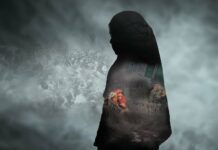
The massacre carried out by a group of gunmen, armed to the teeth, left many young brides as widows, some within a few days of marriage. It was one of the brides whose stoic image was the most haunting from the massacre site.
Vinay Narwal had married Gurugram-based Himanshi on April 16. Their reception was on April 19. Narwal served the Indian Navy’s Southern Command in Kochi for the past 18 months after joining the Navy in 2022. The couple chose Kashmir to be their honeymoon destination. Their neighbours in Karnal (Haryana) told reporters that the couple initially intended to fly to Switzerland but he had leave limitations and delayed visa clearance, so they chose Kashmir. Tragically, it was Pahalgam’s so-called mini-Switzerland where the bullets separated them forever, within days of their marriage.
The story of IAF Corporal Tage Hailyang is not very different. A resident of Arunachal Pradesh, he was posted at the IAF Srinagar base (his brother, serving army, is also posted in Srinagar). This was their first vacation after getting married in December 2024. He was awaiting his transfer out of Kashmir to Assam but destiny had decided otherwise.
Shubham Dwivedi, 31, a Kanpur cement trader, got married on February 12. He had flown to Srinagar soon after his marriage, and this time he flew his wife, Aishanya, on April 16 and 11 other family members. His relatives told reporters that his wife desperately begged for her husband’s life but she was pushed away and told that she is being spared to tell the government (about the happening). Baisaran was supposed to be the last destination of the family trip as they were flying home the next day. It was there that the tragedy struck.
Numbers Deconstructed
In massacres, the initial focus remains on the numbers. As the dust settles on the numbers, the victims emerge from the numericals to tell their stories of life, love, struggles, and belongingness.
TCS techie Bitan Adhikari, in his forties, worked in the US and flew to Patuli in Kolkata, his home, on April 8, to spend time with his wife, Sohini and three-year-old son, Bitan. They flew to Srinagar on April 16 and were supposed to return home on April 24. His family members said he had insisted that his family accompany them to Srinagar, but they refused, asserting the family must go and enjoy. Two days ahead of their scheduled return, his coffin flew home.
Most of the slain men had their families with them. They were separated from their children and wives and were shot dead brutally. Shailesh Himmat Kathaliya, a resident of Surat, had decided to celebrate his birthday in Kashmir. A manager at the State Bank of India in Andheri, he had his son and daughter along with his wife for the Kashmir tour. After his wife broke the news of her husband’s murder, his cousins flew and took care of her and later accompanied the coffin home.
The stories of the victims and the survivors were supposed to move to the newspaper front pages. One story was about two friends from Pune. Both in their late 50s, they remained busy in their lives so much that Kaustubh Ganbote and his friend Santosh Jagdale did not move out of the state ever. Very recently, they decided to travel to Kashmir along with their wives. It proved the first and the last trip for the two childhood friends, who fell victim to the bullets in the Pahalgam valley. They lived together for most of their life and were murdered together in front of their wives.
Dombivli-based senior executive with a cargo firm, Hemant Joshi, 44, travelled to Kashmir with his wife Monica, son Dhruv, and maternal cousins Atul Mone and Sanjay Lele. Joshi had recently enrolled his father in daycare before the trip. In Kashmir, Joshi and both his cousins were killed.
New Trend?
All survivors, by and large, revealed that the assassins did two things after almost controlling the main gate. One, they segregated men from children and women. This was earlier seen in many massacres in Kashmir during the peak of militancy, including Chittisinghpora, which has a striking resemblance to the Baisaran massacre. In the dusky village, located on the same route, gunmen brought Sikhs out of their homes, lined them up and killed, at a time when Bill Clinton had landed in Kashmir. The Baisarn massacre happened when the US Vice President JD Vance was holidaying in Rajasthan. Second, the killers inquired about their victims’ faiths. Some even said they verified the claim. This is something that has happened for the first time.
Indore LIC manager, Sushil Nathaniel’s sister-in-law, Jema Vikas, told reporters that the killers asked to recite Kalima, but he said he was a Christian. Then, they asked his wife to move aside before mowing him down. His daughter Akanksha, sustained an injury in her leg. He had brought his family to Kashmir to celebrate Easter.
This is the same thing that Kathliya’s son Naksh, told the reporters. Apart from regretting that there was a complete absence of the security forces, the young boy said they saw two terrorists, both bearded, one wearing a T-shirt and jeans and having a camera tied to his head. “I heard one of them ordered all the men to separate into Muslims and Hindus, and then shot all the Hindu men,” he said in a video. “The terrorists asked the men to recite Kalima three times….All those who could not recite it were shot. Once the terrorists left, the locals came and said that all those who had survived should go downhill immediately. The army arrived an hour and a half or so after we climbed down from the point.”
Shubam’s relative Ashanya had the same story to reveal. “We had just got off the horses near the hilltop and were walking while Shubham was sitting with his sister Shambhavi. A man came up and asked, ‘Are you Hindu or Muslim?’ None of us understood what he meant — we thought maybe he was joking,” Ashanyawas quoted as saying. “He asked again…we were all still trying to make sense of it and began laughing, thinking it was a joke. I said, Bhaiya, we are not Muslims’. And then, right in front of me, he pulled out a gun and shot Shubham in the head.”
These testimonies were corroborated by the firsthand account of Silchar’s Assam University Professor, Debasish Bhattacharya, a Bengali teacher. He told reporters that people around him crouched on the ground and started reciting the Kalima, and he followed them. Later, one killer walked up to the group and shot a man dead. “Then he looked at me and asked what I was doing. I just recited the Kalima louder and did not reply to his question,” he told a news gatherer. “I don’t know what happened; he just turned around and left.”
Across India
Over the years, Kashmir’s tourism sector has revived hugely. Though Kashmir has historically had tourists coming from specific destinations for particular seasons – Bengal, Maharashtra, and Gujarat. Post-2019, while these states dominated the numbers, people from other states started coming in good numbers. Srinagar’s Lal Chowk was sleeping around midnight. Tourists would come from every place. The crowd at Baisaran was from across India.
The 26 slain and 17 injured belonged to 11 states or the Union Territories. One was from Nepal. Maharashtra lost six residents; Karnataka three; West Bengal two; UP, Kerala, Bihar, Haryana, Chandigarh, Madhya Pradesh, Odisha, Arunachal, Andhra Pradesh and Jammu and Kashmir reported a death each.
Among those killed were serving government officials, young honeymooners, businessmen and families from across India, marking a grim day of national mourning. A day later, when special aircraft flew the coffins to their destinations, it instantly became a national mourning.
Delayed Reportage
The massacre is said to have started soon after 2 pm and continued for around 20 minutes. Survivor testimonies suggested that killers were not in a hurry and took their own time in segregating and questioning their targets. The initial reports reached Srinagar newsrooms at around 4 pm, when officials were quoted as saying that five persons were injured. Just a one-liner that came from informal channels. As the reporters started seeking more information, the horrifying details began coming.
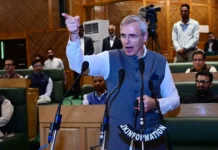
“The death toll is still being ascertained, so I don’t want to get into those details. They will be officially conveyed as the situation becomes clearer,” Jammu and Kashmir Chief Minister Omar Abdullah tweeted almost an hour later. “Needless to say, this attack is much larger than anything we’ve seen directed at civilians in recent years.”
Reporters understood the message in the tweet but were waiting for the security agencies to give details, something that never came. This vindicated the fears that the incident is not as small as it was conveyed. Given its culture that it has evolved with, the media in Jammu and Kashmir avoided offering details as there was a lack of official confirmation.
Minutes short of 6 pm, Home Minister tweeted that he had a meeting with Prime Minister Narendra Modi, who had barely landed at Jeddah, and would be flying to Srinagar soon. An hour later, Ahmad Ali Fayyaz tweeted that 27 tourists had been killed. It was only then that the news started flowing from Srinagar. All newsrooms leapt into disaster mode reporting. Within less than an hour, most of Srinagar’s media had reached the spot.
The Government Response
After being formally received by Lt Governor Manoj Sinha and the Chief Minister at the Srinagar Airport, the Home Minister was briefed, and he then straightaway drove to Raj Bhawan, where he presided over a security review meeting. Apart from LG, the participants included heads of all the security agencies. The Chief Minister had no seat in the meeting as the law and order and security do not fall under his domain.
Early April 23, morning, Shah flew to Baisaran, the blood-drenched meadow and later had a quick interaction with the survivor tourists. He talked to them and assured them of justice. Bharat, he said, will not bend to terror, and the culprits of this dastardly terror attack will not be spared. He later visited the injured in the hospitals and assured them of all the help. In Srinagar, Shah laid floral wreaths on the coffins of the slain tourists before taking off to Delhi.
By then, Prime Minister Modi had flown home, cutting short his Saudi visit. By evening, he was presiding over the meeting of the Cabinet Committee on Security (CCS), which discussed the incident for more than two hours and finally came out with a five-point response towards Pakistan. While the water sharing Indus Water Treaty was put on hold, the CCS decided to downgrade the embassies of each other and expel military attachés. The visa regime was further tightened, and the Attari border post was sealed with immediate effect.
Though Omar Abdullah was missing in the security review of the Home Minister in Srinagar and his party was not invited to the All Party Meeting in Delhi, a day later, his government remained on tenterhooks to ensure the tragedy was managed to the level possible. Jammu and Kashmir government announced a Rs 10 lakh per head compensation, and support to all injured and ensured every injured is attended to. Omar Abdullah and his team visited all the injured and met the tourists within and outside Srinagar. All employees on the rolls of the government were asked to observe a two-minute silence so that the message goes around that Kashmir is gravely unhappy over the massacre.
Kashmir Reacts
As the details of the massacre unfolded, Kashmir was restive by April 22 evening. Shortly before going to bed, the society had decided that the heinous crime was too brutal to be glossed over, and announced a Kashmir-wide day-long strike. Cutting across party, political and professional groupings, everybody was on the same page. Jammu and Ladakh also observed a complete strike for the day.
The real picture started emerging on April 23, when all the political parties came out with formal protests on the roads and reached Lal Chowk. A newly emerged tourist spot, there, scores of tourists joined them. It marked the beginning of an unending series of protests against the Baisaran tragedy as trade bodies, taxi drivers, tourist guides, civil society, and people from different walks of life registered their protest.
“What was interesting in all these marches was that these were outcomes of neither compulsion nor coercion. These were all voluntary and sincere expressions of pain, regret and sympathy,” one ruling party lawmaker said. “People know the costs of such tragedies, and the details were so horrifying that no Kashmiri can afford to sit silent over it.” Politicians in Jammu and Kashmir have remained very angry about tourist arrivals being used as a barometer for peace. After the tragedy struck, they stopped talking and asserted that priority must go to managing the crisis and getting justice for the victims first.
In such situations, as were witnessed earlier, albeit for different reasons like unrest and floods, the primary managers of the crisis are the people who are directly linked to the trade. Within hours, however, the people not linked with the trade open their doors, set up community kitchens and even open doors of their mosques. This happened this time as well but the attention of the media and management remained focused on the main tragedy.
Security Concerns
In their interactions with the media, several survivors talked about missing a security presence. They also talked about the delayed efforts of rescue by official agencies. This issue was flagged by Congress and other political parties in the All-Party Meeting as well.

Abdul Waheed Wani, president of the Pony Wala Association in Pahalgam, found himself in a grim new role —transporting injured tourists on horseback to medical help instead of ferrying them to scenic Baisaran Valley. Reaching the site about 20 minutes after gunshots rang out, Wani was met with a harrowing sight: bodies scattered across the lush meadows and terrified survivors pleading for help. With no motorable road in the mountainous area, he quickly began rescuing the wounded, placing them on horses and leading them to safety, becoming the first to evacuate at least 11 injured. After the security forces reached the spot, he was denied access.
The spot, it needs to be mentioned here, is a jungle meadow that is off track, and an almost six-kilometre distance needs to be footed or mules need to be used. It is a base camp for trekking to high altitude Tulian Lake. The spot has access to a huge area, including Kishtwar, the periphery of Kargil, Zanskar, and various other areas in South Kashmir. The connected forest has had several encounters between the security grid and the outlaws in the last few years.
The spot has been very famous with the tourists and the local picnickers. Over the years, some people have introduced make-shift eateries, tea stalls and some interesting gaming engagements for the tourists. Local stakeholders said the spot is always open till snowfall occurs. “Till about two years ago, there used to be some security presence, but then it was withdrawn,” one hotelier said. “Visitors use mules and a section goes up trekking. In the meadow, there are various ATVS which the people use to get into the surrounding areas.”
Reports appearing in the media suggest that in the All Party Meeting, the government admitted the lapse. As the participants in the meeting talked about intelligence failure and the security lapse, reports said the Home Minister admitted that “we have called the meeting because we could not prevent the attack”. The meeting was told that the route to Baisaran was typically opened to tourists in June, coinciding with the commencement of the Amarnath Yatra. This year, it was claimed “tour operators opened it as early as April 20”, “without the knowledge of the authorities”.
In Srinagar, some social media commentaries suggested that the route was earlier flagged to be made motorable, but it was resisted by the local mule operators who said it would endanger their livelihoods.
Cold War and War
The entire political leadership, cutting across party lines, have asked Prime Minister Modi to take a call and they will be supportive of his actions. He flew to election-bound Bihar to offer an idea about his thought process.
View this post on Instagram
“Today, from the soil of Bihar, I say to the whole world (that) India will identify, track and punish every terrorist and their backers. We will pursue them to the ends of the Earth. India’s spirit will never be broken by terrorism. Terrorism will not go unpunished,” the Prime Minister said. “Every effort will be made to make sure that justice is done. The entire nation is one in this resolve. Everyone who believes in humanity is with us. I thank the people of various countries and their leaders have stood with us.” He added: “I want to say in very clear words that these terrorists and those who conspired towards this attack will get a punishment bigger than they can imagine. The willpower of 140 crore Indians will now break the back of the masters of terror.”
This came as a follow-up to the five decisions that the CCS took earlier. Already, the reactions have started from the other side of the Redcliff divide. Pakistan has closed air airspace for Indian civilian carriers and has threatened an all-out war in case of a military conflict. It has been said that the Shimla Agreement has been put on hold. International media is reporting military movement and build-up near the borders from both sides. There are reports that at a few places on the LoC, tensions are visible.
The situation is hugely fragile, and it is too early to predict what the next step could be. It is already the lowest of the Cold War. Will it lead to a war remains to be seen.