Starting from a wedding, 17 members from three families in Budhal were lost in the last 40 days. Scientists have ruled out bacterial, viral, or microbial causes but found traces of a neurotoxin suggesting poison may be the culprit. An 11-member Special Investigation Team (SIT) is now probing the possibility of foul play, as the Omar government anxiously awaits answers, reports Syed Shadab Ali Gillani
Rajouri’s Budhal is suffocating. In just over a month, 17 souls have been claimed by an invisible hand, their deaths as swift and inexplicable as the poison that seems to be stalking the village. The latest victim, a child too young to understand the weight of death, clings to life by a thread, her fate uncertain, as the people of Budhal wait with bated breath.
The ripple has become a wave, sweeping through the families of Budhal like a curse from the hills themselves. Is it the water? The food? Or something far darker that moves through the shadows, unseen but ever-present? What is this sickness that moves so silently, so deliberately?
A Trail of Death
The chilling series of fatalities began with the death of Fazal Hussain on December 7, 2024. A 40-year-old father, Fazal developed severe abdominal pain, vomiting, and drowsiness before passing away. In the days that followed, three of his children perished, and one more succumbed soon after.
Within weeks, two additional families were struck by the same mysterious affliction. The grim tally now includes the deaths of Fazal, his four children; Rafiq Ahmed’s pregnant wife and three children, and Mohammad Aslam’s wife, five children, maternal uncle, and aunt. The interconnected nature of the families—living close and related by blood—has only intensified fears of targeted foul play.
A Wedding
Investigators have traced the beginnings of this harrowing tale to a wedding held by Fazal Hussain’s family on December 2. It was the marriage of his eldest daughter, attended by 230 guests who shared a festive meal. The bride returned to visit her family on December 4. By December 6, Fazal exhibited symptoms, and his death the following day set off a domino effect of fatalities.
Local MLA Javed Iqbal Chowdhary recalled the first signs of trouble. “I received a call on the night of December 7, that some people had fallen sick and were admitted to GMC Rajouri,” he said. Initially dismissed as food poisoning, the deaths of Fazal and his children soon proved to be far more sinister. “The children were aged between 8 and 16 years. Only Fazal’s wife survived.”
The pattern repeated itself in mid-December when similar symptoms claimed the lives of another family. This escalation prompted authorities to involve premier scientific institutions, including the ICMR, DRDO, CSIR, and PGI Chandigarh.
Sweet Rice and Neurotoxins
The investigation took a critical turn with the discovery of a shared meal at the fateha khawani following Fazal’s death. Food prepared for the occasion, including sweet rice, had been sent to Fazal’s sister’s family—the third family struck by tragedy. Those who consumed the rice fell sick, with five members dying in quick succession.
As multiple laboratories examined the case, reports from research institutes ruled out bacterial or viral involvement. Instead, findings pointed to the presence of neurotoxins—potent poisons that may either stem from contamination or deliberate tampering.
MLA Chowdhary summed up the community’s anguish: “It is now clear there is no medical issue. Either something in the food is causing this devastation, or someone is targeting these families intentionally.”
Budhal Holds Its Breath
In a decisive step to preserve evidence and uphold the integrity of the investigation, the homes of the three affected families in Budhal village stand sealed by the Special Investigation Team (SIT). This measure forms part of the ongoing probe into the unexplained deaths that have shaken the community to its core.
The surviving members—approximately 22 relatives—have been relocated to government-provided accommodation. Under the supervision of the District Officer of ICDS Rajouri, they are receiving food and other essentials, as directed by Deputy Commissioner Rajouri, Abhishek Sharma.
Forensic WebTracking Clues
The SIT, led by SP Operations Wajahat Hussain, is conducting an exhaustive investigation. Samples of food, medicines, and consumables used by the families of Mohammad Fazal, Mohammad Rafiq, and Mohammad Aslam have been collected for lab analysis to identify potential toxins. The team has also traced medicines purchased during the victims’ illnesses and questioned family members extensively. Investigators are considering foul play, possibly tied to land disputes or domestic conflicts.
Deputy Commissioner Rajouri, Abhishek Sharma, confirmed a central investigation team is working with local authorities. Numerous samples have been collected, and strict measures are in place to ensure survivors’ safety. Officials from the Social Welfare and Consumer Affairs Departments are providing essential supplies.
SSP Rajouri, Gaurav Sikarwar, emphasised the SIT’s commitment to a swift and thorough investigation. Specialists from the Food Safety, Agriculture, and Jal Shakti departments, alongside the Forensic Science Laboratory in Jammu, are exploring all angles. “Medical and forensic experts are actively contributing to achieve conclusive results soon,” he stated.
Plea for Justice
In the shadow of tragedy, Mohammad Rafiq stands as a broken man. Having lost his pregnant wife and three children to the inexplicable illness sweeping through Budhal, his grief is matched only by his frustration. “We are not asking for much—just answers,” he said, his voice trembling. “Why has no one come to help us? Why hasn’t anyone investigated what’s killing our children and families? It feels like we have been completely abandoned.”
Rafiq recounted the desperate attempts to save his family. When symptoms first appeared, they sought help from a local doctor. Medicines and injections provided temporary relief, but the fever returned, accompanied by severe weakness and persistent vomiting. “Even after being referred to bigger hospitals, no one could tell us what was wrong,” he said. The anguish reached its peak when his youngest child succumbed to the illness during the journey to Chandigarh.
Whole Family Wiped Out
For Mohammad Aslam, the loss is unimaginable. His wife, five children, and two relatives have died, leaving only his critically ill daughter. “I’ve lost three daughters and two sons in days,” he said, his voice heavy with grief. “My surviving child is all I have left.”
Despite rushing his children to hospitals when symptoms appeared, the illness claimed them one by one. Even his maternal uncle, who came to support the family, succumbed. “I live in constant fear of losing my daughter too,” he cried. While local authorities have offered condolences and minimal aid, Aslam lamented the lack of substantial government action. “I’ve lost everything, but I want to prevent others from suffering,” he urged, calling for a swift investigation to avert further tragedies.
A Village Struggling to Survive
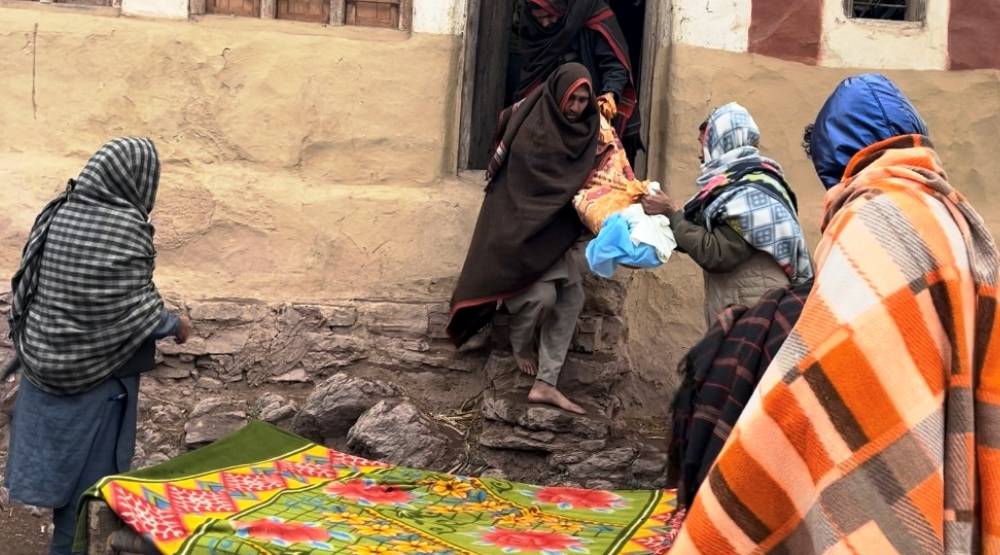
Budhal’s tragedy is worsened by dire conditions. Villagers rely on untreated water and lack basic health facilities. Elders describe a harsh existence, with families surviving on tea, maize roti, and lentils. Clean water and sanitation remain out of reach.
Many suspect contaminated water as a cause of the deaths. “The nearest health facility is far, and we lack roads or transportation,” a village elder said, criticising the government for failing to provide medical camps or safe water access. “We are left to fend for ourselves,” he added with anger and resignation.

Fear and Speculation
As tragedy engulfs Budhal, suspicion ripples through its close-knit community. A relative of Fazal Hussain, speaking anonymously, dismissed the idea of a viral outbreak. “It may be targeted poisoning,” he speculated cautiously. “The police must uncover the truth. If poison is involved, its nature must be investigated to deliver justice to the families.”
His ominous words reflected the unease in the village. “Three families, three clans have been destroyed. Even without known enemies, if this was deliberate, the perpetrators are highly dangerous,” he added.
A villager shared his centenarian grandmother’s perspective, calling the calamity unprecedented. “In over a century, she’s never seen anything like this—entire families erased, leaving empty homes.”
A local man who assisted with funeral rites cast doubt on natural causes. “If it were viral or bacterial, I would’ve fallen ill after handling the deceased,” he remarked, challenging official theories.
Mystery Deepens
After spending too much resources and effort, Health Minister Sakina Itoo confirmed tests have ruled out bacterial or viral infections, quelling fears of a communicable disease. Toxicological analyses, however, revealed toxins in biological specimens, offering a potential lead.
Itoo and her officials have visited the affected areas, chaired meetings, and engaged health and district authorities. The Chief Secretary is coordinating efforts with experts and police to ensure a thorough investigation. Extensive tests at leading labs, including the National Institute of Virology Pune and the National Centre for Disease Control in New Delhi, have confirmed the absence of infectious agents, ruling out an epidemic.
A Coordinated Response
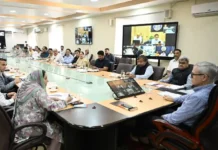
Dr Rajeev Bahl, Secretary of the Department of Health Research and Director General of ICMR, convened a high-level video conference to review the crisis. Preliminary findings from clinical and environmental analyses have corroborated the toxicological results, ruling out the possibility of a communicable disease.
The toxicological findings, though significant, raise more questions than they answer. What is the nature of the toxin? How did it infiltrate the lives of these families? As specialists and officials work tirelessly to uncover the truth, the village of Budhal waits in a state of collective anxiety, haunted by the spectre of a dangerous yet unnamed.
A Unified Plea for Answers
The tragic deaths in Budhal have prompted political leaders to demand a thorough investigation and urge calm. Politicians from across the spectrum visited Budhal to express solidarity with the affected families. PDP lawmaker Waheed Para called for restraint in the face of speculation. “The government must take this matter seriously and determine if this is a medical issue or something else,” he said. “The atmosphere of fear among the villagers is palpable, and we must maintain calm while investigations proceed.”
His party colleague, Guftar Ahmed, suggested that foul play might be involved. “The lack of clear communication from senior officials is troubling. While the Health Minister has ruled out infectious diseases, questions remain—what has caused these deaths?” he asked, reflecting the growing unease in the region.
BJP’s Ravinder Raina led a delegation to the area apparently for condolences and assurances of support. “This devastating loss has deeply shaken the region. The BJP stands firmly with the families during this difficult time,” he said. He said he conveyed these concerns to LG Manoj Sinha, who has personally reached out to the affected families.
“There has been no delay or negligence by the Health and Medical Education Department,” Ittoo stated during a visit to GMC Hospital in Jammu. “This issue should not be politicised. Families are already overwhelmed by grief. The department has acted responsibly from the start.” She said the 11-member “SIT’s findings will be shared with the public once the probe concludes.”
The minister revealed that over 3,500 samples have been tested at national laboratories, ruling out communicable diseases. She urged patience, noting forensic reports, expected in 15–20 days, would be key to understanding the cause. Even the Chief Munster is clueless. A concerned Omar Abdullah assured people that the mystery would be solved and justice ensured.
View this post on Instagram
As the investigation continues, the mystery deepens, and the village of Budhal holds its breath, waiting for the truth. The clock is ticking, and the lives of the surviving villagers hang in the balance. With specialists working tirelessly on multiple fronts, one thing is clear: the quest for answers has only just begun.
Post Script
The death of the sixth and last child of Mohammad Aslam from Budhal village raised the toll to 17, reducing his family to the basic – husband and wife. Yasmeena, aged 13, succumbed at Government Medical College (GMC) Jammu. The unexplained illness has devastated Mohammad Aslam’s family, claiming all six of his children, four daughters and two sons, along with the lives of his maternal uncle and aunt.
The governments in Srinagar and Delhi are desperately working to find answers to one of Jammu and Kashmir’s biggest mysteries. While the 11-member Special Investigation Team (9SIT) of the Jammu and Kashmir Police is investigating the potential arsenic angle, the Home Minister directed the constitution of an inter-ministerial committee that has already landed in the border area.
Authorities said they have identified a possible contamination source: a village spring. Water samples tested positive for pesticides or insecticides. Additional Deputy Commissioner (Kotranka subdivision) Dil Mir ordered the spring sealed and deployed security personnel to prevent its use. “The water source in Budhal has been blocked by the Public Health Engineering Department and sealed by the magistrate. There is concern that locals might still access the water, so strict security is in place to protect public health,” Mir told reporters. People are asking that even if the spring is the source of the crisis, why do casualties take place in three families only?
As the probe continues, the villagers remain anxious, demanding answers and solutions to prevent further loss of life.