In Yaadgah, Berlin-based Kashmir scholar Arshi Javaid gathers a group of women to map their lived experiences of Shehr-e-Kashmir through memory, not merely as reflection, but as a way of tracing coexistence, rupture, aspiration, and endurance across the shifting landscape of Srinagar. Muhammad Nadeem reviews this compelling anthology that re-imagines the city through the lens of those who have inhabited its many textures
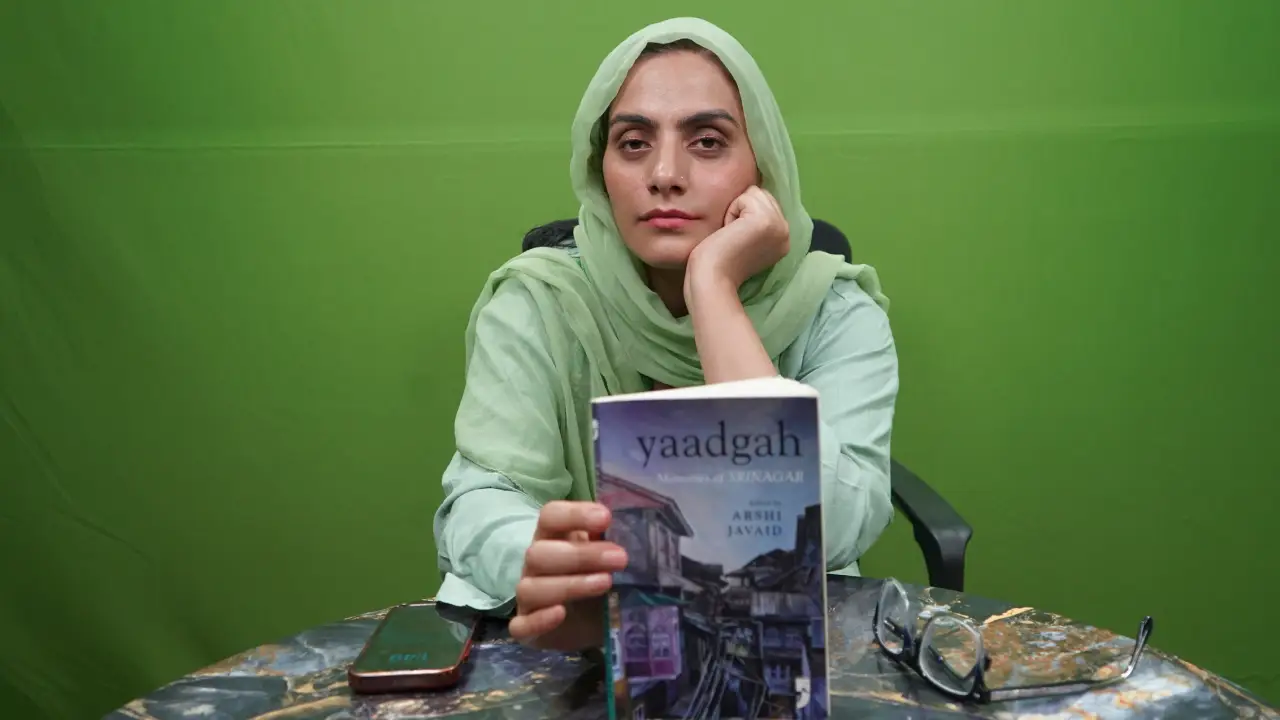
Emerging from a backdrop of restricted civic participation and muted social voices, this anthology, part archive, part elegy, part defiance, traces the intimate lives of Srinagar, the city of Kashmir that Ashoka built.
The essays in the opening section, authored by Javaid herself, draw the outlines of life shared between Kashmiri Muslims and Pandits, focusing on those who did not leave during the 1990s.
The Foreword by Professor Dr Nadja-Christina Schneider places the anthology within broader transregional discourse on social cohesion. Javaid’s strength, as noted in the foreword, lies in her approach to memory and community through everyday practices, food, space, and friendship. What struck German academia, her careful recording of pre-migration social intimacy, which also forms the foundation of the anthology: a refusal to blur difference, even while insisting on solidarity. As Schneider observes, the essays retrieve marginalised and neglected repertoires of living together, offering a counterweight to state-backed versions of displacement.
Javaid’s Introduction reveals her dual commitment: personal witness and scholarly interpretation. Raised in Srinagar, she experienced the social fabric of old neighbourhoods, woven not just from structures and laws but from mutual routines and silent dependencies. Her move to Berlin allowed a shift in perspective. Conflict had also changed the spaces surreptitiously, she notes. The stillness that followed violence was not tranquillity but the residue of absence. Her return in 2023, with plans for a website, digital archive, and spatial mapping, was met with resistance not from infrastructure but from fatigue. Memory, she came to realise, would be the true medium of mapping.
Habba Kadal
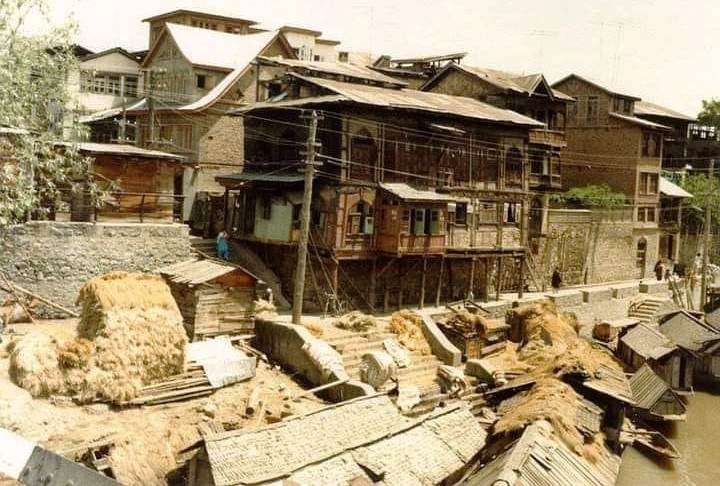
Memory takes form in Habba Kadal: What Was Left Behind in the Mohallae, an essay about presence amid mass absence. Javaid follows the traces of the few Kashmiri Pandit families who stayed put. The search for Suman Pandita’s house becomes a quiet excavation, marked by hesitation and murmured caution. The cop in civvies keeps a watch, a boy says, but unidentified gunmen still have their way. The area carries visible damage, bullet holes, makeshift repairs, and abandoned corners, but also a quiet defiance.
Suman’s mother, Phamb, stayed on as a young widow with three children. “We owned the house,” she says. “What could a young widow do in a wopar (non-native) place?” Her decision is framed as a political statement and as a necessity, as rootedness shaped by care, memory, and duty. Migrated relatives accused her of choosing to live “in Pakistan,” but Phamb’s presence in the mohalla signals something deeper than politics. It marks a commitment to place.
Kehva served by Phamb becomes a gesture of both difference and familiarity. Not the kehva of Muslim households, yet part of the same tradition of hospitality. In this exchange, Javaid captures layers of caste, gender, and economic survival. Those who “never left” often remained by choice, caretaking, and an unspoken refusal to surrender what was theirs.
Love Across a Divided City
The theme of refusal returns in I Have Exiled My Heart; I Loved Across Boundaries. It tells the story of Ayush, a 17-year-old Pandit boy, and Rosheeba, a Muslim girl. They met through Instagram and planned to run away to Delhi. Structured in three parts, the essay traces their arc, from disappearance to communal fallout to the relationship’s dissolution. When discovered in a hotel, the romance is transformed into an act of betrayal. “The Pandit community wanted to punish Ayush for trespassing,” Javaid writes. “He had brought shame and dishonour… the family was cast out.”
The failure is not in their escape plan but in society’s refusal to allow their love a place. Even Rosheeba’s plea, “She cried out loudly that she loved Ayush… and was not kidnapped”, cannot undo the communal judgment that follows. “I have exiled my heart,” Ayush says. “For I loved across boundaries.” His words encapsulate the book’s broader concern. Whether religious or spatial, borders in Kashmir remain tightly guarded, even in the most private spaces.
House of Stories
In Ragini: The Story and the Storyteller, Javaid turns to another Pandit woman who stayed back. Ragini’s house, built of mud and maharaji bricks, mirrors her condition, cracked but intact. Her mother, Priya, spends the day watching television in silence. Ragini herself oscillates between anger and longing. She wants to act in films, wear “Western clothes,” and escape the mohalla. Yet she feels trapped, resentful of the relatives who interpret her family’s choice to stay as opportunism or moral failure.
At the same time, she cherishes her Muslim neighbours. “The asli neighbours have given me so much love,” she says. They treat her with reverence. But even here, she draws lines. She distinguishes between the asli and those who arrived later from the Dal. The former are, in her eyes, dignified even in poverty; the latter, quarrelsome and loud. Having been judged by her own, she now begins to judge in turn.
Ragini’s contradictions are allowed to stand. Her eccentricity, Javaid suggests, is “a silent form of resistance by building a new world in her head.” Her fantasies are not escapes but acts of survival, a way to rewrite herself in a city that never wholly welcomed her. Like other stories in the anthology, Ragini’s offers no tidy resolution.
Memory and Erasure
Across these essays, Javaid accomplishes something rare. She documents what Srinagar once was and what it means to live in its aftermath. Her writing is situated in the streets, in domestic spaces, in silences. She drinks kehva, listens, walks, and pauses. By focusing on those who never left, she presents a counter-history to the dominant narrative of the ‘exodus’. If ‘exodus’ has become the central symbol of Kashmiri Pandit suffering, Yaadgah insists on attending to those who stayed, often at considerable personal cost, and who continue to move through a city that holds them and excludes them in equal measure.
A ‘Mausoleum’
Mehar Qadri’s Absence begins with mourning. Through careful, often elegiac prose, she recounts the life and death of Moghal Masse, among the earliest members of the erstwhile Association of Parents of Disappeared Persons (APDP). Masse’s story is not singular in Kashmir, and therein lies its horror. Her son disappeared in 1991. She died in 2009, having searched for him for over 19 years. Her home, left empty and deteriorating, is revisited by Qadri and the photographer Showkat Nanda. It is a pilgrimage of sorts. The structure speaks in silence, its broken frame bearing witness to what official records omit.

The house becomes Masse’s substitute. “Its corners, like forgotten whispers, hold the weight of countless memories, heavy with the burden of longing,” Qadri writes. The metaphor is not ornamental. In Yaadgah, architecture frequently becomes a repository, and here that motif reaches a concentrated form. Masse’s house stands not as a metaphor but as a material testimony. It is described as a sentinel, a container of echoes, but remains anchored in the political fact of disappearance. The emotional burden is sharpened through images of dust, cracked plaster, and worn thresholds. The reader does not observe grief; the reader encounters it. The story of Moghal Masse was also brought to light by photographer Altaf Qadri. In a couple of paragraphs resemblance between some minute details in this essay and Altaf’s photo essay is uncanny.
Granddaughter’s Inheritance
Where Qadri’s essay finds weight in loss, Ayushi Koul’s Home Through My Grandmother’s Memory draws its strength from transmission. It is a portrait of Srinagar shaped by the recollections of Kashmiri Pandit women before the insurgency. Through personal memory and cultural theory, especially Jan Assmann’s work on communicative memory, Koul constructs a generational bridge. At its centre is Jigri, her grandmother’s mother, who walked to Ganpatyar and Hari Parbat for morning prayers, took part in evening aartis at the ashram of Gopinath Bab, and joined other women on yatras.
These journeys were neither grand nor ornamental. They were acts of agency. While faith shaped them, their significance lay elsewhere. “Faith did play a significant role in it,” Koul writes, “but these ordinary ritual practices opened up space for Jigri and many other home-bound women to leave domestic life behind for a few hours or even days.” The city’s neighbourhoods, Nai Sarak, Habba Kadal, Rainawari, emerge not as coordinates but as lived spaces, filled with sound, scent, and routine. Koul is not idealising the past. She is mapping a form of presence that was removed not only through migration but also through modernisation.
The essay’s strength lies in its focus. Koul writes with a feminist sensibility, attending to how women inhabited both religious and social space. This is a city remembered not through events but through movement. The grandmother’s recollection of skipping college to watch films is not a digression but a gesture of selfhood. These acts, narrated with care, form a counterpoint to dominant accounts of Kashmir as male and militarised. The pride with which the older woman remembers these freedoms reveals a continuity of resistance, passed from one generation to the next, even in exile.
Detention Wall
In The Pale Pink Walls (which was previously published as Witness, Womb and Wall of Woes in the Mountain Ink Magazine), Meher Qadri returns with a starkly intimate portrait of childhood lived in the shadow of surveillance. The narrative follows Saba, a girl whose school shared a boundary with a detention centre. As a child, she saw women standing quietly outside the wall, bearing blankets, tiffins, and books, waiting for a glimpse of a son, brother, or husband held within. The red wall, now faded to pink, marked a line between routine and rupture. Qadri notes that people have grown accustomed to negotiating a militarised landscape without ever being able to question how it emerged after the insurgency of the 1990s.
The power of the essay lies in its restraint. The narrative never overstates. It allows detail to carry heft. When Saba meets Mogli, an elderly woman who has travelled for over twenty years to visit her son at Kot Bhalwal jail, the essay shifts. Surveillance remains, but survival becomes the centre. The gestures Mogli performs, offering water for ablution, sharing rice from a steel tiffin, are not incidental. They sustain the spiritual and emotional bond between mother and son. Mogli tells Saba that she feels the absence in her body. “I have carried him in my womb and raised him,” she says. “I feel an ache in my body for him.” Her words are not abstract. They are anchored in physical memory and maternal labour. She adds simply, “God is gracious. He will ease our struggle.”
Through this encounter, Qadri presents the gendered contours of loss. In Kashmir, it is often men who disappear. It is women who are left to wait, to search, and to remember. They carry out rituals of care and longing, as symbolic acts, as forms of endurance. In Mogli, the female body becomes a site of both grief and resilience.
Return as Ritual
Ayushi Koul’s Celebration of the Present, Mourning the Past, Yearning for the Future begins with a journey. She documents her family’s pilgrimage to the Kheer Bawani temple in Tulmul, where the memory of migration meets the effort to reclaim continuity. Since the 1990s, the temple has been guarded by armed forces. Its protective perimeter now signals the loss it is meant to contain. Koul recounts that there had once been rumours of a planned militant attack, yet no temple in Kashmir has ever been burned. The contradiction unsettles. The presence of soldiers does not reassure. It displaces.
Yet the rituals continue. Her grandmother, 87 and living with osteoporosis, still bathes in the cold stream before entering the temple. For her, the ritual cannot be avoided. “It is a ritual,” she says. “It has to be done.” The act transforms memory from recollection into embodied discipline. In that moment, personal history converges with collective inheritance.
Her conversation with Ashok Toshkhani, a Kashmiri Pandit who never left the Valley, complicates standard accounts of the ‘exodus’. His is a narrative rarely included in dominant discourse. Koul observes that non-migrant Pandits now find themselves erased in official and popular narratives, even though they have endured years of curfews, threats, and internet shutdowns.
Gendered City
Khateeba Syed’s Bayt-ul-Huzn: The House of Sorrows opens with an account that blends sensory observation and memory. The essay follows Shahida as she walks through the old lanes of Fateh Kadal, facing the decay of her city, the weight of patriarchy, and the erosion of domestic and cultural memory. A half-burned window, barely holding on to the frame of a Zoon Dub, appears to her not merely as charred wood but as a soul in need of release, a fragment of a forgotten home and a neglected past.
Syed interlaces recollections of childhood, lavasa-filled mornings, with a sharper awareness of historical erasure. She writes that the city’s story was being rewritten, its histories either denied or grotesquely distorted. This act of remembering is both intimate and political. Through her grandmother and others like her, women rooted in folk tradition who exercised a quiet agency yet remained excluded from formal records, she gestures toward a silenced lineage. A tul kul, now leafless, still grips the wall of her family home, standing as both witness and residue of what once was.
The essay’s strength lies in its portrayal of gendered exclusion, particularly within sacred spaces. At a Sufi shrine, Shahida observes a railing thick with knotted fabric, a sign of collective yearning. A sign prohibits women’s entry, a rule guarded by a man who calls their presence inauspicious. Despite this, the women remain outside, creating a space that is neither private nor public. They whisper zikr, exchange vegetables, and rest. Shahida sees in this improvised gathering not passive exclusion but subtle resistance, a reclaiming of spiritual and social presence in a city that often overlooks them.
Shrines
Muntaha Amin’s Gender, Leisure and the Public Sacred Spaces of Srinagar City provides a shift from personal memory to ethnographic observation. At Hazratbal shrine, she records a scene filled with colour and life: vendors selling papier-mâché items, tea stalls, young girls by the lake, a newlywed couple seeking blessings. In these moments, the shrine appears not just as a site of devotion but also as a refuge where the boundaries of gendered conduct briefly soften.
Amin draws a sharp contrast with the limited public spaces available to women elsewhere. While men cycle, loiter, or play cricket without scrutiny, women’s access to leisure remains conditional. Shrines, however, offer a fragile reprieve. Within these sanctuaries, women navigate a liminal space, between sacred and secular, between permitted and policed. Here, they can sit together, pray with infants, or exchange grievances. Asiya, holding her child in prayer, and women confiding in each other at the Khanqah, illustrate how these gatherings offer not only companionship but also release.
The essay’s final observations are pointed. Amin argues that these shrines function not only as religious spaces but also as therapeutic ones. They allow women to step briefly outside domestic expectations and enter a realm of mutual recognition. They become places of solace that extend beyond ritual, offering an informal structure of care rarely acknowledged in formal discourse.
Spiritual and the Visceral
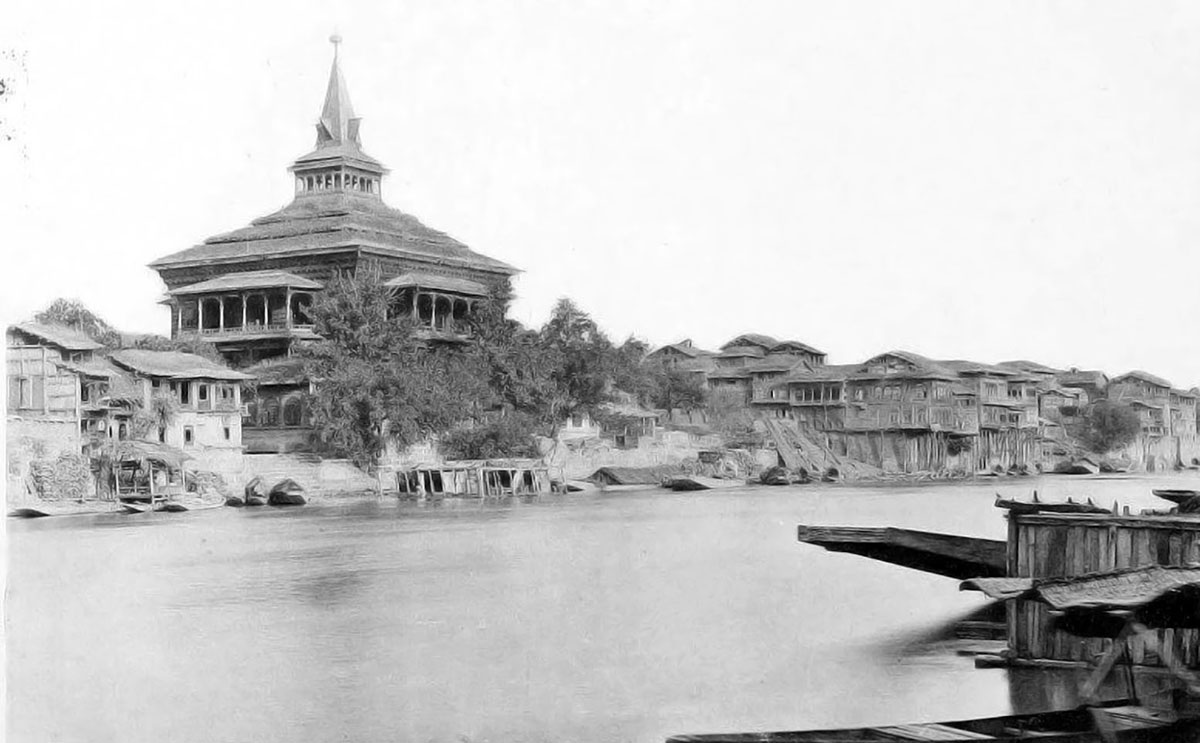
Sadaf Masoodi’s Alam Sahib Shrine: A Symbol of the Spiritual and a Conversation with Jiji explores the power of belief through a dialogue between the writer and her aunt. Jiji recounts miracles with a certainty rooted in lived experience. The Alam Sahib shrine in downtown Srinagar is not an abstract symbol to her but a place that holds memory, safety, and conviction. She recalls tales of relics from Karbala and moments during militancy when even armed men stepped back from the sanctum, unable to touch a sacred box. One soldier said, “Something is holding my hand inside.” Whether the listener shares her faith or not, Jiji does not attempt persuasion. Her belief stands firm without the need for approval.
Masoodi handles this intergenerational exchange with care. She acknowledges the difference in their relationships to the shrine. For Jiji, it was shelter during unrest, healing during illness, and a site of collective memory. For the younger Masoodi, the association is more political. Yet, both women find the shrine central to their understanding of their environment. The narrative resists the temptation to dismiss or romanticise. It insists that belief itself is a form of knowledge and survival, shaped by conflict and carried in the body.
The essay challenges the reader to consider the role of faith not as a relic of the past but as an ongoing method of meaning-making. In a world fractured by violence, the shrine stands as both continuity and resistance, not just in stone but in memory.
Unseen Women of the City
Nairu Naqsh’s What Does It Mean to Be an Ordinary Working-Class Woman from the City? departs from spiritual spaces and instead turns inward, into the home. Written as a diaristic meditation, it details the rhythms of life for Kashmiri women whose labour remains unnoticed. The structure mirrors the monotony it describes: waking at 4 am to prepare food due to power cuts, feeding everyone else before eating, and watching carefully stored clothing deteriorate without ever being worn.
Naqsh refuses sentimentality. The domestic sphere is not portrayed as a space of comfort or sanctity but as one of repetition and resignation. Her commentary on food distribution within households is stark. Soft rice goes to men, elders, and guests. Women eat leftovers. Self-care, she writes, is confined to the rare purchase of a home bleach kit during the marriage season. Even pleasure is rationed.
Inheritance, too, is marked by anxiety. Jewellery passed through generations, called jadaad, is hidden, fought over, and always in question. Naqsh wonders if women ever truly owned what they believed was theirs. The essay does not offer answers. Instead, it lets these reflections remain unresolved, mirroring the quiet uncertainty of those who rarely find their lives reflected in public accounts. Through its unembellished prose, the piece gives weight to the labour and silence that sustain the city, yet remain unseen by it.
The Shergarhi Complex
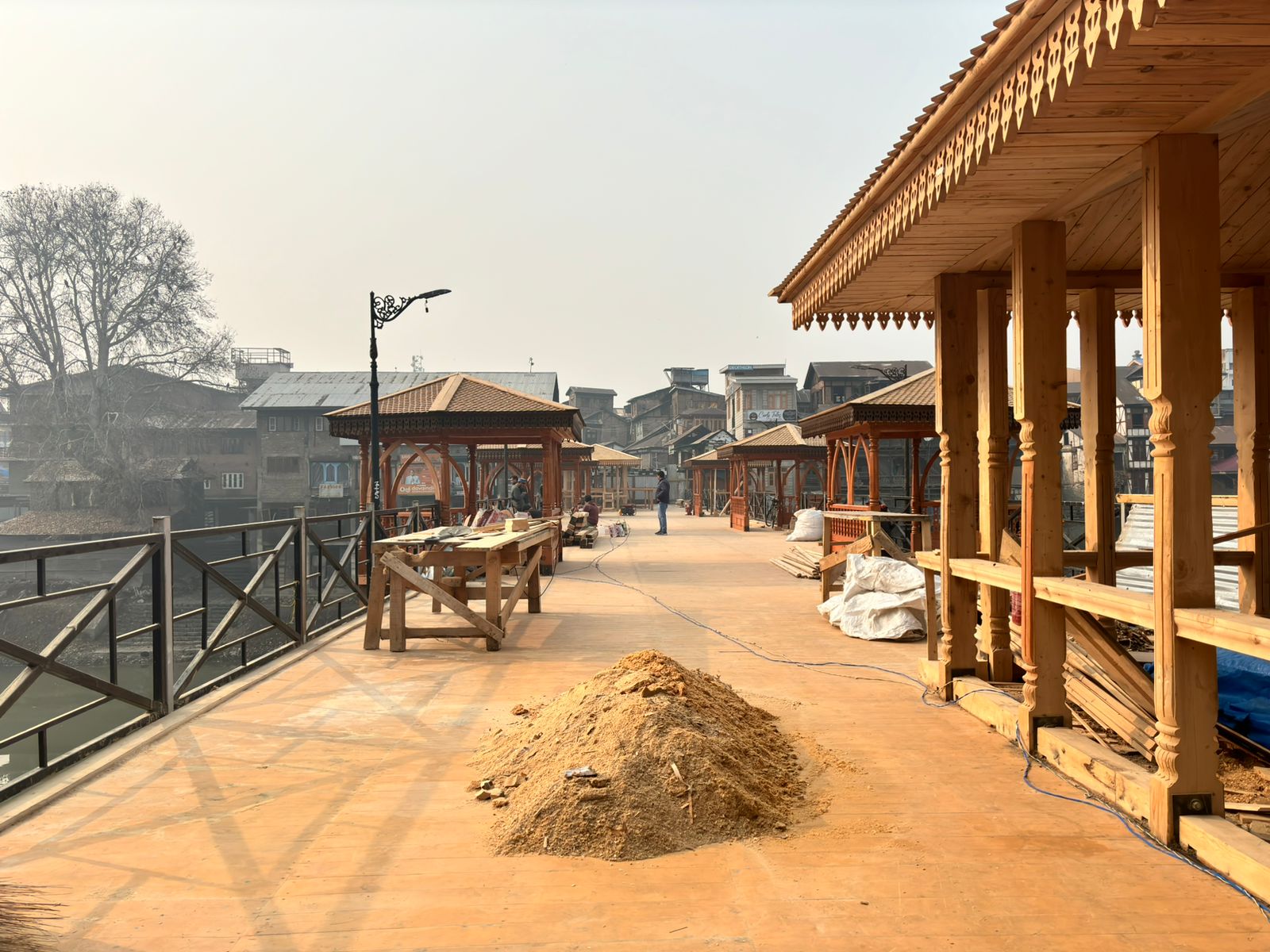
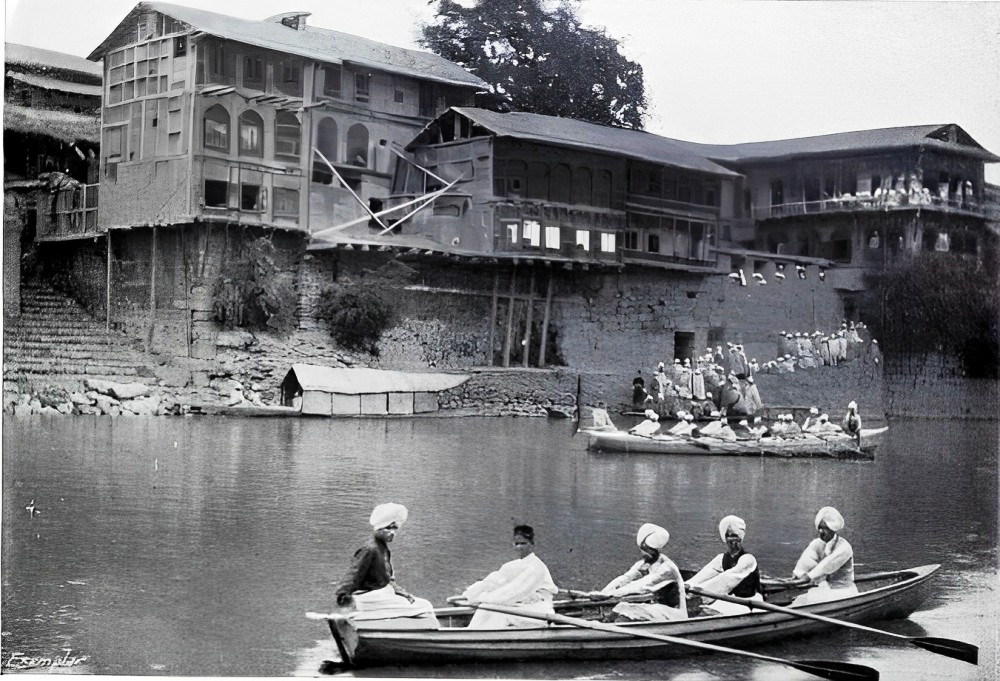
Fatima Masnoon’s Shelters of Solace begins with a study of the Shergarhi Complex, a historic structure situated at Jehangir Chowk. Built by the Afghans and later expanded by subsequent regimes, the site serves as a prism through which the entanglement of governance, architecture, and urban planning over centuries can be observed.
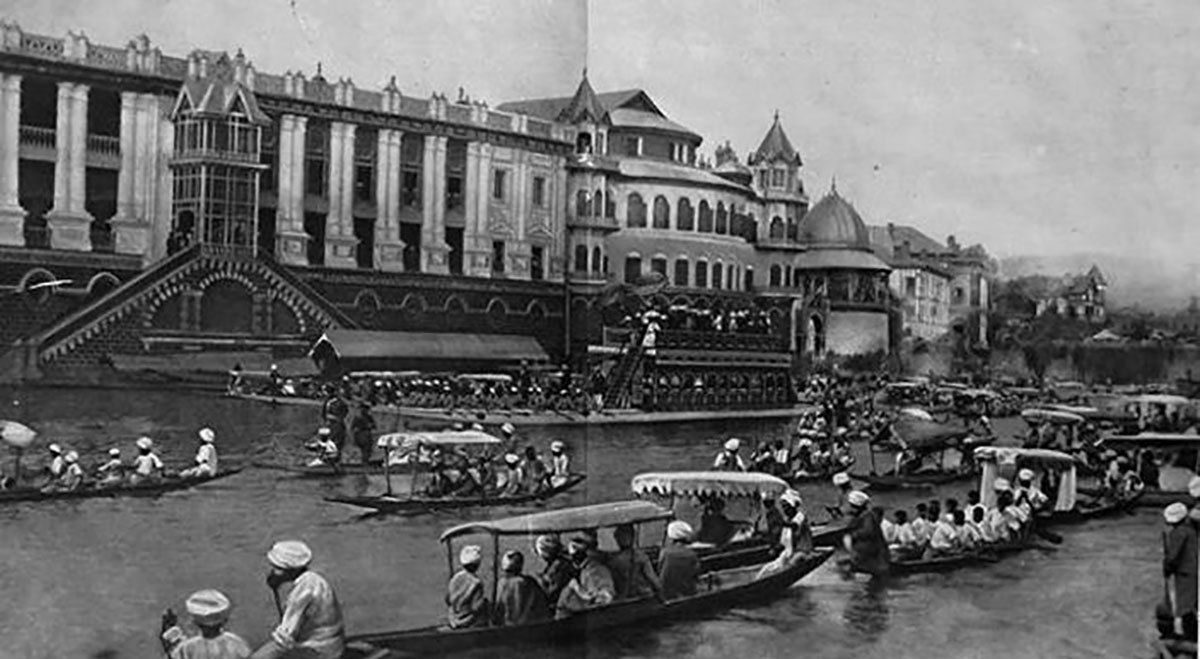
Masnoon follows the transformation of the complex from its Afghan inception, when power shifted from Shehr-e-Khaas to the outskirts, through the Dogra additions that introduced a palatial grandeur, to its post-independence function as an administrative centre. Once positioned beside the Jehlum for access to river transport, the structure is now detached from that artery. “The loss of river transportation has rendered the ghat completely useless and in shambles; it is being used as a dumping site for the waste from the complex,” she writes. Her comment reveals a decline not only of physical infrastructure but of civic consciousness.
Her prose links physical deterioration with shifts in the social contract. The palace, originally intended to project authority, now hosts military checkpoints and a small garrison. Its original intention is lost. The Chinar Bagh, once a communal green space, is no longer publicly visible, now accessible only to those visiting the family court. The contrast between the palace’s imperial past and its current alienation is sharp.
Masnoon avoids romanticising the past. Instead, she presents a clear account of how structures are shaped, forgotten, and sometimes reclaimed. Her closing line: “After years of being a site of authority, the complex is at last emerging as a shelter of solace,” signals a quiet transformation. As ordinary citizens begin to reclaim the site, the essay becomes a meditation on resistance through presence.
Urban Memory
In Loitering Through the Multicultural Neighbourhoods of Lal Chowk, Sabiqa Wani documents a walk through Srinagar’s core, moving across both emotional and geographical ground. Once synonymous with conflict and commerce, Lal Chowk is reimagined through the footsteps of women reclaiming public space.
Wani, raised some 20 kilometres from the centre, reflects that she had never been certain whether one could truly loiter in such a densely monitored place. The walk, organised by groups such as Her Pixel Story and Yaadgah, altered this view. She describes the participants, photographers, historians, and architects as people seeking to “understand the city as few of its inhabitants would do, memorising the city with their feet.” Here, memory is not confined to recollection. It is enacted through movement.
The route winds past remnants of Sikh, Dogra, and British constructions, prompting Wani to interrogate the foundations of access, class, and gender. She asks, “Are cities planned to keep middle-class virtues in view?” She suggests that while a fisherwoman may sell fish in the street, a student from a conservative family cannot wander without consequence. Kashmiri women’s movements, she notes, are shaped by constraint. “Their body language shows classic postures of defensiveness,” she writes. Their right to be present is conditional.
Wani’s strength lies in combining reflection with precision. In Wani’s telling, the city becomes a contested ground where gender, history, and space converge.
Neighbourhood
Arshi Javaid’s An Ode to Court Road stands at the emotional core of the collection. It merges memoir with social history and urban critique, offering a layered portrait of Srinagar’s Court Road. Through discarded papers and marginal notes, “tissue papers, back covers of books, and receipts”, Javaid rebuilds a childhood steeped in detail. “Court Road beats inside me like a second heart,” she writes. The statement is effective but never indulgent.
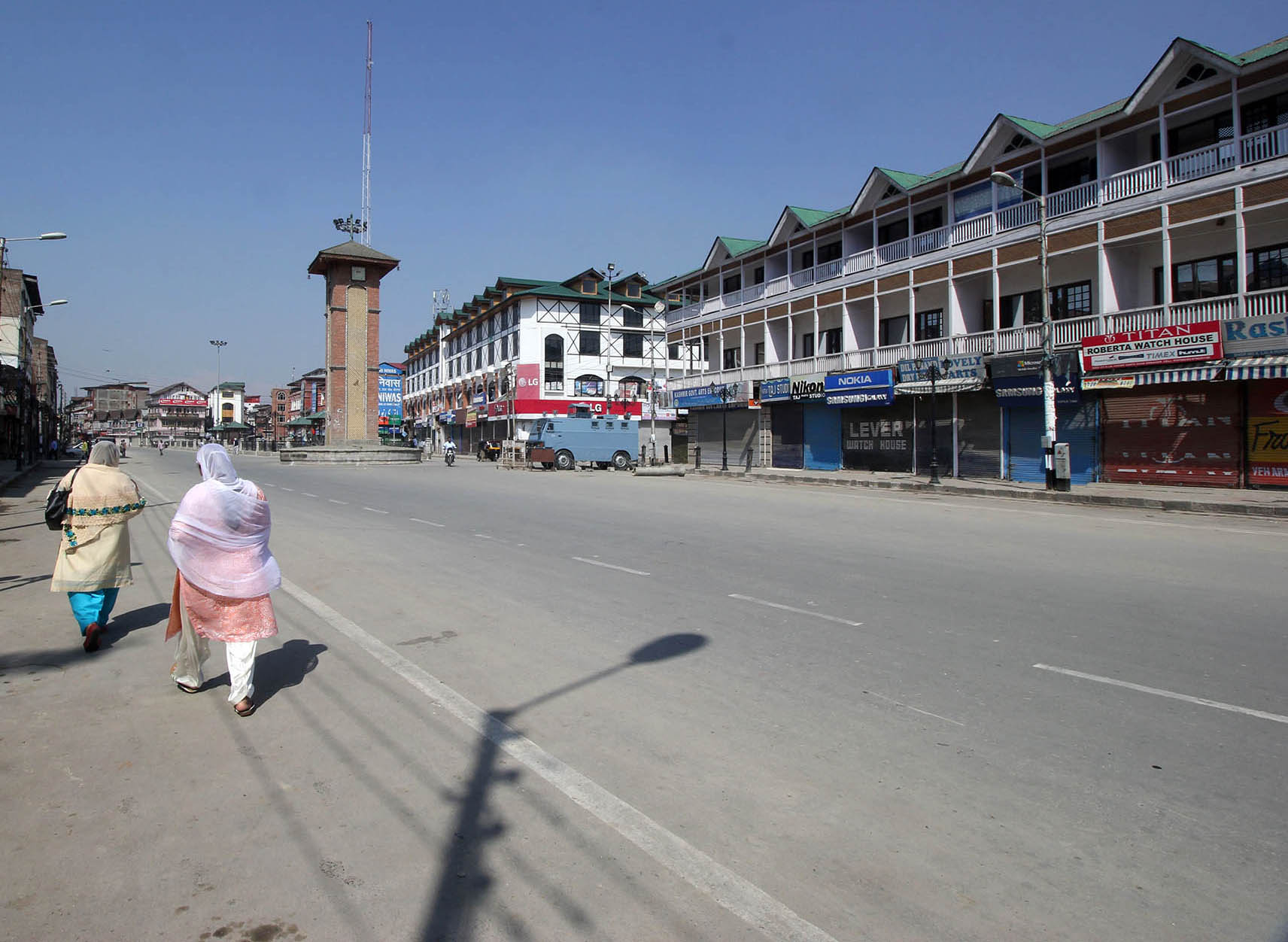
Born in the late 1980s, Javaid recounts how her neighbourhood was marked by militancy. She recalls how the CID office was bombed, how militants escaped through the family courtyard, and how police dogs combed the area. Though too young to remember the events firsthand, she writes, these episodes were embedded in her early consciousness.
Court Road, she explains, was a space of coexistence rather than harmony. Muslims, Hindus, Sikhs, and Buddhists lived beside each other. Assamese Muslims displaced by the Nellie massacre also found refuge there. Javaid acknowledges the frictions, caste divisions, class disparities, and religious differences, but notes that “co-living in subtle ways” was part of daily life.
Her portraits of residents are unflinching. There is the Sikh woman who lived alone, surviving on plain rice, salt, and tea, and whose rent was never raised despite her means. There is Rama, the daughter of a suicide victim, soothed only by the Maulvi Sahib. Master, a tailor from Odisha who converted to Islam, was buried locally. Tara, a Hindu woman from Kishtawar, faded into obscurity after her lover left her. These figures are not illustrations. They are the city’s living record.
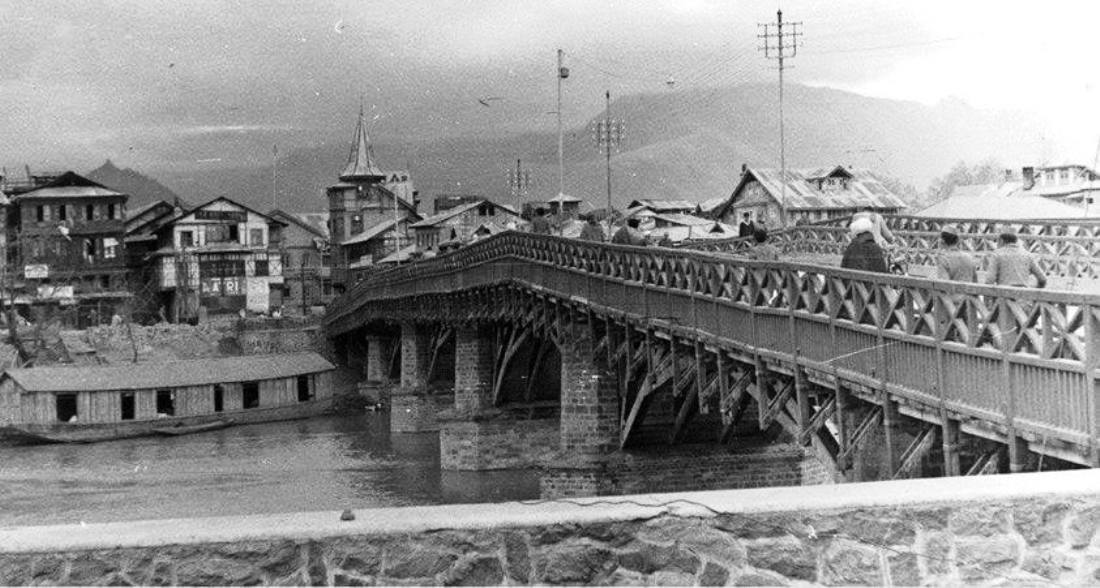
Javaid’s observations extend to structural transformation. She writes about the Jehlum beautification plan, which displaced riverside dwellers, and how floods and the abrogation of Article 370 reshaped Lal Chowk. “Economically emaciated, socially distressed and politically plagued, the imposed urban renewal looks like a dreamwork of authoritarian urbanism,” she remarks. The phrasing is sparse, exact, and piercing.
Her closing image is haunting. Only “10 to 15 families continue living there,” she writes. The rest have been replaced by vendors, political agents, and developers. Yet even in this altered landscape, she sees remnants of what once was. A stone, a façade, a shop sign. The memory endures in what is left behind.
A Polyphonic Chorus
What lends coherence to these sections is not only the shared concern with memory but also the editorial judgment of Arshi Javaid, whose curatorial choices shape Yaadgah into something more than a conventional anthology.
Each contributor approaches Srinagar not as a city suspended in the familiar frames of conflict, but as one that lives and shifts with its people. The visual obstructions of GI sheets along Shergarhi, the uneasy smile of a woman making a phone call in a cramped alley, or the dull gleam of a gold ring sold to pay rent, all reflect a reality drawn with precision. These are not passing observations, but fragments of lived experience.
The Memory of the City
Yaadgah stands as a deliberate act of recalling. It avoids sentimentality and grandeur. It locates dignity in neglected lanes, defiance in women’s movements, meaning in the city’s surfaces, and perseverance in everyday life. It puts forward the idea that even within the confines of a militarised, fragmented, and tightly controlled urban environment, the city finds ways to remember and endure.
The book is relevant to readers familiar with Srinagar and also to those seeking to understand how cities are inhabited and transformed.
At a moment when even memory is under surveillance, Yaadgah offers a clear response. It asserts that the residents of Srinagar were present, that they made their lives in the city, and that this is what it was like to be there.
Yaadgah contains a subdued ache. It mourns Srinagar, remembers it, and returns to it with a precision that resists abstraction.
These essays are not expressions of longing for the sake of nostalgia. These are invocations of memory as witness, and as an archive of that which politics and media have tried to erase.