arrests, including Malik’s. Rashid allegedly sent funds through Western Union and this was allegedly revealed by his emails.
The court however refused to admit memos and statements linking Hussain and Shariq to those killed. There was no evidence that Rashid sent the money to the slain militants and the IMA passes were for a parade already held. It was also revealed that Rashid’s emails were dated after he had revealed his password to police. The court naturally suspected manipulation.
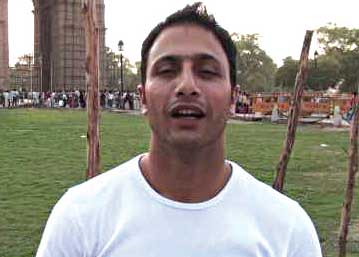
On Sept 21, 2005, Khurshid Ahmad Bhatt was arrested from Pampore for being a Jaish operative. A year later, police found Khurshid was a juvenile and shifted him to juvenile justice board. Three years later, he was declared a juvenile. In an eerie similarity of trumpeting up charges to frame innocents, the police had claimed they reached Pampore police station, went to Khadawala chowk where J&K police checked passing vehicles, and arrested Khurshid, all between 4.30 pm and 5 pm. The court wondered how the police could do so much in just 30 minutes and suspected frame-up. There were no witnesses to the arrest, or any evidence linking Wani to Aslam Wani, an alleged Jaish commander on whose behest Wani was arrested.
In another frame up, a Kashmir student, Gulzar Ahmad Ganai and a government employee, Amin Hajam, were arrested in Delhi on December 10, 2006 with ‘explosives and Rs 6 lakh.’ The two were declared aides of LeT operative Abu Tahir, and alleged to have been sent to Delhi to deliver arms, ammunition and hawala money.
The case got deflated in the court when a witness testified the two had been arrested on November 27 that year. The police had claimed that the two travelled in a bus but its conductor deposed that the supposed trip was not made that day. “Errors were committed while attempting to cook up a story,” the court had ruled.
In another sensational case, a Kashmir model, Tariq Dar, who had moved to Dhaka in 2003 where his father ran a business, was picked up by Bangladesh’s Rapid Action Battalion on charges of being an RAW agent in Sept 2006. He was released under pressure from civil rights groups sent to New Delhi.
When he landed at IGI Airport on October 25, 2006, the Special Cell arrested him. The police had claimed that Dar had been named by two alleged terrorists, abu Anas and Mohammad Issa and accused him of helping an LeT district commander in Dhaka. While the police had said the evidence was difficult to gather from a foreign country, letters from the Indian government to Dhaka never mentioned Dar was wanted for terror in India.
The dangerous pattern of cooking up stories to frame innocent Muslims and inventing evidence repeats itself with the case of Imran Ahmed, an aeronautical engineering student, arrested from Dwarka shopping complex on November 16, 2006. While the police said he was the brother of an LeT operative and was meeting an aide, Ghulam Rasool, also arrested, there was no evidence of LeT links, no public witnesses to arrest and glaring contradictions between charge-sheet and the then Special Cell ACP, Sanjeev Yadav’s statement.
In another case of a Kashmiri, Mukhtar Ahmad Khan, who was arrested from Azadpur on June 12, 2007, the Cell had claimed that he was an LeT operative staying in a Delhi hotel who had disappeared and went to Kashmir to collect explosives, which were recovered, besides a Pakistani visa. The police had also claimed his phone had numbers of top LeT commanders. The prosecution failed to prove that the phone belonged to Khan or the numbers were being used by LeT commanders. The court also questioned how Khan could have disappeared when he was under surveillance.
A Dangerously Pliant Media
The JTSA has castigated the media for acting as ‘faithful stenographers’ of the police by not only presuming innocents to be guilty but also failing in following the cases where innocence of victims was established. The report says the Special Cell uses the press to conduct a media trial to portray the victims as ‘dangerous terrorists’ while an ‘obedient’ press, without any regard for objectivity or balancing the story, reproduces the police version of the story while omitting the statements of the family members or friends of the framed persons.
“The tone of the few reports suggests that the innocents were guilty even after they were acquitted by the court of law” and that it was the flaw of investigating agencies in not plugging the loopholes in its theories that led to the acquittals. “As in most such cases, the media uncritically reproduced the police version of the arrests, indiscriminately calling innocents ‘terrorists’ and treating him as guilty before and after the trial,” the report states.
In reporting the cases where Muslims were picked up by the Special Cell, the press ‘wholeheartedly embraced the police version and neglected even the most minimum of journalistic norms,’–