At the peak of mutiny in 1857, when Maharaja Gulab Singh’s death turned fish into forbidden fruit, Srinagar paid a savage price for the superstition. People even now are scared of making fish part of their staple food, writes Mir Rameez Raja
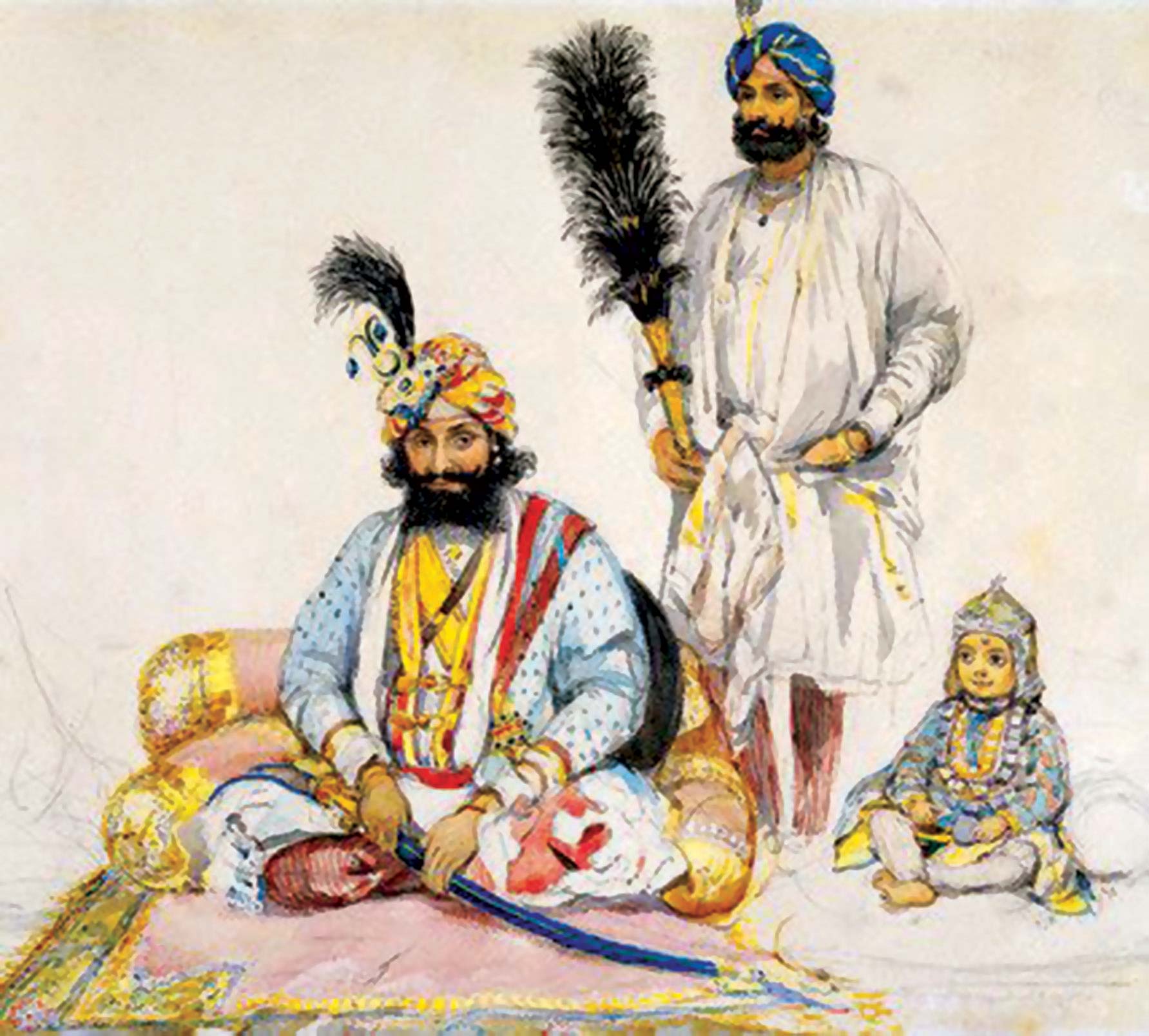
On the last day of June 1857, as the Great Sepoy Mutiny convulsed the Indian subcontinent, Maharaja Gulab Singh breathed his last in Srinagar, carried off by dropsy. The timing was almost cosmically ironic.
This Jammu-born warrior, who had risen through the ranks of the Sikh Empire and then purchased Kashmir from the British for 75 lakh Nanakshahi rupees under the Treaty of Amritsar in 1846, had given everything he could to help the very British now consolidating their grip on a burning India. Moments after lighting the pyre of his father, Maharaja Ranbir Singh, his son had marched Dogra troops all the way to Delhi to assist the colonial power in defeating the Great Mutiny warriors. And yet, in his dying, Gulab Singh, credited for founding now a dismantled Jammu and Kashmir state, would unleash a torment on ordinary Kashmiris that no sepoy’s rifle could match.
The flames at Rambagh Gardens in Srinagar consumed his body in the presence of British officers who had personally intervened to prevent his wives and concubines from immolating themselves on his pyre. Death, it seemed, required intervention from both the foreign rulers outside and, more devastatingly, from the superstitions within.
On Return
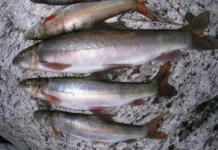
When Ranbir Singh returned from Delhi, the court astrologers delivered their verdict with the grave authority of men who traffic in celestial certainty: the Maharaja’s soul had transmigrated. They announced that it had entered the body of a fish swimming in the Jhelum.
The consequences of this declaration fell not on the astrologers, nor on the royal family, but on Srinagar fishermen, people who, in the cold logic of geography and hardship, had always depended on the rivers for survival.
Communities built around water bodies have known for centuries what nutritional science would later confirm: cold-water fish is a source of balanced protein, a natural buffer against the famines that periodically stalked mountain valleys. In times of agricultural stress, the river was not merely convenient. It was life itself.
That life was now forbidden.
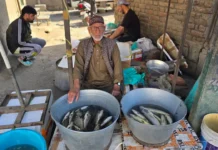
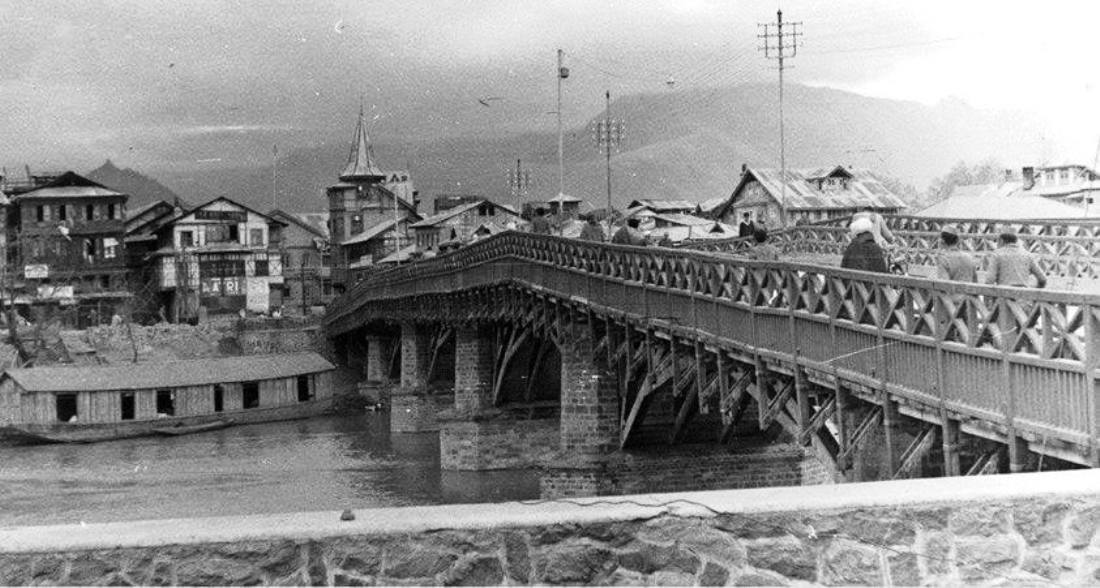
Fishing was banned across a vast stretch of the Jhelum through Srinagar. Between Amiran Kadal and Zaina Kadal, the first and second bridges of the city, no man could cast a net or drop a line. It was the stretch on the Jhelum banks where the Afghans had built the Sherghari palace, the seat of power from where the Dogras ruled Kashmir for 101 years, starting with Gulab Singh. The prohibition, initially covering nearly the entire animal kingdom in a sweeping gesture of royal mourning, eventually narrowed to fish. Six years would pass before any relaxation came. But the damage was measured not in years but in bodies.
Coinciding With Famine
The years of the fishing ban coincided, with terrible precision, with years of famine. Kashmiris, already among the most heavily taxed subjects in the region, every boatman, every weaver, every class of population save the tailors, squeezed for revenue, now found the one resource that nature offered freely placed beyond their reach by royal decree.
What happened next was documented by missionary Arthur Brinckman, who recorded the testimony of a British officer travelling up the Jhelum by boat. The officer came upon three men chained naked to the riverbank at a desolate spot miles from any habitation. Around each man’s neck hung a necklace of rotting fish. They had been left there, without food or water, for three days and three nights.
Their crime: driven by hunger, they had caught a few fish from the river.

Brinckman, writing in his 1868 account, was withering in his assessment. He noted the grotesque inversion of responsibility, that a ruler who would not accept even the slave-driver’s acknowledged obligation of feeding those who laboured and enriched him would nevertheless deploy the full machinery of punishment to protect a superstition.
The soul of the late Maharaja had fixed upon a place of residence in the river. The bodies of the starving could fix themselves to the bank, rotting alongside the fish they had dared to eat.
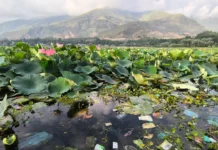
Among the worst affected were the communities living along the shores of Srinagar. These were people who subsisted entirely on what the lake and river gave them: coarse grass sold as cattle fodder, reeds woven into matting, and fish. It was only by what Brinckman describes as “a very recent order” that they were even permitted to catch and sell fish at all.
The story of Gulab Singh’s soul and Kashmir’s fish is not merely a historical curiosity about royal eccentricity. It illuminates something precise and brutal about the nature of tributary power: how the metaphysical convictions of rulers translate directly into the physical suffering of subjects.