In a break from routine discord, Jammu and Kashmir lawmakers set aside political rivalries to deliver a unified, sombre response to a deadly massacre, marking a rare moment of reckoning with violence and a call for collective resolve, reports Syed Shadab Ali Gillani
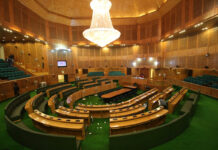
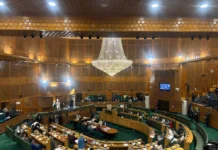
The chamber stood still. Not a slogan echoed, not a single placard rose. The usual cacophony of walkouts and protests that had defined the newly reconstituted Jammu and Kashmir Assembly was absent. On April 28, in the aftermath of the Pahalgam attack, the House, known for its relentless disruptions, sat in a silence that unsettled even the most seasoned legislators. For the first time since its inception, the Assembly did not erupt. It mourned.
The session began with a two-minute silence in memory of the victims.
Display of Unity
Across party lines, members urged collective resolve. Handwara MLA Sajad Gani Lone called the incident a turning point in Kashmir’s long engagement with violence. “What we saw with these marches was a social stigmatisation of violence,” he said, urging lawmakers to embrace the shift and avoid reverting to old divisions.
Speakers condemned the killings, pledged support for the victims, questioned lapses in accountability, and acknowledged the wider implications. The attack, they agreed, had stirred the national conscience.
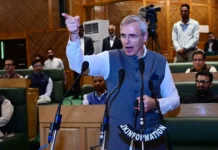
Chief Minister, visibly moved, reflected on the sudden change in circumstances. “It is still unbelievable that just days ago, we were here debating the budget. When the House adjourned, we expected to meet again in Srinagar. Who could have thought we would meet under such tragic circumstances?” As both Chief Minister and Minister for Tourism, who had invited visitors, he said, the loss felt deeply personal. “They came here as guests and never returned. What can I say to their families?”
Reckoning with Violence
Sajad described the attack as a moment of reckoning. “For 35 years, we have seen violence, and we should not politicise this,” he said. “There was societal acceptance of violence. Some considered it legitimate. But the marches reflected a social rejection of violence. People are no longer willing to accept it.”
He also spoke of the challenges civilians faced during counterinsurgency operations. “Law enforcers often could not distinguish between innocents and militants. Sometimes four innocents were killed trying to arrest one terrorist,” he said. “We do not blame anyone. But healing cannot come through force. Unless thousands of Adil Shahs are created, violence will not end.” He added, “The police have a limited role. The army has a limited role. Only the people of this place can achieve what no one else can.”
A Call for Action
MLA Pahalgam Altaf Kallo was firm in his stance. “As lawmakers, our stance has always been clear: those responsible must not be spared.” He urged the Central Government to launch a decisive and comprehensive crackdown on terrorism to prevent such tragedies.
Leader of the Opposition Sunil Sharma expressed confidence that the Prime Minister would not remain silent. He said the statements made in the Assembly were being followed closely, not just in Jammu and Kashmir, but across the country.
“Every word is being scrutinised. We are the people who did not eat after the attack but went to the streets to send a message. It may have taken 35 years, but the people are united, and no ploy can divide us,” Sharma said.
A United Condemnation
Speakers unanimously praised the spontaneous and humane response of Kashmiris who rushed to aid victims in the aftermath of the attack. Omar commended the local community that transported the injured and provided immediate support. He said the people were united against terror, and that such moments revealed the true spirit of Kashmir.
Sajad Lone described the public response as historic and unprecedented. “Not a lane, not a village, stayed silent. This has never happened in 78 years,” he remarked. He argued that the reaction marked a shift in Kashmir’s social fabric, signalling a rejection of earlier passive acceptance of violence. “This is not the end of the social sanctity of violence, but it is the beginning of that end.” He cautioned, however, that this shift must be nurtured carefully. “We must now create such an environment that this mindset does not return.”
PDP’s Waheed Para said that Kashmir was, for the first time in decades, mourning alongside the rest of India. “Whether it was Pulwama, the Mumbai attack, or Kargil, never during the 30 years of violence did Kashmiris and the rest of the country mourn together. But today, for the first time, Kashmir is mourning alongside the entire nation.” He asserted: “All parties, despite political differences, stood together unequivocally to denounce it. That unity is significant. Still, incidents of harassment continue to be reported, and such actions must be stopped.”
Accountability
Communist leader M Y Tarigami, raised concerns over the absence of those responsible for overseeing security. “You called the House, but not those who control the security apparatus,” he said. Expressing frustration, he added, “Where should I ask my questions? Who is accountable?”
He called for honest introspection, criticising the national discourse for veering into religious polarisation instead of addressing the safety of citizens. “It is not that religion is in danger. The real danger is to common citizens, to people like us.”
Sajad Lone acknowledged the complexity of counterinsurgency and argued that force alone could not bring peace. “The biggest challenge has been distinguishing between innocents and militants. Healing cannot come through force. The police and army have a role, but only the people can change the narrative.”
Waheed Para argued against questioning the security apparatus immediately after the attack. “They attacked civilians, so it would not be correct. We have lost many innocent lives in this gruesome terror attack. Families are devastated. A wife has lost her husband, a son or daughter their father.” He added, “Point-scoring is inappropriate at this time. What is needed now is unity among political parties to resolve this issue, and later we can address other questions. Right now, Kashmir must mourn, feel, and process the grief.”
MLA Langate, Sheikh Khursheed, disagreed. “As lawmakers, we believe this was a clear security lapse. That is not just our assessment; eyewitnesses and even victims’ families have raised serious questions about how this was allowed to happen.”
He said they had hoped for accountability at least at the lower levels. “But no one was held responsible. Not even a single transfer took place. We were not given space to raise this in the Assembly, but we made our concerns known to the media.” He added, “That area should have been sanitised. When 200, 300, even 500 non-locals pass through daily, there should be a police presence, at the very least.”
Former judge and independent MLA from Thannamandi, Muzaffar Iqbal Khan, described the attack as “the darkest chapter in the history of Jammu and Kashmir”. “We have to see where lapses occurred. Ironically, the home department is not with the J&K government. Where were the security and intel agencies? We need to fix accountability,” he said.
He opposed the punitive action of demolitions carried out after the attack and sought leniency for Pakistani women married in Jammu and Kashmir for the past 60 to 70 years.
“Were security agencies not aware of the armed terrorists? For the past 8 to 10 years, we have been hearing that the terror ecosystem has been busted, and J&K was free of terrorism. From where did they (terrorists) come? Where were the police, security and intel agencies,” he questioned.
Media Under Fire
Several legislators voiced concern over irresponsible reporting following the attack. Omar issued a stern warning to media outlets, urging them to refrain from spreading misinformation, stressing that such actions only exacerbate chaos. He underscored the need for restraint and accuracy in sensitive times.
Tarigami criticised sections of the media for deflecting the narrative towards communal tensions and ignoring the central issue of public safety and governance. “The real issues are sidelined. The safety of the people must remain our focus,” he said.
Sajad was particularly critical, urging the media to act responsibly. He warned that hostile narratives were endangering Kashmiri students. “Some sections of the media have acted positively. But others have sown division and placed innocent students in danger,” he added.
Support Beyond Compensation
Omar Abdullah expressed a moral obligation to the victims, recalling his tenure as tourism minister. “They were our guests. Their loss is personal to us,” he said.
Sajad called for institutional support for the victims’ families. “I am not talking about ex gratia. Ex gratia trivialises sacrifice. Guardianship of these families should be assumed by the Jammu and Kashmir government. If someone’s daughter wanted to become a doctor, we now must make her a doctor.”
Sunil Sharma urged all legislators to donate their salaries to the victims. Altaf Kallo declared he has donated one month’s salary to the family of Adil Shah.
Sheikh Khursheed proposed building a memorial in Pahalgam with contributions from legislators. Waheed Parra pitched for the victims to be accorded the status of martyrs.
Kashmiris Outside
Omar acknowledged the fear and uncertainty faced by Kashmiris outside Kashmir. He thanked various Chief Ministers for taking steps to ensure their safety and proposed a dedicated grievance redressal mechanism for Kashmiris during such times.
Sajad warned that inflammatory media coverage could translate into real-world threats for Kashmiris living outside. “We must be cautious. Our young people are being made scapegoats,” he said, urging the House to act proactively for their protection.
Waheed Para noted that, while instances of harassment against Kashmiri students and traders had occurred, such cases had significantly decreased. “Our party president and former Chief Minister Mehbooba Mufti ji raised this issue with the Union Home Minister, and I am confident that the Chief Minister also used his good office to do the same,” he said.
Statehood
The Assembly session also turned to the region’s political future. Omar distanced himself from what he termed opportunistic politics. “I will not use this moment to demand statehood. After Pahalgam, with what face can I ask for statehood for Jammu and Kashmir? Meri kya itni sasti siyasat hai? (Is my politics so cheap?). We have talked about statehood in the past and will do so in the future too, but it will be shameful on my part if I go and tell the central government that 26 people have died, now give me statehood,” he asked, asserting that discussions on statehood must occur in a dignified context.
The immediate priority, he said, was security, healing, and unity before engaging in constitutional discourse.
However, Sheikh Khursheed emphasised statehood’s importance, suggesting that if local leadership had the authority to appoint officials and lead security reviews, the tragedy might have been prevented or mitigated.
Despite political divergences, lawmakers expressed collective resolve to reject violence, support victims, protect Kashmiris across the country, and hold those in power accountable.