Confronted with shrinking job opportunities and rising unemployment, Kashmir’s youth are embracing entrepreneurship, not out of choice, but compulsion. From online boutiques and home kitchens to beekeeping and sanitary pad manufacturing, a quiet yet determined revolution is taking shape, driven by resilience, resourcefulness, and the will to endure, reports Babra Wani
Six years ago, Haleema, a postgraduate in Urdu from Anantnag, gave up applying for government jobs. It was not a conscious decision, but a response to prolonged silence. Years of sending resumes and taking up short-term work had led nowhere.
Tired of waiting, she decided to create her work. What began as a modest tailoring unit gradually expanded into a full-fledged boutique. She now employs four women, all of whom had similarly abandoned the search for salaried jobs and chose to rely on their skills instead.
Although her business remains unregistered, Haleema’s determination is evident. Across Jammu and Kashmir, countless others like her are sustaining themselves through informal ventures that do not show up in official data but are steadily reshaping the region’s economy.
While headlines often highlight the unemployment crisis in Kashmir, a quieter transformation is underway. Away from the glare, young people are challenging long-held social norms through enterprise.
Aspirational Landscape
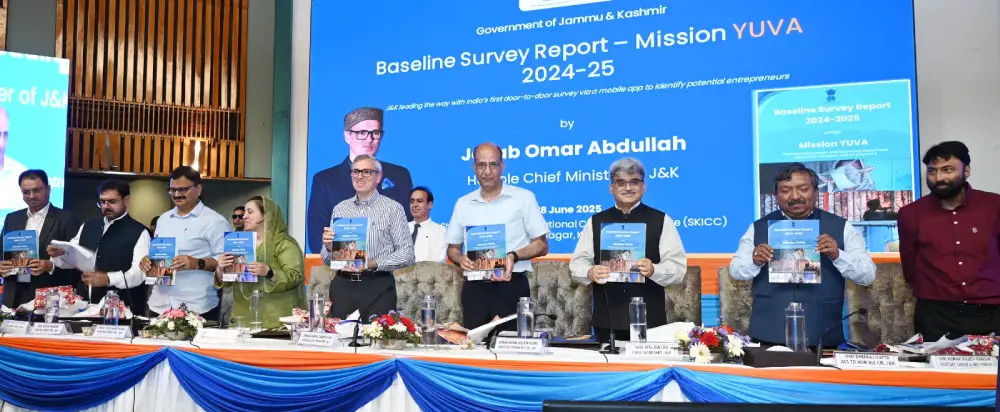
The Youth Baseline Survey Report (June 2025) by the government identifies over 548,000 potential entrepreneurs in Jammu and Kashmir. This includes 343,871 unemployed youth and 148,035 people currently employed but open to self-employment. With public sector opportunities shrinking, self-employment is increasingly becoming a path taken out of compulsion rather than ambition.
Danish, 25, is among those who took this path. He is currently building a restaurant in Srinagar, using every rupee he has saved. He explained that he had lost hope in securing a government job, citing the limited number of posts and the disadvantage of belonging to the general category.
After completing an MBA in 2022, Danish applied across the government and private sectors. Refusing to leave his family behind, he chose not to move abroad. Instead, he took up remote freelance work to raise capital for his venture. He believes entrepreneurship offers him dignity, independence, and the possibility to contribute to his family and community.
“There are so few opportunities that we have to create our own,” he asserted.
Kashmir’s youth unemployment rate stands at 17.4 per cent, far above the national average of 10.2 per cent. Among urban women, it soars to 28.6 per cent. Against this backdrop, young Kashmiris are increasingly drawn towards small-scale entrepreneurship.
For Danish and many others, this route is not just a means of survival, but a way to generate employment for others too. He hopes that once his restaurant is operational, he can support others the way he once needed support himself.
“I want it to succeed,” he said, looking at the unfinished space. “If it does, I will make sure others benefit too.”
Wheelchair to Workplace
In Mattan village of Anantnag, Shahid, 35, has built a thriving online business from his home. Bound to a wheelchair, he has also become a recognisable face on social media. After graduating, he applied for several government jobs but secured none. Observing the rise of online business pages and their success, he decided to try it himself.
With initial support from his parents and siblings, Shahid launched his venture. He remains the sole manager of his social media presence but receives help from his cousins and niece in producing videos and reels. He credits his family for being central to his journey.
Shahid now hopes to open a physical store for his pan-India customer base. Though his progress appears seamless from the outside, the path to self-employment has been anything but smooth.
Across Jammu and Kashmir, more than 56,855 unregistered enterprises are in operation, employing over 250,000 people. Most of these, nearly 76 per cent, are in rural areas and 88 per cent function as sole proprietorships, the government survey revealed. Despite their economic significance, only 16.7 per cent of these ventures have received government support. Many cite obstacles such as a lack of awareness, tedious documentation, high-interest loans, and inflexible collateral requirements.
Sisters in Business
In Budgam, two sisters launched a dry fruit processing unit with their parents’ support and have run it for the past five years. The elder sister, a trained engineer, had initially sought employment but found no opportunities. She turned to entrepreneurship and was soon joined by her younger sister. Eventually, the elder sibling secured a government job, and the younger continued managing the business.
Their enterprise now enjoys strong social media visibility and receives orders from across Jammu and Kashmir. The elder sister shared that the idea came from her fondness for planting fruit trees. Upon learning about fruit dehydration, she experimented with techniques for two years. Once she perfected the process, she launched the unit.
She had once received a job offer outside the region, but was not permitted by the family to leave. On returning home, she felt lost until this opportunity emerged. The business, though home-based, holds registration with the Food Safety and Standards Authority of India.
What the Youth Want
The Youth Baseline Survey found agriculture, forestry, and fishing to be the preferred sectors among aspiring entrepreneurs, attracting over 110,000 individuals. This is followed by wholesale and retail trade (59,843) and other service activities (40,840). Urban entrepreneurs favour education, food services, and technology-based ventures, while rural youth remain focused on agriculture, dairy, construction, and home-based manufacturing.
Dairy farming is the most preferred business, with 25 per cent of unemployed potential entrepreneurs expressing interest. Fruit cultivation, particularly of apples and pears, comes next, along with bee-keeping, tailoring, and small retail. These fields require modest capital but demand basic infrastructure, training, and access to markets, all of which pose hurdles for many.
Keeping Bees
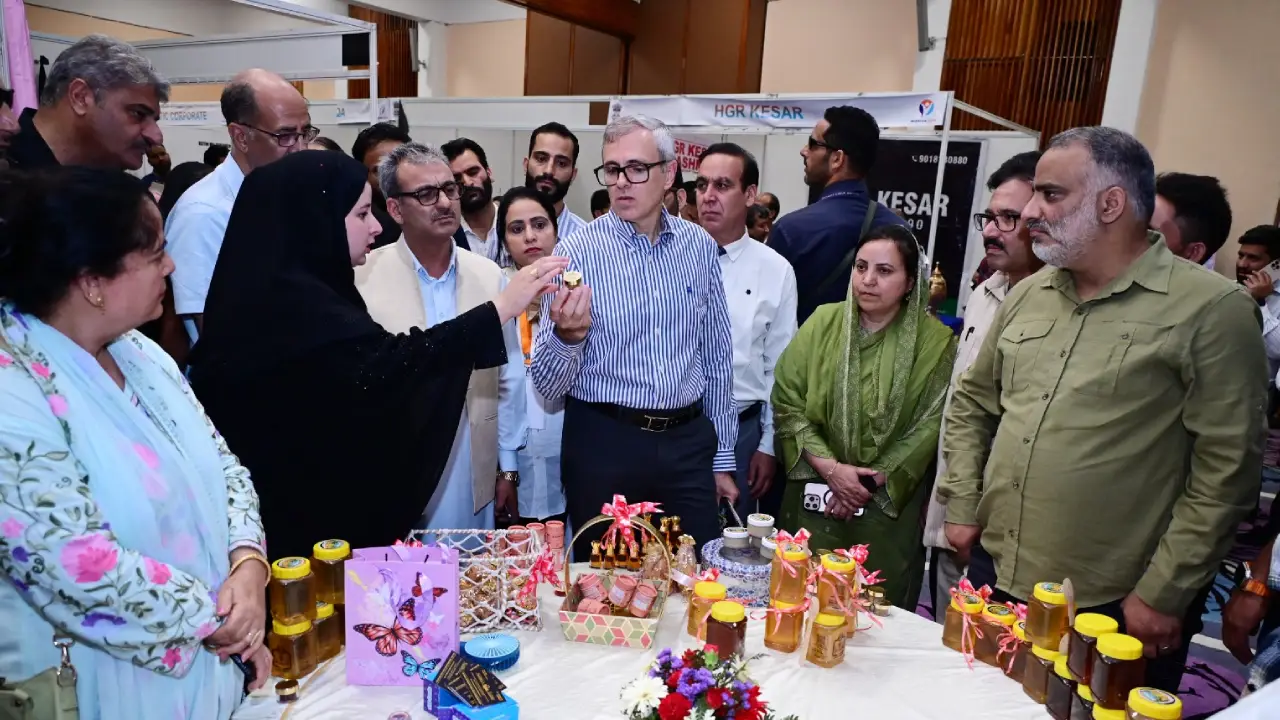
Umar Mukhtar from Kupwara is one of the few who never considered salaried employment. He chose to carry forward his family’s bee-keeping business. Over time, he expanded into poultry and floriculture. He said government schemes had assisted him at every step.
In Handwara, Dar Noumaan left a government job to pursue organic farming. Now a successful agri-entrepreneur, he runs a nursery and sheep farm.
Raziya from Uttersoo, Anantnag, started her walnut processing unit in 2018 after joining a self-help group. She later availed of a government scheme, took a loan, built her unit, and now provides employment to others.
A similar story unfolds in Shahgund, Bandipora, where Razia Farooq established Rahat, a brand producing low-cost sanitary pads. She founded the unit in 2022 along with ten other women under a self-help group supported by the National Rural Livelihoods Mission (NRLM) and training from the Global Initiative of Academic Networks (GIAN). Despite financial constraints and a slow start, Razia stayed committed to her mission of promoting hygiene in rural areas.
Rahat was registered on August 3, 2022. Both ventures received initial support under the NRLM’s Umeed scheme, which focuses on women’s empowerment through self-employment and addresses vital community needs.
Razia explained that even without immediate profit, the work held long-term value by encouraging women to maintain hygiene and take charge of their well-being.
Many among the current and aspiring entrepreneurs have expressed their intent to apply for government schemes to fund and expand their ventures.
Missing Link
A key finding from the Survey is that 25 per cent of all potential entrepreneurs in Jammu and Kashmir lack technical skills. The gender gap is more striking: over 80 per cent of female potential entrepreneurs have never undergone formal training. Most depend on informal or inherited knowledge, such as tailoring, food preparation, or caregiving. The data reveals the urgent need for gender-responsive skilling programmes and Recognition of Prior Learning (RPL) mechanisms.
Access to finance remains another major hurdle. Most young people surveyed, including 38 per cent of the employed and 36 per cent of the unemployed, said they needed between Rs 5 to Rs 10 lakh to start a business. However, loans of this scale remain difficult to obtain without proper documentation, collateral, or credit history. Only a small fraction has approached government departments for support: 12.2 per cent of the employed and 9.5 per cent of the unemployed.
Gender disparity continues to shape entrepreneurship in the region. Of the 56,855 unregistered enterprises, only 5,496 are owned by women, just under 10 per cent. Their ventures mostly involve embroidery, handicrafts (40 per cent), personal grooming and beauty services, and food production from home. Districts like Poonch, where 17.94 per cent of such enterprises are led by women, have emerged as exceptions, largely due to self-help groups and NGO efforts. Yet, most of these businesses remain informal and limited in scale, constrained by social barriers, lack of mobility, and the absence of institutional support.
Invisible Enterprise
For Zarka, make-up artistry began as a self-taught skill acquired from YouTube tutorials. Coming from a lower-middle-class family, she had wanted to pursue science, but her parents refused due to high fees. She was asked to choose the humanities if she wished to continue studying.
She complied and, despite challenges, remained determined to work hard. Her interest in make-up grew alongside her studies. She started experimenting on herself, then her friends. Without access to expensive products, she saved from her eidi and bus fare to buy affordable items from Meesho.
Her first bridal assignment came through a friend’s recommendation. Since then, she has continued receiving bookings. Living in a remote village in North Kashmir, she has become a preferred choice for local brides.
Zarka now earns enough to fund her postgraduate education independently. However, her business, with only a modest social media presence, remains largely invisible. Like her, many young women run unregistered ventures that escape official notice. Their earnings are not recorded, and they seldom receive institutional support or recognition.
Among registered businesses, the gender imbalance continues. Of the 13,427 Udyam-registered enterprises surveyed, only 14.2 per cent were owned by women. While women make up 59.8 per cent of the workforce in these enterprises, nearly 73 per cent are unskilled. The figures reflect an urgent need for structured training that goes beyond symbolic efforts.
(Some names and identifying details have been changed to protect the privacy of individuals.)