Kashmir’s public healthcare system is collapsing under the weight of apathy and neglect. From the crowded wards of Srinagar’s tertiary hospitals to the under-equipped PHCs of Gurez, patients are met with crumbling infrastructure, vacant posts, and chronic shortages. Doctors voice their frustration, patients endure indignities, yet the administration remains largely absent. A system once built to heal now breeds mistrust, dysfunction, and despair, with no remedy in sight, reports Babra Wani
Almost three years ago, Ghulam Nabi moved from one department to another at a reputed government hospital in Srinagar, seeking treatment for his son, who had been diagnosed with a rare blood disorder.
He alleged he encountered indifference. A senior doctor dismissed him outright, humiliating him in front of others before telling him to leave. Nabi said the doctors mistreated him because he kept returning to ask for help.
“Once, a doctor said that your son is not going to make it. He addressed his colleagues and said, iss dangar ko maene kaha bhi bohat bhaar (I have told this idiot many times). It was so humiliating, but I endured everything for my son,” the Kulgam resident recalled. “I was heartbroken, disappointed and whatnot. My son needed treatment, and instead of that, nobody even looked at him.”
Shaista had a similar experience. She accompanied her ailing mother to another prominent hospital in Srinagar in 2024. expecting care and guidance, but left disheartened.
“There was a PG student in the OPD, and he was behaving rudely with everyone and not checking anyone thoroughly. He even insulted some patients, who had come from rural areas,” she alleged. “And I am telling you it was so painful to witness.”
Disturbed by what she saw, Shaista began recording the scene on her phone. The act prompted the doctor-in-training to apologise.
Zahir visited a public health facility hoping to undergo an ultrasound scan, only to find that no radiologist was available. “I went there to have my USG done, but unfortunately, there was no radiologist there. The facility has been without a doctor for the past few years.”
Many sub-district hospitals across the region lack radiologists, leaving patients stranded without vital diagnostic services.
These are not isolated stories. They represent the widespread dysfunction within Kashmir’s public healthcare system, where patients frequently face neglect, shortages of staff, and a system with little accountability. The worsening doctor-patient confrontations are now a part of daily reality.
The Confrontation
Last month, SMHS Hospital in Srinagar witnessed protests after a PG student was assaulted by a patient’s attendant. The incident drew strong condemnation from the medical community. Hundreds of GMC doctors and their affiliated hospitals gathered at SMHS in protest.
A CCTV recording, showing a man slapping the doctor inside the hospital, circulated widely on social media and triggered debate on the safety of healthcare professionals.
GMC Srinagar issued a statement condemning the assault. “GMC and other hospitals are public assets dedicated to patient care. The healthcare staff work tirelessly for patients. We urge patients and attendants to show restraint and cooperate with staff.”
A committee was soon formed to investigate the matter. Reports suggest there was a police case too.
Following the incident, Kashmir Life received two phone calls. One caller, speaking anonymously, claimed he had been at the private clinic of a well-known doctor when the video began circulating. “As soon as he learnt about the incident, the doctor rushed back to the hospital, fearing that the officials might visit the hospital and notice his absence. This is not just an isolated incident; many doctors do this.”
Several doctors posted their accounts online, sharing the challenges they face in dealing with patients and their attendants, while also expressing solidarity with the assaulted student.
To the public, it appeared to be yet another clash between patients and doctors. But one local doctor offered a different perspective.
“This is not about doctors versus the public,” the doctor, who spoke anonymously, said. “The real issue lies with the administration. The babus sit comfortably in air-conditioned rooms while hospitals struggle without even a Rs 300 glucometer. PG students are not doctors. Let me repeat that. They are students, meant to stand alongside senior doctors to learn and assist, not to run the show alone.”
Failing System
A doctor in Srinagar, speaking anonymously, recalled a harrowing personal experience from not so distant past. His sister, days away from her engagement, collapsed suddenly due to extremely low blood pressure. In panic, the family rushed her to SMHS Hospital.
“Her BP was 69/40, life-threatening, and we did not even have a functioning glucometer in the emergency room. I said I would pay a lakh from my pocket if anyone could produce one. It was an emergency case, and emergency cases are not supposed to ask for tickets. Yet they did and they still do it.”
The young medico said that there were no QR codes for payment either. What troubled him more was the absence of basic infrastructure and emergency equipment. “People talk about protocols, but where are the beds that meet emergency standards? Where is the defibrillator? I will give you one lakh rupees if anyone shows me a working defib machine there,” he said.
Speaking of the casualty ward, he stressed that the administration needed to understand its purpose. “It is supposed to be an emergency department. Right now, it is merely a ‘casualty’ in name and function.”
The Community Health Centre in Pattan, strategically located along the accident-prone National Highway, remains critically understaffed. Key specialist posts, including those of consultant paediatrician, anaesthetist, and surgeon, have been lying vacant, leaving emergency and surgery patients at risk. Residents voiced concern over the deteriorating state of care, calling the CHC a “trauma hospital in name only.”
Beds, Glucometers
He pointed out that patients come in from across 12 districts. “Do we even have the number of beds required to handle them? Can the infrastructure cope?” he asked. “As of today, there is not even a single functioning resuscitation bed in the entire emergency ward.”
He said that if a patient with a heart attack arrives, there is often no life-saving medication available. “The resuscitation tray, the bed itself, it simply does not exist. We are supposed to administer medication within three minutes. Tell me, where in the entire hospital am I expected to find it?”
Most emergency rooms, he observed, were being run by postgraduate students, while senior doctors remained on-call, usually stationed in their chambers rather than at patients’ bedsides. “According to the National Medical Council (NMC), PGs are not supposed to treat patients independently,” he said. “They are only meant to assist during resuscitation.”
He highlighted the stark mismatch between the patient load and available staff. “You need one qualified doctor. This hospital alone caters to over a hundred thousand patients.” Despite this, few emergency physicians were trained in Advanced Cardiac Life Support (ACLS) or Advanced Trauma Life Support (ATLS), certifications essential for managing cardiac arrests and trauma cases.
Basic diagnostic tools were often unavailable. He said that in cases of critical hypoglycaemia, minutes could mean the difference between life and death. “If a sugar test takes half an hour to arrive, what are you going to do in the meantime?”
He noted the absence of on-call boards, uniforms indicating medical designation, and automated lab support systems. “Even simple tests like CBC, LFT, KFT, should be easily accessible, ideally through nurses trained in automated sampling. But nothing works the way it is supposed to.”
Infrastructure in Disrepair
The shortcomings extended beyond SMHS. Another doctor highlighted similar structural problems at Lalla Ded (LD) Hospital.
Despite being a tertiary care facility, LD struggled with outdated infrastructure, poorly integrated departments, and serious gaps in logistics, including patient shifting due to a lack of helpers. “Shockingly, no new hospital beds have been procured in over a decade,” the doctor said.
Hygiene was another persistent concern. “The hospital’s surroundings are so poorly maintained that patients often report nausea due to the stench, an issue attributed to the municipal authorities’ negligence. Inside, even the nurses’ counters lack basic sanitiser liquids, further compounding infection risks in a place meant to heal.”
He pointed to the absence of routine inspections from senior administrative officials such as the Resident Medical Officer (RMO) or Medical Superintendent (MS). “Regular ward rounds could address gaps in sanitation, staffing, and essential equipment such as transfer trolleys, wheelchairs, and hygiene supplies, but they are not being conducted.”
Even Kashmir’s largest gynaecology hospital, he said, did not have a fully functional neonatology or paediatric department, raising serious questions about the standard of care available to newborns and high-risk deliveries.
“Faculty posts for neonatologists were created four years ago but remain vacant. As a result, general paediatricians from the state health services who are meant for peripheral health centres are managing newborn care, without the specialised training this delicate work demands.”
A Viral Video
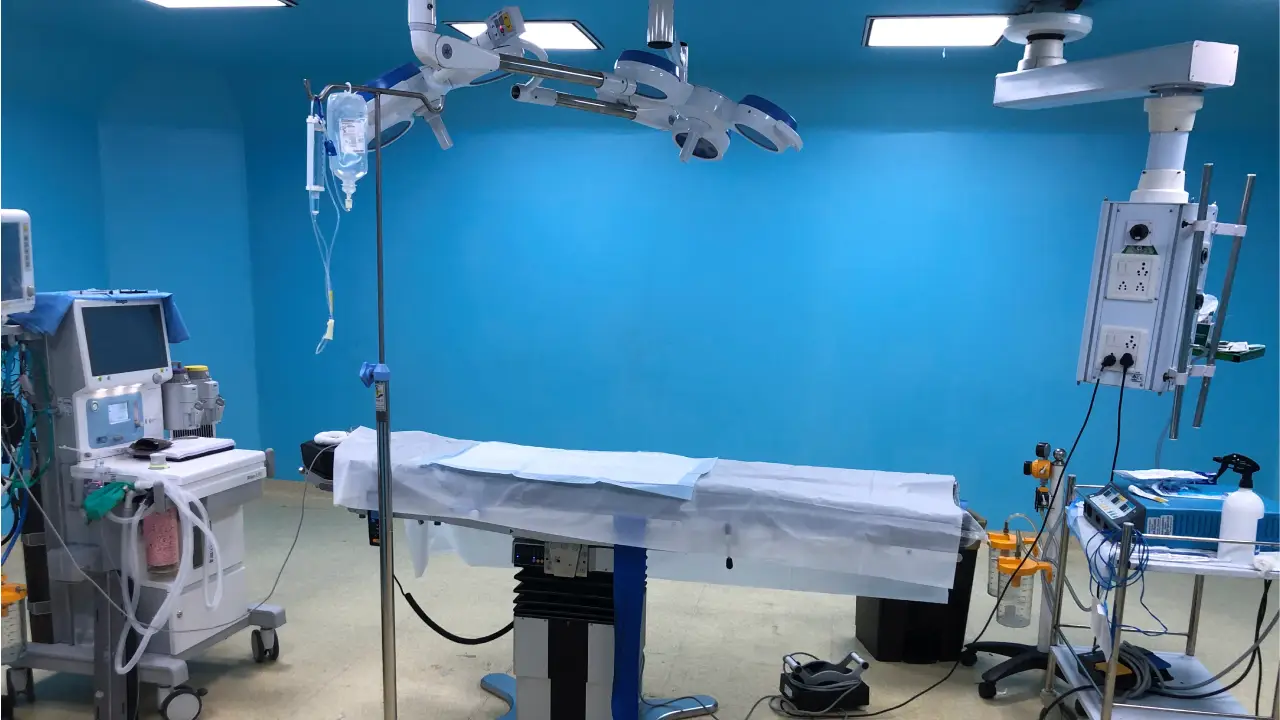
The reputed maternity hospital was recently in the news after a video recorded by a doctor went viral. The footage, captured inside restricted areas of the hospital, including the labour room and an operation theatre during active surgery, provoked public outrage and raised serious concerns about patient privacy and professional conduct. An enquiry was ordered by GMC Srinagar.
Following the incident, the hospital administration issued strict directions banning photography and videography on the premises.
According to the Medical Superintendent of LD Hospital, all doctors, paramedical staff, and other employees were instructed not to take videos or photographs inside the hospital, especially in sensitive areas, to maintain patient confidentiality and protect the dignity of mothers who are pregnant or lactating.
Signboards were installed at several key points in the hospital, warning that videography is prohibited and punishable under the law.
A patient, still recovering from a fall, shared a moment that stayed with her. Struggling to walk, she had arrived at a reputed public hospital expecting assistance. Her brother searched desperately for a wheelchair, but there was none. She was stunned by the absence. “I recently suffered from a fall, and I was not able to even walk properly. My brother desperately looked for a wheelchair to help me at the hospital, but there was none. And I was shocked. This was in a reputed public hospital.”
A System Hollowed Out
In the March 2025 session of the Jammu and Kashmir Assembly, Health Minister Sakina Itoo disclosed an alarming statistic. Of the 852 sanctioned consultant posts across the erstwhile state, only 562 had been filled. That left 290 vacancies, over a third of the total. The deficit was even more pronounced at the senior consultant level, where only 19 doctors held positions against 42 sanctioned posts. Although a recruitment drive was underway, bureaucratic delays, particularly in the Departmental Promotion Committee clearances, continued to stall progress, despite a 60:40 recruitment model that combined Jammu and Kashmir Public Service Commission hires with departmental promotions.
These vacancies directly affected patient care. The doctor-to-population ratio in the region was already far below global standards. According to the National Health Profile 2018, the ratio stood at 1:3,060, far from the World Health Organisation’s recommended 1:1,000. Government data did show a marginal rise in the number of doctors, from 2,739 in 2021 to 2,892 in 2022, but experts argued this change barely dented the gap. Independent estimates that accounted for population growth and healthcare demand placed the effective ratio closer to 1:4,840. Rural hospitals, in particular, were the worst affected, many operating without doctors or even ambulances.
Health infrastructure, already stretched, had received a further setback. According to the Jammu and Kashmir Economic Survey, the health budget for 2024–25 stood at Rs 8,333.45 crore, a slight drop from Rs 8,362.28 crore the previous year. While the decrease appeared minor, its impact on strained systems and delayed procurement was noticeable, particularly in peripheral regions.
The Remote Centres
In Badugam, a remote village tucked into the Tulail belt of Gurez, healthcare seemed to exist in name only. The local Government Primary Health Centre, meant to serve a dispersed mountain community, lay neglected. Afzal, a resident, said the centre had four ambulances parked on the premises. None worked. There were no drivers, even in emergencies. Villagers were left with little choice but to pool money and hire large private vehicles to ferry patients over long distances.
Afzal had tried raising the matter with doctors at the centre, but they told him the drivers were not reporting for duty on the instructions of the Block Medical Officer. According to him, this was not an isolated complaint. The vehicles were present, the patients arrived, but the drivers never showed.
There were other “indignities”. The washroom, Afzal said, was in such a state that it endangered rather than preserved health. “Patients risk worsening their health simply by using it,” he said, appealing for help. The community, already poor and cut off from mainstream access, had nowhere else to go.
People in the area also described spending large amounts of money to book private transport for distant hospitals. Worse, there were no sterilisation protocols in place. Inside the centre, the lack of proper infection control meant that seeking care could sometimes become the cause of a new illness.
One recurring concern was the absence of a gynaecologist. For women in the village, this meant travelling long distances for basic maternal care. According to several reports, gynaecology was among the specialities where the number of senior consultants had dropped sharply, not just in Kashmir but also in Ladakh.
Hope Around, Not Help
Even hospitals located in key areas struggled. At the Sub-District Hospital (SDH) in Pahalgam, a town that had seen a resurgence in visitors following the post-April decline in tourism, the situation remained dire. Despite the installation of an Ultrasound Sonography machine, the facility had no radiologist.
A hospital staffer, speaking anonymously, described the contradiction. “We witnessed the post-April fallout and the decline in tourism. When Yatris came here, a hope bloomed. But the hospital, where these yatris come for treatment, lacks basic human resources. Despite having equipment, there is no one to handle it.”
Pahalgam, a prominent destination during the annual pilgrimage season, saw an influx of patients from within and outside the valley. Yet, for basic diagnostics, locals and pilgrims alike had to seek care elsewhere. It was not a matter of infrastructure alone, but of staffing, training, and maintenance.
The Bigger Picture
A 2024 study titled Public Health in Kashmir: Challenges and Opportunities laid bare the magnitude of the crisis. The healthcare infrastructure in the region, it said, remained critically underdeveloped, particularly in the rural belts where most of the population lived. The study recorded that there was only one doctor for every 4,000 patients, well below the national average.
It also noted that more than 60 per cent of rural healthcare centres lacked essential diagnostic equipment. X-ray machines, laboratory testing tools, and basic medical supplies were unavailable in large sections of the valley. These deficiencies meant that even the most basic care could not be assured.
The study’s author, Sumbl Ahmad Khanday, observed that access to specialised care remained largely restricted. Services in fields such as oncology, cardiology, and advanced surgery were extremely limited. As a result, patients were routinely forced to travel outside the region for treatment that should have been accessible within their districts.
(Some names of patients and healthcare workers have been changed to protect their privacy. In cases where individuals requested anonymity or where disclosure could cause harm or jeopardise employment, pseudonyms have been used. All such changes have been made without altering the factual content of their testimonies.)