The just concluded 2024 would be remembered for countless events at individual and societal levels in all cultures. In Jammu and Kashmir, the year was important for a set of happenings, some of which are more historic than others, writes Syed Shadab Ali Gillani
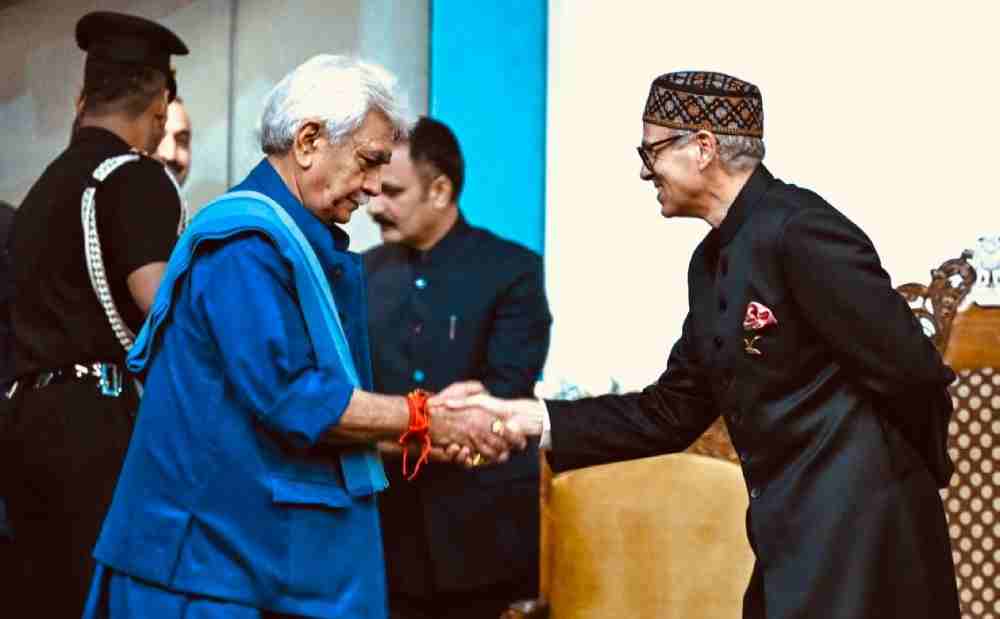
2024 unfolded like a gripping folklore, etched with moments of politics, tragedies, victories, and tears. It was a year that carried the weight of history, much like 2014, a year remembered for the last Assembly Elections in the erstwhile Jammu and Kashmir state and the devastating floods that swept through it. The year marked a new chapter with the first-ever Assembly Elections in the Union Territory.
Tens of thousands of events were reported across the erstwhile state in the last 365 days but the major events that dominated the year were quite a few. These events will get 2024 in the history books.
Lok Sabha Elections
The 2019 elections not only set a record with the highest voter turnout in 35 years but also reshaped the political landscape of the region. The grand old party of the region, the Jammu and Kashmir National Conference (JKNC) and the Bharatiya Janata Party (BJP) emerged as dominant forces, each securing two of the region’s five parliamentary seats. The independent candidate Abdul Rashid Sheikh, popularly known as Engineer Rashid, stunned observers by clinching the Baramulla seat, defeating JKNC’s Vice President Omar Abdullah.
In a significant upset, both former Chief Ministers, Omar Abdullah and Mehbooba Mufti (PDP), lost their respective battles in Baramulla and Anantnag-Rajouri. The BJP retained its stronghold in Jammu and Udhampur, with Dr Jitendra Singh and Jugal Kishore Sharma securing decisive victories. The NC’s Aga Syed Ruhullah Mehdi won from Srinagar, solidifying the party’s influence in the Valley.
The victory of Engineer Rashid was symbolic. Despite being incarcerated since 2019 under the Unlawful Activities (Prevention) Act (UAPA), his campaign resonated with voters disillusioned with traditional parties. His supporters rallied behind the slogan, Jail ka badla, vote say (Revenge for imprisonment through votes), signalling deep-seated frustrations among the electorate.
The polls were held amid the backdrop of the abrogation of Article 370, which had granted special status to the erstwhile state, and a series of political upheavals.
The overall voter turnout of 58.46 per cent was the highest ever recorded in Jammu and Kashmir, with the Valley witnessing a 30-point jump in participation compared to 2019. Baramulla alone registered a remarkable turnout of 61.1 per cent, its highest since 1984.
Government Formation
The last assembly elections were held in 2014 when it was a state and after a gap of a decade, the elections took place strictly as per the deadline set by the Supreme Court of India.
It was a milestone exercise as the election took place after the state was reorganised, stripping the privileges flowing through Article 370 and the protections envisaged within Article 35A, besides bifurcating it into two federally governed Union Territories.
The election, conducted over three phases, aimed to maximise participation across the region’s 90 constituencies. Voter turnout reached 63.88 per cent, surpassing previous Lok Sabha elections, signalling renewed engagement with the democratic process despite ongoing unrest.
JKNC emerged as a standout performer, securing a decisive victory with 42 seats. This impressive win marked a significant milestone for the regional party, which previously achieved a similar feat in 1996 with 57 seats. Almost 28 years apart, the net difference between the two elections – 1996 and 2024, was that while the central government was so keen to see JKNC contesting and winning in 1996, it was almost the reverse in 2024.
Eventually, JKNC claimed its right to form the government. Keep Calm, I will be back, Omar’s 2014 tweet resurfaced over social media. The JKNC’s success was historic, as it became the first party in nearly two decades to form an absolute majority single-handedly. With four independent MLAs – PyareLal Sharma, Satish Sharma, Choudhary Mohammed Akram, and Dr Rameshwar Singh – extending their support, the National Conference now boasts 46 lawmakers in the 90-member house. While the BJP retained its area of influence, PDP shrunk to three berths and Sajad Lone retained his home turf.
Academic Calendar
As was anticipated, the new government with a mini-cabinet would have to negotiate through the new maze of governance which will take time. So far, the only major decision was the reversal of the controversial March academic session, reverting to the traditional November-December timeline.
The LG administration had taken the NEP route to create a single academic calendar across the country but it reduced too many days from the Kashmir student’s class work. Educators and parents have welcomed the shift, recognising its alignment with regional needs. Students, particularly those in higher grades, had mixed reactions. Many stakeholders called this decision a critical step toward aligning education policies with local realities.
The Resolutions
Soon after taking over, Omar Abdullah’s mini-cabinet passed a resolution seeking early restoration of the statehood to Jammu and Kashmir. It was approved by LG and personally handed over to the Prime Minister. Many days later, in the first session of the assembly, another resolution was passed by the lawmakers recording concern over the undoing of special status.
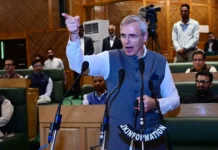
The assembly session focused on Article 370. The five-day session exposed deep ideological divides in the 90-seat House, marked by protests, physical altercations, and heated discussions. A resolution advocating the restoration of Jammu and Kashmir’s special status brought tensions to the forefront, reflecting the enduring political rifts since the 2019 reading down of Article 370 and the state’s reorganisation.
Disagreements escalated when PDP legislator Waheed Parra’s remarks triggered accusations from ruling JKNC members against the opposition BJP, which labelled any discussion on Article 370 as anti-national. While the second day was reserved for paying tribute to deceased legislators, Deputy Chief Minister Surinder Choudhary introduced a resolution on the third day, reaffirming Jammu and Kashmir’s special status. This led to uproar, with
BJP legislators tearing copies of the resolution and accusing the JKNC of anti-national motives. Speaker Rather called a voice vote to pass the resolution amid protests.
PDP and smaller parties, including the People’s Conference, introduced a competing resolution condemning the 2019 abrogation and demanding immediate restoration of Article 370. PDP termed the JKNC resolution as ambiguous, while Sajad Lone argued the new resolution better reflected public sentiment.
Chief Minister Omar Abdullah defended the JKNC resolution, citing its strategic language to maintain dialogue opportunities with the central government.
Prime Minister’s Visit
After 2019, Prime Minister Narendra Modi visited Jammu and Kashmir in June 2024, for the first time. He inaugurated and laid the foundation for multiple development projects, including those related to road infrastructure and education. He also participated in the International Day of Yoga celebrations in Srinagar.
The Prime Minister visited Jammu on September 14, and later Doda. But both these visits were part of the election campaign. He flew to Kashmir also for campaigning during the assembly elections. The June visit was also more of a campaign.
Reservation Debate
Jammu and Kashmir is grappling with debates over its reservation policy amidst ongoing demands for the restoration of statehood. The revised reservation rules allocate over 60 per cent of government jobs and educational quotas to reserved categories, leaving open-merit candidates with limited opportunities. Critics argue that the policy disproportionately benefits certain groups, undermining fairness and constitutional principles of equality. The rules have doubled Scheduled Tribe reservations from 10 per cent to 20 per cent, increased Social Caste quotas from 2 per cent to 8 per cent, and introduced new categories, such as 3 per cent for children of defence personnel and 2 per cent for sportspersons. Conversely, the Resident of Backward Area quota has been halved to 10 per cent, reducing open-merit seats from 57 per cent to just 33 per cent.
With a policy snowballing into a serious issue, the tensions within political parties is indicating a showdown if the political class is unable to offer a solution. The issue has been taken to the High Court and its outcome is likely to have a profound impact on the region’s policies, as stakeholders seek a fairer reservation system that aligns with constitutional values.
Jammu and Kashmir which is struggling between two power centres and the demand for early restoration of statehood, the Reservation policy is emerging as a much bigger issue.
Killer Roads
In November, Srinagar’s traffic landscape saw significant changes as authorities intensified their crackdown on violators. The shift was triggered by a tragic accident on November 14, 2024, in the Tengpora area, where two Class 11 students, Hamaad and Aseem Sofi, lost their lives. The 17-year-old Hamaad was driving a Thar SUV gifted by his father when a failed overtaking manoeuvre caused the vehicle to overturn and crash into a parked truck. The incident, caught on surveillance footage, sparked outrage over underage driving and parental negligence.
The horrific accident prompted authorities to act decisively. Hundreds of vehicles, primarily two-wheelers, were seized, and schools were instructed to restrict minors from bringing vehicles. Petrol pumps denied fuel to underage drivers, and helmet enforcement for pillion riders intensified. SSP Traffic Srinagar highlighted the shared responsibility of parents, schools, and society, emphasising the need to prevent such preventable tragedies.
To enhance enforcement, the city introduced the Intelligent Traffic Management System (ITMS), which uses advanced cameras to detect violations like over-speeding and helmetless riding, ensuring transparency and reducing conflicts at traffic stops. Srinagar’s traffic challenges are compounded by nearly half a million vehicles, frequent tourist inflows, and inadequate infrastructure. In 2024, Jammu and Kashmir reported 4,990 accidents, with 703 deaths and 6,820 injuries. Srinagar remains a hotspot, with pedestrian fatalities alarmingly high at 40 per cent. Despite issuing over 12 lakh challans this year, including 3.37 lakh in Srinagar, traffic congestion and narrow roads persist.
A Villages Erased
On October 14, 2024, a catastrophic fire, triggered by an exploding solar panel battery, razed 80 timber-and-mud houses within two hours, leaving dozens of families homeless in Mulwarwan. The village, home to 1,200 residents, relies on solar power and kerosene lamps due to the lack of electricity. The fire consumed homes, crops, and winter supplies, leaving villagers unprepared and helpless.
The fire brigade, dispatched from Kokernag over 100 kilometres away, arrived too late to prevent significant damage. While newer concrete homes stopped the fire’s spread, the older part of the village was destroyed. For many days, the air remained heavy with the smell of charred crops.
Chief Minister Omar Abdullah visited the village, offering solace and pledging aid. He announced housing support under the Pradhan Mantri Awas Yojana, additional assistance from the Prime Minister’s Relief Fund, and plans to establish fire stations in Warwan and Marwa. Abdullah also committed to improving road connectivity to facilitate faster emergency response.
This tragedy underscores the vulnerabilities of Mulwarwan and its neighbouring villages, which endure isolation during harsh six-month winters due to heavy snowfall. Despite a road linking Kokernag to Warwan, the area remains inaccessible for much of the year. Fires are a constant threat in this fragile terrain, exacerbated by a lack of basic amenities like electricity, mobile connectivity, and emergency services.
The good note, however, was that the entire Jammu and Kashmir joined hands and sent tonnes of relief of all kinds to the village. Ababeel, the NGO handling the relief said it will be a new village that will rise up the mountains later in 2025.
A Craft Event
Five months after earning recognition as a World Craft City, Srinagar hosted a significant World Crafts Council (WCC) event, drawing delegates from 15 countries to celebrate Kashmir’s rich artistic heritage and tackle challenges faced by its artisans. The gathering showcased diverse crafts and opened avenues for collaboration, though immediate benefits remain uncertain.
Srinagar, the fourth Indian city to receive the WCC World Craft City title, has also been part of UNESCO’s Creative Cities Network since 2021. The event marked the WCC’s 60th anniversary, featuring participants from Central Asia, Europe, and Australia. Chief Minister Omar Abdullah announced plans to collaborate with the WCC to establish a world craft hub and international crafts museum in Srinagar, describing crafts as cultural and economic lifelines, particularly for rural artisans. Abdullah expressed optimism about leveraging global partnerships to sustain the sector.
Kashmir’s crafts, from pashmina shawls to walnut woodcarving, face threats from declining demand, competition with machine-made goods, and insufficient support.
The Games Returns
The year 2024 marked a significant revival of international sports in Kashmir, with the historic Bakshi Stadium taking centre stage. Known primarily as a football venue, the stadium underwent extensive renovations to meet FIFA standards, which also transformed it into a premier cricketing arena with a capacity of over 30,000 spectators. This long-awaited upgrade culminated in the hosting of the Legends League Cricket (LLC) tournament, an event that electrified Kashmir’s sporting scene.
Kicking off on October 9, the LLC tournament attracted massive crowds eager to see international cricket stars in action. The event featured renowned players such as Dinesh Karthik, Shikhar Dhawan, Harbhajan Singh, Chris Gayle, Hashim Amla, and Martin Guptill, sparking widespread enthusiasm. For many locals, witnessing these global icons live was a dream realised, igniting a renewed passion for cricket across the region.
Six teams—India Capitals, Gujarat Giants, Konark Suryas, Manipal Tigers, Southern Superstars, and Urban Risers Hyderabad—competed fiercely in seven thrilling matches. The tournament culminated in a nail-biting final on October 16, where the Southern Superstars edged out Konark Suryas Odisha in a dramatic Super Over, leaving the crowd in awe of the spectacle.
This event marked a historic moment for Kashmir, which last hosted an international cricket match in September 1986, when India faced Australia. Before that, the valley’s first international cricket experience was in October 1983, with India playing against the West Indies.
Beyond the LLC, Jammu and Kashmir also saw a surge in other sports activities. Chief Minister Omar Abdullah participated in a widely attended marathon, reflecting growing public interest in sports. Meanwhile, the I-League football tournament unfolded at the TRC ground, featuring local football clubs that added to the region’s vibrant sports calendar.
These events collectively underscored 2024 as a landmark year for sports in Kashmir, reigniting its legacy as a hub for athletic excellence.
Gandbal Tragedy
The Batwara Boat Tragedy of April 16, 2024, profoundly impacted Srinagar, exposing glaring infrastructure deficiencies. A boat carrying 19 people, including schoolchildren, parents, and labourers, capsized in the Jhelum River near Batwara. The Khoutch broke free from its moorings amid swollen currents caused by prolonged rainfall. It drifted until colliding with an obstacle, splitting apart and resulting in six fatalities, with three still missing. Despite a multi-agency rescue effort involving MARCOS, SDRF, NDRF, and local divers, the search for the missing continues.
The tragedy unfolded just metres from safety, sparking outrage over the incomplete Gandbal-Batwara footbridge. Initiated over a decade ago, the project has been stalled by bureaucratic delays and financial mismanagement. Locals assert that a functional bridge could have spared the victims, forcing many to rely on the ill-fated boat. Among the victims was the family of Fayaz Malik, who lost his wife and two sons, a grief echoed across Gandbal, now shrouded in mourning.
The incident underscored the human cost of Kashmir’s stalled development projects. Official records reveal that 15 bridges and seven footbridges remain incomplete across the region, plagued by funding gaps and red tape. The Gandbal-Batwara bridge, approved for construction in 2023, was only completed in December 2024—too late to prevent this disaster.
Amid the sorrow, stories of heroism emerged. Showkat Ahmad, a mason, lost his life trying to save his son, while Insha, a schoolgirl, survived alongside her mother and sister after their boat struck an obstacle. These narratives underscore the daily risks faced by communities reliant on outdated or incomplete infrastructure.
Rail to Kashmir
The long-anticipated train service connecting Kashmir to Kanyakumari is poised to become a transformative reality, marking a historic leap in connectivity and development. This landmark achievement follows the inspection of the 17-km Katra-Reasi stretch on January 5, 2025, by the Commission of Railway Safety (CRS). This stretch is a critical segment of the 65-km Katra-Sangaldan section, part of the ambitious Udhampur-Srinagar-Baramulla Rail Link (USBRL), designed to integrate the Kashmir Valley with the rest of India.
Prime Minister Narendra Modi is expected to inaugurate the service on January 26. While the Reasi-Sangaldan section is ready, the Katra-Sangaldan stretch, featuring the iconic Anji Khad Bridge, awaits final CRS approval. India’s first cable-stayed bridge, the Anji Khad spans 473.35 metres and connects two tunnels. With 96 cables of varying lengths, it stands as a symbol of India’s engineering excellence. A successful trial run of an electric engine over the bridge was conducted on December 25, 2024.
Katra, the last station for pilgrims heading to the Mata Vaishno Devi shrine, is a pivotal junction in this rail network. Beyond Katra lies Reasi Station, followed by Bakkal and Kanthan Chenab Railway Station. The section also boasts the Chenab Bridge, the world’s tallest railway arch bridge at 359 metres. Towering higher than the Statue of Unity and the Eiffel Tower, this marvel is built to withstand winds of 260 km/h and severe earthquakes.
The nearly Rs 40000 crore USBRL project, nearing completion, is a testament to India’s infrastructural capabilities. Featuring 38 tunnels covering 119 km, including the longest Tunnel T-49 (12.75 km), and 927 bridges spanning 13 km, the line offers an engineering masterpiece. The challenging Katra-Banihal section, with 97.64 km of tunnels and 66.4 km of escape tunnels, will provide passengers with a breathtaking journey through tunnels and extraordinary bridges. With most work on track for completion by December 2024, the USBRL promises seamless operations by early 2025, heralding economic and social progress for the region.
Ladakh Fights
In October 2024, climate activist Sonam Wangchuk and approximately 120 activists from Ladakh were detained in Delhi during their Delhi Chalo Padyatra. The Delhi Police cited violations of prohibitory orders under Section 163 of the BNS for their detention, dispersing the group to various police stations, including Bawana and Narela Industrial Area. Wangchuk had initiated the march from Leh a month earlier to advocate for Ladakh’s autonomy under the Sixth Schedule of the Indian Constitution.
The demands echo those made by the Leh Apex Body (LAB) and the Kargil Democratic Alliance (KDA), which have campaigned for statehood, constitutional safeguards, equitable recruitment processes, and separate Lok Sabha seats for Leh and Kargil. Wangchuk’s push aligns with his earlier efforts, including a 2019 appeal to the Ministry of Tribal Affairs for Scheduled Area status for Ladakh.
On December 3, representatives from LAB and KDA met with the High-Powered Committee (HPC) chaired by Minister of State for Home Affairs, Nityanand Rai, to discuss Ladakh’s key issues. The talks focused on four core demands: statehood, Sixth Schedule inclusion, the creation of a Public Service Commission, and additional parliamentary seats. The government committed to reserving 95 per cent of Ladakh’s jobs for locals and proposed forming a subcommittee for further discussions. However, the demand for additional parliamentary seats was deferred until 2026, pending delimitation.
Despite this, LAB and KDA leaders expressed cautious optimism, praising the government’s willingness to engage in dialogue. The next round of talks is scheduled for January 15, with leaders also advocating for greater recognition of local languages and increased women’s representation in the Ladakh Hill Development Council.
Since Ladakh’s designation as a Union Territory in 2019 following the revocation of Article 370, autonomy and representation have been central concerns. In August 2024, the Ministry of Home Affairs announced five new districts—Zanskar, Drass, Sham, Nubra, and Changthang—underscoring the region’s evolving political landscape ahead of Jammu and Kashmir’s assembly elections.