Masood Hussain’s account of living with a splinter wound in Kashmir becomes a lens to explore how violence embeds itself physically in people’s lives, making memory a matter of flesh and bone
I do not remember the exact date. It must have been around 2008. I have forgotten whether I was checking in at Jammu airport or the one in Delhi. But what I do remember is worth remembering.
A young man walked ahead of me through the metal detector. The machine gave a loud beep. He was not a Kashmiri, but the alarm had found something. The security staff asked him to step aside for a physical frisking. The handheld detector beeped again.
By then, it was my turn. I stepped through. The machine cried out once more. I emptied my pockets, coins, keys, belt, everything. Still, the beep persisted. I, too, was asked to step aside. The handheld beeped again. Once. Then again.
I overheard the young man telling the security officers that he had splinters in his body. I glanced at him. “Same here,” I said when my turn came. The security men exchanged glances. a nod here, a question there. Finally, they waved us through.
It was in that moment, separated from the crowd, yet united by metal lodged beneath our skin, that we felt a strange familiarity. I turned to him. “I am Masood Hussain. I work with The Economic Times,” I said.
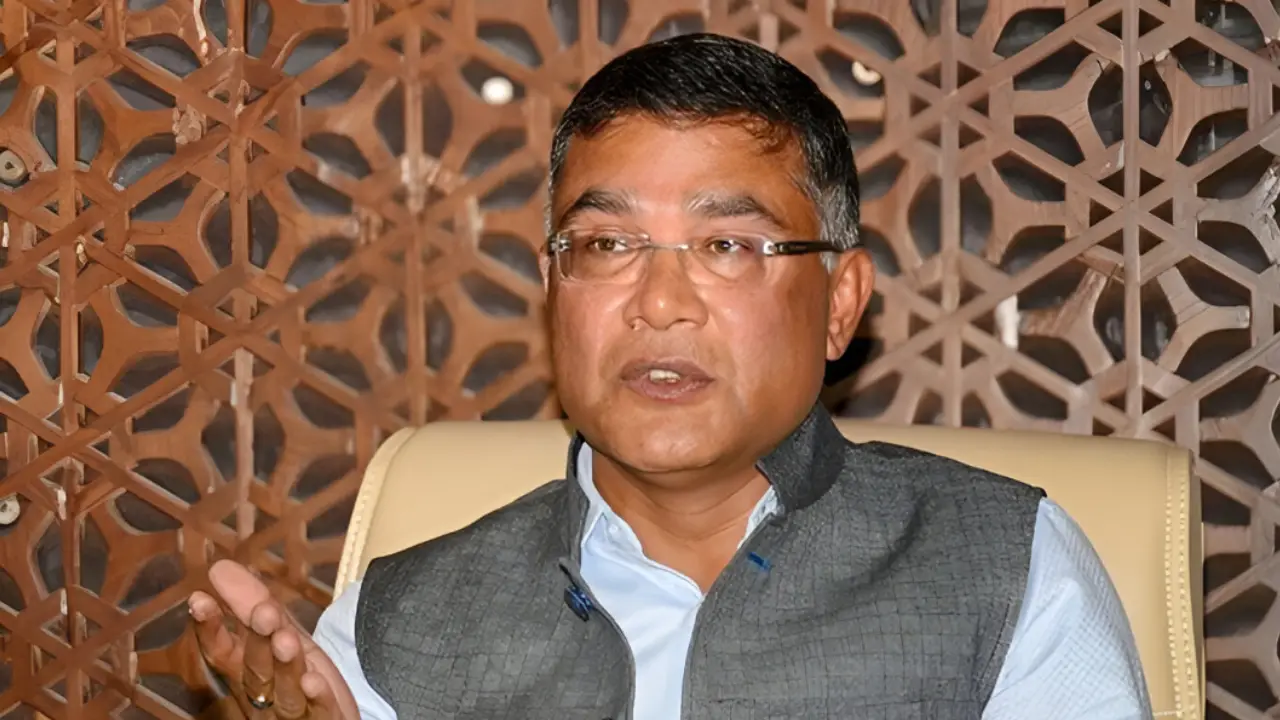
He smiled. “Shailendra Kumar. IAS. I am on my way to a meeting.”
That was the first time I met Shailendra, a meeting born not of protocol or profile, but of pain. A professional connection sealed by fragments of violence buried deep inside both of us. A bond, I would like to believe, that will outlive even the Union Territory’s long shadow.
We walked ahead and settled down, waiting for the boarding call. But our minds were elsewhere.
“So,” I asked, “how did you get yours?”
He exhaled, and with that breath began a long rewind.
“It was July 4, 2003,” he said. “I was Deputy Commissioner in Anantnag. The PDP-Congress alliance was new, and the Rural Development Minister, Peerzada Mohammad Sayeed, was visiting. A delegation asked him to inspect some development work in Larnoo, in the Kokernag periphery.”
One of the visits, Kumar recalled, was to a modest school. It was not on the original itinerary. “That made me anxious,” he said. “I could sense something off… odd movements, uneasy shadows. I told the police officer, Ayub, to stay alert.”
As the minister mingled with teachers and locals, an explosion tore through the air. The earth shook. Silence followed.
“When I came to, I saw bodies strewn across the floor. I could not tell who was alive, who was not. The minister was at my feet, covered in blood,” Kumar said, his voice lowering. “My instincts kicked in. I got up and ordered everyone to evacuate the minister immediately.”
He was rushed to Kokernag hospital. As chaos unravelled, more details emerged: the school’s headmaster, Ali Mohammad Bhat, had died on the spot. Twenty-six others were injured, seven policemen, two senior engineers among them.
“My focus,” Kumar said, “was to get the minister to Srinagar. He had multiple splinters in both legs. Arranging the chopper was a nightmare, but we managed it. The others we put into ambulances.”
Some of the officers, he told me, remained hospitalised for months.
It was only on the return journey that Kumar noticed something wet on his thigh. “I was in the backseat of the car. I felt something. When I lifted my shirt, there was blood. A lot of it,” he said quietly. He had never realised he had been injured too.
At the Anantnag hospital, doctors discovered two splinters, one in his back and another in his hand. “They said if the one in my back had gone half an inch closer to the spinal cord, I would have been paralysed,” he recalled. “But removing it was too risky; it was nestled too close to a major blood vessel. So, they left both of them inside.”
He paused and then looked at me. “And you? How did you get yours?”
But just as I took a breath to begin, the boarding call echoed through the terminal. We stood up, bags, tickets, left-right in silence, onto the seat and up in the air.
And I walked towards the gate, carrying the quiet ache of a poet whose verse was never heard, after hearing another poet sing his song. We met a thousand times later, but the splinters never became part of the table talk.
Cop, My Friend
I already had some idea about the Larnoo tragedy. Back in 1990, when I lived out of a modest rented room in Batamaloo, one of my neighbours was Abdul Rashid, a quiet, deeply religious police constable from Devsar, down south. A tahajjudguzar who never raised his voice, Rashid lived and worked with a grace that made his routine seem like an act of worship.
When the Larnoo incident occurred in 2003, Rashid happened to be on duty in the area. “Peerzada had come to inaugurate the Higher Secondary School, which had just been upgraded,” he told me later, probably when he was recovering in the hospital. “After the event, locals requested him to visit a nearby middle school. He agreed.”
It was during that unplanned visit, as the minister interacted with teachers and villagers, that an IED exploded.
“Everyone fell to the ground,” Rashid recalled. “I remember seeing the headmaster collapse in front of me.” Later, he learned that four people had been killed in the blast, including the headmaster, a police constable named Abdul Qayoom from Bandipora, and two residents. Rashid himself was among the 33 people injured.
He was rushed to the hospital, where doctors delivered devastating news: one of his eyes was beyond saving. “They removed it immediately and fitted me with an artificial one,” he said. “My only concern since then has been to protect the other eye, which had also been injured. I have undergone several surgeries. Technically, I never stopped going to the hospital.”
The police department supported him, offering softer postings in recognition of his sacrifice. His seniors understood the weight he carried, not just in his memory, but in his vision.
Now with most of his children settled, Rashid spends his days between his orchards, the local masjid, and medical appointments. “I am due for another test in August,” he told me with calm acceptance. “Let us see how the eye behaves.”
A Grenade Explodes
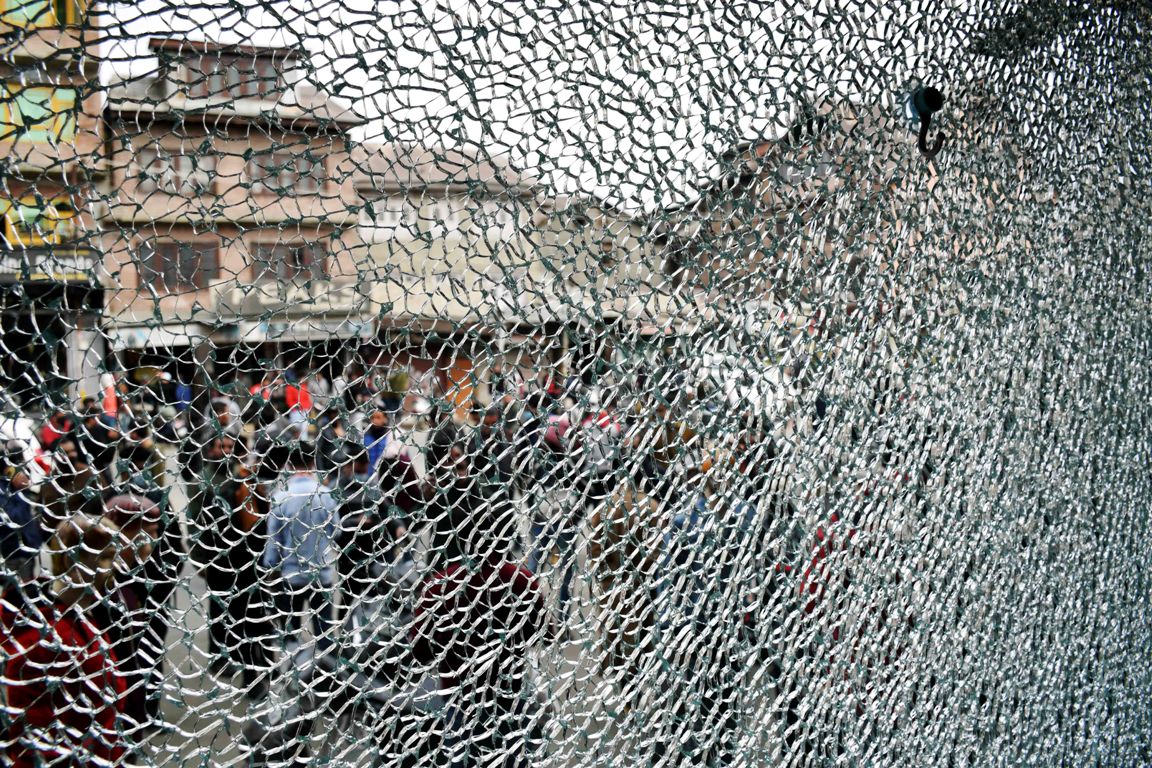
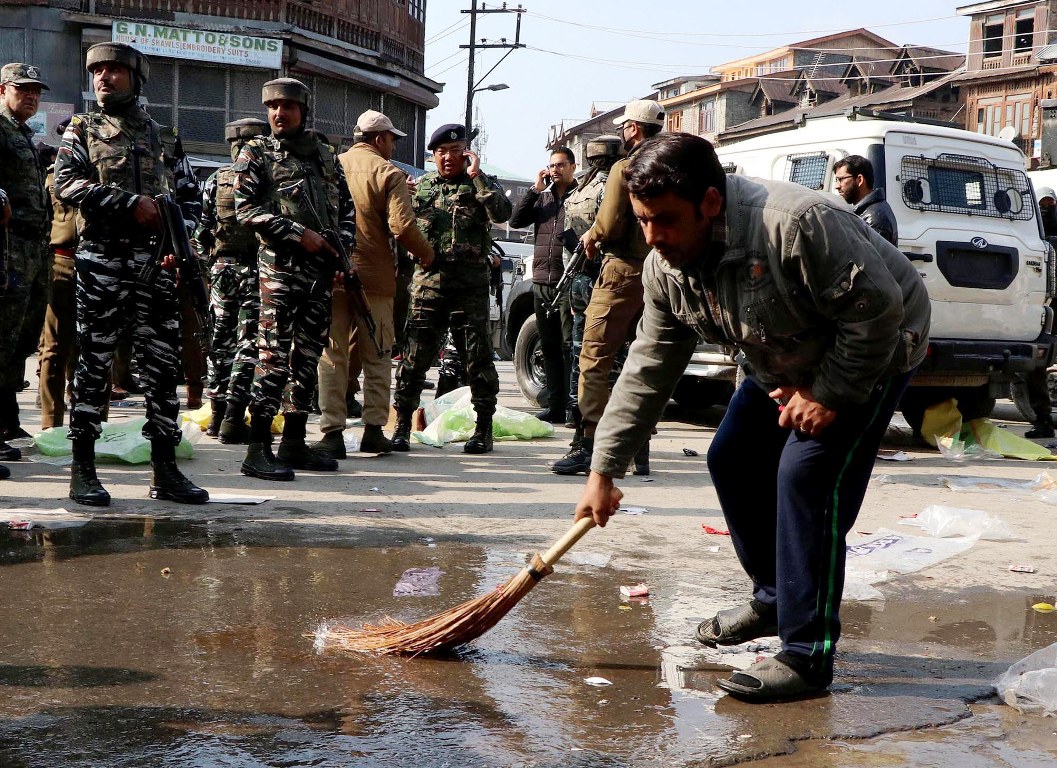
Mine was a smaller story, quieter, but not without its sting. It was the summer of 1993. I was on my way to a friend’s home in Barzulla when a grenade was lobbed at the main road, apparently aimed at a passing CRPF vehicle. It missed. The wall took the hit instead, and so did I.
Wounded and dazed, I staggered to my friend’s house. He rushed me to the nearby Bone and Joint Hospital. A young doctor examined the wound, cleaned it, and sent me for an X-ray. After a while, he returned with a calm but clinical verdict.
“We would not remove it,” he said. “To take it out, we would need to make a long incision. The hot projectile has travelled at high speed, it is sterile, and it would not harm you.”
I trusted him. The wound was dressed, and I went home. Those were days of quiet dread, challenging in ways that tested both nerves and instinct. Stepping out of home felt routine, but returning was never guaranteed. Grenades burst like firecrackers, and Lal Chowk echoed almost daily with the sound of explosions.
I learned one basic rule for survival: avoid crowds. I stuck to narrow lanes instead of main roads and spent most of the day tucked away in the office. Public transport was out of the question for me; I do not think I boarded a bus for months. Fortunately, Batamaloo and Lal Chowk were within walking distance. And in those uncertain times, walking alone felt safer than riding with others.
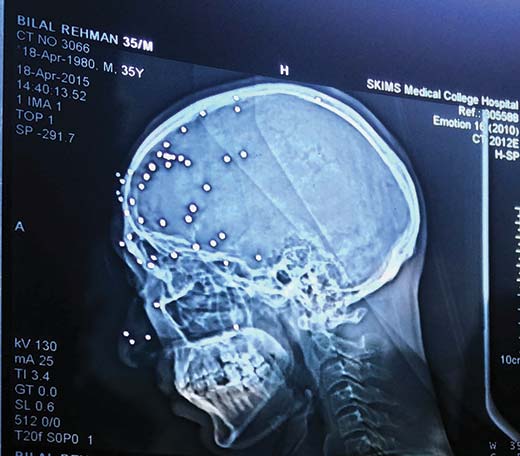
And over time, I forgot there was a splinter embedded deep in my back. It never hurt. It never reminded me, except at airports, of course. The endless metal detectors and the routine frisking were the only times it spoke.
But last week, it finally woke up.
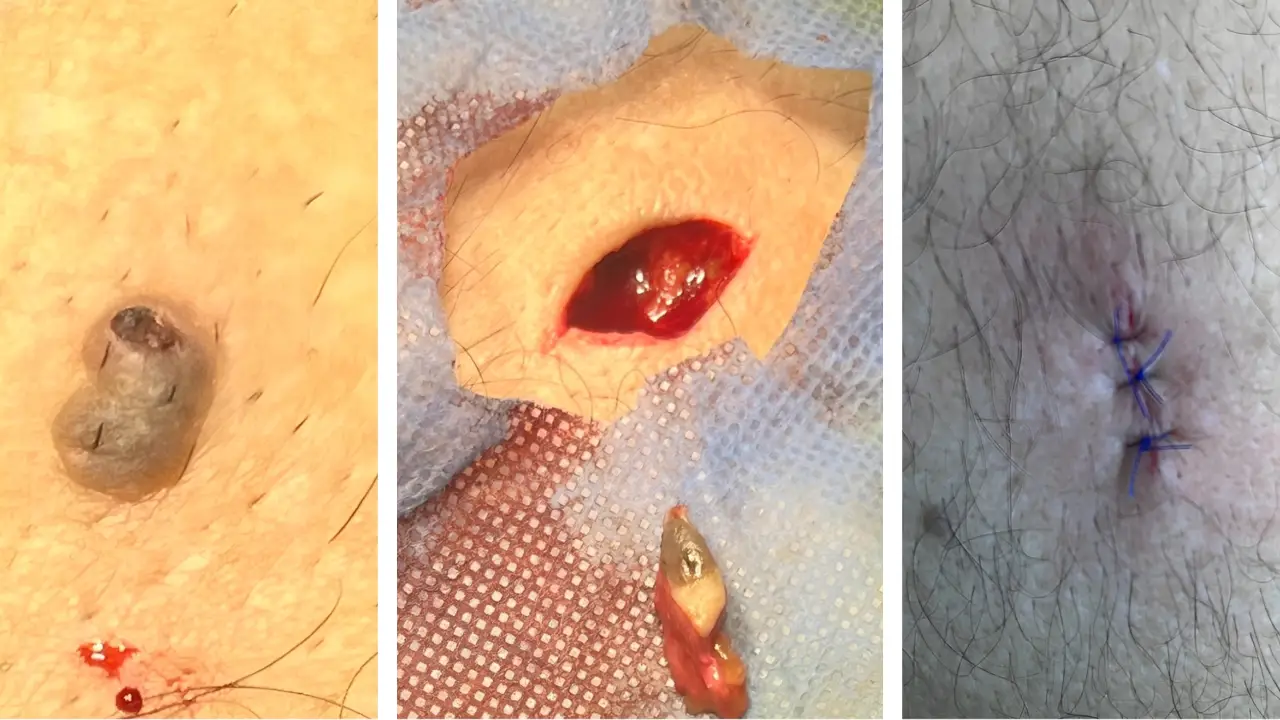
I felt a sudden twinge and dull ache. Then a slow, outward shift, like a long-forgotten guest deciding to leave. Alarmed, I reached out to a surgeon friend, one of the best in the city. He insisted I come immediately. We did a fresh X-ray, and within hours, I was in the operation theatre.
Half an hour later, he shouted with a laugh and a tray. “I have removed the splinter,” he said. “And excised nearly a square centimetre of tissue where it had quietly rested for more than three decades.” He stitched the wound. It is healing well.
After the surgery, over a cup of tea in his chamber, we talked. He shared stories of others like me, Kashmiris walking around with fragments of violence still lodged inside them.
“It is not just a few people,” he said, his voice firm. “It is a generation. Not dozens, or hundreds, it is thousands. We weigh the risks; run a cost-benefit analysis. And in many cases, we leave these projectiles alone.”
Sometimes, it’s safer to let the pain sleep.
A Diversity Basket
Since 1990, if there was one thing that left a mark more visible than anything else, it was the explosives. In the past 25 years alone, open-source data indicates there were at least 2450 explosions, ranging from grenades to improvised explosive devices (IEDs), which resulted in 1658 deaths. Another 11159 individuals were injured, many of them maimed for life.
Beyond militancy, the cycles of civilian unrest came with their grim statistics. While the brief protests over the 2006 sleaze racket under Ghulam Nabi Azad’s tenure faded quickly, the 2008 Amarnath land row, the 2010 protests under Omar Abdullah, and the prolonged unrest of 2016 under Mehbooba Mufti were seismic in scale. These were not mere law and order issues; they redefined the very framework of policing in Kashmir. For a system long tuned to handling militancy, crowd control and civilian anger were unfamiliar, almost forgotten terrains.
The numbers told their own story.
On February 19, 2014, the government informed the erstwhile Jammu and Kashmir Assembly that since 2009, it had registered 1733 police cases related to stone-pelting and rioting, involving 9166 individuals across Kashmir.
Then, on January 24, 2018, the Assembly was told that between July 8, 2016, and February 27, 2017, following the killing of Burhan Wani, at least 9042 people were injured during clashes across Kashmir. Of these, 368 sustained bullet wounds, 6221 had pellet injuries, and 4 were injured by PAVA shells. Among them, 782 individuals suffered eye injuries, many of them irreversible.
A committee headed by the Divisional Commissioner of Kashmir, tasked with identifying civilians left permanently or partially disabled due to action by security forces during that same 2016 period (July 8 to November 2), confirmed 77 such cases.
Violence, for one reason or another, remained a constant, an unrelenting force that changed lives in an instant. Whether it came from a militant’s grenade or a policeman’s riot gun, the damage was the same. People continued to fall, hit by shells, pellets, or bullets. For many, the scars went deeper than flesh. They became silent biographies written in metal.
Doctors Remember
“I was doing my house job when a Sardar Ji was rushed into the operation theatre,” my doctor began, his scalpel gently moving over my back, now numbed with anaesthesia. It was a story from the early nineties, but he remembered it as if it had happened yesterday. “He had taken a bullet, it was lodged dangerously close to a major artery near the heart. After all the scans and tests, the seniors made a call: no surgery. The risk of touching it was greater than the risk of leaving it be. I saw him many times afterwards. He lived normally. The bullet, I believe, is still in his body, resting near his heart.”
Such stories are not rare in Kashmir. A Pulwaman man carrying a bullet for more than 18 years became a major national news story, a few years ago.
Pic: Saima Bhat
On November 21, 2018, Simran Jan, a Class 10 student from Nadigam in Shopian, lay in the recovery ward of Srinagar’s SMHS Hospital. She had just undergone a three-hour-long surgery after sustaining a bullet wound in her abdomen during a gunfight in her village. Though doctors declared her condition stable, her father, Mansoor Ahmed, remained visibly shaken. He had been told the bullet could not be removed; its proximity to vital organs made the procedure too dangerous.
Doctors had removed her gall bladder and stitched a hole in her liver. A senior surgeon later explained that removing the bullet had been considered, but the risk was too high. It could be re-evaluated only if it ever began to move or cause complications.
On May 19, 2022, the story of Philauri Jaan from Nepora village in south Kashmir resurfaced as a haunting reminder of the human toll of conflict. Shot in the ribcage during a 1996 crossfire between militants and the army, the 12-year-old schoolgirl was labelled “collateral damage.” She spent two weeks in a coma before being shifted from Srinagar to a hospital in Delhi due to inadequate local healthcare. Although doctors managed to save her life, the bullet remains lodged in her body. Now, decades later, Jaan remains bedridden, unable to care for herself, her childhood shattered and her future permanently altered.
“I had a patient from Safa Kadal whom I operated on,” said Dr Iqbal Saleem, one of the senior-most surgeons at GMC, Srinagar. “He was hospitalised for around three months, but we never touched the splinter; it was barely a millimetre from his spinal cord. He survived, and just last week, I saw him again, along with his daughter.”
Dr Iqbal recalled another case involving a young man who had nearly 500 splinters lodged in his back. “We did not touch a single one,” he said. “In many cases, accessing the foreign object is extremely risky; trying to reach it can damage vital organs.”
He explained that the body often reacts defensively. “Sometimes, the body’s immune response encases the splinter in fibrous tissue, minimising further harm. And if the splinters are lodged just under the skin, they usually find their way out on their own.”
“These decisions are life-defining,” explains Dr Salim Wani, one of Kashmir’s top urologists. “If a foreign object is lodged near the spinal cord, heart, lungs, or kidneys, and removing it could compromise the organ’s function, we usually avoid intervention. I remember a case where a bullet had landed on the margin of a man’s spinal cord. After exhaustive tests, we concluded that any attempt to extract it could cause paralysis. So we left it there. And believe me, he still drives his car.”
In Kashmir, such stories are not exceptional; they are common. Foreign objects often stay where they land, sometimes for life. “My mamu has had a bullet inside him for over 20 years,” said a paramedic, who did not want to be named. “It is lodged somewhere between his heart and lungs. The doctors said removing it would require a surgical path that could endanger both organs. So they let it be.” He admitted his uncle does face complications, sometimes serious, “but the fact is, he is alive, and mostly normal.”
A generation of doctors, orthopaedists, neurosurgeons, pulmonologists, and general surgeons has quietly built a catalogue of such cases, even if not a formal record. “It is a tragedy,” said a senior orthopaedist in Srinagar, “that while we managed thousands of trauma cases, we never had the bandwidth to document how many people continue to live with foreign objects, bullets, splinters, shrapnel, inside their bodies. People are walking around with bullets in their bones. And unless you X-ray them, you would never know.”
And then came 2016.
The pellet gun, marketed as a ‘non-lethal’ alternative, was unleashed across Kashmir like a dust storm. The injuries shifted from single-entry bullet wounds to bodies riddled with tiny metallic splinters. “When real guns fire, you deal with one bullet. Now we were looking at people with a hundred tiny pellets lodged across their bodies,” said a retired doctor who had been at the forefront of trauma care. “One bullet meant one incision. A hundred pellets meant a hundred tiny cuts. So what happened? Most pellets were not touched. They are still in there.”
The result was catastrophic. Kashmir got a one-eyed generation, young men and boys blinded permanently. Others, still, are haunted by invisible pain, trying to locate the splinters modern machines cannot always trace. There are cases in which the splinters are removed but a phantom pain exists; otherwise, a normality with amputations.
Some used their own logs to offer some empirical idea of trauma management. A group of medics, including Mumtazdin Wani, Mushtaq Chalkoo, Peer Hilal Ahmad Makhdoomi, Ankush Banotra, Awhad Mueed, Yassar Arafat, and Syed Shakeeb, published An Analysis of War Weaponry Trauma Victims from a Medical College Setting in Kashmir Valley in 2017, which laid bare the devastating medical realities of trauma in Kashmir. Conducted at the Government Medical College linked SMHS hospital, between July 8 and November 8, 2016, the research suggested that of abdominal trauma victims, 80 per cent of the 500 patients were between 15 and 30 years of age, with 95.2 males.
The study reveals a startling dominance of pellet-related injuries, accounting for 69.8 per cent of abdominal trauma cases, followed by bullet wounds (17 per cent), shell injuries (4.4 per cent), and physical assault (8.8 per cent). Among the patients, 60.4 per cent sustained penetrating injuries. While 55 per cent were managed conservatively, 42 per cent underwent surgery, and 3 per cent were handled through non-operative means. The most commonly affected organ, according to the study, was the small intestine (44.76 per cent), with other frequent injuries involving the spleen and liver. The doctors managed to limit mortality to 2 per cent, though deaths were mostly due to haemorrhagic shock before hospitalisation or from sepsis and multi-organ failure post-surgery.
In this landscape of metal and memory, survival is measured not by what is removed but by what is endured. Even though the violence has fallen to an all-time low post-2019, the memories still haunt. These come out of nowhere to reopen the wounds that surgeons sealed decades ago.
A Call
After I returned to work, the first thing I did was call Shailendra Kumar. I was not calling to finally share the story that the airline boarding gate had interrupted. That moment had passed. I simply needed to ask him something, about his wounds, about the splinters.
“My splinter had become a crisis,” I told him over the phone. “A surgeon finally took it out. I have got three stitches now.”
“Good riddance,” he replied with a chuckle.
“And yours?” I asked.
“They are still there,” he said. “They do not hurt much. But sometimes, there’s pain. And a lot of itching.” He paused. “Every time it hurts,” he added, “it takes me back to Larnoo.”
It struck me then how memory in Kashmir is not just held in the mind. It lives under the skin.
The English say, to forget something, one must first remember it. But in Kashmir, people often wish not to remember at all. Yet their bodies betray them. The past is not stored in journals or archives; it is embedded in flesh and bone. And sometimes, without warning, it stings or itches, refusing to let go.