Since 2022, details of the proposed road to the Amarnath cave had been entering the public domain, drawing both interest and concern. Yet it took just a 28-second Instagram reel, four years later, to provoke outrage among Kashmir’s political class. Why did they remain silent for so long, asks Masood Hussain
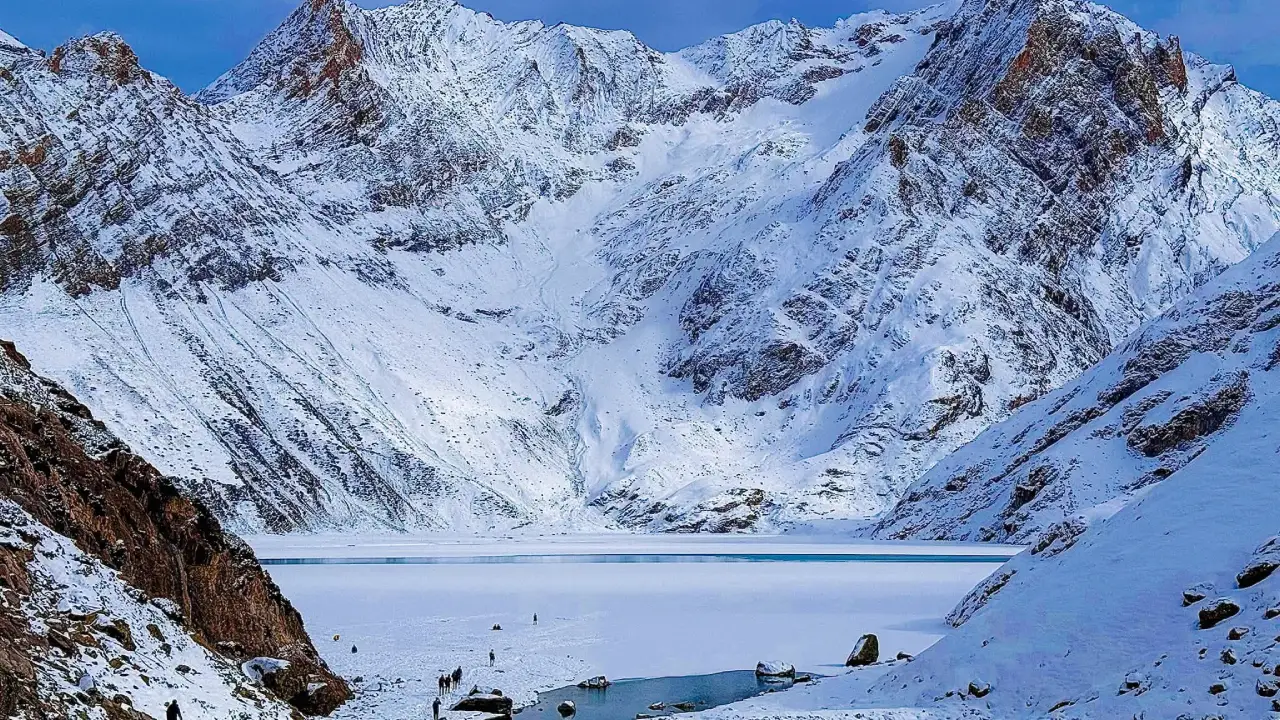
The video runs for 28 seconds on Instagram. An excavator arm swings above a patch of blue water. The man at the controls smiles at the camera as a trending song plays. Someone else films the shot. It looked like a piece of fun. But it became a political storm.
The Tribune reported that a JCB operator uploaded it. He removed it after residents raised concerns. By then it had spread. By November 22, it was circulating widely across Kashmir, a day after it had gone viral.
The Hindu noted that the video is undated. It shows an earthmover filling a site at the lake’s edge. Reports do not say who employed the operator. Sources told The Tribune the work was part of a Border Roads Organisation (BRO) project along the existing Amarnath Yatra track.
A man identified by Khaleej Times as the uploader later said: “Development at the cost of nature and the disruption of ecosystems is devastation.” Climate activist Raja Muzaffar Bhat called the visuals “a disaster”. He asked how such heavy machinery had reached Kashmir’s glaciers.
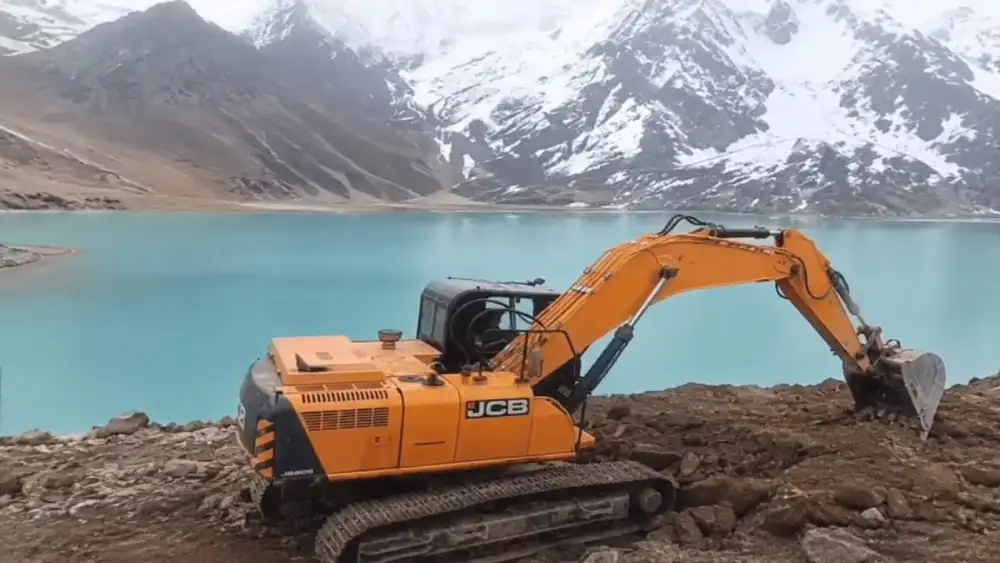
Fragile Lake
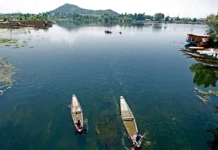
Sitting at 3590 meters above sea level, almost 23 kms from Pahalgam, Sheshnag is no ordinary water body. Snow covers the 1.1 km x 0.7 km lake for most of the year.
For the yatra season, it is the first night halt for pilgrims walking from Pahalgam to the cave. It is also the source of the Lidder River, which drains these hills and feeds Pahalgam, Bijbehara, Anantnag and hundreds of villages. Besides, it is one of 14 glacial lakes officially identified as high risk in Jammu and Kashmir. Jammu and Kashmir’s has identified 68 potentially dangerous glacial lakes (PDGLs), and its Department of Disaster Management, Relief, Rehabilitation and Reconstruction (DMRRR) is monitoring Seshnag for Glacial Lake Outburst Flood (GLOF) for years.
As social media started commenting on the visuals, politicians got in. Communist leader and five-time Kulgam lawmaker, Mohammad Yousuf Tarigami, said the lake is ringed by loose moraine and steep slopes. Disturbing that terrain with heavy machinery, he said, is “an invitation to disaster”.
Science backed his worries. A landslide study in Scientific Reports covered a 35 km corridor from Baltal to Amarnath, Panchtarni and Pothpathri. It found nearly 85 per cent of the area susceptible to landslides. Some 16.2 per cent is highly susceptible. Another 68.1 per cent is moderately susceptible.
Researchers documented 49 landslide events. Between 60 and 70 per cent of them occurred within 50 metres of roads and other infrastructure. The study also estimated the region warmed by about 2.3 degrees Celsius between 1980 and 2024.
Builder’s Take
On November 23, the BRO responded to the controversy. It said it was carrying out work after the Amarnath Yatra “in compliance with all applicable safety norms and environmental safeguards“. The organisation that has historically managed most of the roads in the erstwhile state said bulldozers are “not used for new construction work”. It said the works are “confined to the existing tracks”. It said the aim is to stabilise vulnerable stretches and widen tracks “to ease congestion and allow safer passage”.
The agency added that it ensures safe disposal of excavated material, protects natural drainage and minimises disturbance to surrounding terrain.
Not everyone was convinced. Ruling National Conference (NC) legislator Hasnain Masoodi, a retired High Court judge, asked: “If you have to stabilise a track, why is the bulldozer needed?” Tarigami asked the same. Cutting at the base of a slope, he said, removes its natural support.
The BRO’s statement did not say whether environmental clearances had been obtained. Tarigami noted exactly that.
Political Storm
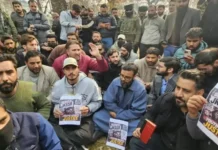
The reaction was swift and wide. Mirwaiz Umar Farooq called the visuals “very disturbing“. He said improving facilities for pilgrims had never been an issue. But not, he said, at the cost of a fragile ecosystem. He demanded the work be stopped immediately.
PDP spokesperson Mohit Bhan called it a crime against “Hinduism and Faith in Nature”. Terming it “the biggest crime one can commit to Hinduism and its faith in nature”, he argued that Sheshnag is the place where Lord Shiva left his serpents before going to the cave. Another Pandit activist, Satish Mahaldar, warned of another Kedarnath. The BJP, however, welcomed the road. Its leader Altaf Thakur said proper environmental impact assessment had been followed and no trees were cut.
Aga Ruhullah Mehdi, who recently resigned as the Srinagar MP, put it bluntly. “Kashmir’s mountains are not BJP’s real estate,” he said. Congress leader Pawan Khera called Sheshnag “not a construction site”. Apni Party chief Altaf Bukhari asked the government to explain what such machinery was doing there.
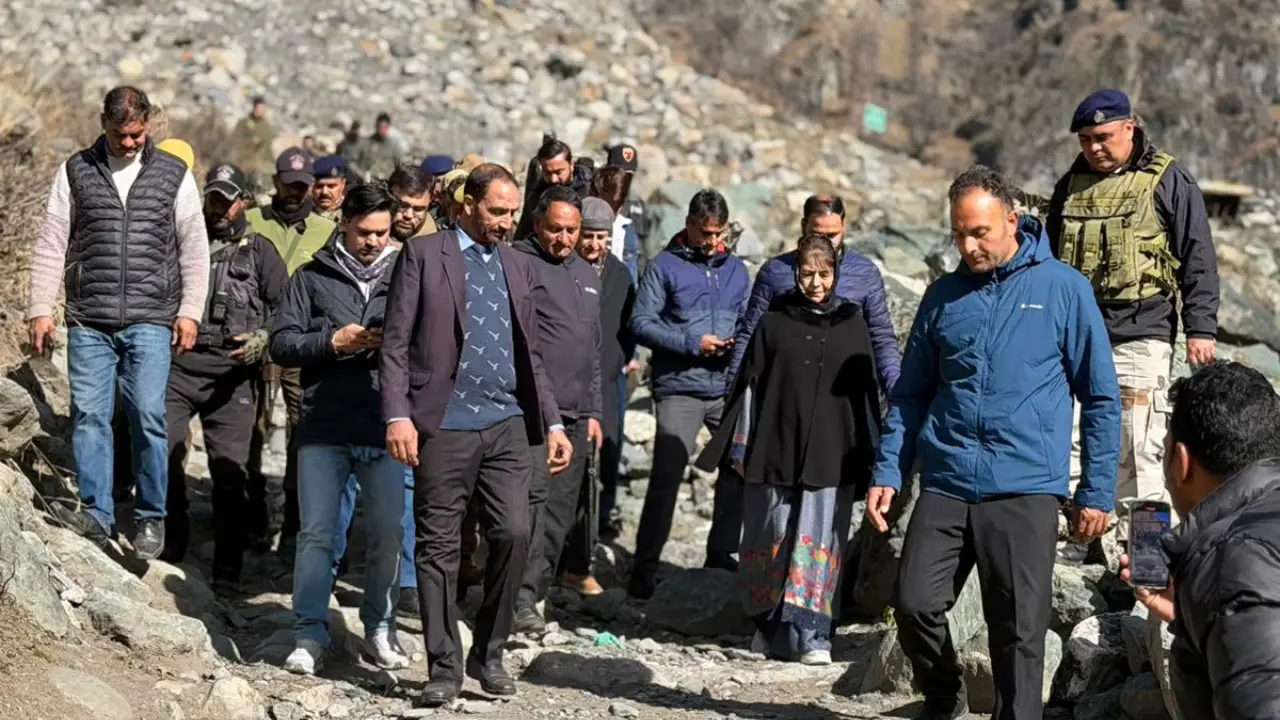
On November 24, PDP president Mehbooba Mufti and former Chief Minister tried to trek to the lake. She said police stopped her at Chandanwari, about 12 km short. They cited security reasons. She said her worst fears were confirmed. She warned that Kashmir could become another Uttarakhand.
Tarigami, who chairs the Assembly’s Committee on Environment, put three questions to the government. Has any independent expert body assessed the slopes? Have environmental and forest clearances been sought or obtained? How does the work relate to the NH 501 alignment that passes through Sheshnag?
Mirwaiz asked another. “Why is our Chief Minister mute?” he said. He urged people to sign a petition.
Government Defence
The silence ended on November 25, when Forest Minister Altaf Ahmad Wani said the lake was safe. A team of 12 officials had inspected the site, he said. “Not even a single grain of soil has gone into Sheshnag,” he asserted, while talking to reporters at Pahalgam, the constituency he also represents in the assembly.
He said the stretch about which the visuals appeared lies 200 to 300 feet from the lake. He said the video was shot from a height and gave a false impression. The BRO, he added, has done maintenance before and after the Yatra since 2022. The aim is to widen the track to 12 feet for pilgrim safety. He said the work follows a Supreme Court direction and the terms of a memorandum of understanding.
The Tribune noted that Wani did not directly explain why heavy machinery was deployed so close to the lake.
NC spokesperson Tanvir Sadiq said Chief Minister Omar Abdullah has asked for a report on any deviation from the approved work. If found, it would be stopped at once.
Wani blamed the PDP and the BJP. He said they were politicising the issue with Uttar Pradesh elections approaching.
Blame Game
Then the row turned on itself. On November 25, Mehbooba Mufti alleged that the Omar Cabinet had cleared “the road to Sheshnag”. It did so, she said, by extending an MoU with the BRO’s Project Beacon. She demanded its withdrawal.
The NC hit back. Its spokesperson Imran Nabi Dar said the MoU was meant for “completing pending and critical works”, slope stabilisation and snow clearance. “ROAD? Prove or apologise,” he said.
Sadiq went further. The project began in 2022, he said. The MoU was signed in 2023. Approval came in 2024. “Where was Mehbooba Mufti Sahiba in 2022, 2023 and 2024?” he asked. He told critics to go to the National Green Tribunal or the High Court.
The BJP also pointed to the NGT. Its spokesperson Abhijeet Jasrotia accused Mehbooba and Tarigami of attacking religion. People’s Conference chief Sajad Lone dismissed the whole exchange. Sheshnag is an “ecological disaster”, he said. “The NC and PDP would bury it under a blame game”, he warned.
Outside politics, a Change.org petition by entrepreneur Zarqua Banday crossed 13,000 signatures. Banday claimed law enforcement agencies called and asked her to take it down. Mehbooba said petitioners and young protesters were being harassed. She claimed some had been summoned to a police station and their phones seized. The government has not yet responded to the allegations.
The row now asks one question above the rest. If the project is old, why is the shock new?
Road Profile
The project at the centre is the Khanabal to Baltal road. It is part of National Highway 501, known locally as KP Road. The National Highways and Infrastructure Development Corporation Limited (NHIDCL), under the Union Ministry of Road Transport and Highways, is the developer.
NHIDCL signed a consultancy agreement with Redecon (India) Pvt Ltd on September 20, 2022. The detailed project report was completed in January 2024. The DPR said the alignment was accorded approval on November 15, 2022.
The road has two parts. The first upgrades 57.4 km of existing road from Khanabal to Chandanwari. It passes Mattan, Bumzoo, Seer Hamdan, Aishmuqam, Batkoot, Pahalgam, Laripora and Betaab Valley. Bypasses are planned around Khanabal, Anantnag, Seer Hamdan, Aishmuqam and Pahalgam.
The second part is far harder. It is a 32.6 km greenfield road from Chandanwari to Baltal. No motorable road exists there today. Only the pilgrim footpath runs through the terrain. The alignment goes through Pissu Top, Jojibal, Sheshnag, Ganesh Top, Panchtarni, Sangam Top and Domail. Ganesh Top, at about 4,400 metres, is the highest point.
The centrepiece is a 10.8 km tunnel from Jojibal near Sheshnag to Panchtarni. The DPR describes a twin tube bore beneath Mahagunus Top, also called Ganesh Top. It would bypass the steepest, snow-bound pass on the trek.
Once built, vehicles could reach Sangam. Only the last 3 km to the cave would remain on foot. That stretch is planned as a 4.5 metre-wide concrete walkway.
The money is large. Union Minister Nitin Gadkari announced about Rs 5,300 crore in April 2023. A separate Baltal to cave ropeway was put at Rs 750 crore. But these figures differ from the package estimates in the DPR. They are not the same as the sanctioned costs.
In 2024, NHIDCL invited bids for three packages on the existing road. Package III, from Pahalgam Bypass to Chandanwari, covers 21.23 km. It was estimated at Rs 425.19 crore with a 24-month schedule. Official tender records later carried annulment notices for all three packages.
As of November 2026, no confirmed completion date exists for the full road in the records reviewed. Its final environmental impact depends on alignment, design and statutory clearances.

Long Trail
The story starts in September 2022. That month, the Jammu and Kashmir government handed the Yatra tracks to the BRO for maintenance and upgradation. Before that, the Public Works Department kept the Baltal track. The Pahalgam Development Authority kept the Chandanwari track.
The next year brought the public announcements. On February 16, 2023, Lt Governor Manoj Sinha said NHIDCL had completed a preliminary report. The road would link Pahalgam, Panjtarni, Sangam Top and Baltal. He expected approval that year and completion in four to five years. He said he was confident the route could be built the way the Char Dham road was built.
The same day, the Ministry of Road Transport and Highways assigned the Sheshnag Tunnel on NH 501 to NHIDCL. Bids were invited. The deadline was February 20.
In April, Gadkari made it official. He announced Rs 5,300 crore for roughly 110 km between Khanabal and Chandanwari, then on to Baltal via Panchtarni. He promised a 10 km tunnel between Sheshnag and Panchtarni. He promised a ropeway and a concrete footpath. Travel time from Srinagar, he said, would fall from three days to seven or eight hours.
In June 2023, Sinha said the DPR was at an advanced stage. The road, he said, would cut the walk to the shrine to two kilometres.
None of this was whispered. It came from a Lt Governor and a Union minister.
Early Warnings
The warnings came early too. On February 20, 2023, Arun Joshi noted that the road could affect several glaciers. He named Kolahoi, Thajwas, Panchtarni, Sheshnag and Amarnath. “The main issue,” he wrote, was how the region’s fragile environment would be protected.
In April 2023, The Telegraph reported that Kashmir had reacted only “in hushed tones”. It suggested fear of retribution. Perhaps, it said, such announcements had become the new normal.
Journalist Jehangir Ali asked on X whether this was “an ecological disaster in the making”. Raja Muzaffar Bhat, the same activist now leading the protests, was blunter. “You will have to cut raw, fragile mountains”, he told the paper. He pointed to Joshimath and Kedarnath. He said the Kolahoi glacier was already melting. He urged a credible institute to carry out an environmental assessment before the project got its nod.
Quiet Years
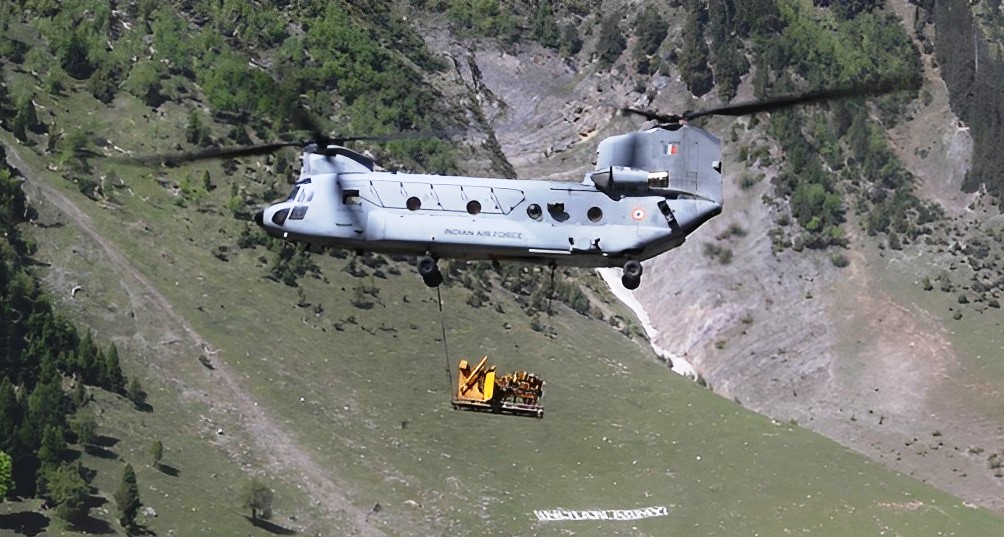
In June 2023, Sputnik India and The Hindu reported the airlifting of heavy equipment, including an earth-mover, to Panjtarni for stabilising the treks. In November 2023, the BRO posted a video on X. It was titled “Our Men Our Mission”. Drone footage showed a mini truck and a dumper on a new road. It celebrated vehicles reaching the cave for the first time. Officials told The Indian Express the tracks on the Baltal route had been widened up to 15 feet. That was enough for trucks and pick-ups. Tourist vehicles, they said, would not be allowed. Concerns were reported.
Days later, the BRO denied the whole thing. A statement called reports of a vehicular road “factually incorrect“. It said the widening was for pedestrians, palkis, dandies and ponies. It cited the Supreme Court’s directions in a 2012 case.
The two accounts sat side by side. Neither settled the matter.
In May 2024, the BRO’s Director General said widening was complete, and surfaces were covered with blocks. In June 2024, the Jammu and Kashmir government formed a committee to inspect the BRO’s works against the MoU and tender documents.
In June 2025, the Lt Governor trekked the Baltal track. He spoke of an alternate route from Chandanwari to Pissu Top. A month later, the BRO chief said tracks once three to four feet wide had been widened to 12 feet. The stretch ran about 45 km. He said extreme care had been taken so that geological conditions were not disturbed.
Each announcement was public. Each could have drawn a question.
Cabinet Nod
The most awkward date is January 2026. Daily Excelsior reported that the Omar Abdullah Cabinet cleared the Tourism Department’s MoU with BRO’s Project Beacon. The aim was to complete “pending crucial works” on the Yatra track. The BRO had cut the total cost from Rs 230 crore to Rs 170 crore. Mehbooba put the date at January 23.
The NC said this was no road approval. The MoU covered pending works, slope stabilisation and snow clearance. Mehbooba claims it cleared the way to Sheshnag.
The documents reviewed settle neither claim. They do show something else. An elected Cabinet knew of the BRO’s work on these tracks. It signed off on extending it. That was 10 months before the video.
Tarigami’s question stays open. How does the work under way relate to the NH 501 alignment through Sheshnag? No official has answered it.
Wilful Blindness
Lay the dates out in a row. The tracks were passed to the BRO in September 2022. The alignment was approved in November 2022. A Lt Governor announced the road in February 2023. A Union minister announced Rs 5,300 crore in April. The BRO posted its vehicle video in November. The DPR followed in January 2024. A government committee was formed that June. The Cabinet extended the MoU in January 2026.
Every step was public. Every step could be questioned. The Sheshnag tunnel was named in 2023. Sheshnag itself was named in the DPR.
Yet the record reviewed shows few questions from Kashmir’s mainstream leaders. It shows no challenge before the National Green Tribunal or the High Court. Those are the very forums that NC and BJP leaders now say critics should approach. They existed in 2023.
The fairest reading has two sides. Some did speak. The Telegraph’s explanation of hushed voices may be true for ordinary citizens. But politicians have platforms, committees and assemblies. Tarigami chairs the Assembly’s environment committee. He now quotes the January 2024 report in detail. The question is when he first read it.
The NC says the PDP stayed silent in 2023. The PDP says the NC Cabinet signed the MoU. Each side’s charge against the other is partly supported by the record. That is the problem. Both can be right. “But the two Kings’ parties, the NC and the PDP, have started to blame each other,” Sajad Lone said. “And as with other important issues confronting us, they will bury the issue under the cacophony of their blame game”.
Sheshnag may yet prove safe. The Forest Minister says it is as his team said it visited the spot. But nobody outside the government has verified that. No independent glaciologist has published findings. No environmental clearance has been shown to the public.
Ignorance would be an excuse. The public record offers none. The road was announced, costed, designed and defended in plain sight. Kashmir’s politicians did not fail to know. The record suggests they chose not to look, until a 28-second video made looking unavoidable.
They cannot blame Delhi for this, as has been their style. When the government started surveying the trek for a railway line to Pahalgam, all parties reacted and pleaded with the government that it was not in the best interests of Kashmir; the project was called off. This time, they chose silence.
The excavator did not create this project. It only made it visible. But Kashmir politicians knew it throughout.
(This is a web-only news feature)